 Bandai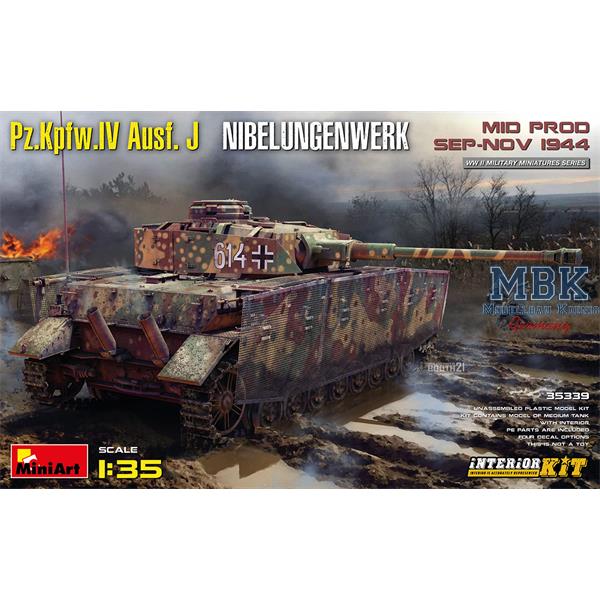
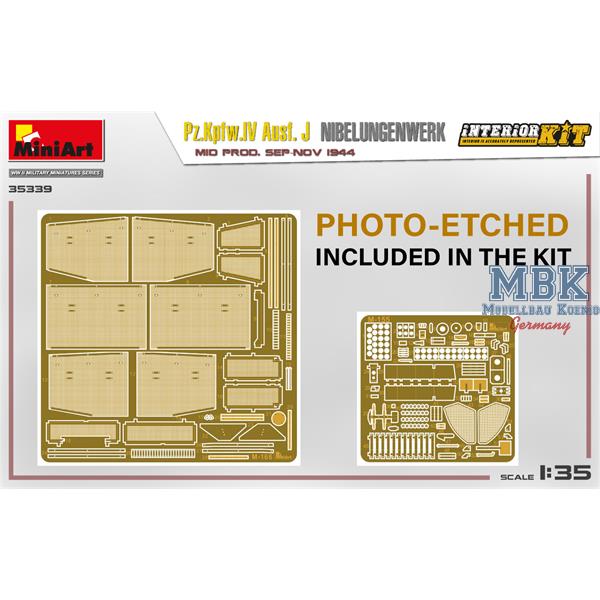
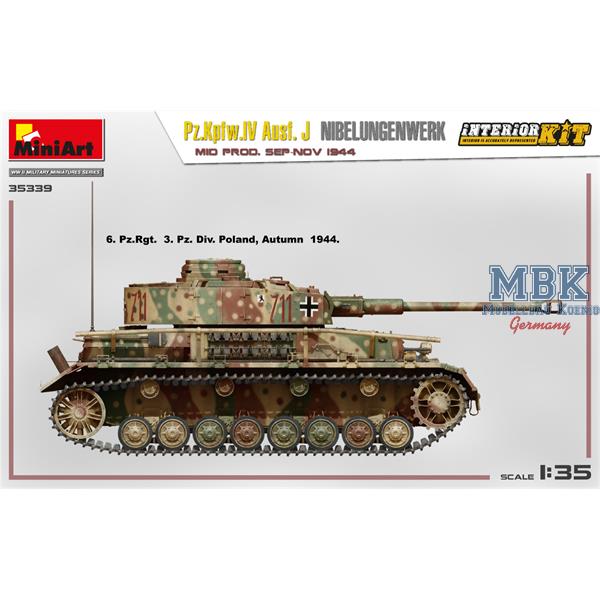
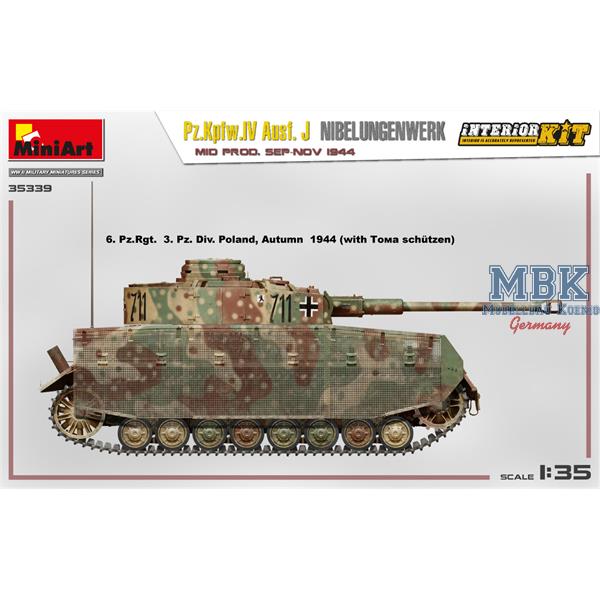
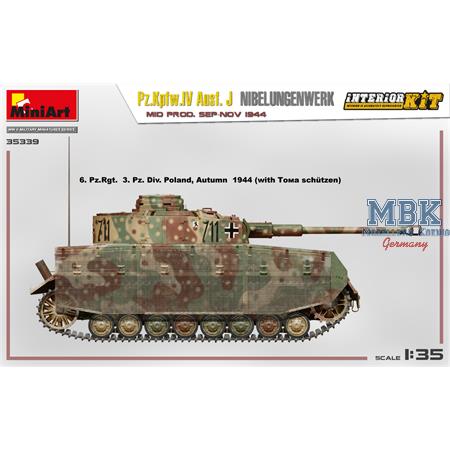
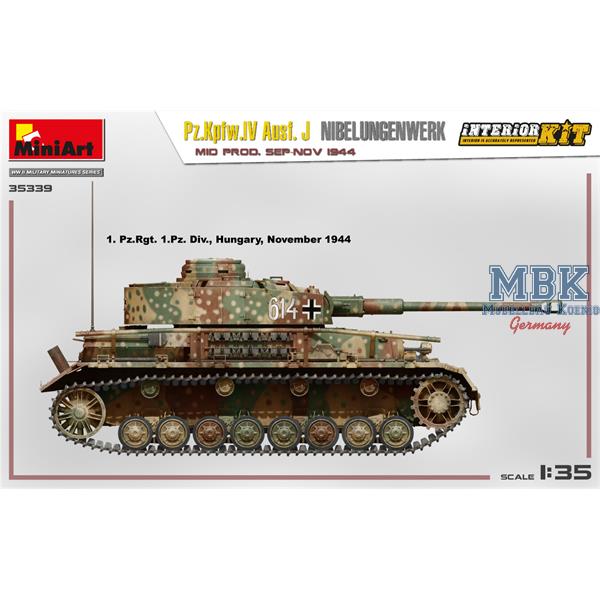
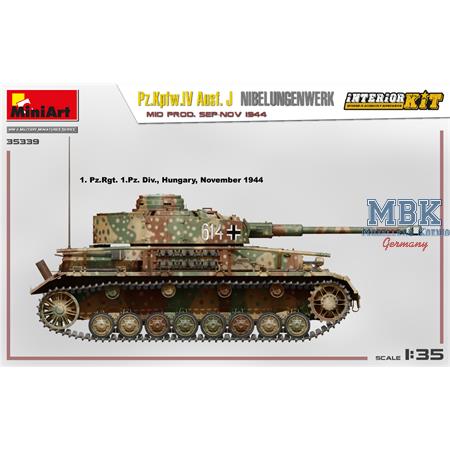
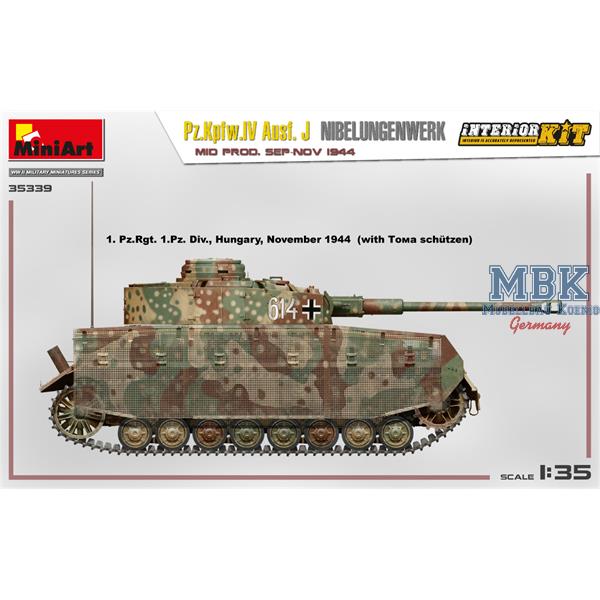
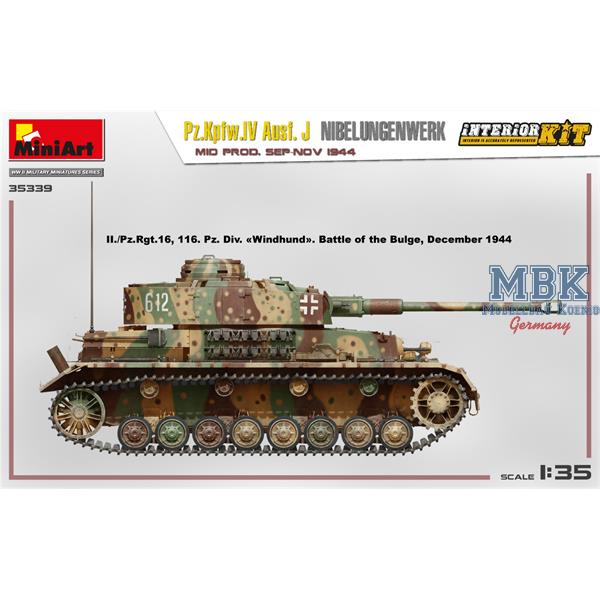
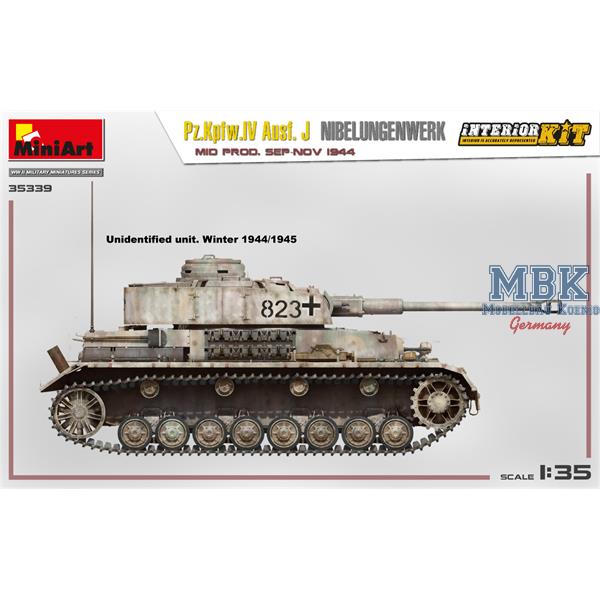
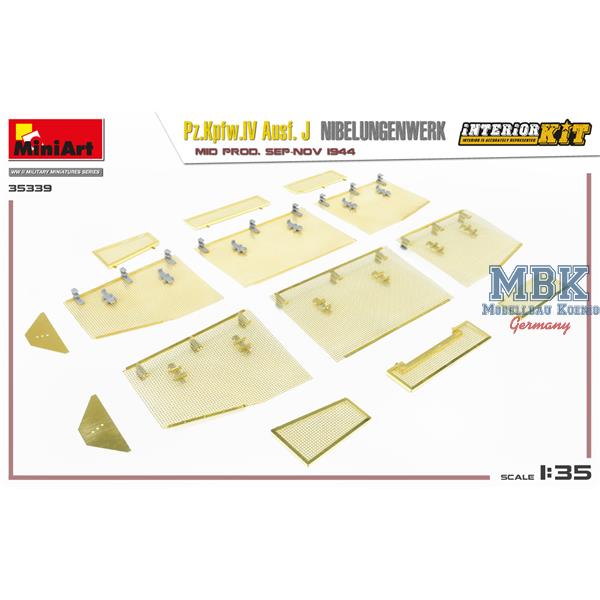
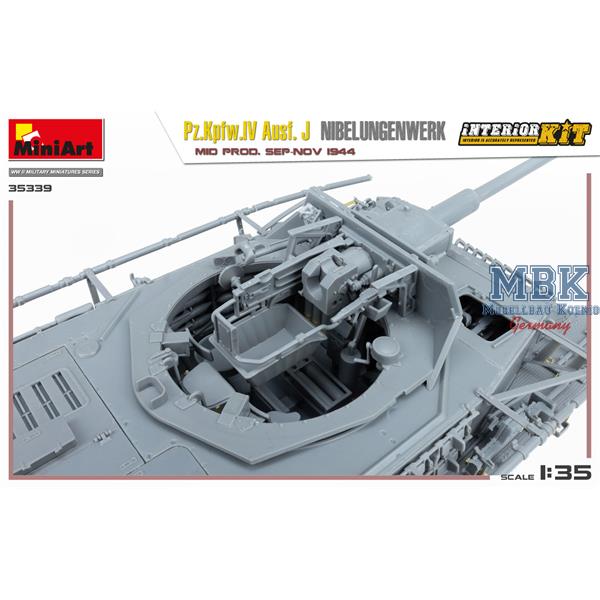


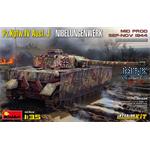
Plastic model kit for a Pz.Kpfw.IV Ausf. G Last/Ausf. H Early. NIBELUNGENWERK Prod. May-June 1943 2 IN 1
INTERIOR KIT
The Panzerkampfwagen IV Ausf. H and J models manufactured at the Nibelungenwerk plant in St. Valentin were among the final and most capable production variants of this proven German battle tank. From 1944 onwards, the Nibelungenwerk became the primary production site for the Panzer IV; following the conversion of other facilities to different models, it eventually became virtually the sole manufacturer of the final production vehicles. In total, several thousand Panzer IVs were built there, accounting for more than half of all vehicles of this type ever produced.
The Ausf. H entered production in the spring of 1943, featuring frontal armor reinforced to 80 mm and factory-fitted *Schürzen* (side skirts) on the hull and turret, which provided additional protection against anti-tank rifles and shaped-charge projectiles. It was armed with the proven 7.5 cm KwK 40 L/48, one of the most effective German tank guns of the war. Propulsion was provided by the liquid-cooled Maybach HL 120 TRM V12 gasoline engine, delivering 300 hp and accelerating the approximately 25-ton tank to a top speed of around 38 km/h. Numerous detailed improvements were made during the production run, including reinforced final drives, cast running-gear components, and the application of *Zimmerit*—a magnetic anti-mine coating—though the latter practice was discontinued in September 1944.
The Ausf. J, introduced in early 1944, marked the final production version of the Panzer IV. Outwardly, it initially differed little from the Ausf. H, yet it was the result of numerous simplifications intended to facilitate faster and more cost-effective manufacturing. The most notable change was the removal of the electric turret traverse mechanism in favor of a purely manual traversing system. The space freed up by this modification was utilized for an additional fuel tank, thereby increasing the vehicle's operational range. As production continued, further components were eliminated or simplified without significantly altering the vehicle's fundamental combat effectiveness. Its armament, engine, and armor remained largely unchanged.
Panzer IV models H and J, manufactured at the Nibelungenwerk, saw action on nearly every front of the war—from the Eastern Front, Italy, and Normandy to the final battles in Hungary and on German soil—starting in 1943 and 1944, respectively. Despite their considerable weight and limited scope for further development compared to modern opposing armor, the design proved its worth right up to the end of the war. The vehicles produced at the Nibelungenwerk, in particular, stand today as symbols of the German armaments industry's late-war production efforts; facing mounting material shortages and Allied air superiority, the industry strove to maintain Panzer IV production until the very last days of the conflict.
INTERIOR KIT
- 1:35 scale
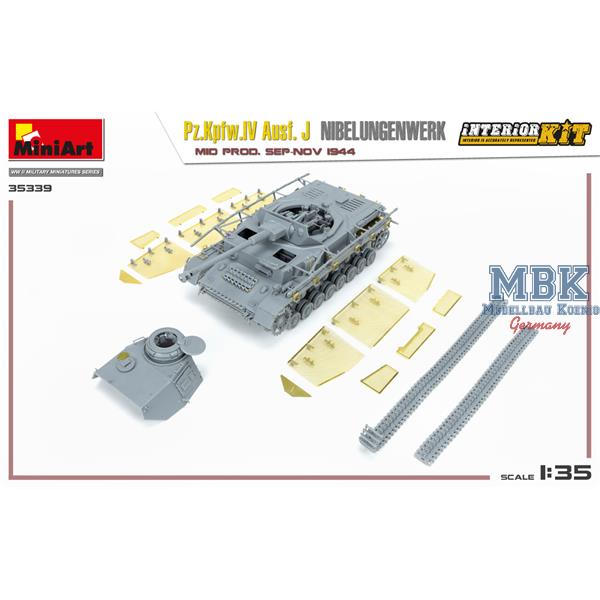
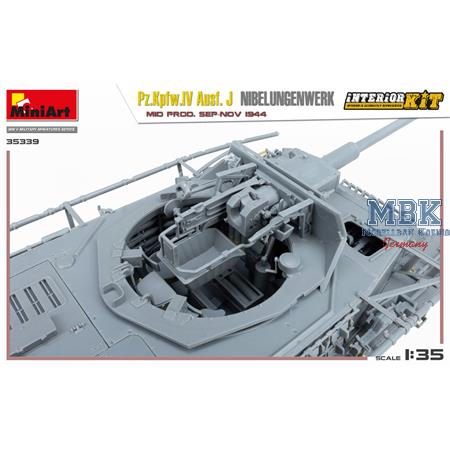
- Highly detailed kit with complete interior like engine, full ammunition, driver's and fighting compartment, turret interior
- workable chains included
- All hatches can be displayed open or closed
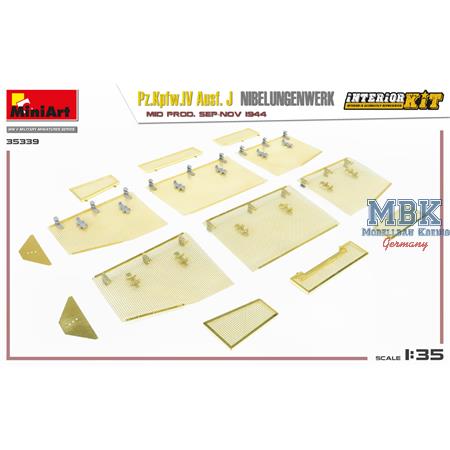
- Including photo-etched parts
- Including transparent parts
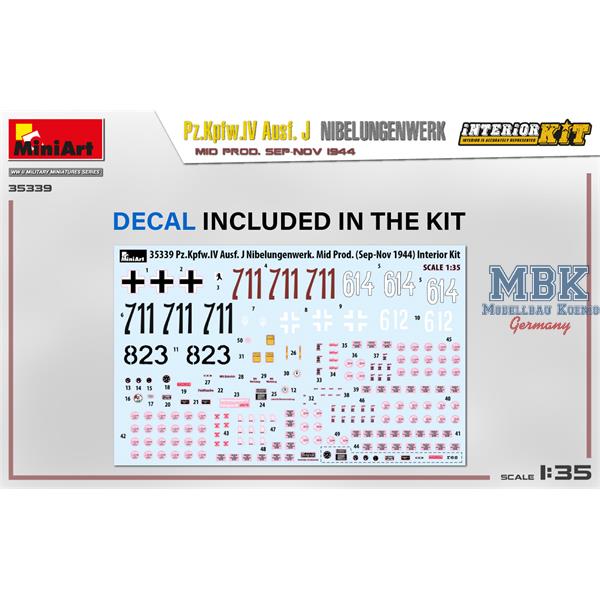
- Decals for four variants
- not built/not painted
- Paint and glue not included
| MiniArt offers a whole range of Panzerkampfwagen IV, which you can purchase here (if available): | |
| with interior: | without interior: |
|
|
The Panzerkampfwagen IV Ausf. H and J models manufactured at the Nibelungenwerk plant in St. Valentin were among the final and most capable production variants of this proven German battle tank. From 1944 onwards, the Nibelungenwerk became the primary production site for the Panzer IV; following the conversion of other facilities to different models, it eventually became virtually the sole manufacturer of the final production vehicles. In total, several thousand Panzer IVs were built there, accounting for more than half of all vehicles of this type ever produced.
The Ausf. H entered production in the spring of 1943, featuring frontal armor reinforced to 80 mm and factory-fitted *Schürzen* (side skirts) on the hull and turret, which provided additional protection against anti-tank rifles and shaped-charge projectiles. It was armed with the proven 7.5 cm KwK 40 L/48, one of the most effective German tank guns of the war. Propulsion was provided by the liquid-cooled Maybach HL 120 TRM V12 gasoline engine, delivering 300 hp and accelerating the approximately 25-ton tank to a top speed of around 38 km/h. Numerous detailed improvements were made during the production run, including reinforced final drives, cast running-gear components, and the application of *Zimmerit*—a magnetic anti-mine coating—though the latter practice was discontinued in September 1944.
The Ausf. J, introduced in early 1944, marked the final production version of the Panzer IV. Outwardly, it initially differed little from the Ausf. H, yet it was the result of numerous simplifications intended to facilitate faster and more cost-effective manufacturing. The most notable change was the removal of the electric turret traverse mechanism in favor of a purely manual traversing system. The space freed up by this modification was utilized for an additional fuel tank, thereby increasing the vehicle's operational range. As production continued, further components were eliminated or simplified without significantly altering the vehicle's fundamental combat effectiveness. Its armament, engine, and armor remained largely unchanged.
Panzer IV models H and J, manufactured at the Nibelungenwerk, saw action on nearly every front of the war—from the Eastern Front, Italy, and Normandy to the final battles in Hungary and on German soil—starting in 1943 and 1944, respectively. Despite their considerable weight and limited scope for further development compared to modern opposing armor, the design proved its worth right up to the end of the war. The vehicles produced at the Nibelungenwerk, in particular, stand today as symbols of the German armaments industry's late-war production efforts; facing mounting material shortages and Allied air superiority, the industry strove to maintain Panzer IV production until the very last days of the conflict.
Customer Reviews 3
Write now your personal experience with this article and help others with their purchase decision.
