Bandai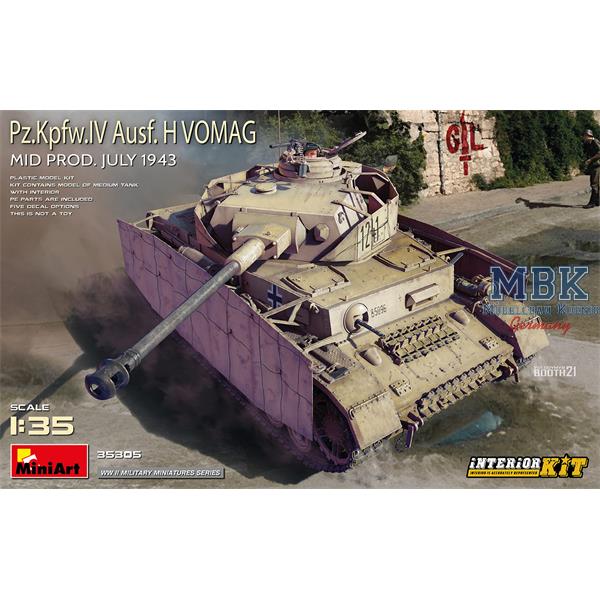
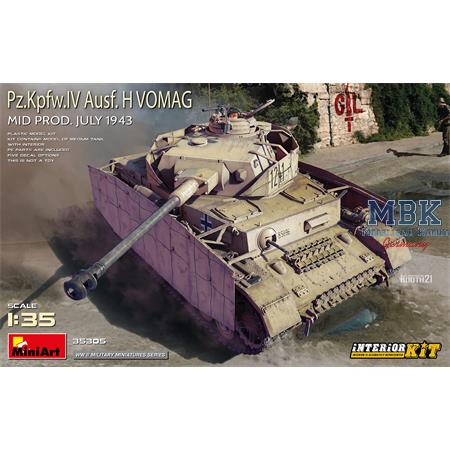

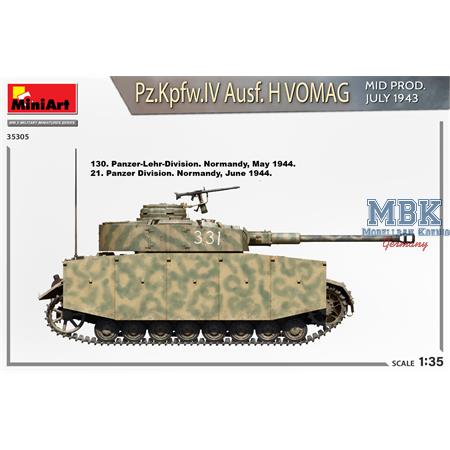
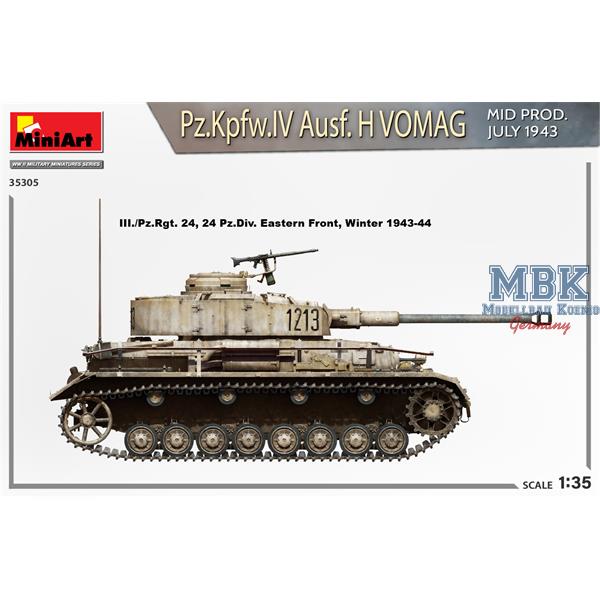
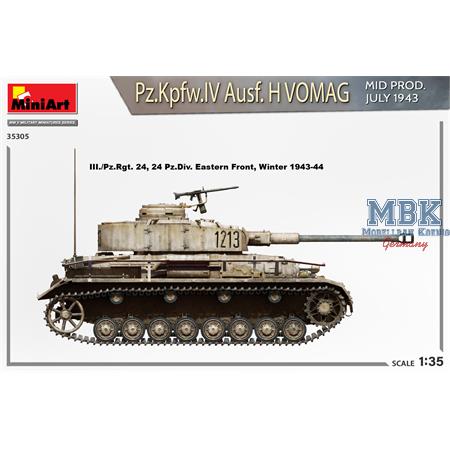
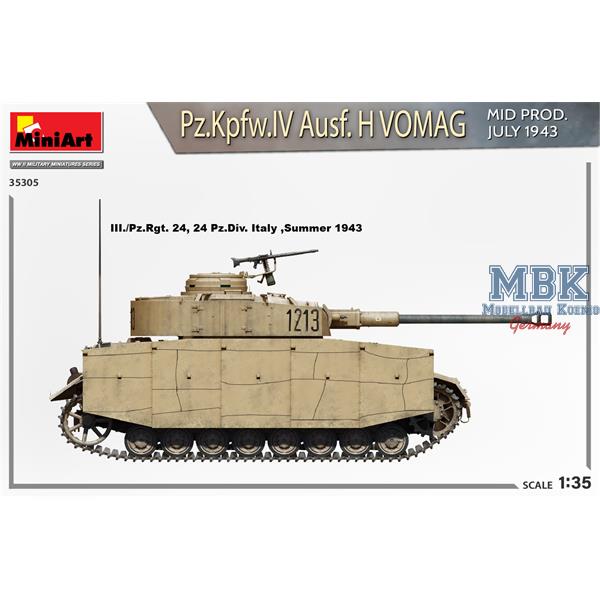
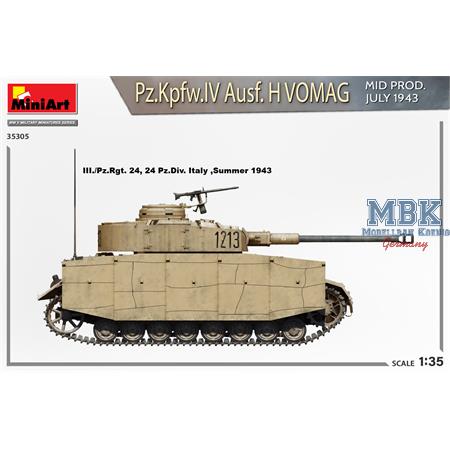
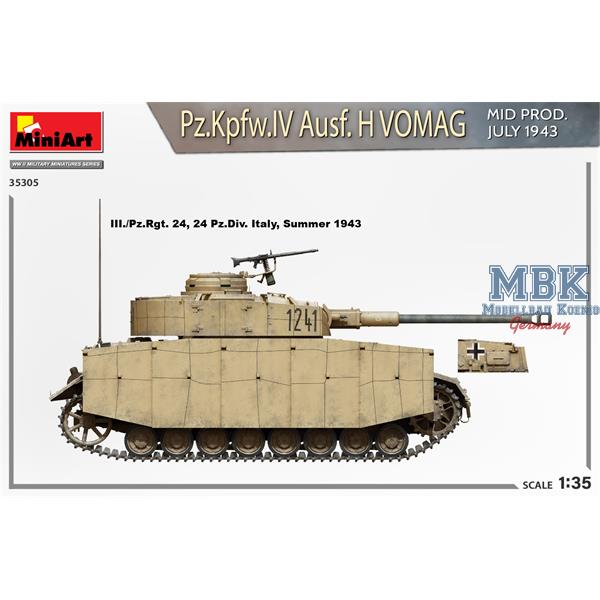
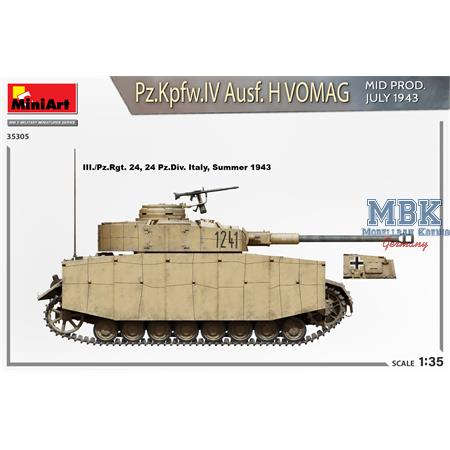

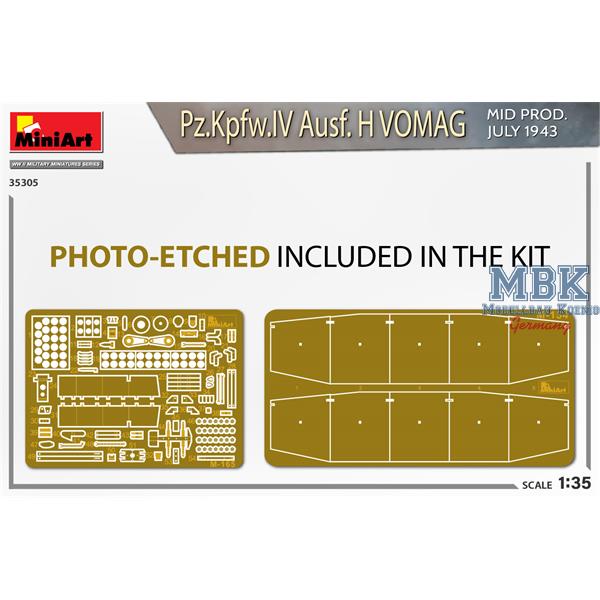


Pz.Kpfw.IV Ausf. H Vomag. Mid Prod. (July 1943)
Item Number:
MA35305
MA35305
Manufacturer
MINIART
MINIART
Scale:
1:35
1:35
Plastic model kit for a Pz.Kpfw.IV Ausf. H Vomag. Mid Prod. (July 1943)
INTERIOR KIT
The Panzerkampfwagen IV Ausf. H, manufactured by VOMAG in Plauen, was one of the most formidable mass-produced versions of this proven medium tank. Alongside Krupp-Gruson and Nibelungenwerk, VOMAG was a key manufacturer of the Panzer IV, producing the Ausf. H variant from mid-1943 through 1944. While the vehicles built by VOMAG generally adhered to the standard production specifications, they—like those from other manufacturers—exhibited minor design variations depending on the specific production period and batch.
A defining feature of the Ausf. H was its frontal armor, reinforced to 80 mm, which offered significantly better protection than earlier variants. This was complemented by factory-installed side skirts (*Schürzen*) on the turret and hull, enhancing resistance against anti-tank rifles and shaped-charge weapons. The main armament was the proven 7.5 cm KwK 40 L/48 gun; thanks to its high penetration capability, it posed a serious threat to most Allied tanks at medium combat ranges. Propulsion was provided by the Maybach HL 120 TRM—a liquid-cooled, 12-cylinder gasoline engine with a displacement of 11.9 liters and an output of 300 hp. This engine, noted for its high reliability, accelerated the approximately 25-ton tank to a top speed of around 38 km/h.
Over the course of production, VOMAG implemented numerous modifications aimed at both improving the vehicle and simplifying the manufacturing process. These included revised running gear components, simplified mounting brackets, new exhaust systems, and the application of *Zimmerit* anti-magnetic coating starting in autumn 1943—a practice that was discontinued in September 1944. At the same time, individual components were gradually simplified to save material and maintain production output despite growing raw material shortages and Allied air raids.
The Panzer IV Ausf. H tanks manufactured by VOMAG saw action on all major fronts, including the Eastern Front, Italy, and Normandy, as well as during the fighting in the Ardennes and Hungary. Together with vehicles from the Nibelungenwerk and Krupp-Gruson, they formed the backbone of German armored units during the second half of the war. The continuous production modifications make VOMAG vehicles particularly interesting to historians and modelers today, as numerous small details often allow for the precise determination of the production period and, in some cases, even the manufacturer.
INTERIOR KIT
- 1:35 scale
- Highly detailed kit with complete interior like engine, full ammunition, driver's and fighting compartment, turret interior
- workable tracks included
- All hatches can be displayed open or closed
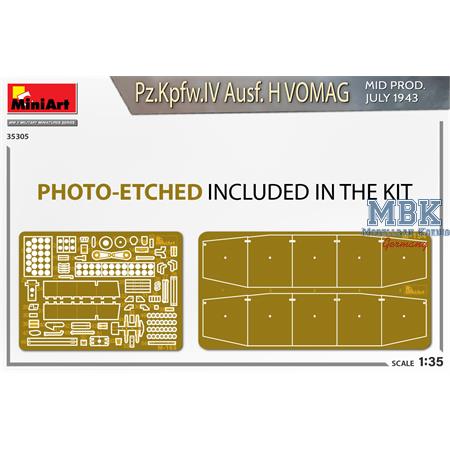
- Including photo-etched parts
- Including transparent parts
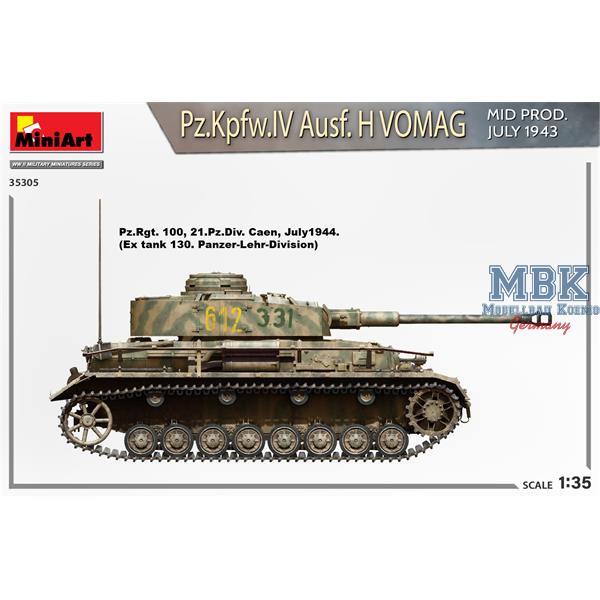
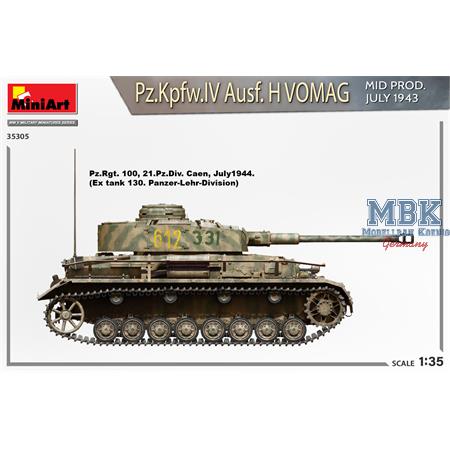
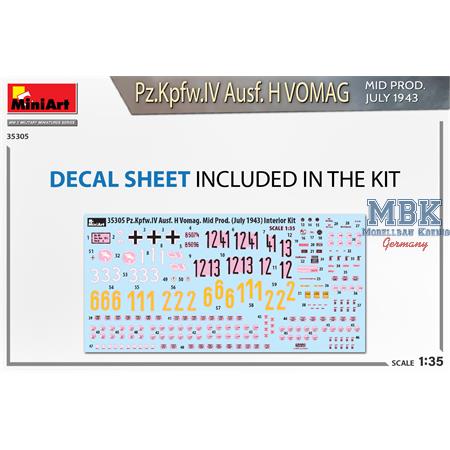
- Decals for five variants
- not built/not painted
- Paint and glue not included
| MiniArt offers a whole range of Panzerkampfwagen IV, which you can purchase here (if available): | |
| with interior: | without interior: |
|
|
The Panzerkampfwagen IV Ausf. H, manufactured by VOMAG in Plauen, was one of the most formidable mass-produced versions of this proven medium tank. Alongside Krupp-Gruson and Nibelungenwerk, VOMAG was a key manufacturer of the Panzer IV, producing the Ausf. H variant from mid-1943 through 1944. While the vehicles built by VOMAG generally adhered to the standard production specifications, they—like those from other manufacturers—exhibited minor design variations depending on the specific production period and batch.
A defining feature of the Ausf. H was its frontal armor, reinforced to 80 mm, which offered significantly better protection than earlier variants. This was complemented by factory-installed side skirts (*Schürzen*) on the turret and hull, enhancing resistance against anti-tank rifles and shaped-charge weapons. The main armament was the proven 7.5 cm KwK 40 L/48 gun; thanks to its high penetration capability, it posed a serious threat to most Allied tanks at medium combat ranges. Propulsion was provided by the Maybach HL 120 TRM—a liquid-cooled, 12-cylinder gasoline engine with a displacement of 11.9 liters and an output of 300 hp. This engine, noted for its high reliability, accelerated the approximately 25-ton tank to a top speed of around 38 km/h.
Over the course of production, VOMAG implemented numerous modifications aimed at both improving the vehicle and simplifying the manufacturing process. These included revised running gear components, simplified mounting brackets, new exhaust systems, and the application of *Zimmerit* anti-magnetic coating starting in autumn 1943—a practice that was discontinued in September 1944. At the same time, individual components were gradually simplified to save material and maintain production output despite growing raw material shortages and Allied air raids.
The Panzer IV Ausf. H tanks manufactured by VOMAG saw action on all major fronts, including the Eastern Front, Italy, and Normandy, as well as during the fighting in the Ardennes and Hungary. Together with vehicles from the Nibelungenwerk and Krupp-Gruson, they formed the backbone of German armored units during the second half of the war. The continuous production modifications make VOMAG vehicles particularly interesting to historians and modelers today, as numerous small details often allow for the precise determination of the production period and, in some cases, even the manufacturer.
Customer Reviews 2
Write now your personal experience with this article and help others with their purchase decision.