 Bandai
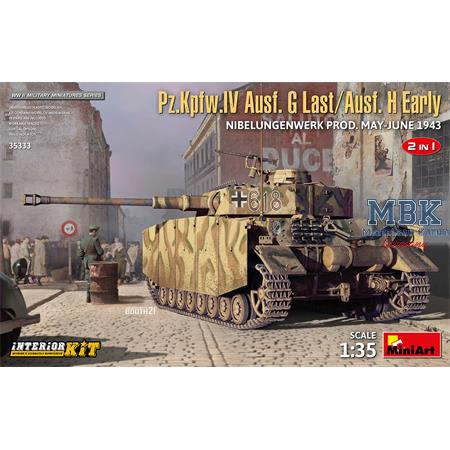
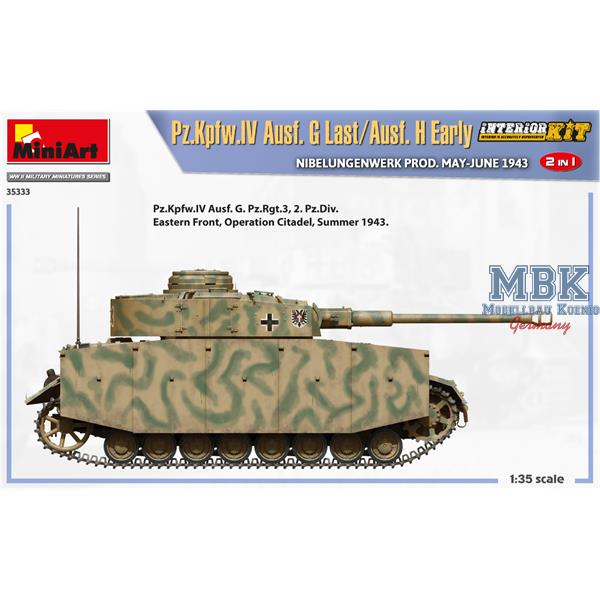
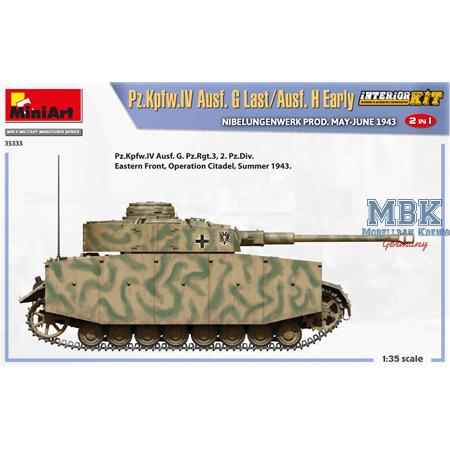
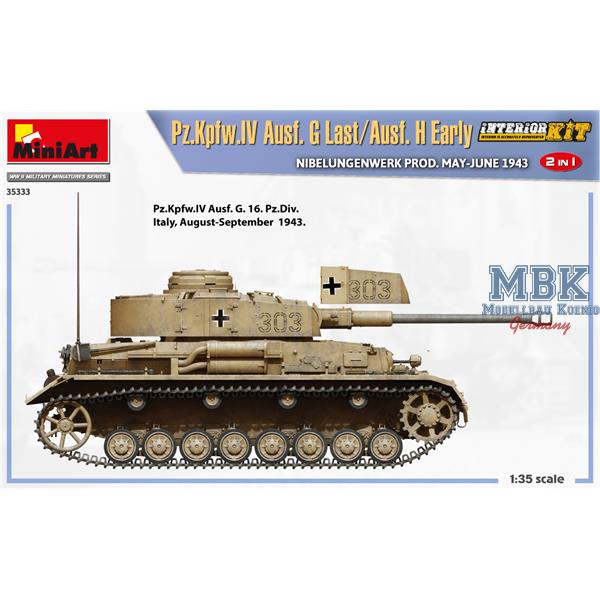

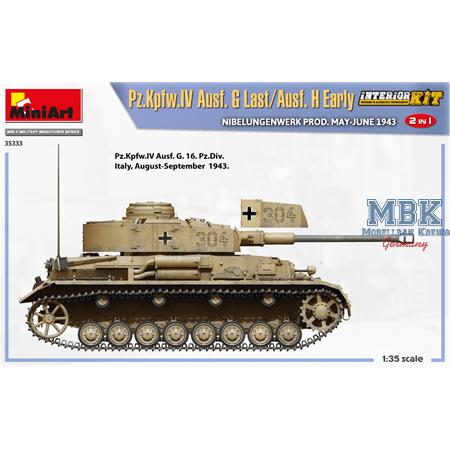
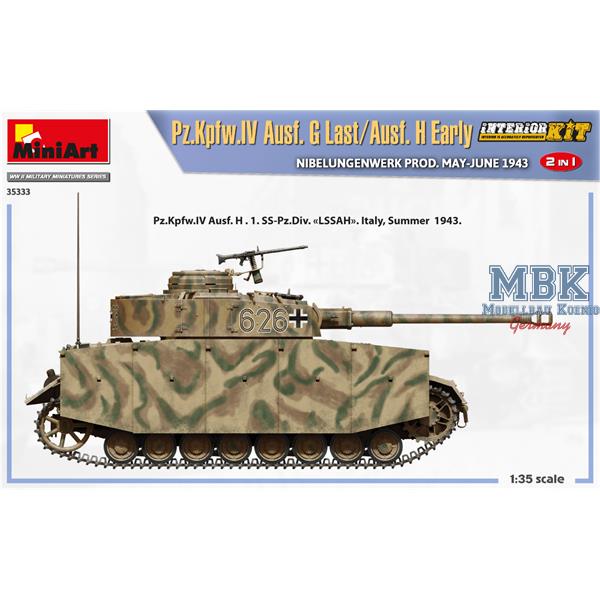
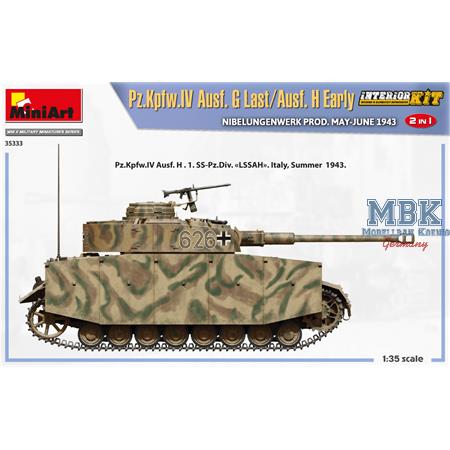
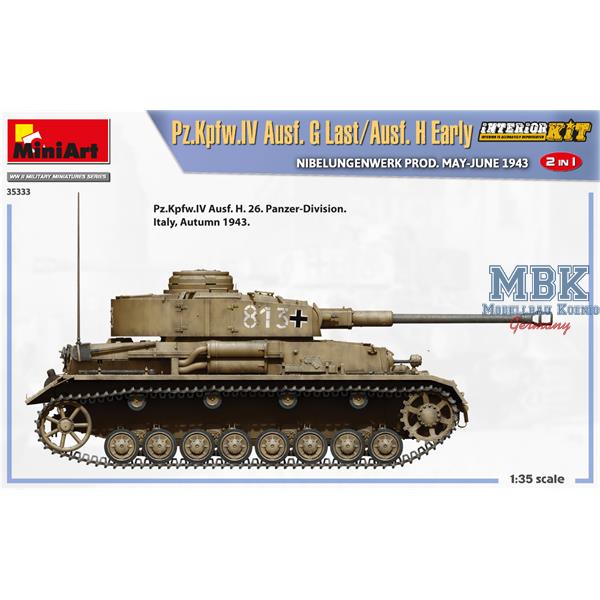
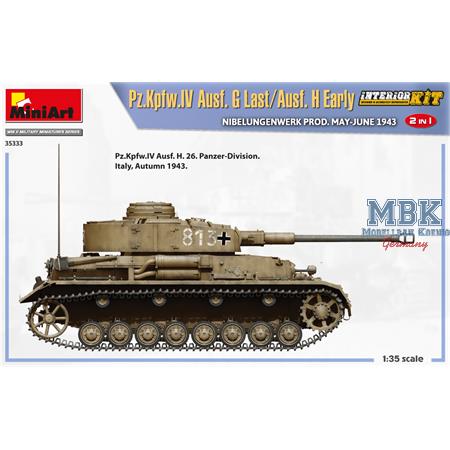
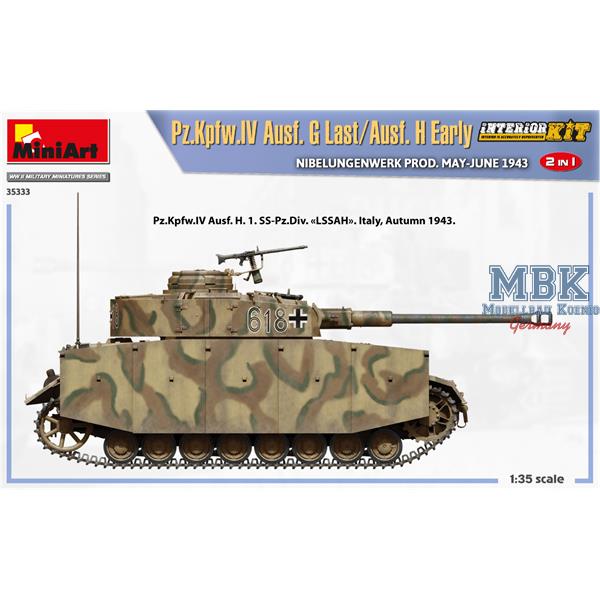
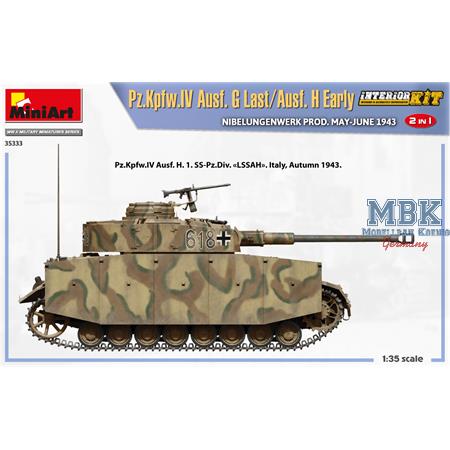
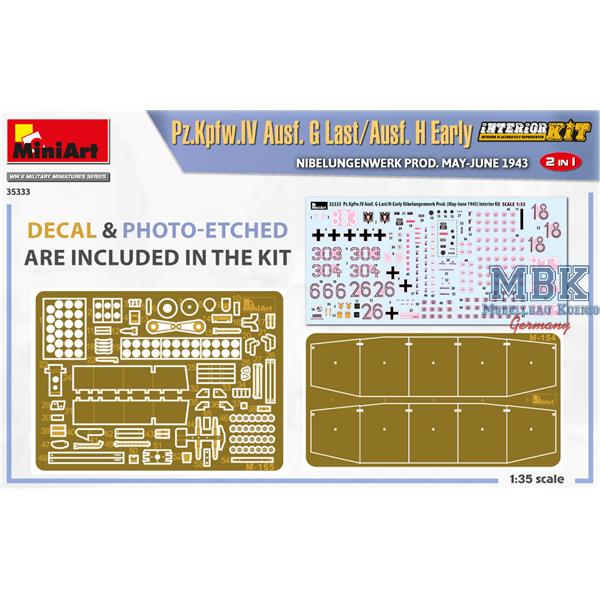
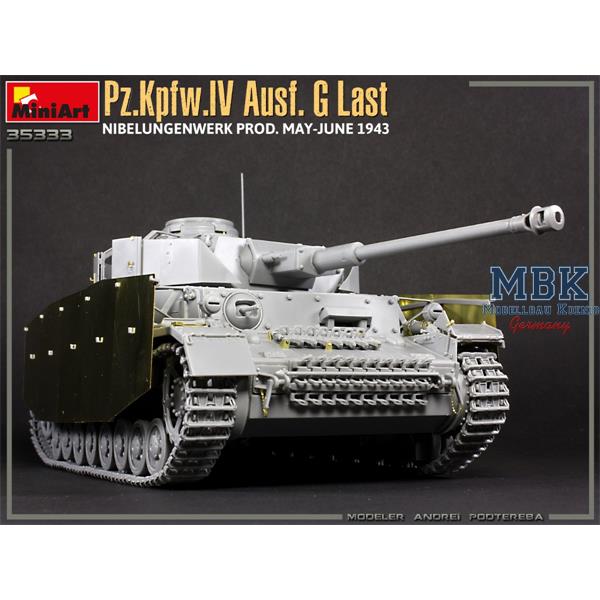
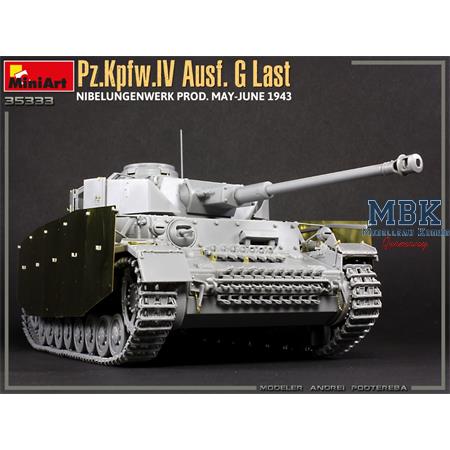
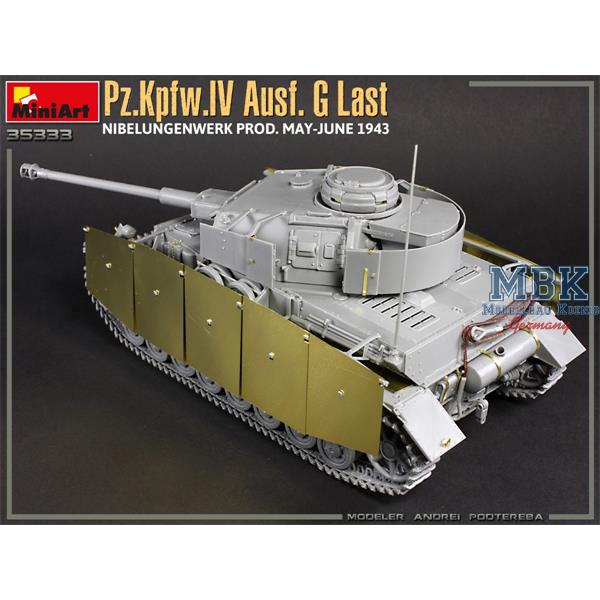
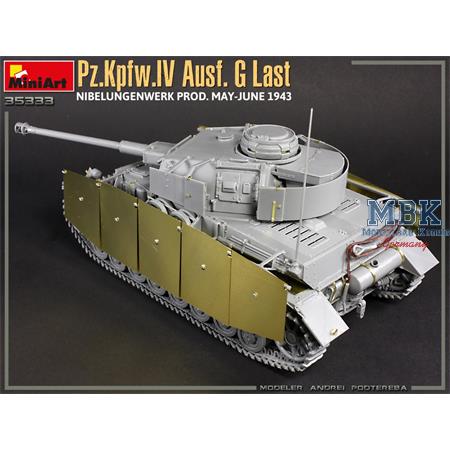
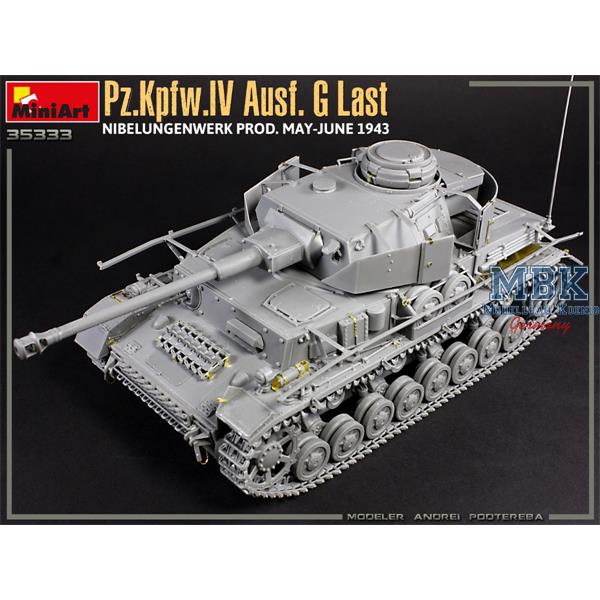
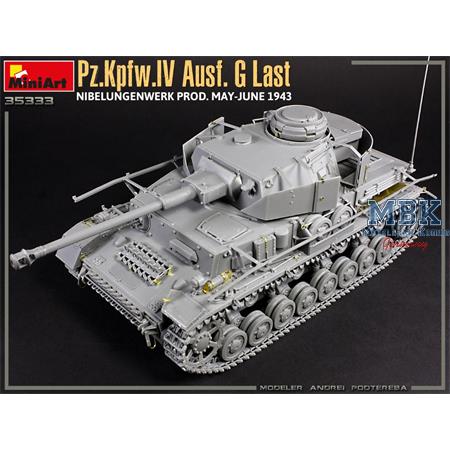

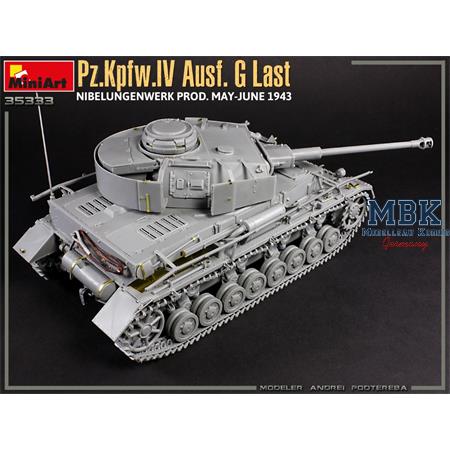


Pz.Kpfw.IV Ausf.G-Last/H-Early Nibelungenwerk 2in1
Item Number:
MA35333
MA35333
Manufacturer
MINIART
MINIART
Scale:
1:35
1:35
58.50 €
VAT included plus shipping and handling
Unfortunately sold out at the moment
No new delivery date known, if necessary please activate stock alert
Plastic model kit for a late Pz.Kpfw.IV Ausf.G or early H from the Nibelungen factory (May/June 1943)
complete interior
From 1942 onwards, the Nibelungenwerk plant in St. Valentin, Austria, developed into the largest and most productive manufacturing site for the Panzerkampfwagen IV. It produced the Ausführung (variant) G, H, and J models, which ranked among the most important and potent versions of this proven medium battle tank. While the Ausführung G was initially manufactured concurrently at several plants, the Nibelungenwerk increasingly took over primary production for the H and J variants, delivering the majority of all newly built Panzerkampfwagen IVs by the end of the war.
The Ausführung G marked a decisive shift, transforming the Panzer IV—originally conceived as a support vehicle—into a capable battle tank. Initially equipped with the 7.5 cm KwK 40 L/43 gun, it later received the longer, more powerful 7.5 cm KwK 40 L/48, which was retained in the subsequent H and J variants. The liquid-cooled, 300 hp Maybach HL 120 TRM twelve-cylinder gasoline engine provided a top speed of approximately 38 to 40 km/h, ensuring good mobility despite the vehicle's increasing weight. Numerous improvements were introduced during production, including reinforced frontal armor plating, revised vision and protection systems, and various measures to streamline manufacturing.
With the Ausführung H, the Panzerkampfwagen IV reached its peak level of protection. Frontal armor was increased to 80 mm, and the vehicle was fitted as standard with *Schürzen* (side skirts) on the turret and hull, offering additional protection against shaped-charge weapons and anti-tank rifles in particular. At the same time, reinforced final drives and numerous detailed improvements were introduced to maintain the vehicle's reliability, despite its weight having risen to approximately 25 tons. From the autumn of 1943 onwards, the vehicles also received a *Zimmerit* coating, the application of which was discontinued in September 1944.
The Ausführung J (Variant J), produced from mid-1944, represented the final stage of development for the Panzerkampfwagen IV. Its focus was less on increasing combat power than on simplifying production amidst the increasingly difficult conditions facing the German wartime economy. The electric turret traverse mechanism was eliminated in favor of a manual traversing system, thereby creating space for an additional fuel tank. As production continued, numerous components were simplified or omitted, including various vision ports, brackets, and items of equipment. Armament, armor, and engine specifications, however, remained largely unchanged, allowing the Ausführung J to retain its firepower until the end of the war.
The Panzerkampfwagen IV variants G, H, and J manufactured at the Nibelungenwerk saw action on almost every European battlefront—from the Eastern Front, Italy, and Normandy to the fighting in Hungary and on German soil. Despite the growing technical superiority of Allied tanks, the Panzer IV proved to be one of the most important German battle tanks of the Second World War, thanks to its reliable design, effective 7.5 cm gun, and continuous development. The vehicles produced at the Nibelungenwerk also exemplify the shift in German arms production; faced with growing material shortages and Allied air superiority, manufacturers increasingly relied on simplifying production processes without fundamentally compromising the vehicle's operational capability.
complete interior
- 1:35 scale
- Highly detailed kit with complete interior
- movable tracks included
- All hatches can be displayed open or closed
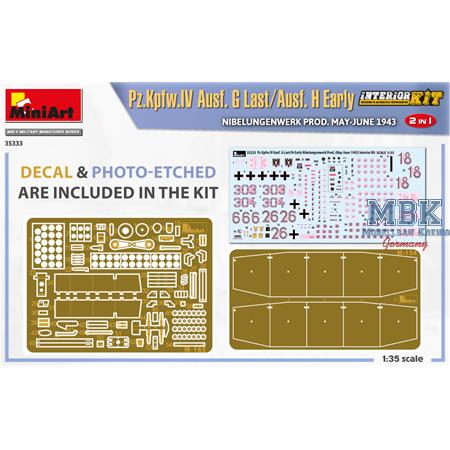
- Including photo-etched parts
- Including transparent parts
- Decals for six variants
- not built/not painted
- Paint and glue not included
| MiniArt offers a whole range of Panzerkampfwagen IV, which you can purchase here (if available): | |
| with interior: | without interior: |
|
|
From 1942 onwards, the Nibelungenwerk plant in St. Valentin, Austria, developed into the largest and most productive manufacturing site for the Panzerkampfwagen IV. It produced the Ausführung (variant) G, H, and J models, which ranked among the most important and potent versions of this proven medium battle tank. While the Ausführung G was initially manufactured concurrently at several plants, the Nibelungenwerk increasingly took over primary production for the H and J variants, delivering the majority of all newly built Panzerkampfwagen IVs by the end of the war.
The Ausführung G marked a decisive shift, transforming the Panzer IV—originally conceived as a support vehicle—into a capable battle tank. Initially equipped with the 7.5 cm KwK 40 L/43 gun, it later received the longer, more powerful 7.5 cm KwK 40 L/48, which was retained in the subsequent H and J variants. The liquid-cooled, 300 hp Maybach HL 120 TRM twelve-cylinder gasoline engine provided a top speed of approximately 38 to 40 km/h, ensuring good mobility despite the vehicle's increasing weight. Numerous improvements were introduced during production, including reinforced frontal armor plating, revised vision and protection systems, and various measures to streamline manufacturing.
With the Ausführung H, the Panzerkampfwagen IV reached its peak level of protection. Frontal armor was increased to 80 mm, and the vehicle was fitted as standard with *Schürzen* (side skirts) on the turret and hull, offering additional protection against shaped-charge weapons and anti-tank rifles in particular. At the same time, reinforced final drives and numerous detailed improvements were introduced to maintain the vehicle's reliability, despite its weight having risen to approximately 25 tons. From the autumn of 1943 onwards, the vehicles also received a *Zimmerit* coating, the application of which was discontinued in September 1944.
The Ausführung J (Variant J), produced from mid-1944, represented the final stage of development for the Panzerkampfwagen IV. Its focus was less on increasing combat power than on simplifying production amidst the increasingly difficult conditions facing the German wartime economy. The electric turret traverse mechanism was eliminated in favor of a manual traversing system, thereby creating space for an additional fuel tank. As production continued, numerous components were simplified or omitted, including various vision ports, brackets, and items of equipment. Armament, armor, and engine specifications, however, remained largely unchanged, allowing the Ausführung J to retain its firepower until the end of the war.
The Panzerkampfwagen IV variants G, H, and J manufactured at the Nibelungenwerk saw action on almost every European battlefront—from the Eastern Front, Italy, and Normandy to the fighting in Hungary and on German soil. Despite the growing technical superiority of Allied tanks, the Panzer IV proved to be one of the most important German battle tanks of the Second World War, thanks to its reliable design, effective 7.5 cm gun, and continuous development. The vehicles produced at the Nibelungenwerk also exemplify the shift in German arms production; faced with growing material shortages and Allied air superiority, manufacturers increasingly relied on simplifying production processes without fundamentally compromising the vehicle's operational capability.
Customer Reviews 3
Write now your personal experience with this article and help others with their purchase decision.
