Bandai



You save: 41 %
instead of: 16.95 €*
Now: 9.95 €*
VAT included plus shipping and handling
Sonderangebot
More than 5 Pieces available
Shipping 1 - 4 days
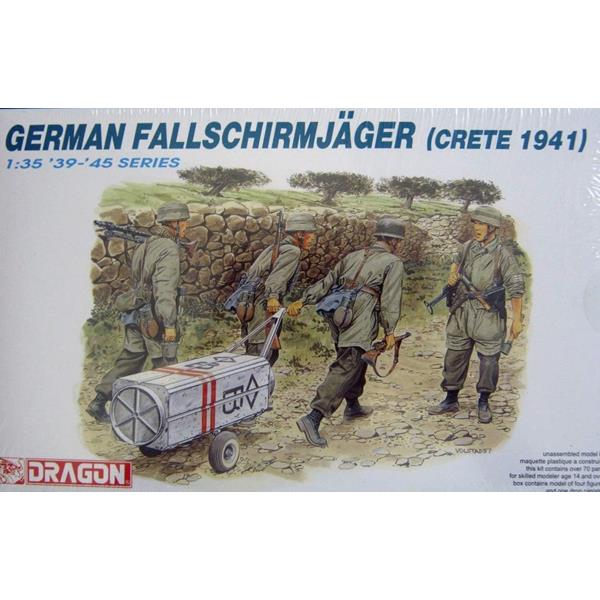
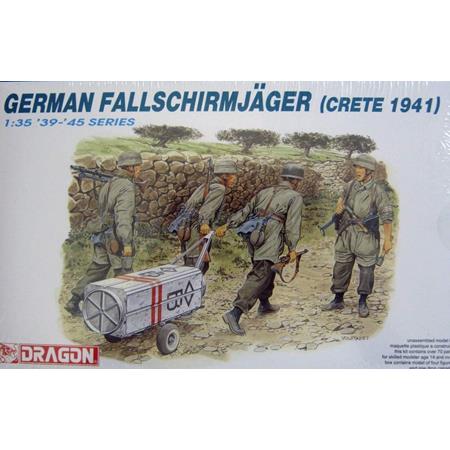
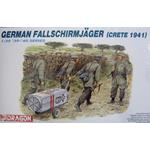
Plastic model kit of German paratroopers during Operation Mercury (Operation Merkur) on Crete in 1941
German airborne forces consisted primarily of units from the 7th Air Division, supported by mountain troops (Gebirgsjäger) from the 5th Mountain Division. The paratroopers were dropped from Ju 52 transport aircraft, while cargo gliders and later sea transports brought in additional troops and equipment.
The attack began on the morning of May 20, 1941. Some paratroopers landed directly under heavy defensive fire from British, Greek, Australian, and New Zealand defenders. Heavy fighting occurred, particularly around Maleme. Although the Germans initially suffered high casualties—with many paratroopers killed or wounded during the landing itself—they ultimately succeeded in securing the Maleme airfield. This allowed German reinforcements to be flown in.
Over the following days, Allied troops were increasingly pushed back. German mountain troops and further reinforcements arrived on Crete to support the paratroopers. By the end of May, the Allied defense had largely collapsed; British and Commonwealth troops were either evacuated via Sfakia or taken prisoner. By June 1, 1941, organized Allied resistance had ended.
Particularly characteristic of the paratroopers on Crete were their field-grey uniforms and distinctive helmets—often fitted with camouflage covers or foliage—as well as weaponry and equipment simplified for airborne deployment. Heavy weapons and additional ammunition had to be retrieved from airdropped containers after landing. Weapons employed included the Karabiner 98k, MP 40, MG 34, MG 42, mortars, and light infantry guns.
While the Battle of Crete was a German victory, it came at an exceptionally high cost. German paratroopers suffered thousands of casualties, including both killed and wounded. These staggering losses led to the decision to largely avoid large-scale airborne operations of this kind in the future; consequently, Crete is considered the last major German airborne operation of World War II.
- 1:35 scale
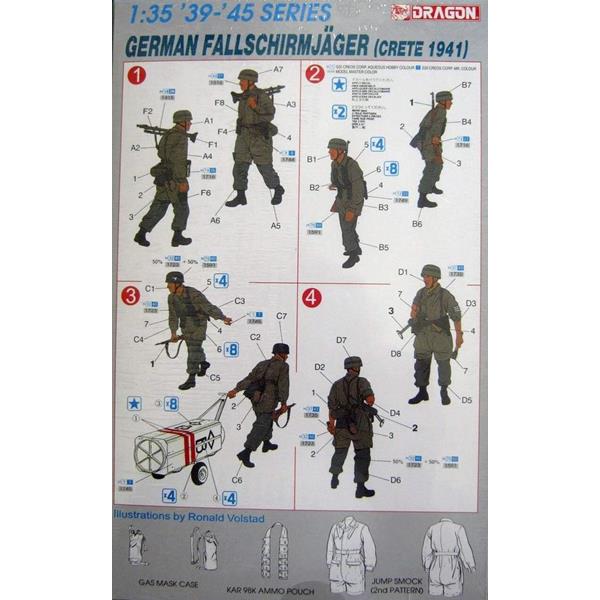
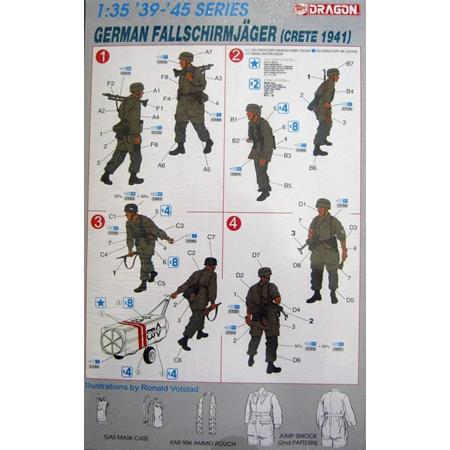
- 4 figures
- Air-drop containers included
- Includes weapons and personal equipment
- Unassembled and unpainted
- Paint and glue not included
German airborne forces consisted primarily of units from the 7th Air Division, supported by mountain troops (Gebirgsjäger) from the 5th Mountain Division. The paratroopers were dropped from Ju 52 transport aircraft, while cargo gliders and later sea transports brought in additional troops and equipment.
The attack began on the morning of May 20, 1941. Some paratroopers landed directly under heavy defensive fire from British, Greek, Australian, and New Zealand defenders. Heavy fighting occurred, particularly around Maleme. Although the Germans initially suffered high casualties—with many paratroopers killed or wounded during the landing itself—they ultimately succeeded in securing the Maleme airfield. This allowed German reinforcements to be flown in.
Over the following days, Allied troops were increasingly pushed back. German mountain troops and further reinforcements arrived on Crete to support the paratroopers. By the end of May, the Allied defense had largely collapsed; British and Commonwealth troops were either evacuated via Sfakia or taken prisoner. By June 1, 1941, organized Allied resistance had ended.
Particularly characteristic of the paratroopers on Crete were their field-grey uniforms and distinctive helmets—often fitted with camouflage covers or foliage—as well as weaponry and equipment simplified for airborne deployment. Heavy weapons and additional ammunition had to be retrieved from airdropped containers after landing. Weapons employed included the Karabiner 98k, MP 40, MG 34, MG 42, mortars, and light infantry guns.
While the Battle of Crete was a German victory, it came at an exceptionally high cost. German paratroopers suffered thousands of casualties, including both killed and wounded. These staggering losses led to the decision to largely avoid large-scale airborne operations of this kind in the future; consequently, Crete is considered the last major German airborne operation of World War II.
Customer Reviews 5
Write now your personal experience with this article and help others with their purchase decision.