Bandai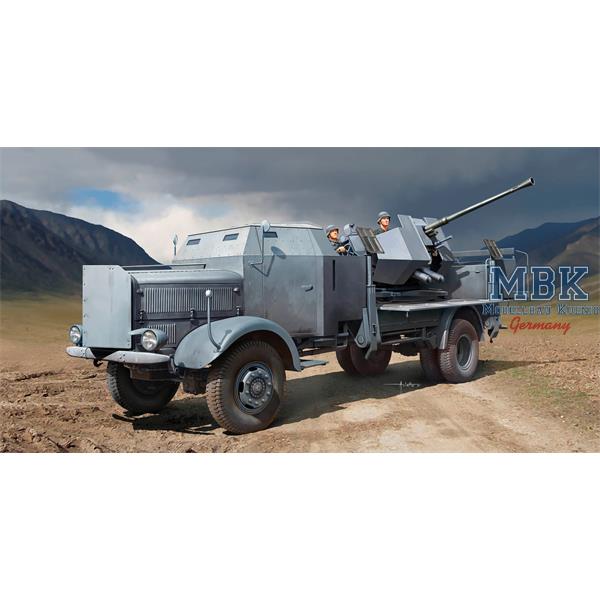
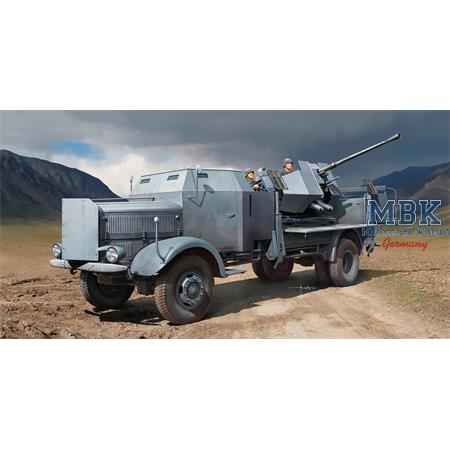
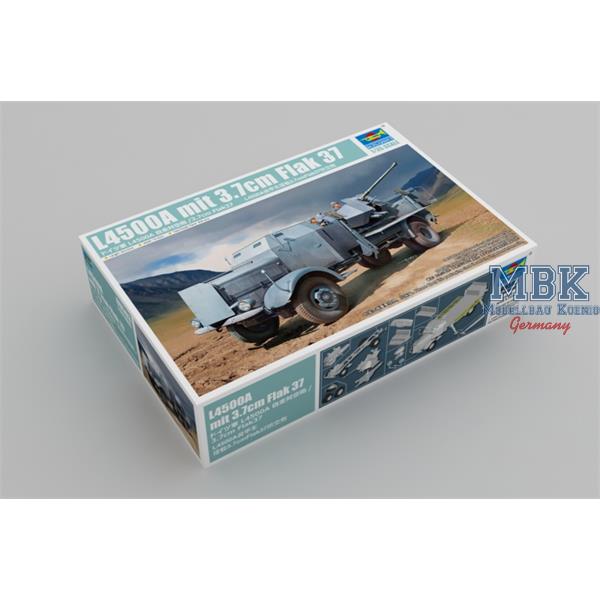
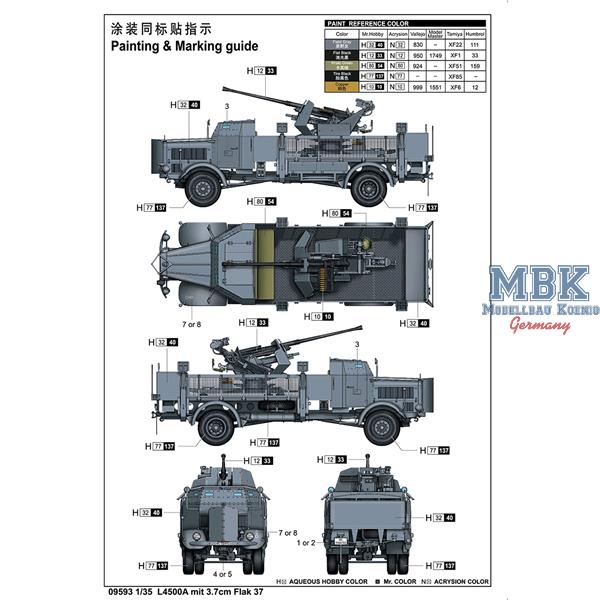
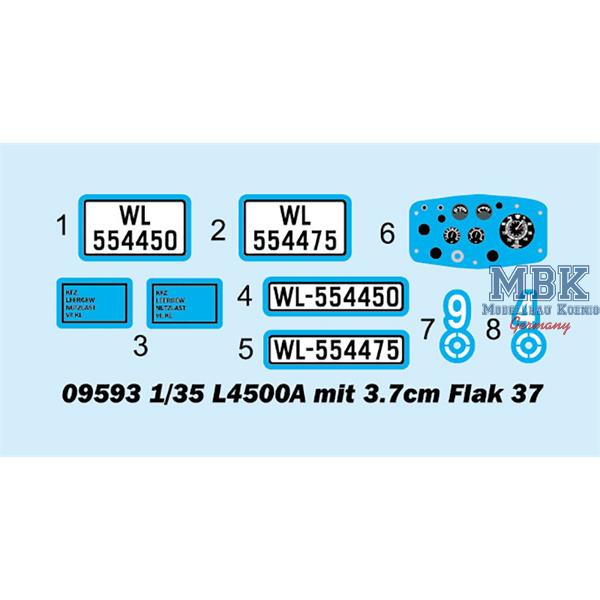
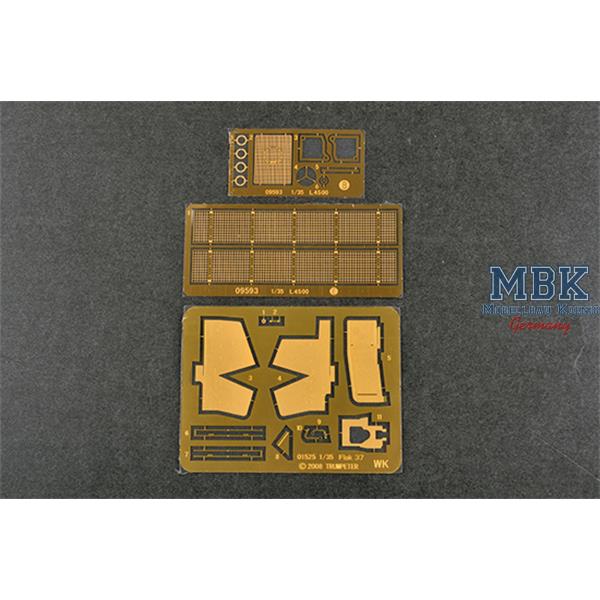
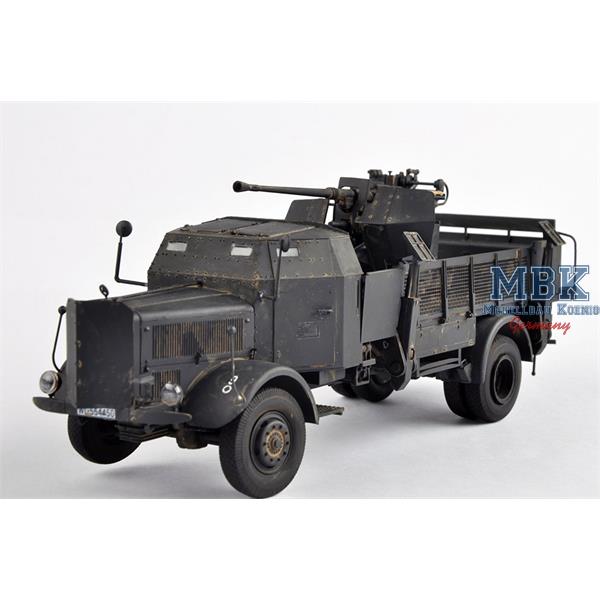
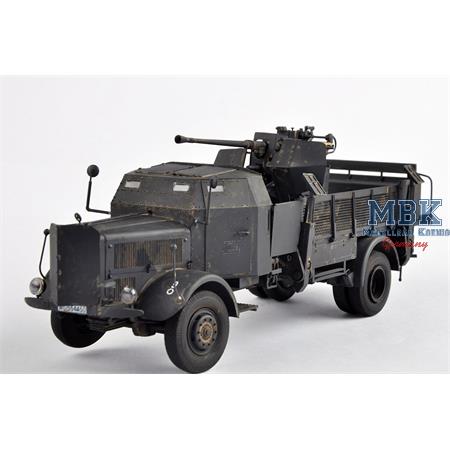
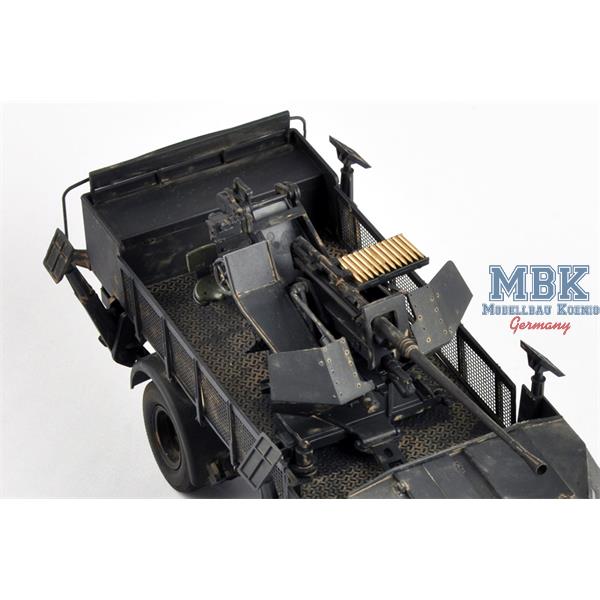
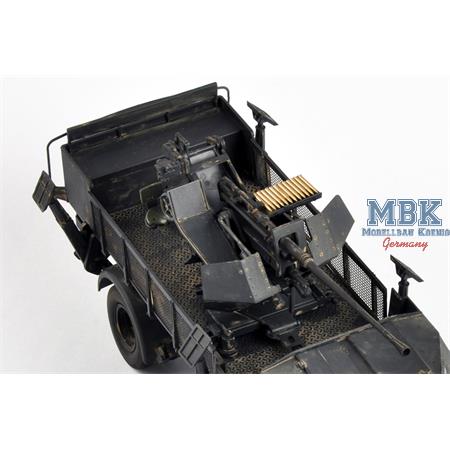
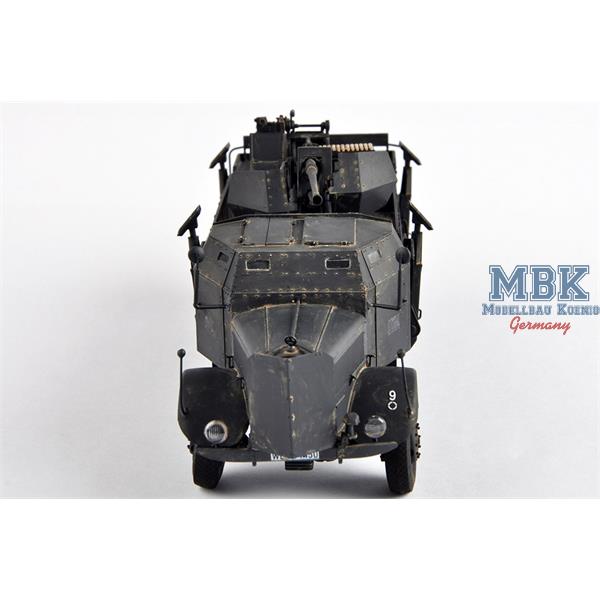
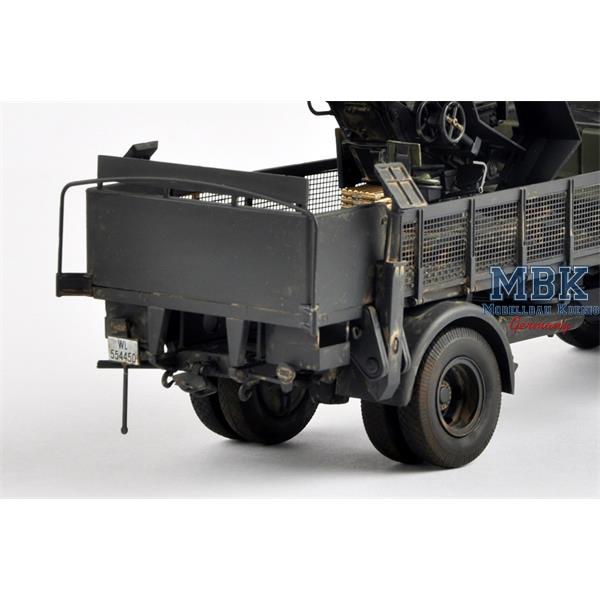
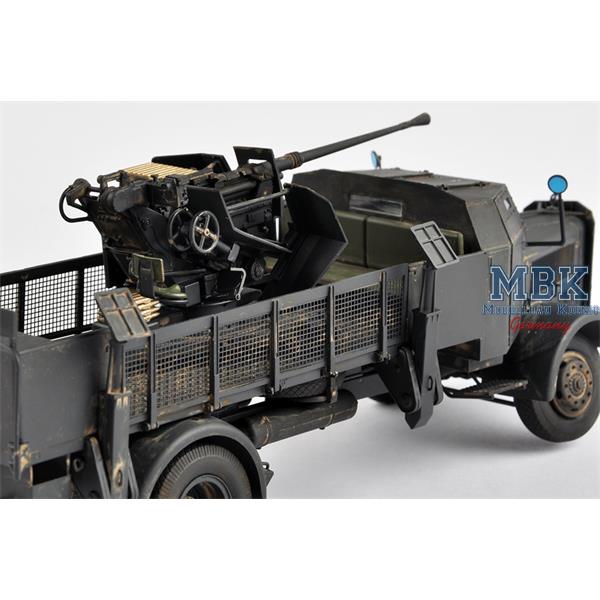
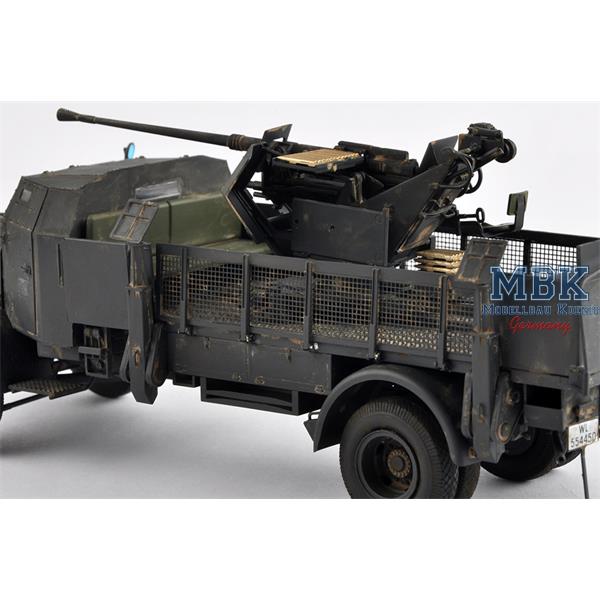



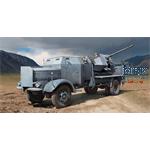
Complete kit for building a Mercedes L4500 with armored cab and 3.7 cm FlaK 37
The Mercedes-Benz L4500A equipped with the 3.7 cm Flak 37 was a mobile anti-aircraft platform used by the German Wehrmacht from 1943 onwards to protect motorized units against low-flying Allied aircraft. It was based on the Mercedes-Benz L4500A, a heavy, all-terrain truck; its high payload capacity and robust all-wheel-drive system enabled the mounting of the more powerful 3.7 cm Flak 37 gun. These vehicles belonged to the family of so-called *Flakwagen* (anti-aircraft trucks) and were built on chassis from both Mercedes-Benz and Büssing-NAG. The official designation was "Heavy all-terrain truck (4.5 t) Mercedes-Benz L4500A as *Flakwagen* for 3.7 cm Flak 37 (Kfz. 410)." Unlike improvised field modifications, these were factory-prepared or standardized conversions featuring an armored driver's cab and a specially adapted gun platform. Nevertheless, total production numbers remained comparatively low.
The vehicle utilized the Mercedes-Benz L4500A chassis—a heavy truck featuring all-wheel drive, a 4.5-ton payload capacity, and a water-cooled, six-cylinder OM 67/4 diesel engine producing 112 hp (82 kW). Equipped with a five-speed transmission and a low-range transfer case for off-road use, the vehicle achieved a top speed of approximately 65 km/h and demonstrated good off-road capability, even on unpaved surfaces. Many of these anti-aircraft trucks were fitted with an armored driver's cab featuring armor plating 10 to 14 mm thick, designed to protect the driver and co-driver from infantry fire and shrapnel. Behind the cab was a reinforced firing platform featuring folding side panels and extendable outriggers; these safely transferred the recoil forces generated during firing into the ground and enhanced the vehicle's stability.
The primary armament was the 3.7 cm Flak 37, an evolution of the 3.7 cm Flak 36 distinguished primarily by an improved sighting system. Developed by Rheinmetall-Borsig, the weapon fired 37 mm high-explosive and armor-piercing shells at a muzzle velocity of approximately 820 m/s. Its theoretical rate of fire was up to 160 rounds per minute, while a rate of about 80 rounds per minute was achieved under combat conditions. An elevation range of –8° to +85° and a full 360° traverse allowed for engagement of both low-flying aircraft and lightly armored ground targets. Against armored vehicles, special ammunition could penetrate up to 36 mm of armor at short ranges.
The operating crew typically consisted of six to seven soldiers. In addition to the gunner and loaders, the crew included ammunition handlers and the driver. Extra ammunition boxes were stowed beneath the gun platform and on the cargo bed to ensure a steady supply of the eight-round loading clips. Like other German anti-aircraft vehicles, the L4500A was used not only for air defense but frequently for fire support against infantry, lightly fortified positions, or unarmored vehicles. The high firepower of the 3.7 cm Flak proved particularly effective—especially on the Eastern Front and during the fighting in France and Germany—in countering the increasing attacks by Allied fighter-bombers. The Mercedes-Benz L4500A equipped with the 3.7 cm Flak 37 combined the mobility of a heavy, all-terrain truck with the superior range and penetrating power of the 3.7 cm anti-aircraft gun. Compared to vehicles armed with the 2 cm Flakvierling 38, it offered significantly greater impact per hit and a longer effective firing range, albeit at the cost of a lower rate of fire. As a mobile anti-aircraft platform, the vehicle proved to be an effective escort for armored and supply units and is today considered one of the most well-known heavy German anti-aircraft vehicles of World War II.
- 1:35 scale
- Dimensions LxW (built): 223.2 x 74.3 mm
- 400+ parts
- Photo-etched parts included
- unbuilt, unpainted
- Paint and glue not included
| Trumpeter has several Mercedes L4500s in its range or will be bringing them onto the market in the future. If already available, you can buy them here: |
The Mercedes-Benz L4500A equipped with the 3.7 cm Flak 37 was a mobile anti-aircraft platform used by the German Wehrmacht from 1943 onwards to protect motorized units against low-flying Allied aircraft. It was based on the Mercedes-Benz L4500A, a heavy, all-terrain truck; its high payload capacity and robust all-wheel-drive system enabled the mounting of the more powerful 3.7 cm Flak 37 gun. These vehicles belonged to the family of so-called *Flakwagen* (anti-aircraft trucks) and were built on chassis from both Mercedes-Benz and Büssing-NAG. The official designation was "Heavy all-terrain truck (4.5 t) Mercedes-Benz L4500A as *Flakwagen* for 3.7 cm Flak 37 (Kfz. 410)." Unlike improvised field modifications, these were factory-prepared or standardized conversions featuring an armored driver's cab and a specially adapted gun platform. Nevertheless, total production numbers remained comparatively low.
The vehicle utilized the Mercedes-Benz L4500A chassis—a heavy truck featuring all-wheel drive, a 4.5-ton payload capacity, and a water-cooled, six-cylinder OM 67/4 diesel engine producing 112 hp (82 kW). Equipped with a five-speed transmission and a low-range transfer case for off-road use, the vehicle achieved a top speed of approximately 65 km/h and demonstrated good off-road capability, even on unpaved surfaces. Many of these anti-aircraft trucks were fitted with an armored driver's cab featuring armor plating 10 to 14 mm thick, designed to protect the driver and co-driver from infantry fire and shrapnel. Behind the cab was a reinforced firing platform featuring folding side panels and extendable outriggers; these safely transferred the recoil forces generated during firing into the ground and enhanced the vehicle's stability.
The primary armament was the 3.7 cm Flak 37, an evolution of the 3.7 cm Flak 36 distinguished primarily by an improved sighting system. Developed by Rheinmetall-Borsig, the weapon fired 37 mm high-explosive and armor-piercing shells at a muzzle velocity of approximately 820 m/s. Its theoretical rate of fire was up to 160 rounds per minute, while a rate of about 80 rounds per minute was achieved under combat conditions. An elevation range of –8° to +85° and a full 360° traverse allowed for engagement of both low-flying aircraft and lightly armored ground targets. Against armored vehicles, special ammunition could penetrate up to 36 mm of armor at short ranges.
The operating crew typically consisted of six to seven soldiers. In addition to the gunner and loaders, the crew included ammunition handlers and the driver. Extra ammunition boxes were stowed beneath the gun platform and on the cargo bed to ensure a steady supply of the eight-round loading clips. Like other German anti-aircraft vehicles, the L4500A was used not only for air defense but frequently for fire support against infantry, lightly fortified positions, or unarmored vehicles. The high firepower of the 3.7 cm Flak proved particularly effective—especially on the Eastern Front and during the fighting in France and Germany—in countering the increasing attacks by Allied fighter-bombers. The Mercedes-Benz L4500A equipped with the 3.7 cm Flak 37 combined the mobility of a heavy, all-terrain truck with the superior range and penetrating power of the 3.7 cm anti-aircraft gun. Compared to vehicles armed with the 2 cm Flakvierling 38, it offered significantly greater impact per hit and a longer effective firing range, albeit at the cost of a lower rate of fire. As a mobile anti-aircraft platform, the vehicle proved to be an effective escort for armored and supply units and is today considered one of the most well-known heavy German anti-aircraft vehicles of World War II.
Suitable Accessories

26.50 €*
Customer Reviews 5
Write now your personal experience with this article and help others with their purchase decision.