Bandai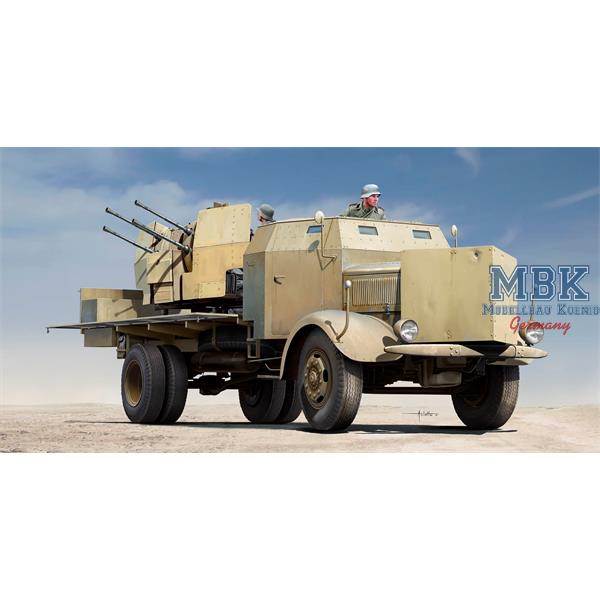
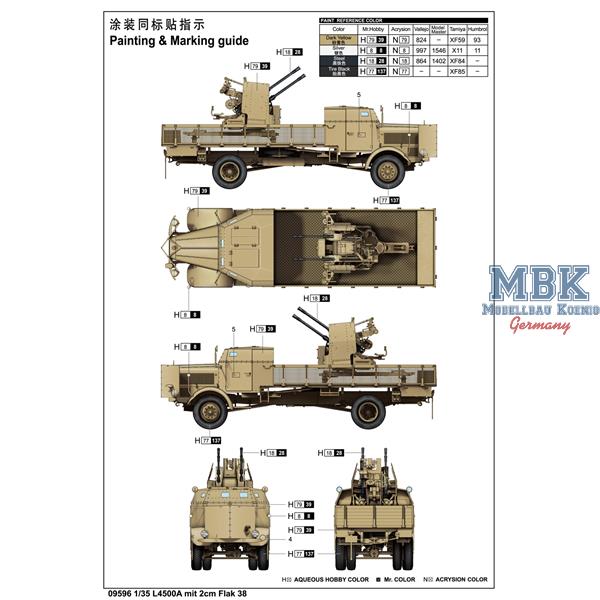
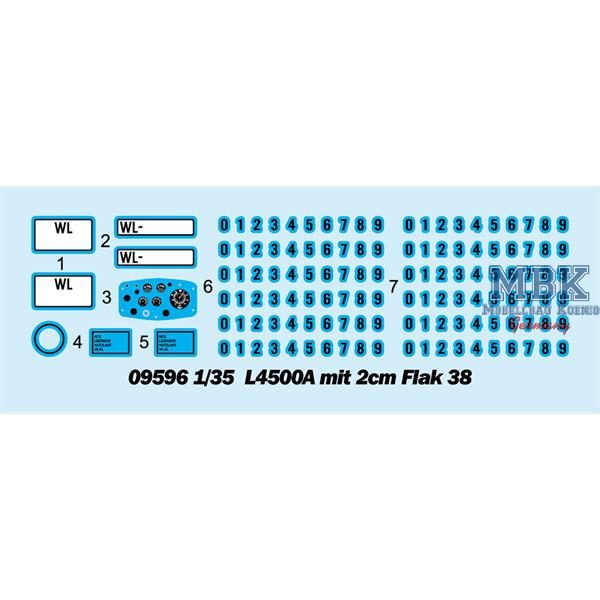
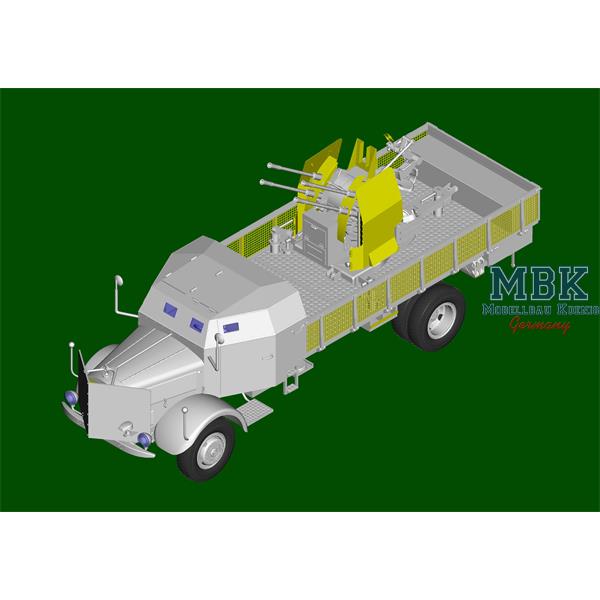
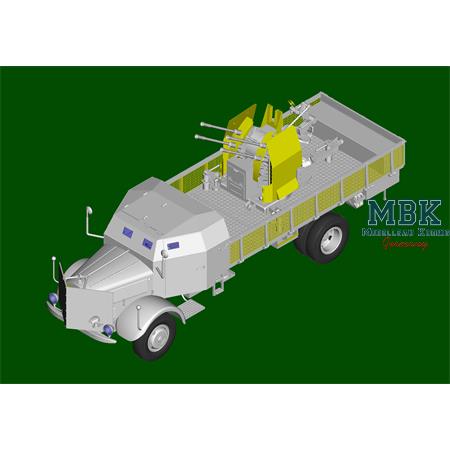
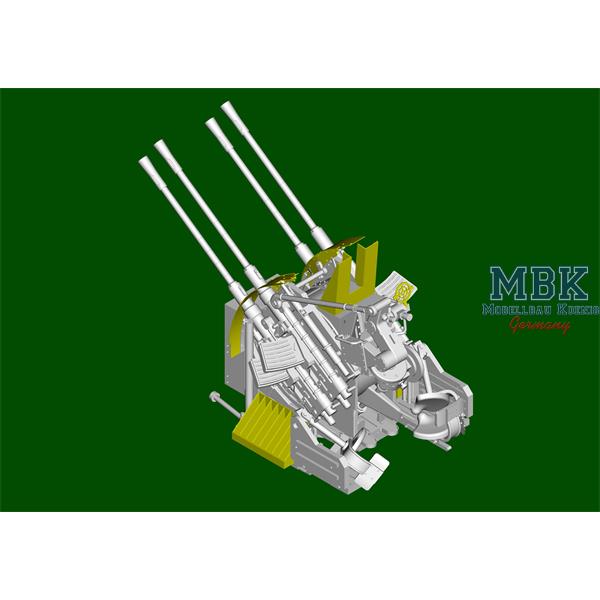
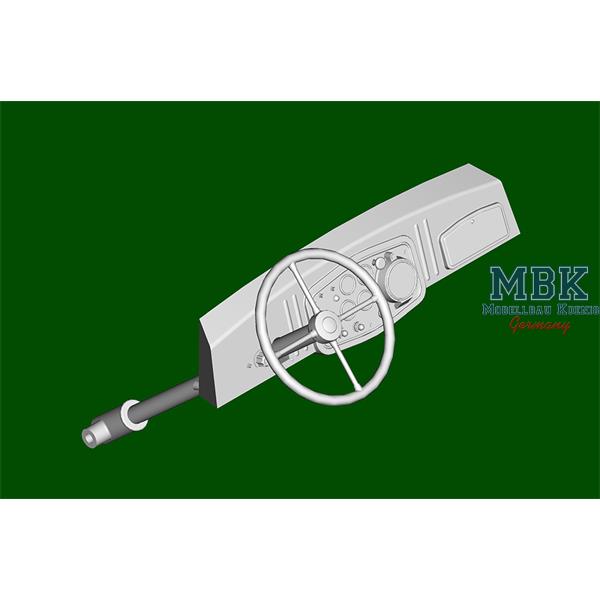
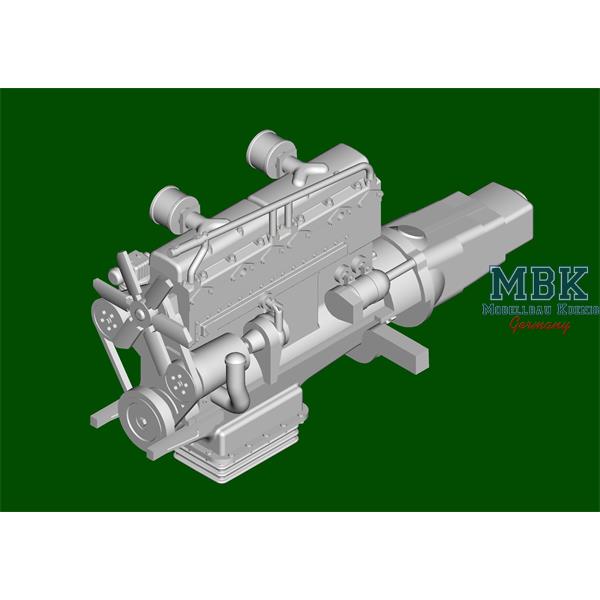
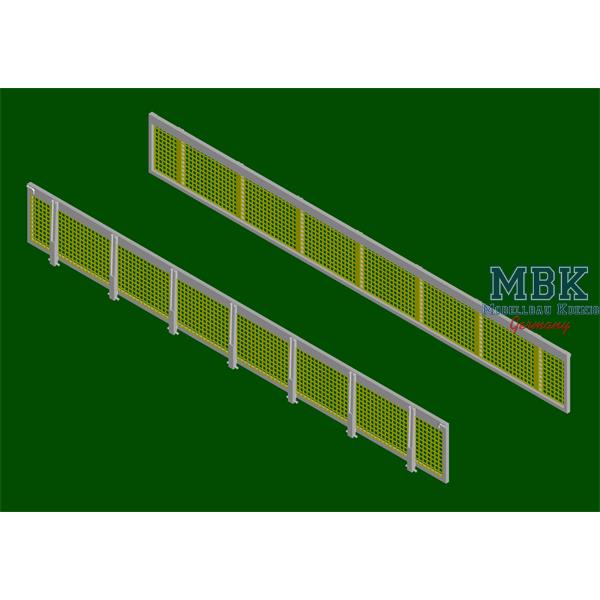
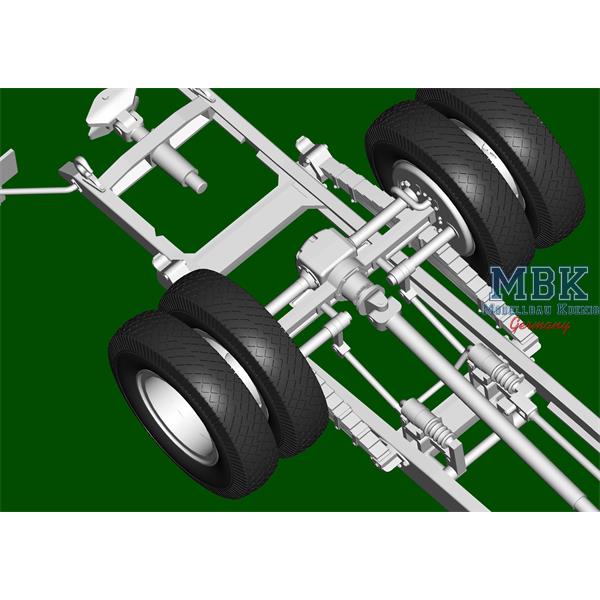
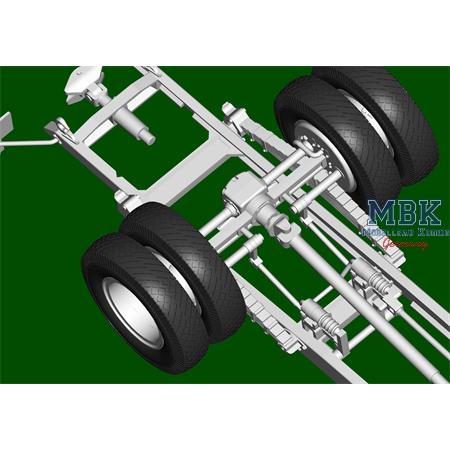
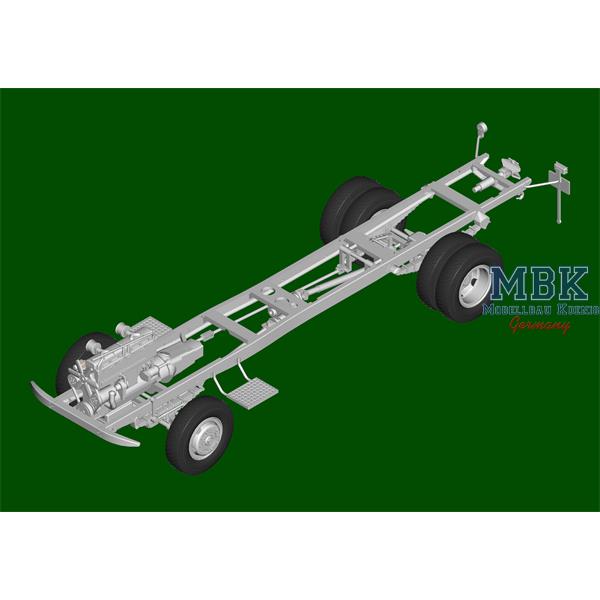
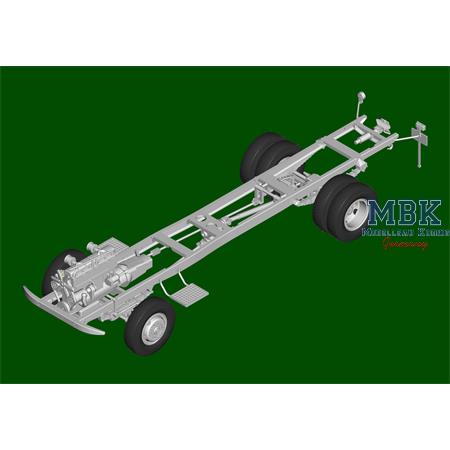



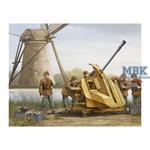
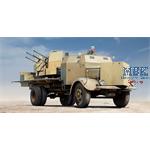
Complete kit for building a Mercedes L4500 with 2 cm FlaK 38 Quadruple
The Mercedes-Benz L4500A equipped with the 2 cm Flakvierling 38 was a mobile anti-aircraft platform used by the German Wehrmacht during World War II; it was one of the many so-called *Flakwagen* (anti-aircraft trucks) deployed to protect motorized units against low-flying aircraft. It was based on the heavy, all-terrain Mercedes-Benz L4500A truck, whose robust design and high payload capacity allowed for the installation of the powerful 2 cm Flakvierling 38. Such conversions were produced from around 1943 onwards, both in field workshops and—in limited numbers—at military maintenance facilities. They were intended to combine the high mobility of armored and supply units with readily available anti-aircraft defense. However, there was no standardized mass production, resulting in significant variations in the vehicles' specific configurations.
The Mercedes-Benz L4500A chassis was an all-wheel-drive, 4.5-ton truck powered by a water-cooled, six-cylinder OM 67/4 diesel engine producing 112 hp (82 kW). Equipped with a five-speed transmission featuring a low-range transfer case, the vehicle achieved a top speed of approximately 65 km/h and was noted for its excellent off-road capability and high reliability. The cargo bed was reinforced to accommodate the anti-aircraft gun and was often fitted with fold-down side panels to provide the operating crew with greater freedom of movement. Some vehicles were also equipped with folding outriggers or a reinforced firing platform to improve stability during engagement.
The primary armament was the 2 cm Flakvierling 38, which consisted of four 2 cm Flak 38 guns mounted side-by-side. Each of the four guns operated using a gas-assisted recoil mechanism and was fed by 20-round magazines. Collectively, the *Flakvierling* achieved a theoretical rate of fire of up to 1,800 rounds per minute, while the practical rate of fire was around 700 to 800 rounds per minute due to frequent magazine changes. The 20 mm ammunition left the barrel with a muzzle velocity of approximately 900 m/s and was highly effective against fighter-bombers, low-flying aircraft, and lightly armored ground vehicles. An elevation range of –10° to +100° allowed for both anti-aircraft defense and engagement of ground targets.
Operation typically required a crew of six to eight soldiers, comprising a gunner, loaders, and ammunition handlers. Since the crew worked on an open cargo bed, only the gun's armored shield offered limited protection against infantry fire and shrapnel. However, the weapon could be brought into action within seconds and accompanied motorized units directly to the front line. These vehicles proved their worth—particularly on the Eastern Front and during the fighting in France and Germany—in countering Allied fighter-bombers that were increasingly targeting German supply lines.
The Mercedes-Benz L4500A mounting the 2 cm *Flakvierling* 38 combined the high mobility of an all-terrain truck with the immense firepower of one of the Wehrmacht's most effective light anti-aircraft guns. Although it was never produced as a standardized mass-production vehicle and existed in numerous variants, it remains one of the best-known improvised German anti-aircraft trucks of World War II. Its combination of mobility, high rate of fire, and versatility made it a vital escort vehicle for armored, supply, and engineer units during the final years of the war.
- 1:35 scale
- Dimensions LxW (built): 229.2 x 67.1 mm
- 420+ pieces
- Complete powertrain assembly with engine gearbox, differential case and suspension units.
- The tires are hollow rubber with a very good tread pattern
- Flak 38 included
- including photo-etched parts
- unbuilt, unpainted
- Paint and glue not included
| Trumpeter has several Mercedes L4500s in its range or will be bringing them onto the market in the future. If available, you can buy them here: |
The Mercedes-Benz L4500A equipped with the 2 cm Flakvierling 38 was a mobile anti-aircraft platform used by the German Wehrmacht during World War II; it was one of the many so-called *Flakwagen* (anti-aircraft trucks) deployed to protect motorized units against low-flying aircraft. It was based on the heavy, all-terrain Mercedes-Benz L4500A truck, whose robust design and high payload capacity allowed for the installation of the powerful 2 cm Flakvierling 38. Such conversions were produced from around 1943 onwards, both in field workshops and—in limited numbers—at military maintenance facilities. They were intended to combine the high mobility of armored and supply units with readily available anti-aircraft defense. However, there was no standardized mass production, resulting in significant variations in the vehicles' specific configurations.
The Mercedes-Benz L4500A chassis was an all-wheel-drive, 4.5-ton truck powered by a water-cooled, six-cylinder OM 67/4 diesel engine producing 112 hp (82 kW). Equipped with a five-speed transmission featuring a low-range transfer case, the vehicle achieved a top speed of approximately 65 km/h and was noted for its excellent off-road capability and high reliability. The cargo bed was reinforced to accommodate the anti-aircraft gun and was often fitted with fold-down side panels to provide the operating crew with greater freedom of movement. Some vehicles were also equipped with folding outriggers or a reinforced firing platform to improve stability during engagement.
The primary armament was the 2 cm Flakvierling 38, which consisted of four 2 cm Flak 38 guns mounted side-by-side. Each of the four guns operated using a gas-assisted recoil mechanism and was fed by 20-round magazines. Collectively, the *Flakvierling* achieved a theoretical rate of fire of up to 1,800 rounds per minute, while the practical rate of fire was around 700 to 800 rounds per minute due to frequent magazine changes. The 20 mm ammunition left the barrel with a muzzle velocity of approximately 900 m/s and was highly effective against fighter-bombers, low-flying aircraft, and lightly armored ground vehicles. An elevation range of –10° to +100° allowed for both anti-aircraft defense and engagement of ground targets.
Operation typically required a crew of six to eight soldiers, comprising a gunner, loaders, and ammunition handlers. Since the crew worked on an open cargo bed, only the gun's armored shield offered limited protection against infantry fire and shrapnel. However, the weapon could be brought into action within seconds and accompanied motorized units directly to the front line. These vehicles proved their worth—particularly on the Eastern Front and during the fighting in France and Germany—in countering Allied fighter-bombers that were increasingly targeting German supply lines.
The Mercedes-Benz L4500A mounting the 2 cm *Flakvierling* 38 combined the high mobility of an all-terrain truck with the immense firepower of one of the Wehrmacht's most effective light anti-aircraft guns. Although it was never produced as a standardized mass-production vehicle and existed in numerous variants, it remains one of the best-known improvised German anti-aircraft trucks of World War II. Its combination of mobility, high rate of fire, and versatility made it a vital escort vehicle for armored, supply, and engineer units during the final years of the war.
Suitable Accessories

26.50 €*
Customer Reviews 3
Write now your personal experience with this article and help others with their purchase decision.