Bandai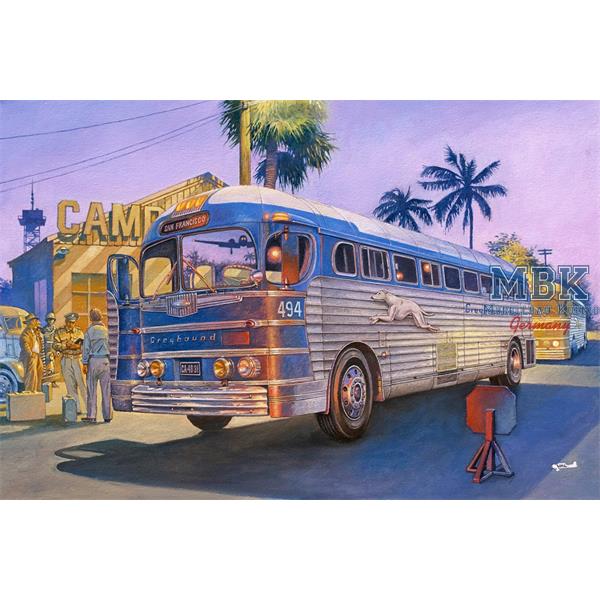
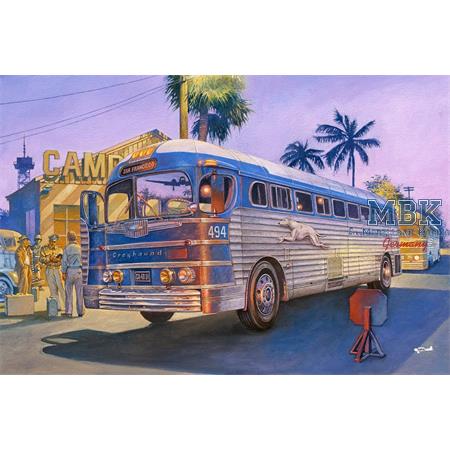
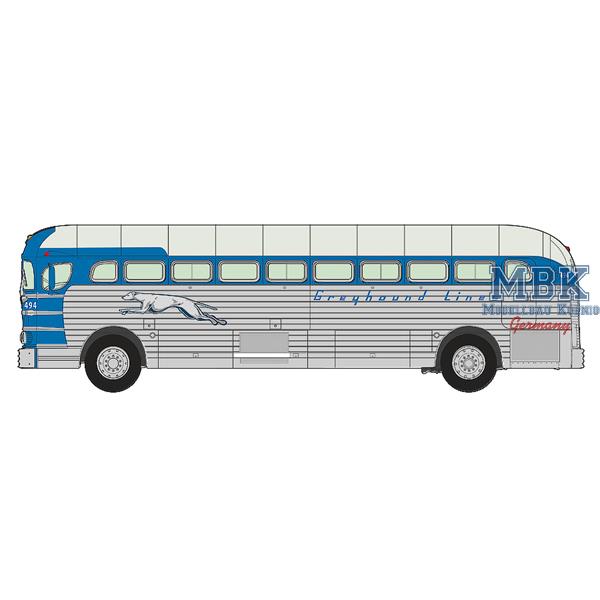
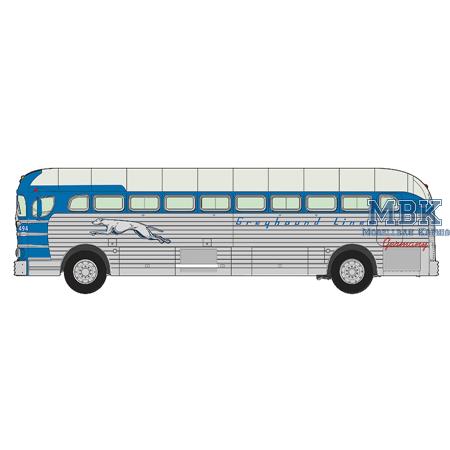
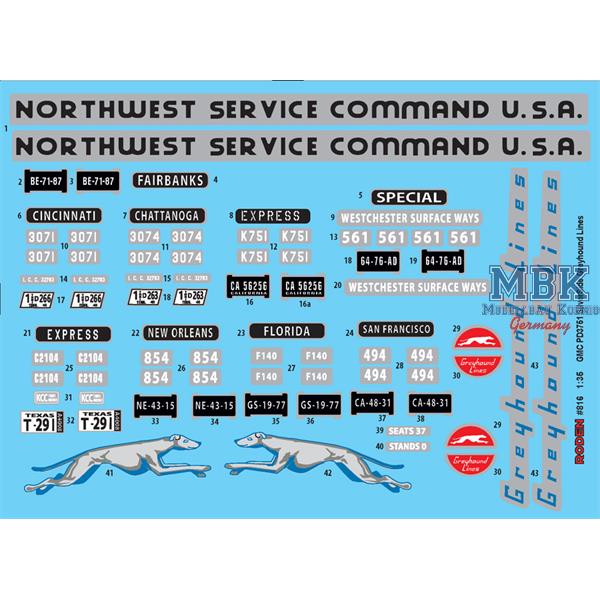
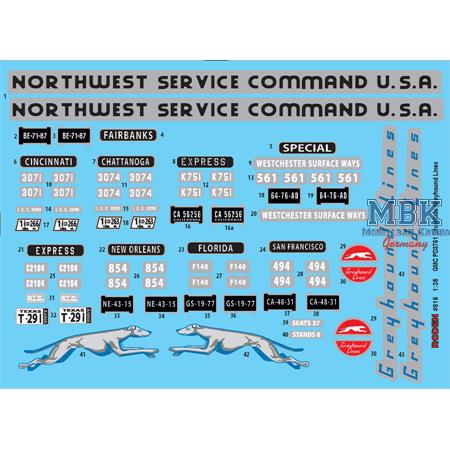
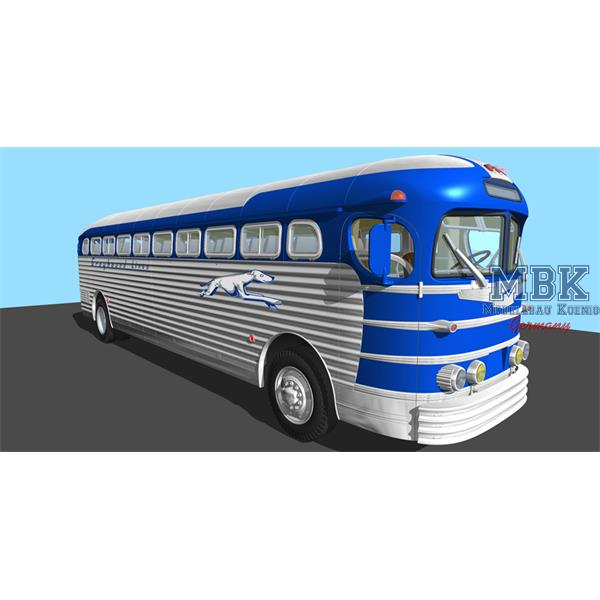
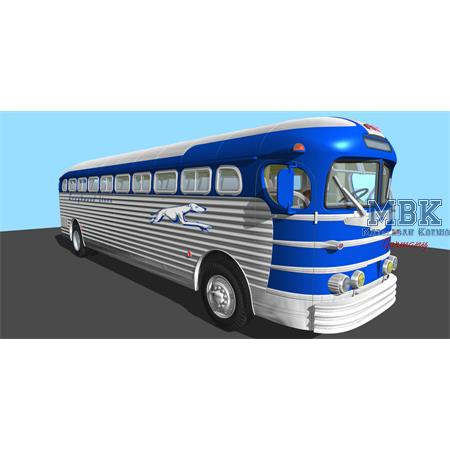
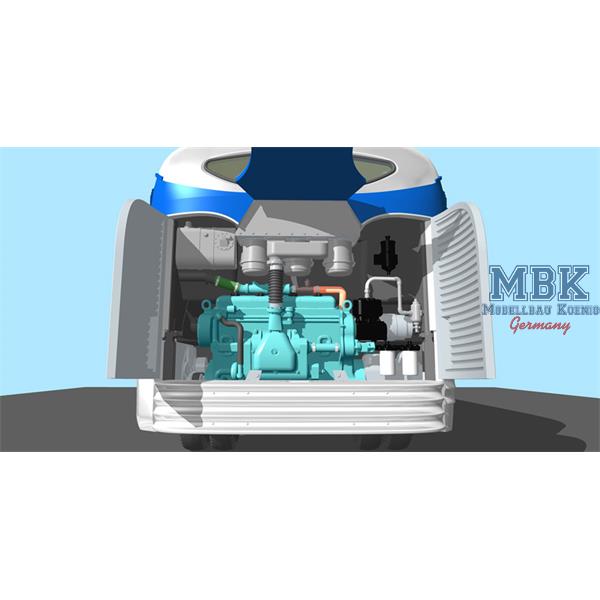
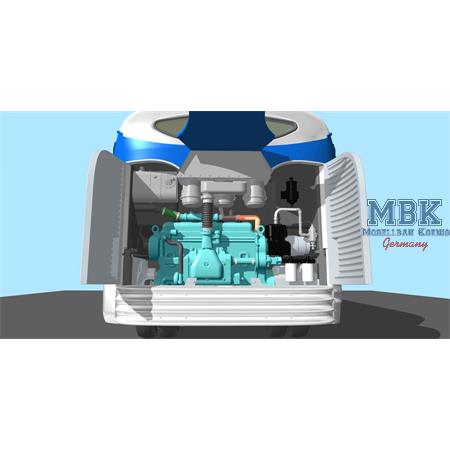
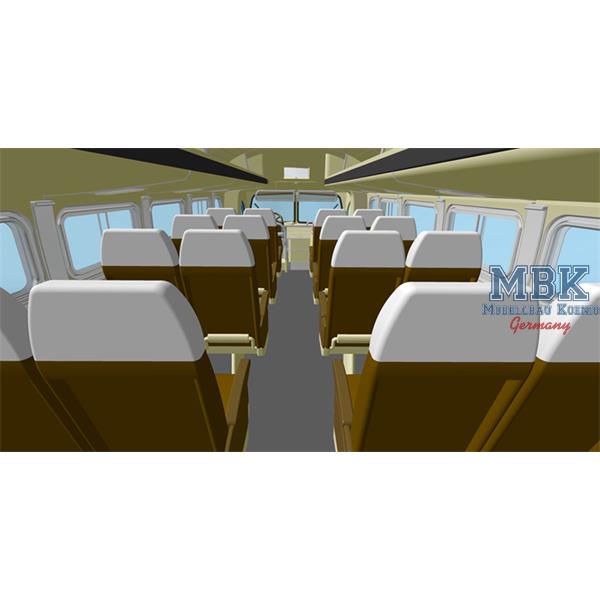
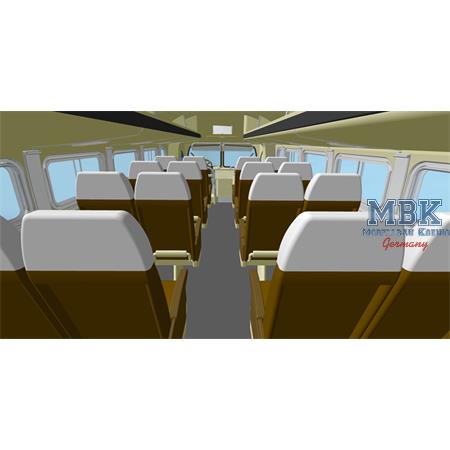
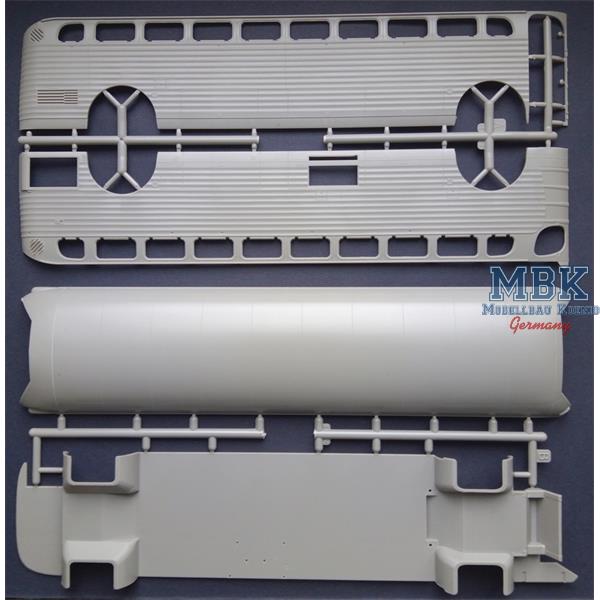
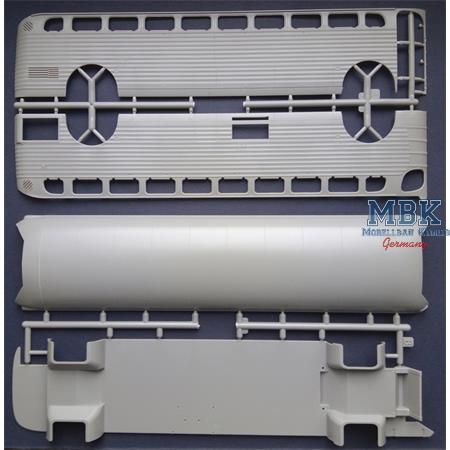
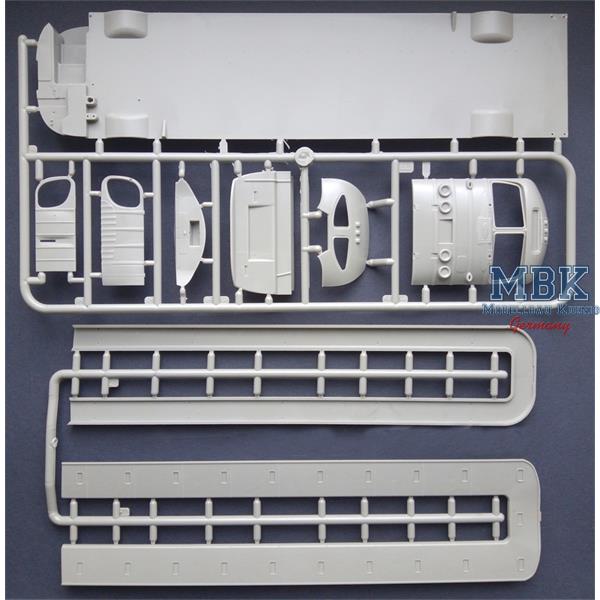
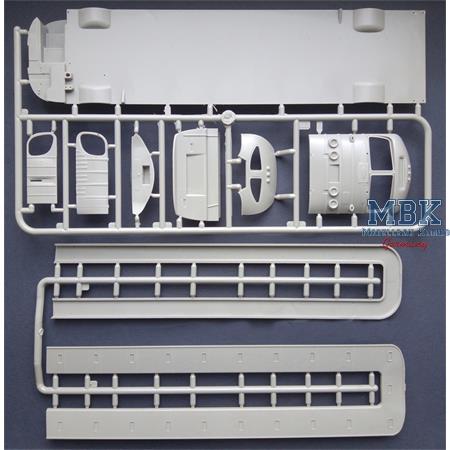
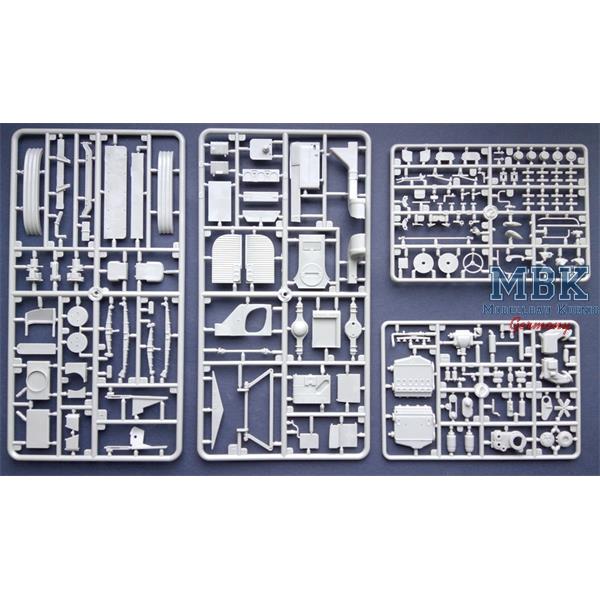
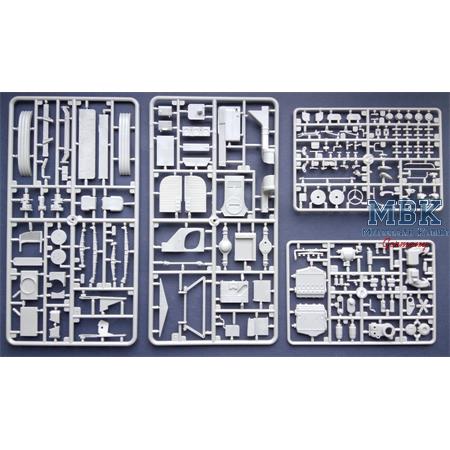
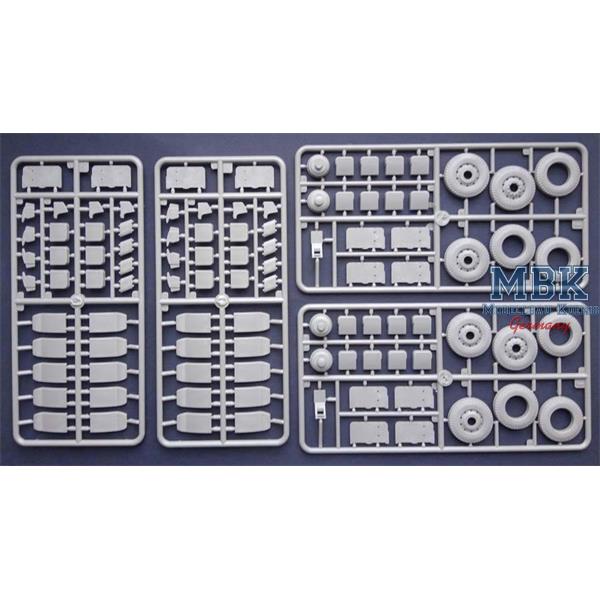
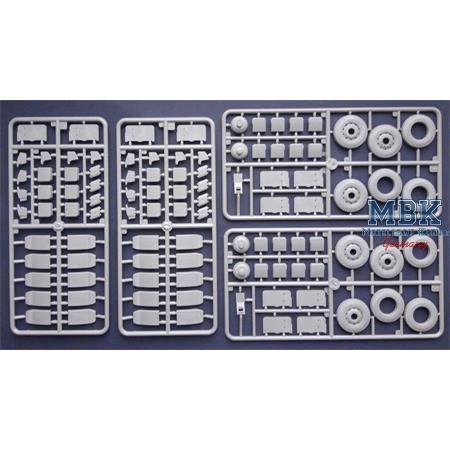
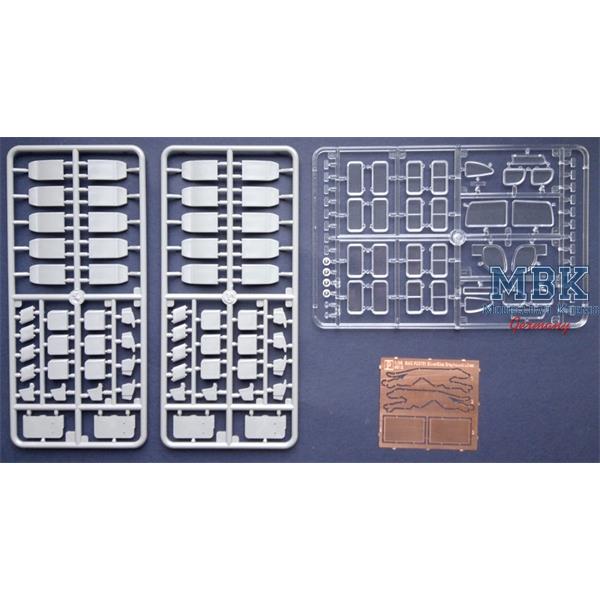
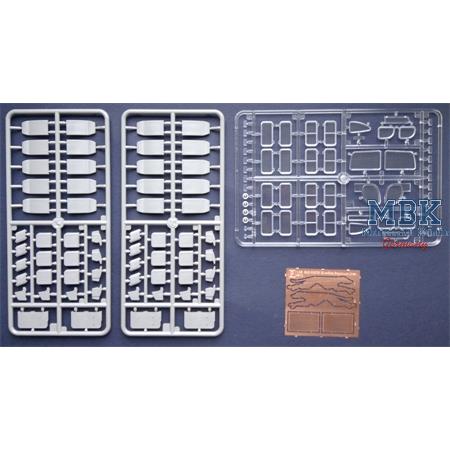


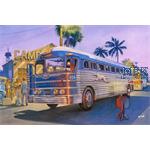
Plastic Model Kit to build a GMC PD-3751 Silverside Bus "Greyhound Lines"
In general, it was possible to cope with this task in a fairly short time, however, one of the negative consequences of the construction of numerous high-quality roads was the almost complete decline of passenger transportation by railway - it turned out that road transport is no worse than rail. And buses played a significant role in this, which very quickly transported passengers over considerable distances with comfort no worse than in railway carriages.
At that time, fast aerodynamic shapes were gaining more and more popularity in the automotive industry, and the main materials used were aluminum and stainless steel. For the new bus, the developers used corrugated aluminum as the base material to emphasize its similarity with the railway carriages, which passengers preferred until recently.
In 1939, at the Worlds Fair in New York, the GMC company showed visitors a new design of an intercity bus, which immediately became the star of the show. It was type PD3701 - the number 37 indicated the number of passengers and 01 - the series. Despite the official name SuperCoach from the developer, it immediately received its own name Silversides for the characteristic silver side panels made of polished aluminum. Also in the interior decoration, new polymer materials were widely used, such as plastic for moldings and synthetic fabrics for upholstery for sitting.
The bus gained enormous popularity, and in the same year large-scale passenger transportation between all large and medium-sized cities of the country began. Serial construction was started at the Pontiac West Assembly plant in Pontiac, Michigan, where General Motors had assembled pickup trucks and small trucks for this company before.
The main customer of the new bus was the transport company GreyhoundLines, which had the most extensive network of routes throughout the country, including the northern territories of the state of Alaska.
In general, this bus has gone down in history as one of the symbols of the success of the United States in the automotive industry, and its forms and appearance are still impressive today with their futuristic and elegant.
Text Roden (excerpt)
- 1:35 scale
- Interior details
- Engine replica included
- Clear and photo-etched parts included
- Doors and engine covers can be built open (optional)
- 9 marking options
- unbuilt, unpainted
- Paint and glue not included
In general, it was possible to cope with this task in a fairly short time, however, one of the negative consequences of the construction of numerous high-quality roads was the almost complete decline of passenger transportation by railway - it turned out that road transport is no worse than rail. And buses played a significant role in this, which very quickly transported passengers over considerable distances with comfort no worse than in railway carriages.
At that time, fast aerodynamic shapes were gaining more and more popularity in the automotive industry, and the main materials used were aluminum and stainless steel. For the new bus, the developers used corrugated aluminum as the base material to emphasize its similarity with the railway carriages, which passengers preferred until recently.
In 1939, at the Worlds Fair in New York, the GMC company showed visitors a new design of an intercity bus, which immediately became the star of the show. It was type PD3701 - the number 37 indicated the number of passengers and 01 - the series. Despite the official name SuperCoach from the developer, it immediately received its own name Silversides for the characteristic silver side panels made of polished aluminum. Also in the interior decoration, new polymer materials were widely used, such as plastic for moldings and synthetic fabrics for upholstery for sitting.
The bus gained enormous popularity, and in the same year large-scale passenger transportation between all large and medium-sized cities of the country began. Serial construction was started at the Pontiac West Assembly plant in Pontiac, Michigan, where General Motors had assembled pickup trucks and small trucks for this company before.
The main customer of the new bus was the transport company GreyhoundLines, which had the most extensive network of routes throughout the country, including the northern territories of the state of Alaska.
In general, this bus has gone down in history as one of the symbols of the success of the United States in the automotive industry, and its forms and appearance are still impressive today with their futuristic and elegant.
Text Roden (excerpt)
Customer Reviews 3
Write now your personal experience with this article and help others with their purchase decision.