Bandai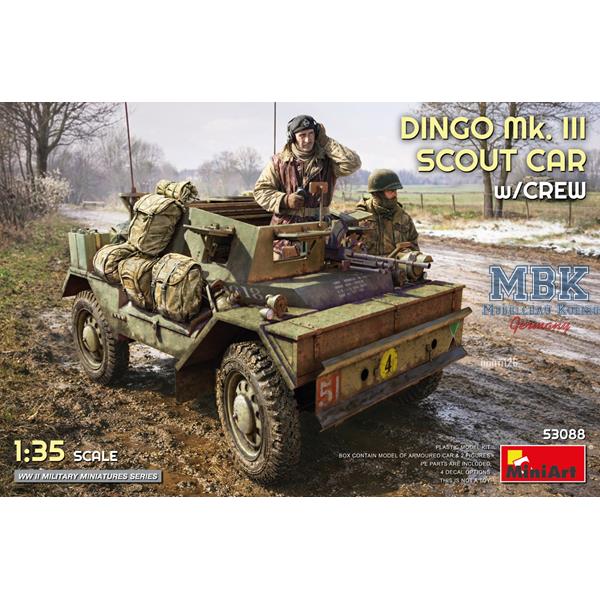
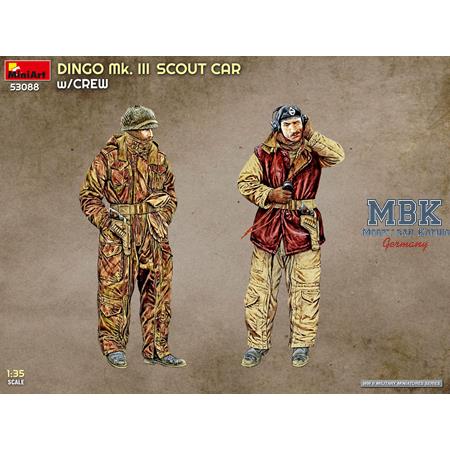
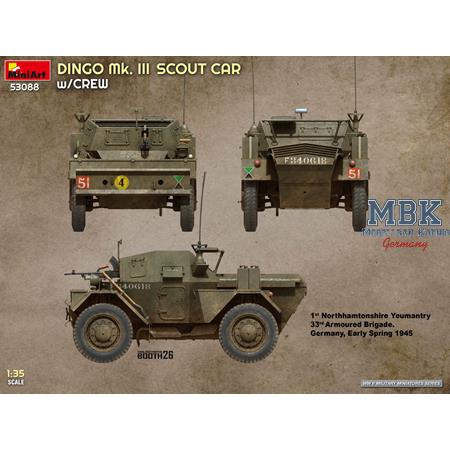
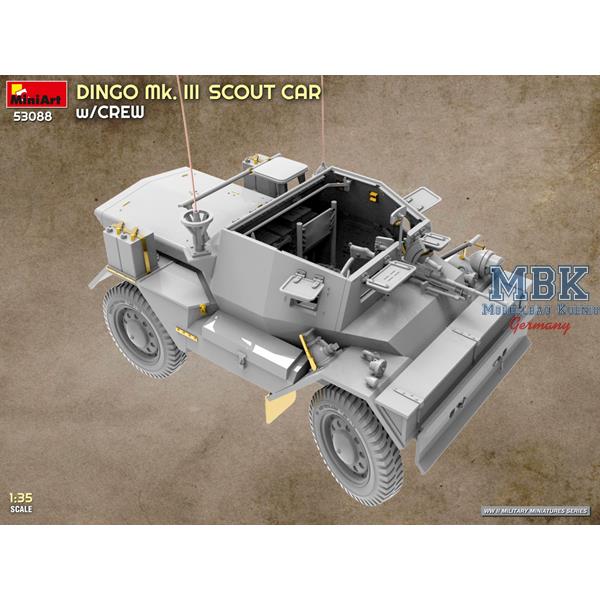
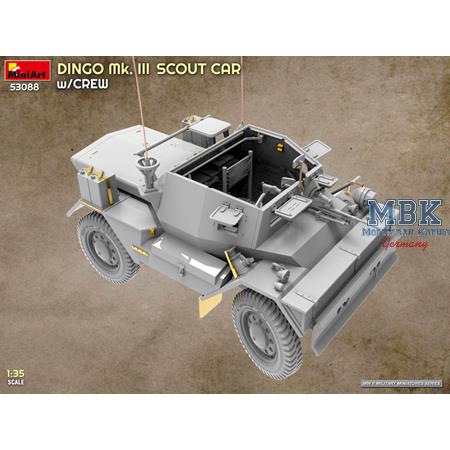
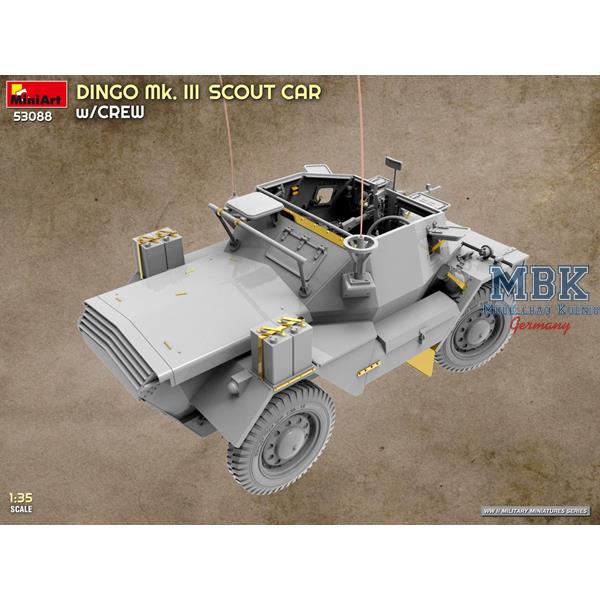
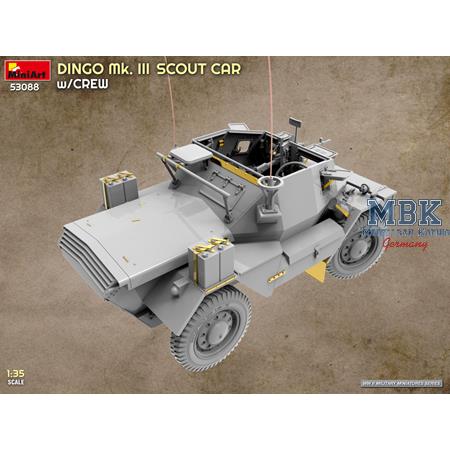
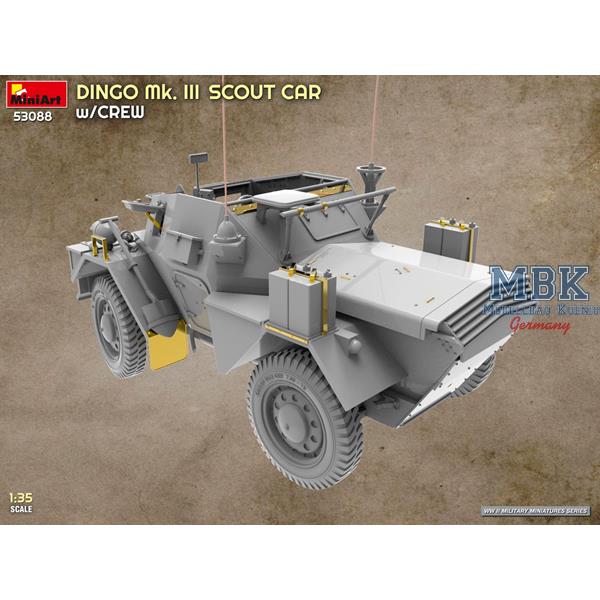
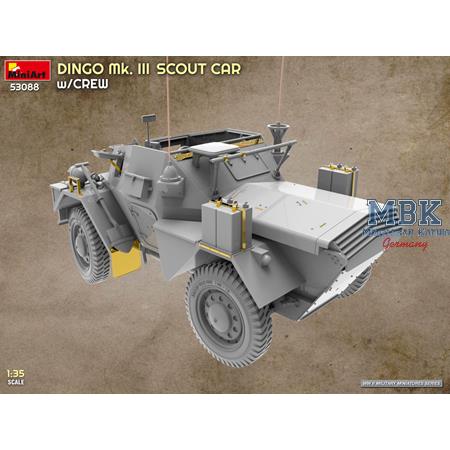
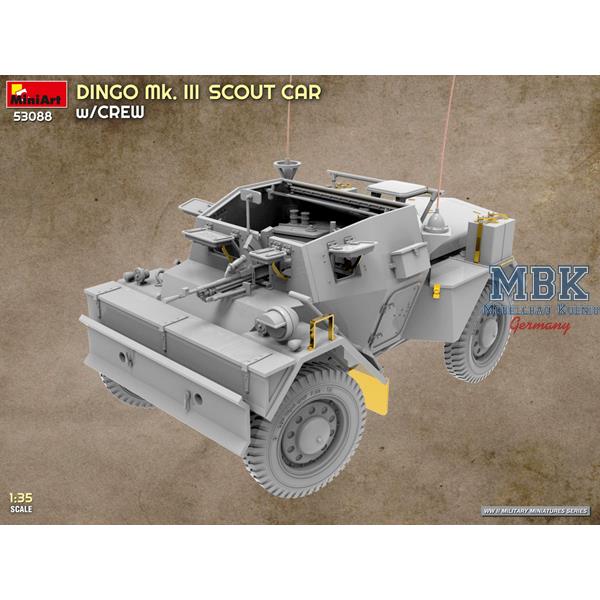
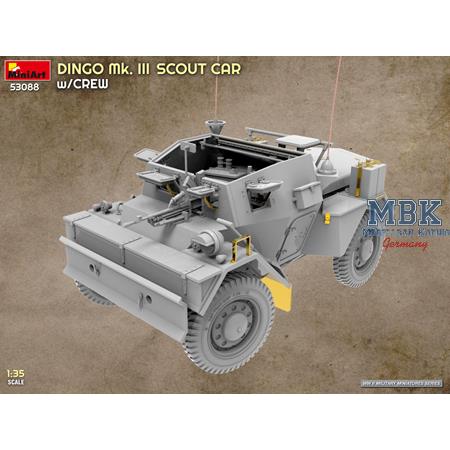


Dingo Mk. III Scout Car w/Crew
Item Number:
MA53088
MA53088
Manufacturer
MINIART
MINIART
Scale:
1:35
1:35
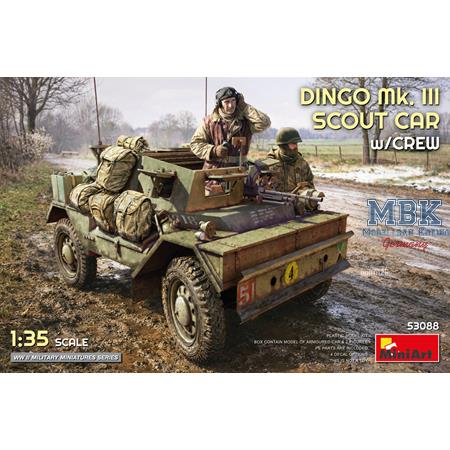
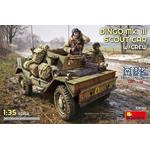
Plastic model kit of a British Dingo Mk. III armored reconnaissance vehicle with crew
The British armored reconnaissance vehicle Daimler Dingo, also known as the Daimler Scout Car, was developed for the British Army starting in 1938 and went into mass production in 1939. The goal was a small, fast, and well-protected vehicle for reconnaissance and liaison missions. With a crew of two, all-wheel drive, and a top speed of around 90 km/h (50 mph), the Dingo combined high mobility with surprisingly strong armor for its size. It was typically armed with a light machine gun such as the Bren, and occasionally with an anti-tank rifle.
Technically, the Dingo featured several advanced solutions, including a preselector gearbox with an equal number of forward and reverse gears, which allowed for rapid changes of direction. Early models also had all-wheel steering, which offered exceptional maneuverability but proved complicated to operate. As production progressed, the vehicle was therefore gradually simplified and made more robust.
The various versions clearly illustrate this development: The early variants (Mk I and Mk IA) still featured the complex all-wheel steering system and different roof designs. The Mk IB primarily improved cooling and reliability, especially for operations in hot climates. The Mk II finally abandoned all-wheel steering in favor of a simpler front steering system, which improved handling. The later Mk III version was further simplified, featuring, among other things, a waterproof ignition system and often an open roof, thus improving maintenance and operational flexibility.
The Dingo saw service throughout World War II in various theaters of operation, including North Africa, Italy, and, after the Normandy landings, Western Europe. It was considered one of the best light reconnaissance vehicles of its time, effectively combining mobility, a low profile, and adequate protection.
- Scale 1:35
- Highly detailed kit
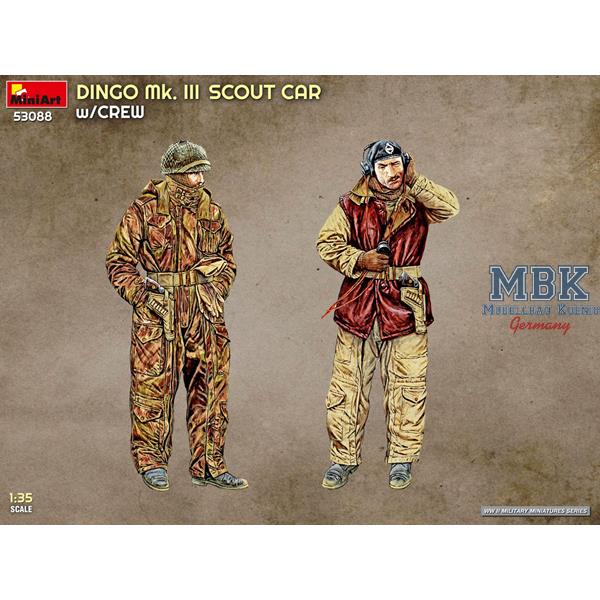
- 2 figures
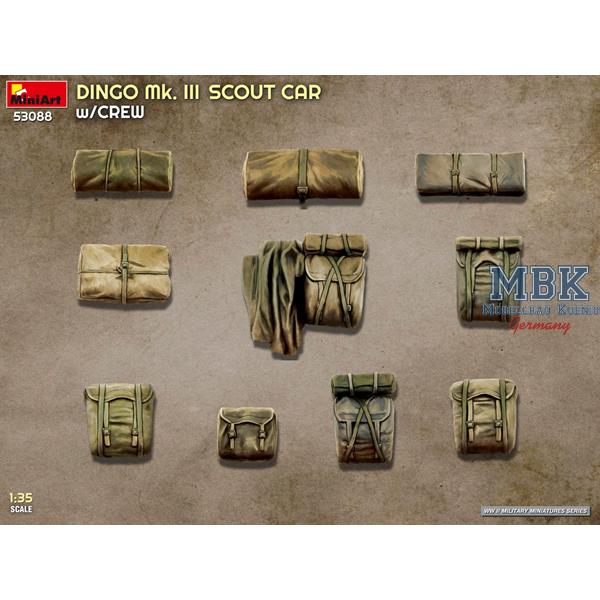
- Personal and other equipment not included
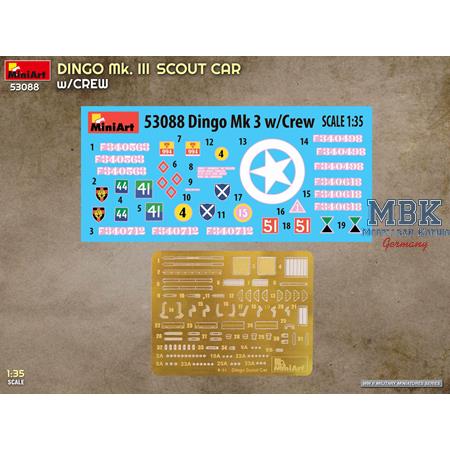
- Photo-etched parts included
- Plastic wheels
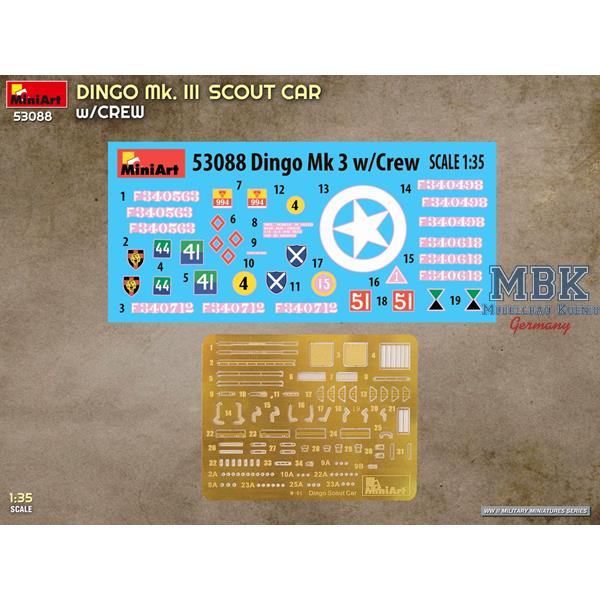
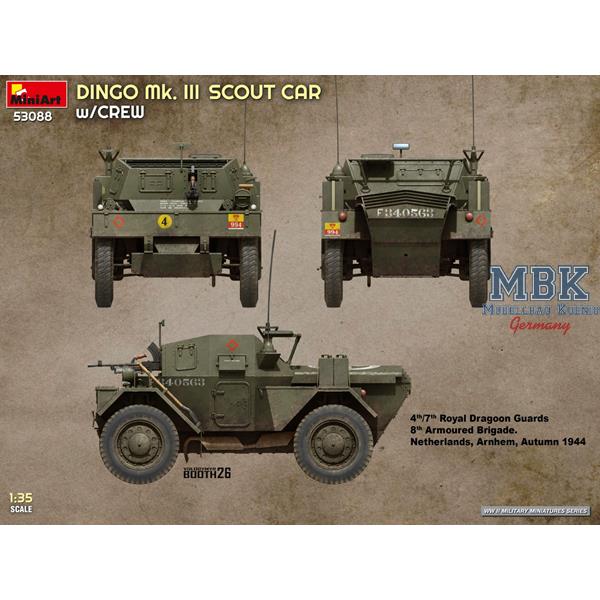
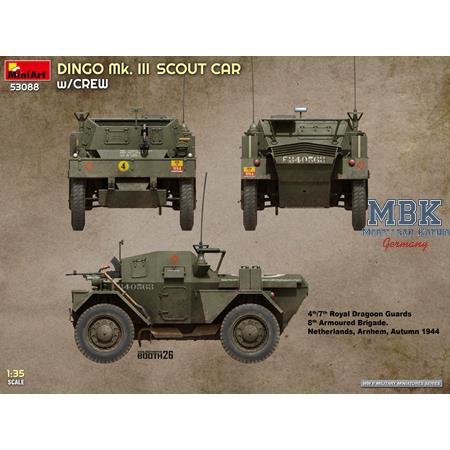
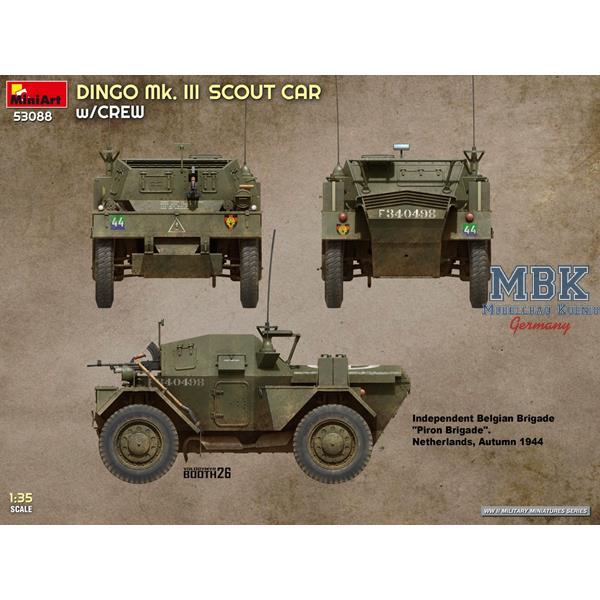
- Decals for 4 marking options
- 4th/7th Royal Draoon Guards, 8th Armoured Brigade, Arnhem, Netherlands, Autumn 1944
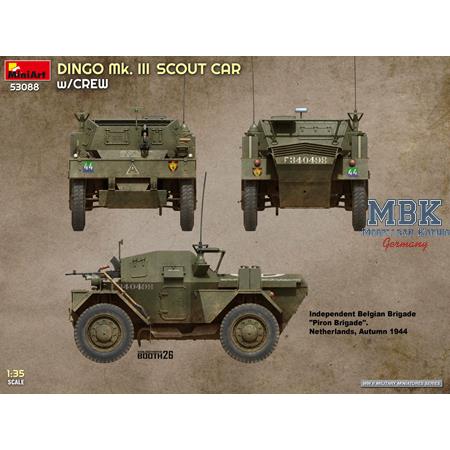
- Independent Belgian Brigade "Piron Brigade", Netherlands, Autumn 1944
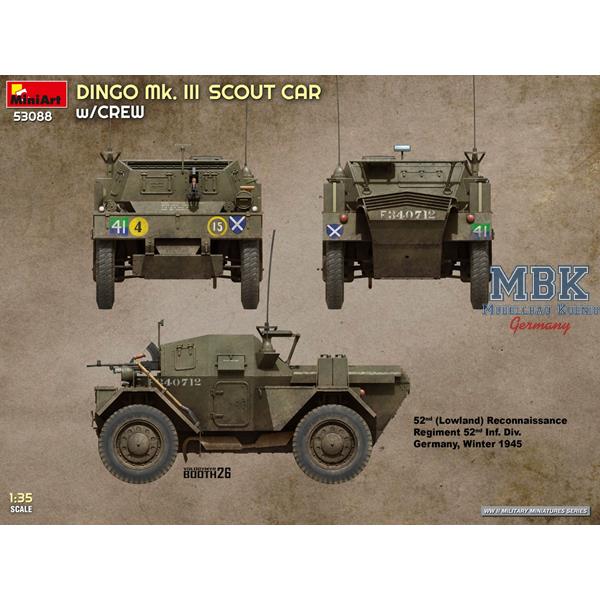
- 52nd (Lowland) Reconnaissance Regimanet 52nd Inf.Div., Germany, Winter 1945
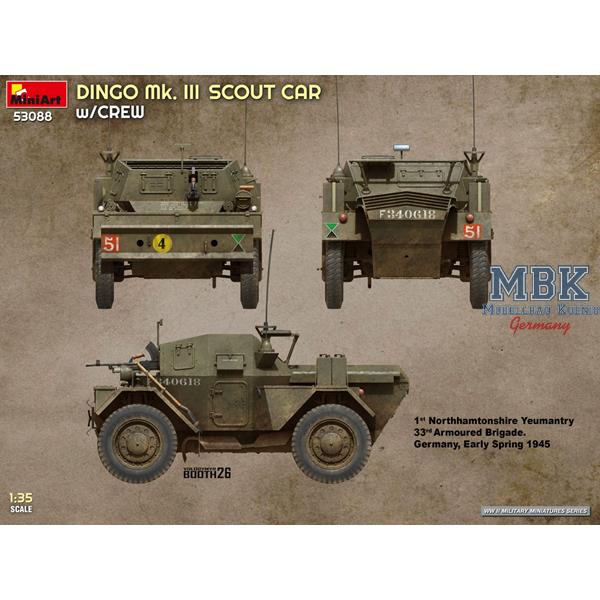
- 1st Northhampshire Yeumantry, 33rd Armoured Bridgade, Germany, early Spring, 1945
- Unbuilt, unpainted
- Paint and glue not included
MiniArt has produced several Daimler Scout Cars, which you can purchase here (while supplies last):
|
The British armored reconnaissance vehicle Daimler Dingo, also known as the Daimler Scout Car, was developed for the British Army starting in 1938 and went into mass production in 1939. The goal was a small, fast, and well-protected vehicle for reconnaissance and liaison missions. With a crew of two, all-wheel drive, and a top speed of around 90 km/h (50 mph), the Dingo combined high mobility with surprisingly strong armor for its size. It was typically armed with a light machine gun such as the Bren, and occasionally with an anti-tank rifle.
Technically, the Dingo featured several advanced solutions, including a preselector gearbox with an equal number of forward and reverse gears, which allowed for rapid changes of direction. Early models also had all-wheel steering, which offered exceptional maneuverability but proved complicated to operate. As production progressed, the vehicle was therefore gradually simplified and made more robust.
The various versions clearly illustrate this development: The early variants (Mk I and Mk IA) still featured the complex all-wheel steering system and different roof designs. The Mk IB primarily improved cooling and reliability, especially for operations in hot climates. The Mk II finally abandoned all-wheel steering in favor of a simpler front steering system, which improved handling. The later Mk III version was further simplified, featuring, among other things, a waterproof ignition system and often an open roof, thus improving maintenance and operational flexibility.
The Dingo saw service throughout World War II in various theaters of operation, including North Africa, Italy, and, after the Normandy landings, Western Europe. It was considered one of the best light reconnaissance vehicles of its time, effectively combining mobility, a low profile, and adequate protection.
Customer Reviews 0
Write now your personal experience with this article and help others with their purchase decision.