Bandai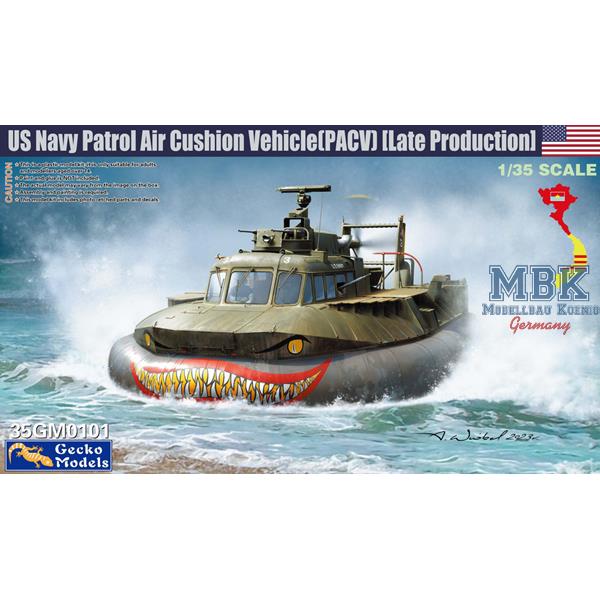
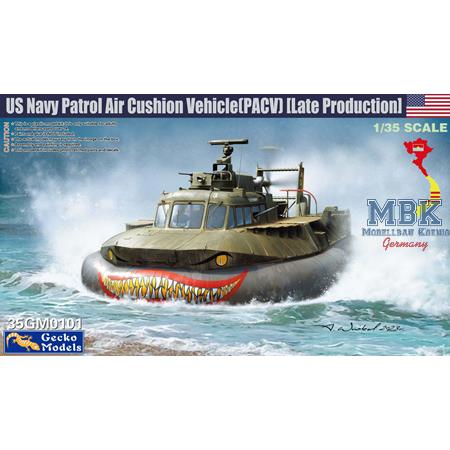
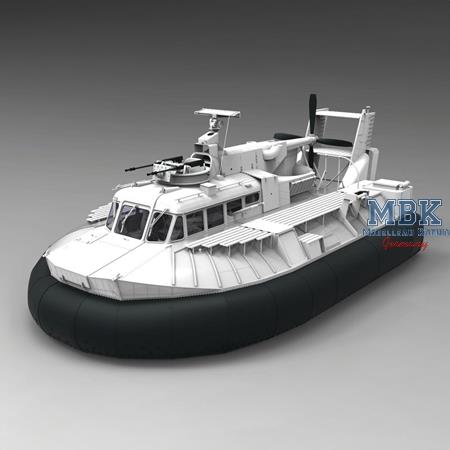
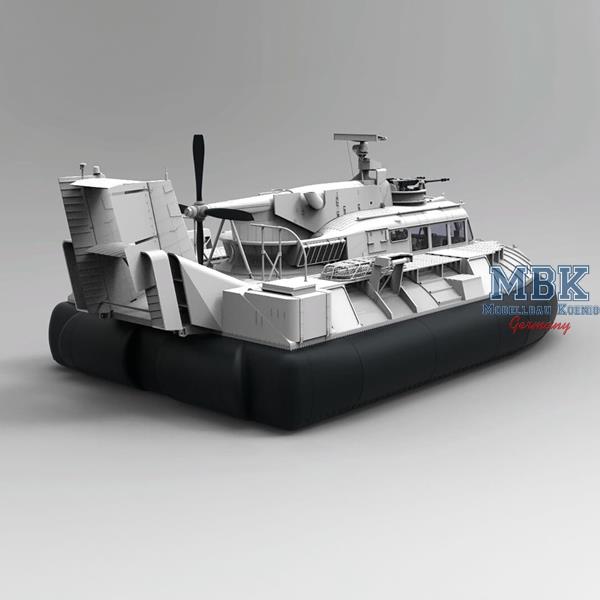
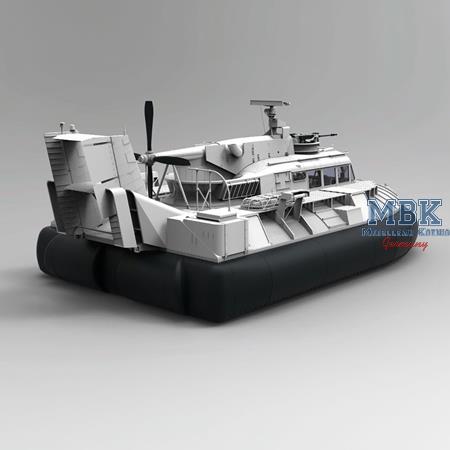
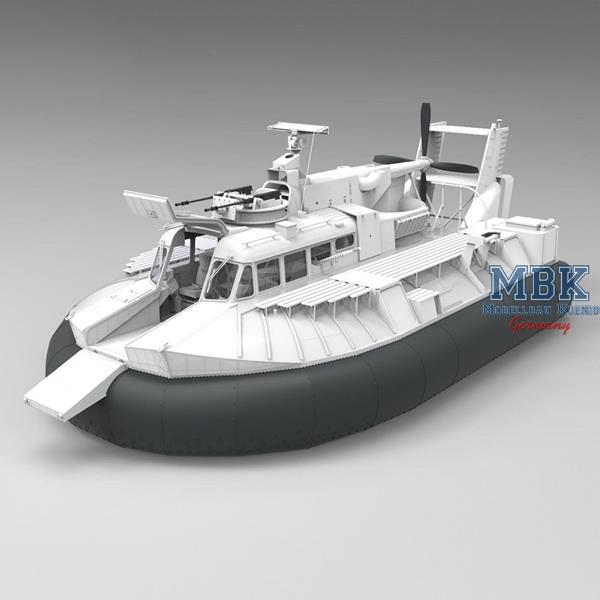
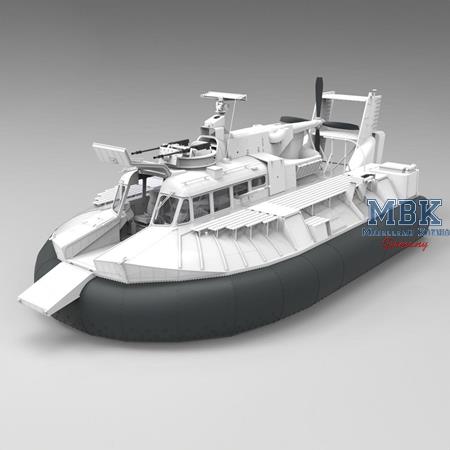


US Navy Patrol Air Cushion Vehicle (PACV)
Item Number:
35GM0101
35GM0101
Manufacturer
Gecko Models
Gecko Models
Scale:
1:35
1:35
Plastic kit for US Navy Air Cushion Patrol Vehicle (PACV)
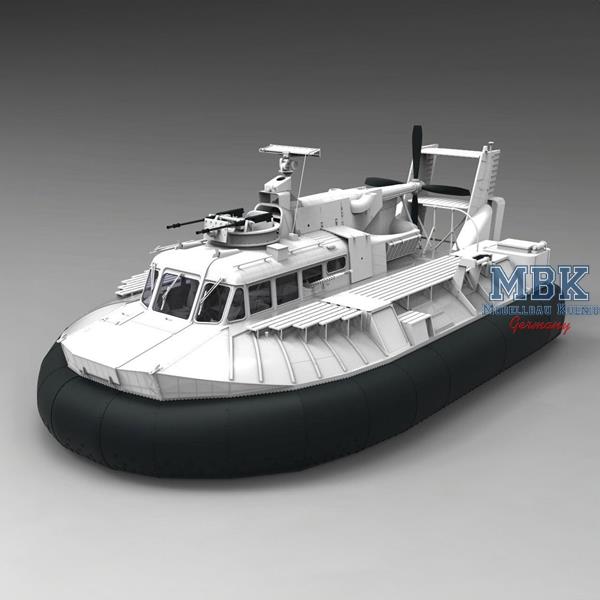
The PACV was based on the British Saunders-Roe SR.N5; it was manufactured under license in the U.S. by Bell Aerosystems and extensively modified to meet military requirements. Propulsion was provided by a General Electric LM100 gas turbine generating approximately 1,100 hp, which powered both the lift fan and the large rear-mounted air propeller. Unlike many later hovercraft, the propeller was mounted openly on the rear structure rather than being enclosed within a duct. Directional control was achieved via a series of interconnected rudders positioned directly behind the propeller, which deflected the airflow to the left or right. Combined with the horizontal stabilizer positioned above them, this design gave the rear of the vehicle a distinctive, aircraft-like appearance.
The crew typically consisted of four personnel: the vehicle commander, a navigator, and two gunners. Standard armament included a 12.7mm M2HB machine gun on the forward weapon platform and two 7.62mm M60 machine guns on side-mounted pintles. Depending on the mission, additional items such as personal weapons, radios, signaling devices, or recovery equipment could be carried.
Externally, the late-production version differed from the early vehicles only in minor details. Numerous changes were made to mounts, stowage bins, antennas, radio equipment, and maintenance access points. The flexible air-cushion skirt also underwent several improvements, as it was subjected to severe stress during operations from hazards such as driftwood, tree stumps, and bank reinforcements. These modifications were introduced continuously during service, resulting in few vehicles looking identical down to the last detail.
Between 1968 and 1970, the late-model PACVs were primarily operated by the US Navy in the riverine and coastal regions of South Vietnam, while the US Army simultaneously utilized its own vehicles in separate testing programs. The hovercraft performed patrol, reconnaissance, troop transport, and security duties, as well as escorting supply convoys. Their ability to transition seamlessly from water to mudflats, rice paddies, or solid ground gave them significant tactical advantages over conventional patrol boats. At the same time, their high speed enabled surprise incursions into hard-to-reach areas.
Despite these exceptional capabilities, the PACV remained an experimental vehicle. Its gas turbine consumed vast amounts of fuel, maintenance was demanding, and the air-cushion skirt required frequent repairs. Furthermore, the exposed propeller generated considerable noise, announcing the vehicle's presence from a great distance and often negating the element of surprise. The program was terminated in 1970 following the completion of trials; however, the insights gained later informed the development of modern military hovercraft.
For modelers, the late-production version offers a wealth of interesting details. Characteristic features include the open stern design with its exposed propeller and rudders positioned behind it, the distinctive bow-mounted weapons platform, the side-mounted machine-gun stations, and the expansive air-cushion skirt. Operational craft often displayed significant signs of wear and tear: soiled or patched skirt segments, traces of oil and fuel around the gas turbine, faded Olive Drab paintwork, retrofitted equipment, and custom field modifications. It is precisely these variations that make each individual PACV a unique subject, offering the modeler numerous opportunities for an authentic representation.
- Scale 1:35
- with partial interior
- Clear and photo-etched parts included
- 4 marking options
- unbuilt, unpainted
- Paint and glue not included
The PACV was based on the British Saunders-Roe SR.N5; it was manufactured under license in the U.S. by Bell Aerosystems and extensively modified to meet military requirements. Propulsion was provided by a General Electric LM100 gas turbine generating approximately 1,100 hp, which powered both the lift fan and the large rear-mounted air propeller. Unlike many later hovercraft, the propeller was mounted openly on the rear structure rather than being enclosed within a duct. Directional control was achieved via a series of interconnected rudders positioned directly behind the propeller, which deflected the airflow to the left or right. Combined with the horizontal stabilizer positioned above them, this design gave the rear of the vehicle a distinctive, aircraft-like appearance.
The crew typically consisted of four personnel: the vehicle commander, a navigator, and two gunners. Standard armament included a 12.7mm M2HB machine gun on the forward weapon platform and two 7.62mm M60 machine guns on side-mounted pintles. Depending on the mission, additional items such as personal weapons, radios, signaling devices, or recovery equipment could be carried.
Externally, the late-production version differed from the early vehicles only in minor details. Numerous changes were made to mounts, stowage bins, antennas, radio equipment, and maintenance access points. The flexible air-cushion skirt also underwent several improvements, as it was subjected to severe stress during operations from hazards such as driftwood, tree stumps, and bank reinforcements. These modifications were introduced continuously during service, resulting in few vehicles looking identical down to the last detail.
Between 1968 and 1970, the late-model PACVs were primarily operated by the US Navy in the riverine and coastal regions of South Vietnam, while the US Army simultaneously utilized its own vehicles in separate testing programs. The hovercraft performed patrol, reconnaissance, troop transport, and security duties, as well as escorting supply convoys. Their ability to transition seamlessly from water to mudflats, rice paddies, or solid ground gave them significant tactical advantages over conventional patrol boats. At the same time, their high speed enabled surprise incursions into hard-to-reach areas.
Despite these exceptional capabilities, the PACV remained an experimental vehicle. Its gas turbine consumed vast amounts of fuel, maintenance was demanding, and the air-cushion skirt required frequent repairs. Furthermore, the exposed propeller generated considerable noise, announcing the vehicle's presence from a great distance and often negating the element of surprise. The program was terminated in 1970 following the completion of trials; however, the insights gained later informed the development of modern military hovercraft.
For modelers, the late-production version offers a wealth of interesting details. Characteristic features include the open stern design with its exposed propeller and rudders positioned behind it, the distinctive bow-mounted weapons platform, the side-mounted machine-gun stations, and the expansive air-cushion skirt. Operational craft often displayed significant signs of wear and tear: soiled or patched skirt segments, traces of oil and fuel around the gas turbine, faded Olive Drab paintwork, retrofitted equipment, and custom field modifications. It is precisely these variations that make each individual PACV a unique subject, offering the modeler numerous opportunities for an authentic representation.
Customer Reviews 4
Write now your personal experience with this article and help others with their purchase decision.