Bandai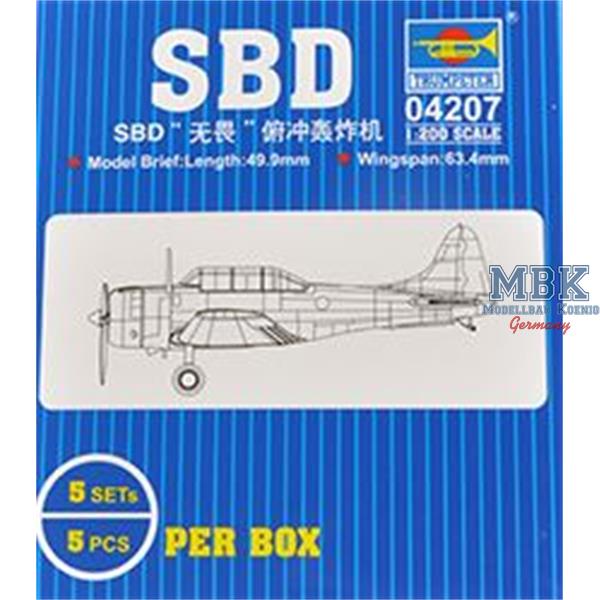



5.90 €
VAT included plus shipping and handling
Unfortunately sold out at the moment
No new delivery date known, if necessary please activate stock alert
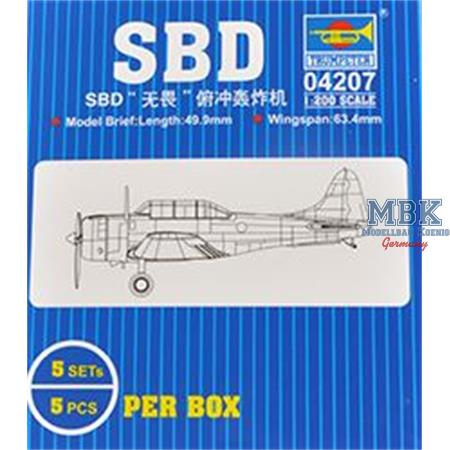
Plastic model kit for the Douglas SBD Dauntless dive bomber and reconnaissance aircraft
Designed for carrier operations, the SBD featured robust all-metal landing gear and folding wings. Its most distinctive feature was the dive brakes—perforated flaps located on the upper and lower surfaces of the wings. These allowed for extremely steep dives without the aircraft accelerating excessively, enabling the pilot to drop bombs with great precision onto ships or ground targets.
Early variants were armed with two fixed 12.7 mm M2 machine guns mounted above the engine and two 7.62 mm machine guns for the rear gunner. The later SBD-5 model also featured two 12.7 mm machine guns for the pilot, while the observer operated two flexible 7.62 mm machine guns. A 1,000 lb (454 kg) bomb could be carried under the fuselage, with additional smaller bombs mounted under the wings. The SBD-5 was powered by a Wright R-1820-60 Cyclone engine generating approximately 1,200 hp and achieved a top speed of around 410 km/h. Although relatively slow compared to later fighter aircraft, it distinguished itself through excellent dive-bombing characteristics, high bombing accuracy, and a robust design.
Its most famous test of combat effectiveness was the Battle of Midway on June 4, 1942. SBD Dauntless aircraft from the US carriers *USS Enterprise*, *USS Yorktown*, and *USS Hornet* attacked the Japanese aircraft carriers. Within a short time, the Akagi, Kaga, and Sōryū were heavily damaged and lost; later, the Hiryū was also attacked and disabled by Dauntless bombers. Consequently, the SBD is considered one of the decisive American combat aircraft of the battle.
The Dauntless remained in service long after Midway. It saw action at Guadalcanal, in the Battle of the Coral Sea, and during numerous operations in the South Pacific, among other engagements. From 1943 onwards, it was increasingly replaced in carrier-based units by the more capable Curtiss SB2C Helldiver, though it remained in service with Marine Corps units for a longer period.
- Scale: 1:200
- 5 aircraft
- Dimensions (assembled): Length 49.9 mm / Wingspan 63.4 mm
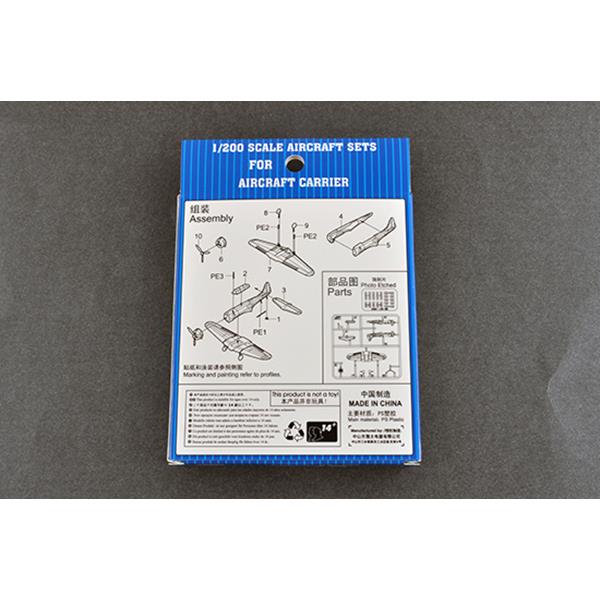
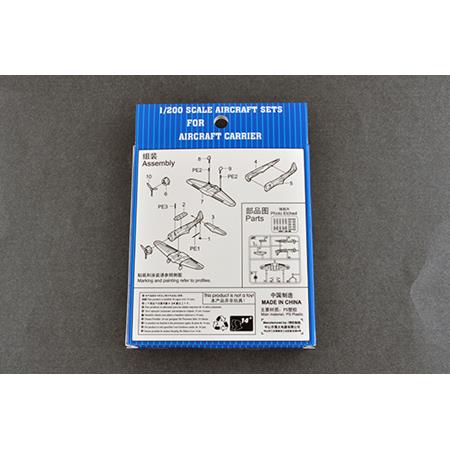
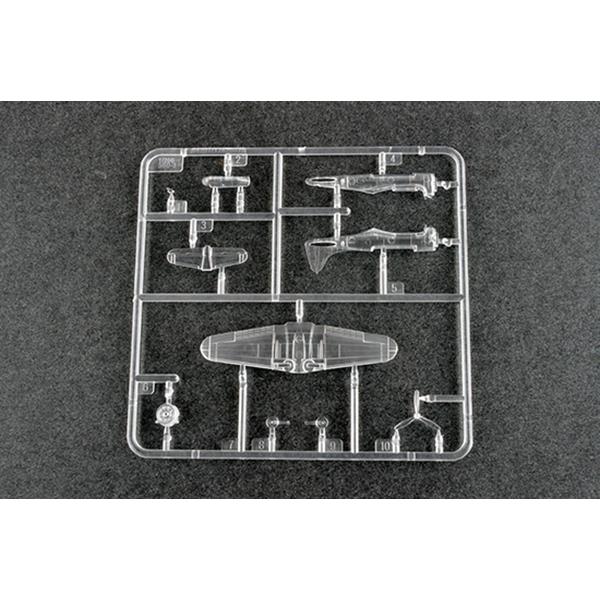
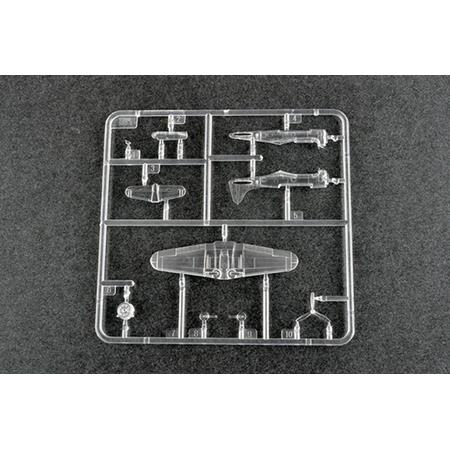
- 70 parts
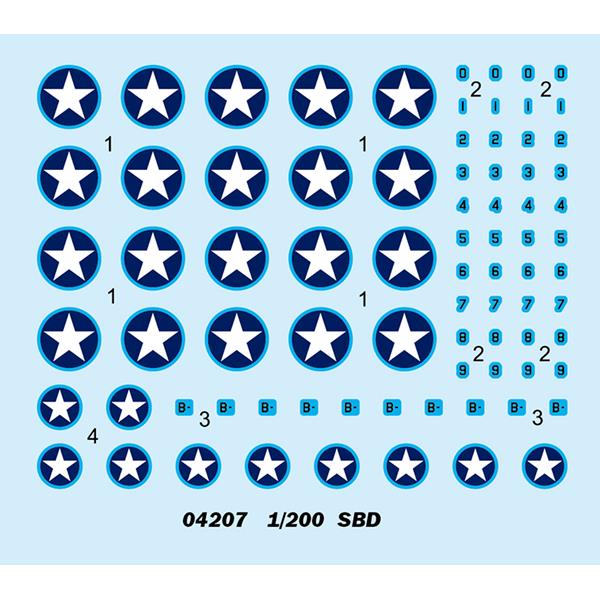
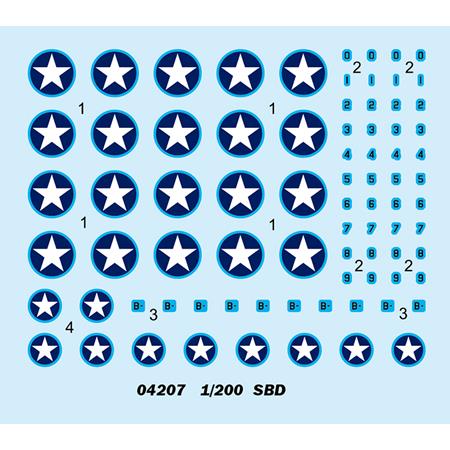
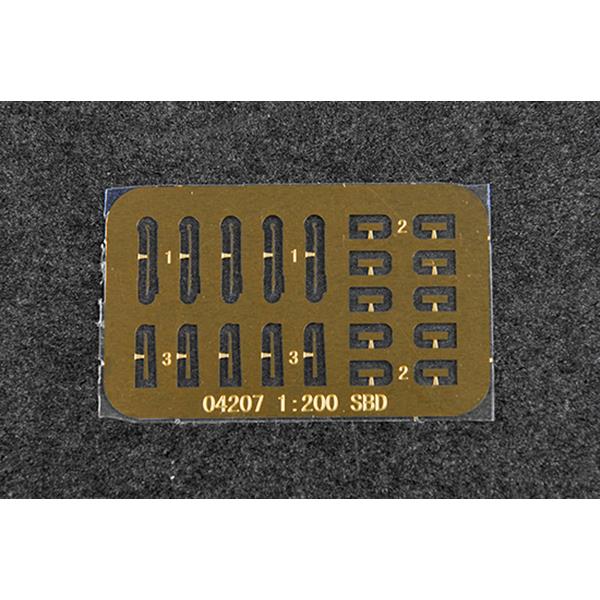
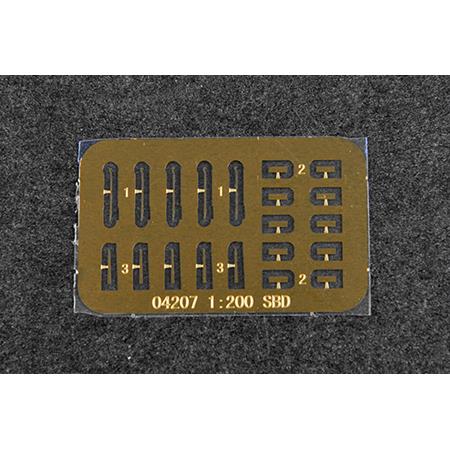
- Decals, clear parts, and photo-etched parts included
- Unassembled, unpainted
- Paint and glue not included
Designed for carrier operations, the SBD featured robust all-metal landing gear and folding wings. Its most distinctive feature was the dive brakes—perforated flaps located on the upper and lower surfaces of the wings. These allowed for extremely steep dives without the aircraft accelerating excessively, enabling the pilot to drop bombs with great precision onto ships or ground targets.
Early variants were armed with two fixed 12.7 mm M2 machine guns mounted above the engine and two 7.62 mm machine guns for the rear gunner. The later SBD-5 model also featured two 12.7 mm machine guns for the pilot, while the observer operated two flexible 7.62 mm machine guns. A 1,000 lb (454 kg) bomb could be carried under the fuselage, with additional smaller bombs mounted under the wings. The SBD-5 was powered by a Wright R-1820-60 Cyclone engine generating approximately 1,200 hp and achieved a top speed of around 410 km/h. Although relatively slow compared to later fighter aircraft, it distinguished itself through excellent dive-bombing characteristics, high bombing accuracy, and a robust design.
Its most famous test of combat effectiveness was the Battle of Midway on June 4, 1942. SBD Dauntless aircraft from the US carriers *USS Enterprise*, *USS Yorktown*, and *USS Hornet* attacked the Japanese aircraft carriers. Within a short time, the Akagi, Kaga, and Sōryū were heavily damaged and lost; later, the Hiryū was also attacked and disabled by Dauntless bombers. Consequently, the SBD is considered one of the decisive American combat aircraft of the battle.
The Dauntless remained in service long after Midway. It saw action at Guadalcanal, in the Battle of the Coral Sea, and during numerous operations in the South Pacific, among other engagements. From 1943 onwards, it was increasingly replaced in carrier-based units by the more capable Curtiss SB2C Helldiver, though it remained in service with Marine Corps units for a longer period.
Customer Reviews 1
Write now your personal experience with this article and help others with their purchase decision.