Bandai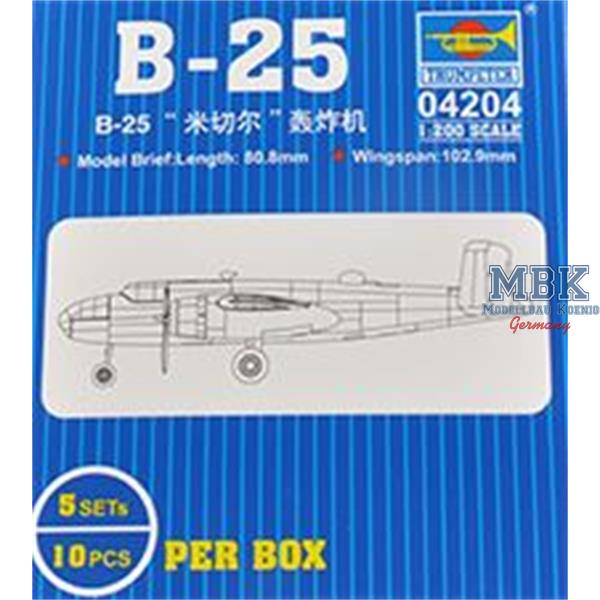



7.90 €
VAT included plus shipping and handling
Unfortunately sold out at the moment
No new delivery date known, if necessary please activate stock alert
Plastic model kit for North American B-25 Mitchell bombers
The B-25 was employed for daylight bombing missions against tactical and operational targets. Over the course of the war, however, it evolved into an extremely versatile combat aircraft. In addition to its traditional role as a bomber, it served in low-level attack, anti-shipping, and reconnaissance roles, as well as in ground support. Particularly in the Pacific theater, the B-25 proved highly effective against Japanese ships and ground targets thanks to its robust construction and heavy armament.
The B-25 gained fame through the Doolittle Raid on April 18, 1942. Led by Lieutenant Colonel James "Jimmy" Doolittle, 16 B-25B aircraft launched from the aircraft carrier USS Hornet to attack targets on the Japanese home islands. These bombers - unusually large for carrier-based operations - had been specially modified for the mission.
The major production variants differed significantly from one another. The early B-25B featured relatively weak defensive armament, supplemented by two dorsal turrets. The B-25C and B-25D models introduced improved engines, self-sealing fuel tanks, and other modifications. The best-known variant was the B-25J, many of which reverted to having a glazed bombardier's nose. In contrast, other B-25Js were built as low-level attack aircraft featuring a solid nose with heavy armament.
The B-25 was powered by two Wright R-2600 Cyclone radial engines, each producing approximately 1,700 hp. Depending on the version and mission configuration, it achieved speeds of around 440–445 km/h. The typical bomb load was approximately 1,360 kg, though the actual payload depended heavily on range and mission profile.
Armament became increasingly heavy over the course of production. Later B-25 models could carry numerous 12.7 mm M2 Browning machine guns. On specialized low-level attack versions, nose-mounted firepower was massively increased through the addition of fixed M2 machine guns. Some aircraft were also equipped with 75 mm cannons, rockets, or specialized anti-shipping gear.
- Scale: 1:200
- 5 aircraft
- Dimensions (assembled): Length 80.8 mm / Wingspan 102.9 mm
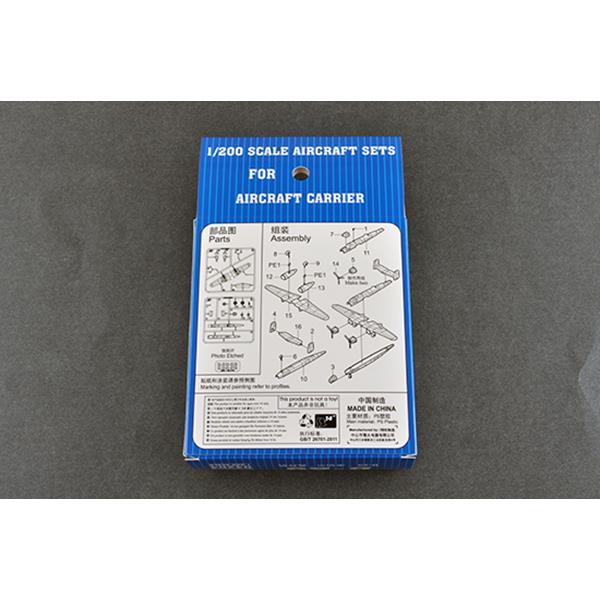
- 100 parts
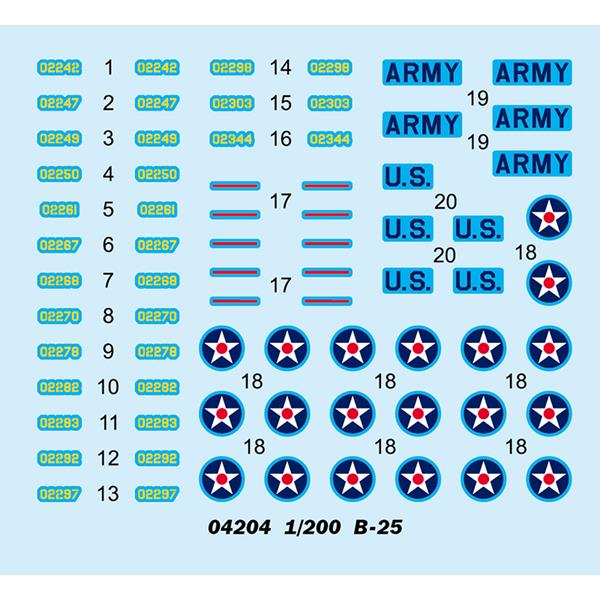
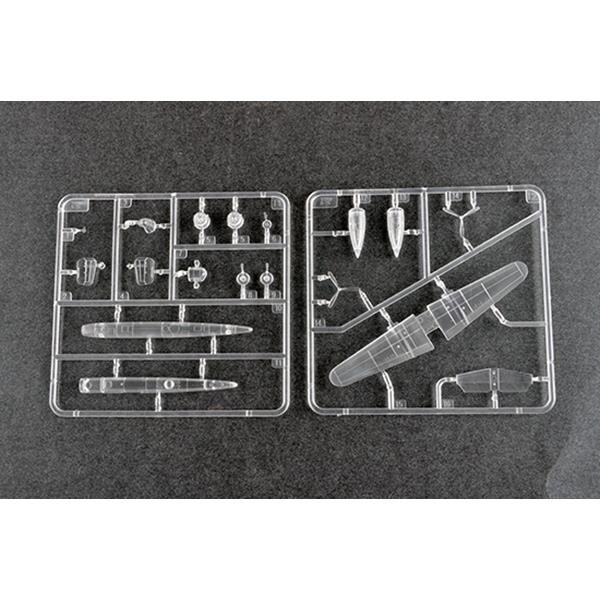
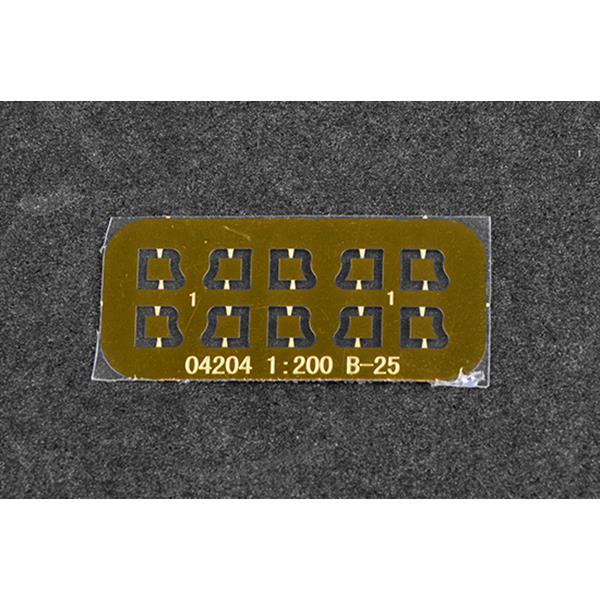
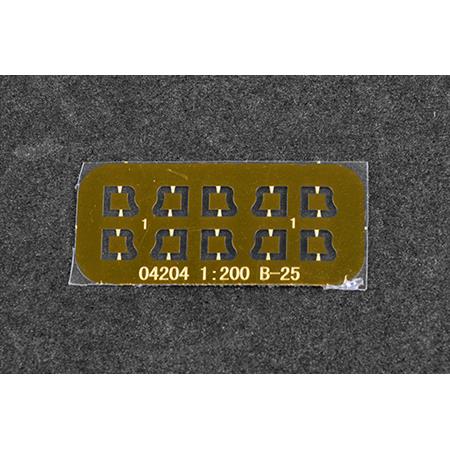
- Decals, clear parts, and photo-etched parts included
- Unassembled, unpainted
- Paint and glue not included
The B-25 was employed for daylight bombing missions against tactical and operational targets. Over the course of the war, however, it evolved into an extremely versatile combat aircraft. In addition to its traditional role as a bomber, it served in low-level attack, anti-shipping, and reconnaissance roles, as well as in ground support. Particularly in the Pacific theater, the B-25 proved highly effective against Japanese ships and ground targets thanks to its robust construction and heavy armament.
The B-25 gained fame through the Doolittle Raid on April 18, 1942. Led by Lieutenant Colonel James "Jimmy" Doolittle, 16 B-25B aircraft launched from the aircraft carrier USS Hornet to attack targets on the Japanese home islands. These bombers - unusually large for carrier-based operations - had been specially modified for the mission.
The major production variants differed significantly from one another. The early B-25B featured relatively weak defensive armament, supplemented by two dorsal turrets. The B-25C and B-25D models introduced improved engines, self-sealing fuel tanks, and other modifications. The best-known variant was the B-25J, many of which reverted to having a glazed bombardier's nose. In contrast, other B-25Js were built as low-level attack aircraft featuring a solid nose with heavy armament.
The B-25 was powered by two Wright R-2600 Cyclone radial engines, each producing approximately 1,700 hp. Depending on the version and mission configuration, it achieved speeds of around 440–445 km/h. The typical bomb load was approximately 1,360 kg, though the actual payload depended heavily on range and mission profile.
Armament became increasingly heavy over the course of production. Later B-25 models could carry numerous 12.7 mm M2 Browning machine guns. On specialized low-level attack versions, nose-mounted firepower was massively increased through the addition of fixed M2 machine guns. Some aircraft were also equipped with 75 mm cannons, rockets, or specialized anti-shipping gear.
Customer Reviews 2
Write now your personal experience with this article and help others with their purchase decision.