Bandai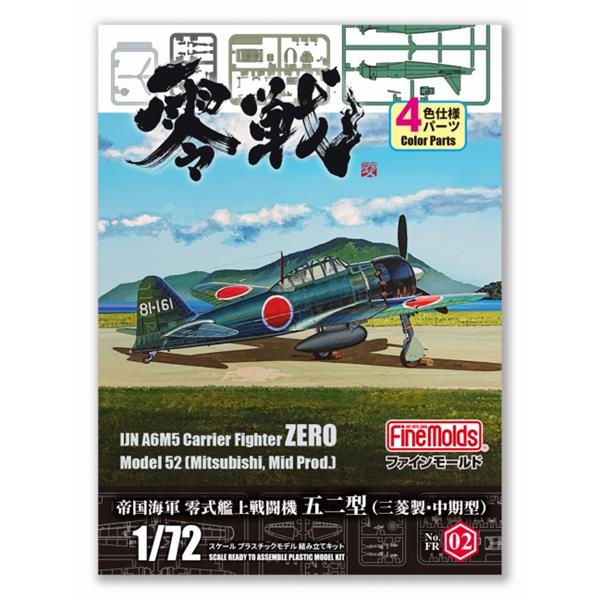
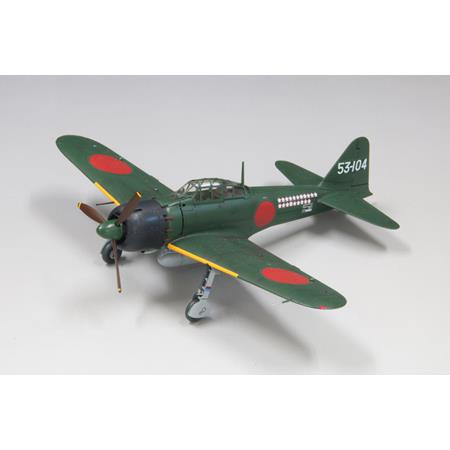
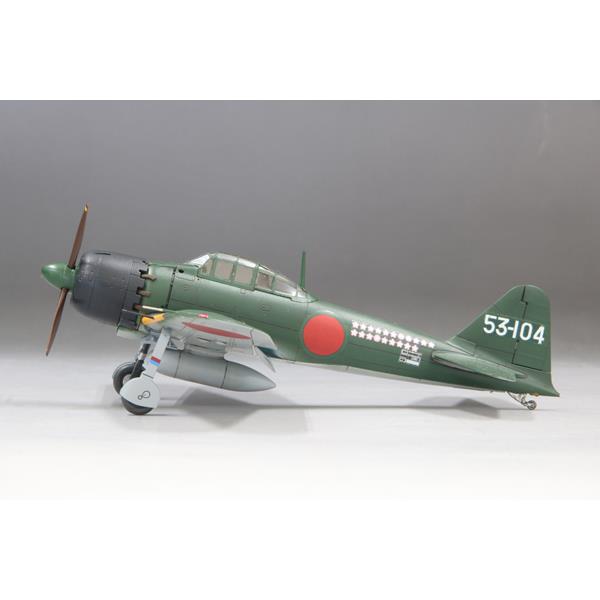
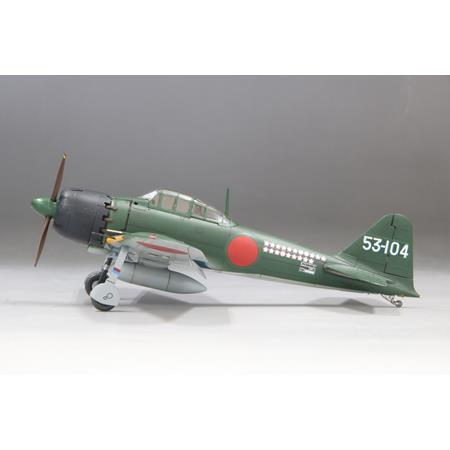
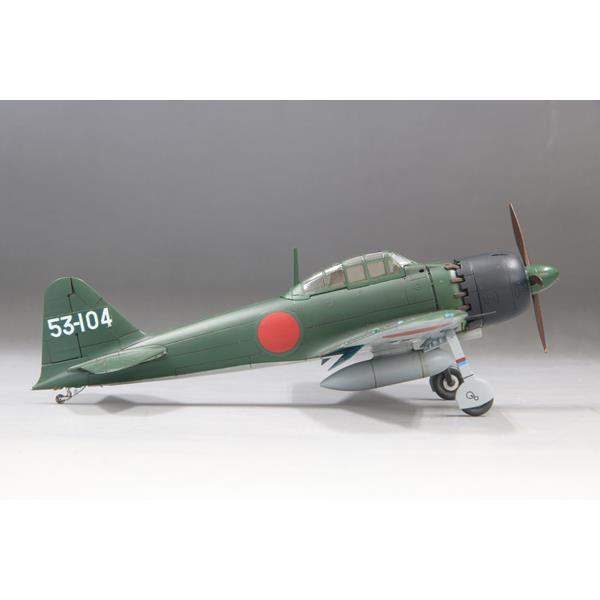
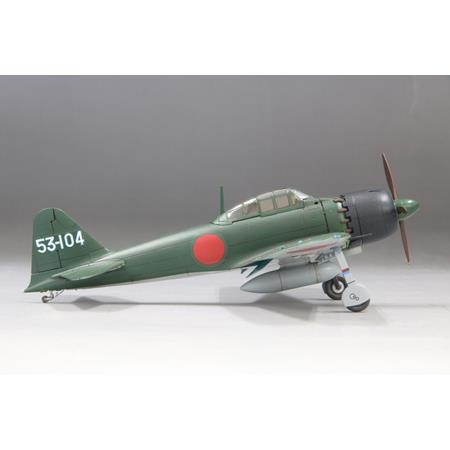
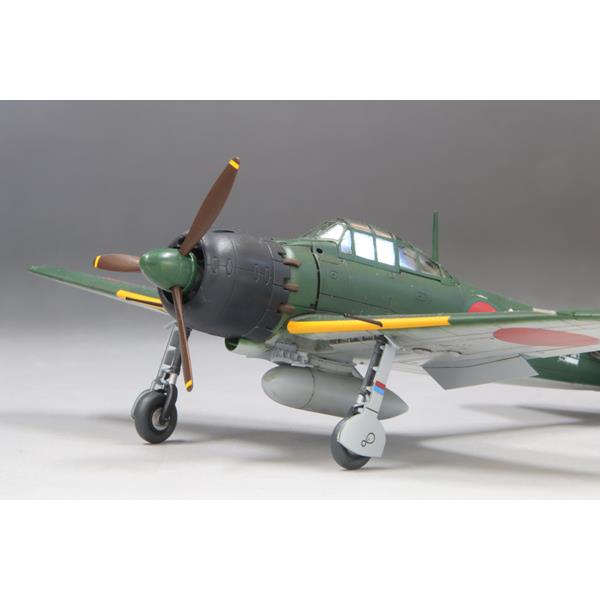
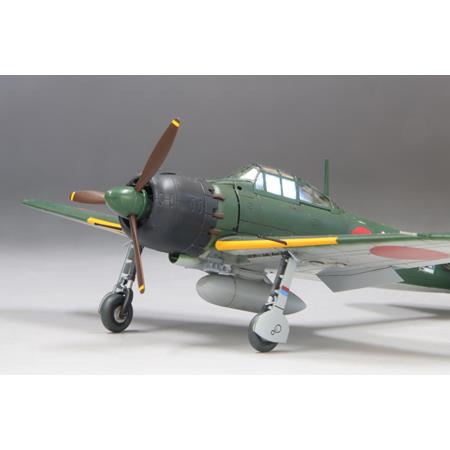
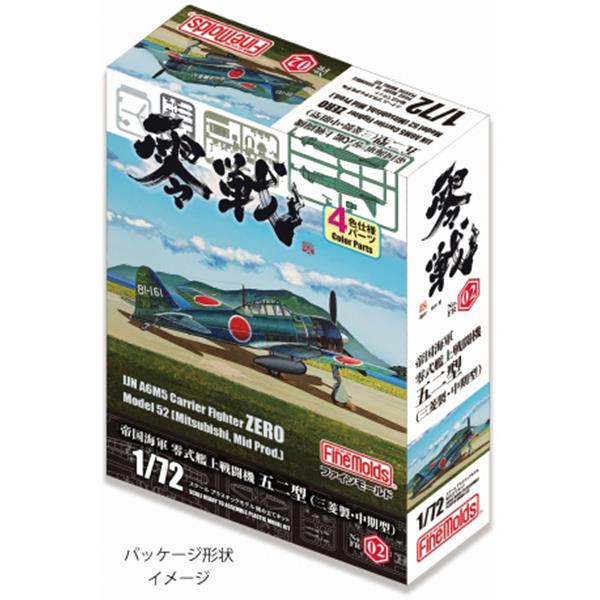
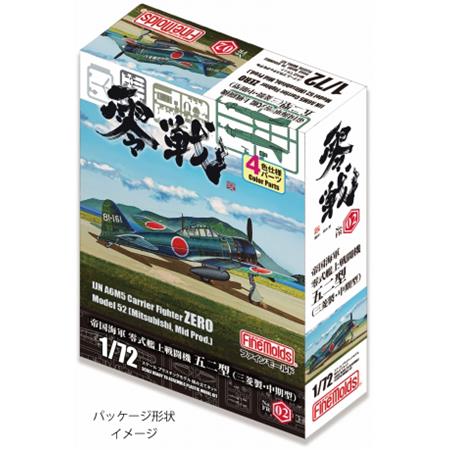


IJN A6M5 Zero Model 52 (Mitsubishi, mid. Prod.)
Item Number:
FM-FR02
FM-FR02
Manufacturer
Fine Molds
Fine Molds
Scale:
1:72
1:72
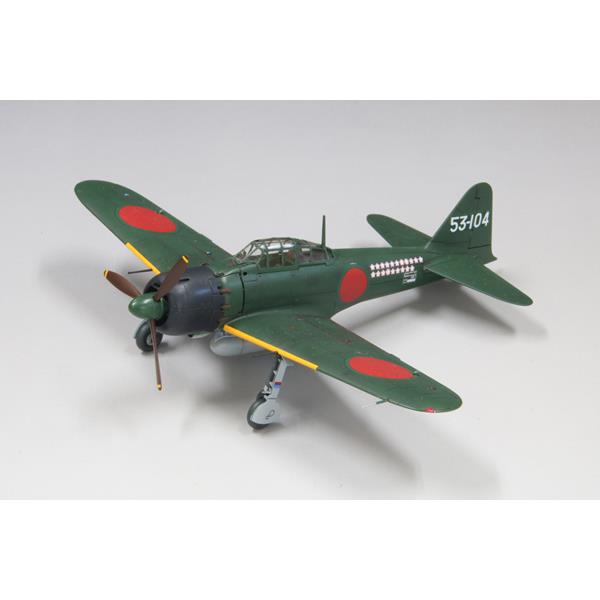
Plastic model kit of a mid-production Imperial Japanese Navy Mitsubishi A6M5 Zero Model 52 Otsu (Zeke) carrier-based fighter aircraft
The A6M5 Model 52 Otsu continued to be powered by the air-cooled Nakajima Sakae 21 radial engine, delivering approximately 1,130 hp and enabling a top speed of around 565 km/h. Compared to the initial production version, the mid-production series incorporated numerous detailed improvements. The most noticeable change was the replacement of one of the two fuselage-mounted 7.7 mm machine guns with a more powerful 13.2 mm Type 3 machine gun. Combined with the two wing-mounted 20 mm cannons, this significantly boosted firepower, particularly against rugged Allied fighters and bombers. Additionally, the windscreen was fitted with thicker armored glass to provide better protection for the pilot.
Like all Model 52 variants, the *Otsu* featured clipped wingtips, a reinforced wing structure, and a redesigned exhaust system; the individual exhaust stacks generated a slight thrust effect, thereby improving flight performance. Despite these measures, the lack of pilot seat armor and the limited self-sealing capability of the fuel tanks remained design weaknesses. It was not until the subsequent Model 52 *Hei* that further protective measures and even heavier armament were introduced.
The A6M5 Model 52 *Otsu* saw service across nearly all Pacific theaters of war starting in 1944 and formed a key component of Japanese naval fighter units during the final phase of the conflict. Although technically improved, it could only hold its own against more powerful Allied aircraft—such as the Grumman F6F Hellcat or Vought F4U Corsair—under favorable conditions. Compounding this issue was a growing shortage of experienced pilots, which further diminished the Zero's operational effectiveness.
For scale modelers, the mid-production series of the A6M5 is of particular interest, as it represents the transition between the early and late Model 52 variants. Typical identifying features include the single 13.2 mm machine gun on the left side of the fuselage, the clipped wingtips, the individual exhaust stacks, and the dark green upper-surface camouflage combined with a light gray underside. This combination of the Zero's classic lines and incremental technical improvements makes the Model 52 Otsu one of the most attractive and historically significant variants of this famous fighter aircraft.
- 1:72 scale
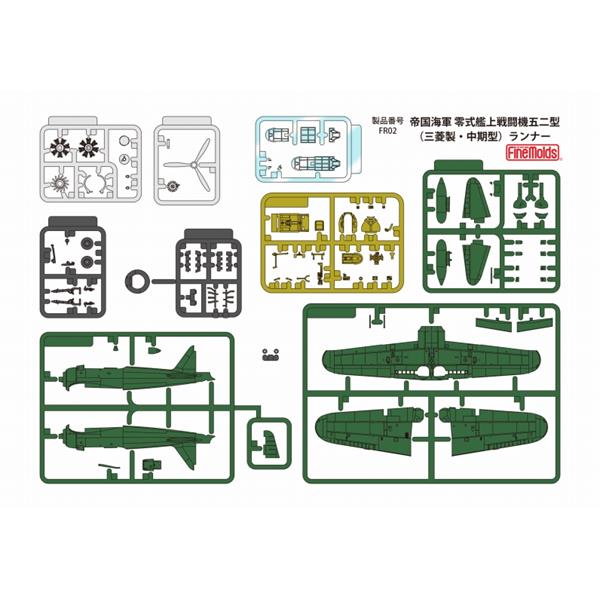
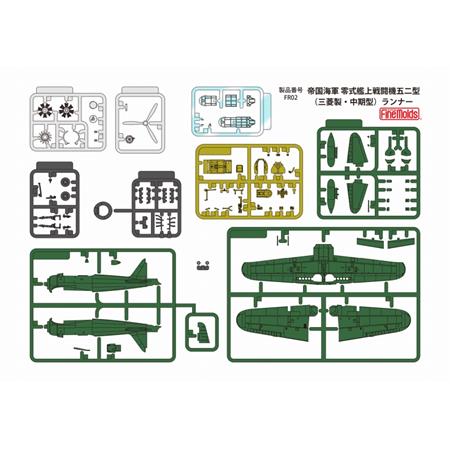
- Parts molded in 4 different colors
- Clear parts included
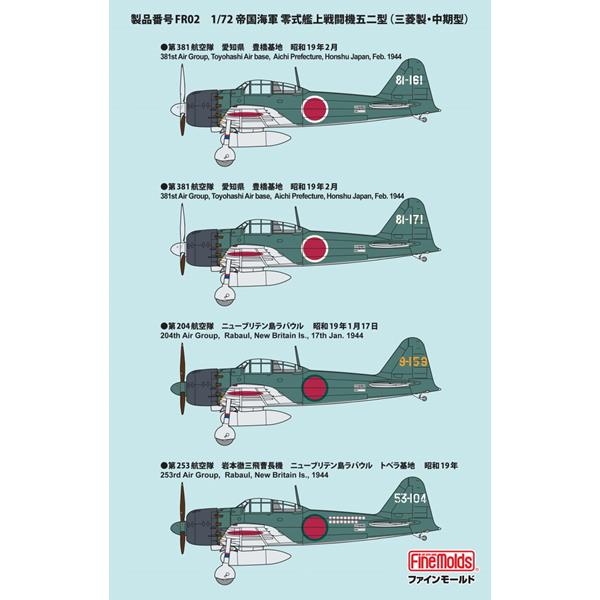
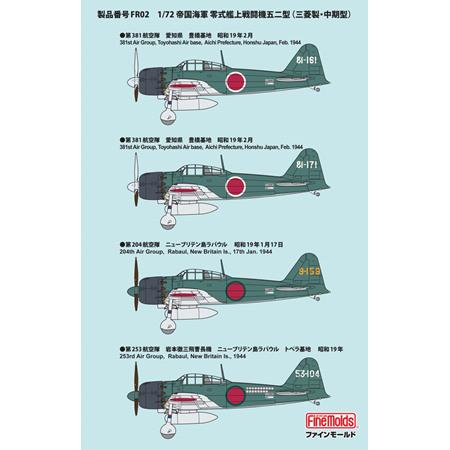
- 4 marking options
- 81-161, 381st Air Group, Toyohashi Airbase, Aichi Prefecture, Honshu/Japan, Feb. 1944
- 81-171, 381st Air Group, Toyohashi Airbase, Aichi Prefecture, Honshu/Japan, Feb. 1944
- 9-159, 204th Air Group, Rabaul, New Britain Is., Jan. 17, 1944
- 53-104, 253rd Air Group, Rabaul, New Britain Is., 1944
- Unassembled, unpainted
- Paint and glue not included
The A6M5 Model 52 Otsu continued to be powered by the air-cooled Nakajima Sakae 21 radial engine, delivering approximately 1,130 hp and enabling a top speed of around 565 km/h. Compared to the initial production version, the mid-production series incorporated numerous detailed improvements. The most noticeable change was the replacement of one of the two fuselage-mounted 7.7 mm machine guns with a more powerful 13.2 mm Type 3 machine gun. Combined with the two wing-mounted 20 mm cannons, this significantly boosted firepower, particularly against rugged Allied fighters and bombers. Additionally, the windscreen was fitted with thicker armored glass to provide better protection for the pilot.
Like all Model 52 variants, the *Otsu* featured clipped wingtips, a reinforced wing structure, and a redesigned exhaust system; the individual exhaust stacks generated a slight thrust effect, thereby improving flight performance. Despite these measures, the lack of pilot seat armor and the limited self-sealing capability of the fuel tanks remained design weaknesses. It was not until the subsequent Model 52 *Hei* that further protective measures and even heavier armament were introduced.
The A6M5 Model 52 *Otsu* saw service across nearly all Pacific theaters of war starting in 1944 and formed a key component of Japanese naval fighter units during the final phase of the conflict. Although technically improved, it could only hold its own against more powerful Allied aircraft—such as the Grumman F6F Hellcat or Vought F4U Corsair—under favorable conditions. Compounding this issue was a growing shortage of experienced pilots, which further diminished the Zero's operational effectiveness.
For scale modelers, the mid-production series of the A6M5 is of particular interest, as it represents the transition between the early and late Model 52 variants. Typical identifying features include the single 13.2 mm machine gun on the left side of the fuselage, the clipped wingtips, the individual exhaust stacks, and the dark green upper-surface camouflage combined with a light gray underside. This combination of the Zero's classic lines and incremental technical improvements makes the Model 52 Otsu one of the most attractive and historically significant variants of this famous fighter aircraft.
Customer Reviews 0
Write now your personal experience with this article and help others with their purchase decision.
Customers also bought