Bandai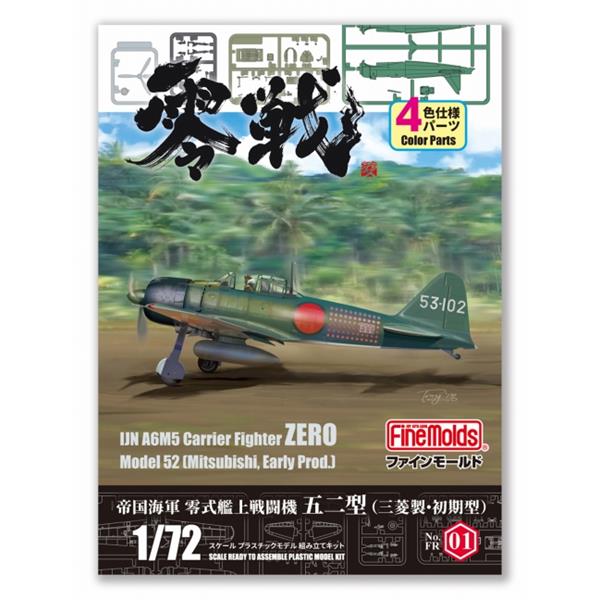
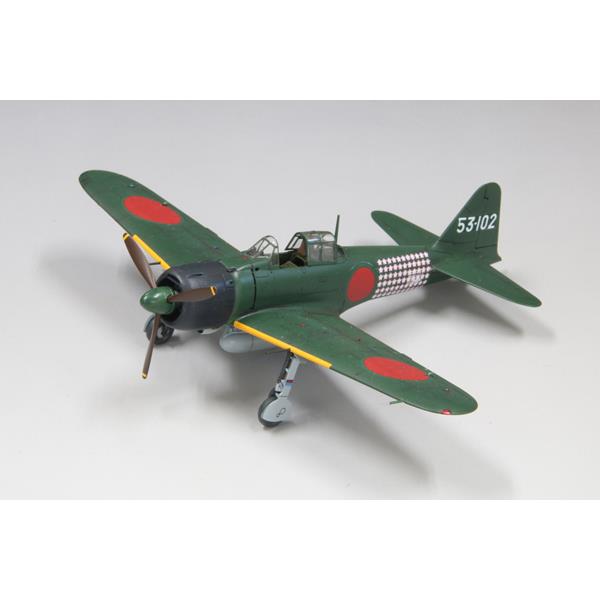
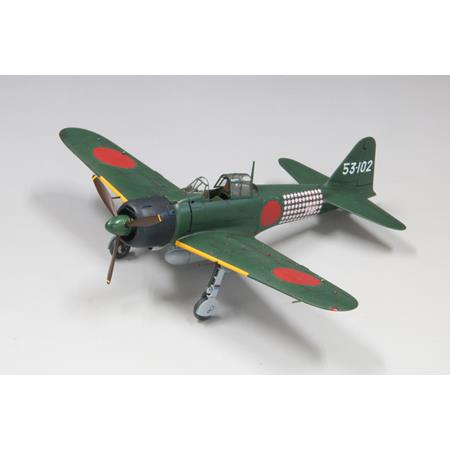
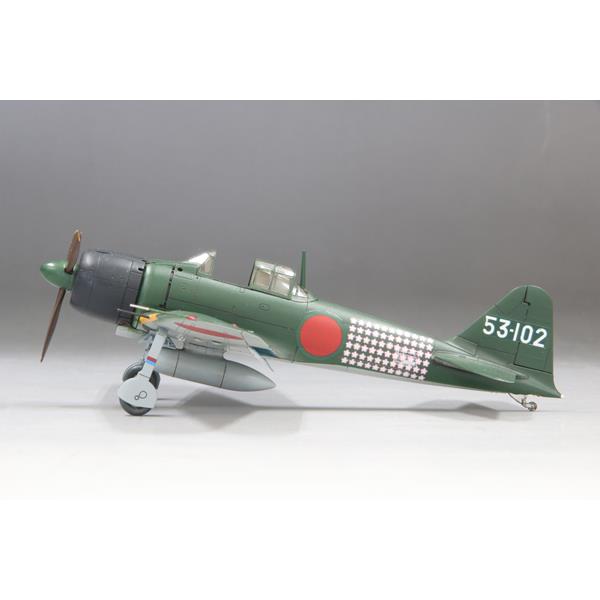
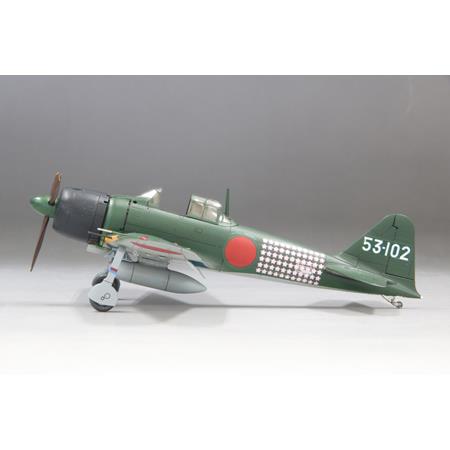
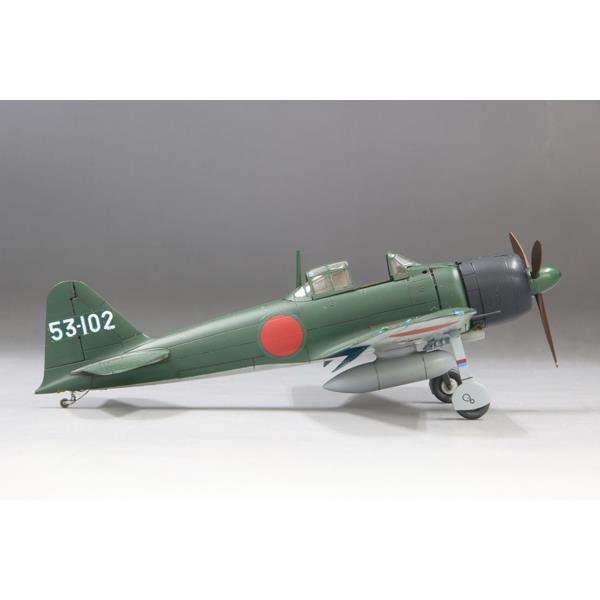
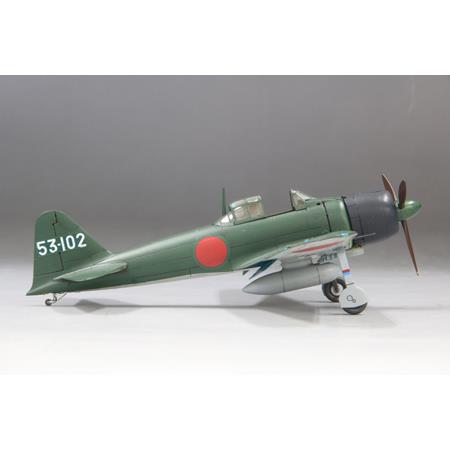
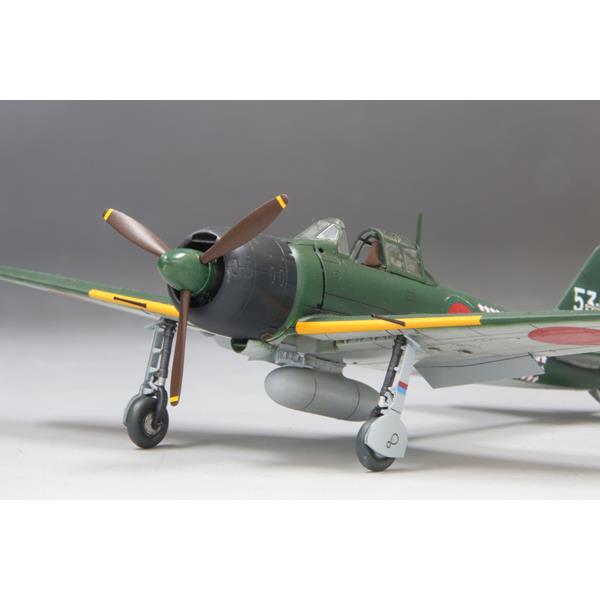
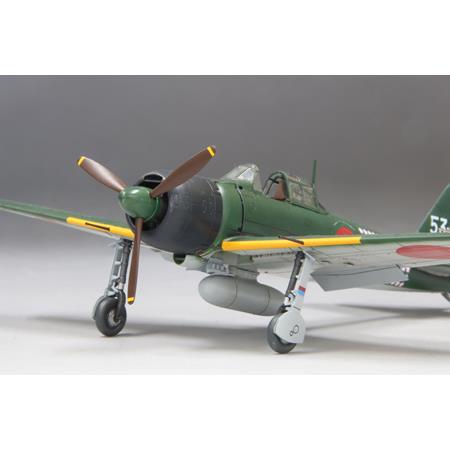
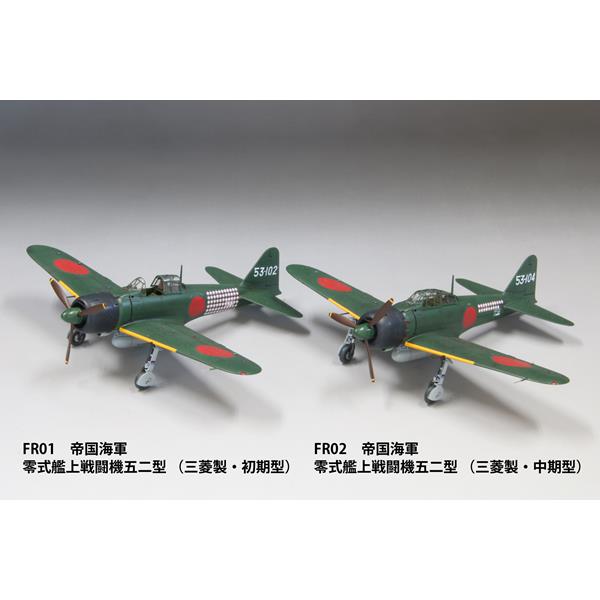
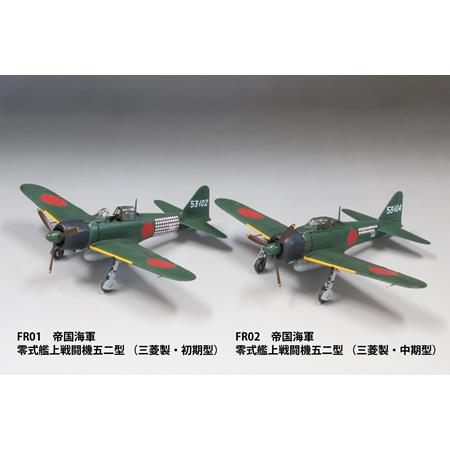
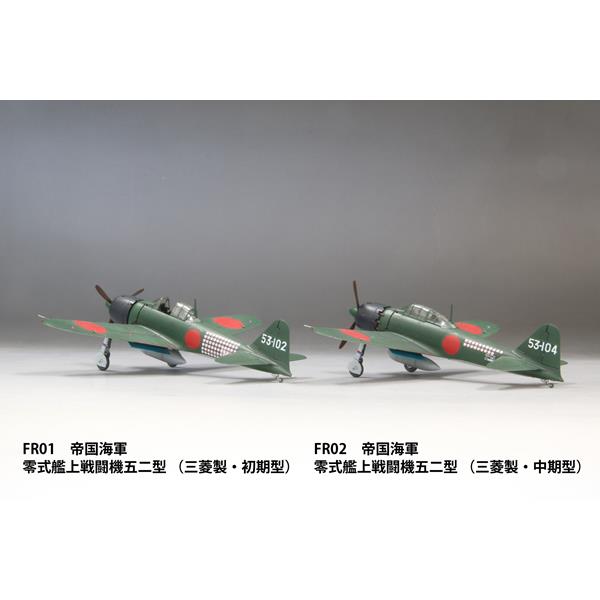
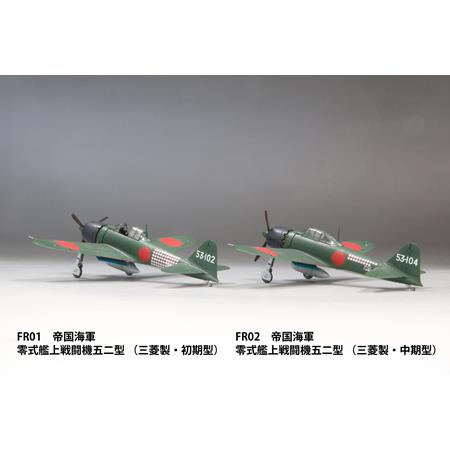
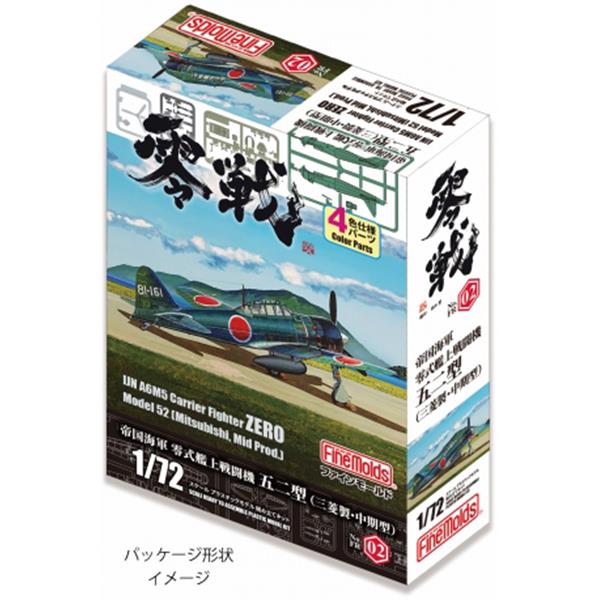
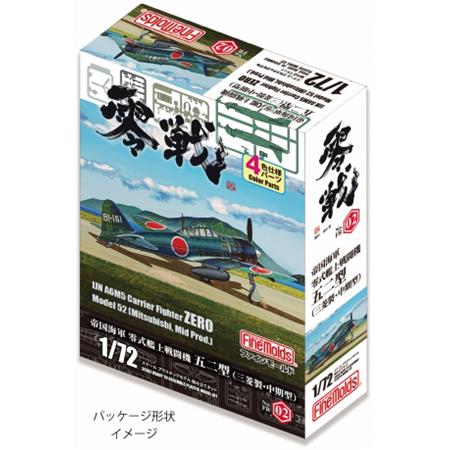


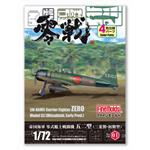
IJN A6M5 Zero Model 52 (Mitsubishi, early Prod.)
Item Number:
FM-FR01
FM-FR01
Manufacturer
Fine Molds
Fine Molds
Scale:
1:72
1:72
Plastic model kit of the early-production Imperial Japanese Navy's Mitsubishi A6M5 Zero Model 52 Ko (Zeke) carrier-based fighter aircraft
The A6M5 Model 52 Ko was powered by an air-cooled Nakajima Sakae 21 radial engine producing approximately 1,130 hp, enabling a top speed of around 565 km/h. Compared to the preceding Model 22 version, it featured shortened, rounded wingtips and a reinforced wing structure, which significantly improved the roll rate, particularly at high speeds. It also incorporated a redesigned exhaust system with individual stacks, the thrust effect of which provided a slight boost in performance.
Its armament consisted of two wing-mounted 20mm Type 99 Model 2 cannons and two 7.7mm machine guns positioned above the engine. Unlike later production batches, the early Model 52 variant relied solely on this light fuselage-mounted armament; it lacked both the 13.2mm machine gun introduced later and the additional protective measures found in subsequent versions. Nevertheless, it was regarded as offering a well-balanced combination of firepower, range, and excellent flight characteristics.
The A6M5 Model 52 Ko saw service from the autumn of 1943 across the key theaters of the Pacific War. It proved effective, particularly in the defense of Japanese island bases and in carrier-based operations, though it increasingly had to contend with modern Allied aircraft such as the Grumman F6F Hellcat and the Vought F4U Corsair. While maneuverability remained one of its greatest strengths, its relatively light armor and the absence of fully self-sealing fuel tanks became increasingly significant liabilities.
For scale modelers, the early production series of the A6M5 holds a special appeal, as it combines the classic Zero silhouette with the first major performance upgrades. Key features include the twin 7.7mm machine guns in the upper fuselage, shortened wingtips, distinctive individual exhaust stacks, and a dark green upper-surface camouflage contrasting with a light gray underside. The Model 52 Ko thus embodies the transition from the early wartime Zero to the technically advanced late-war versions and ranks among the most distinctive variants of this famous Japanese fighter aircraft.
- 1:72 scale
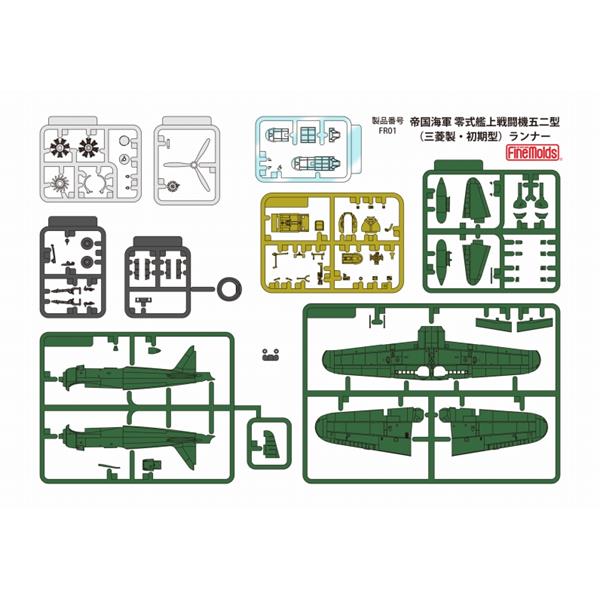
- Parts molded in 4 different colors
- Clear parts included
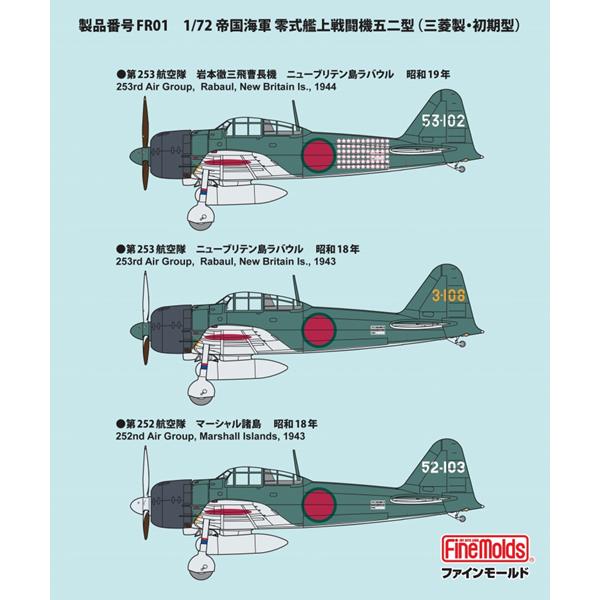
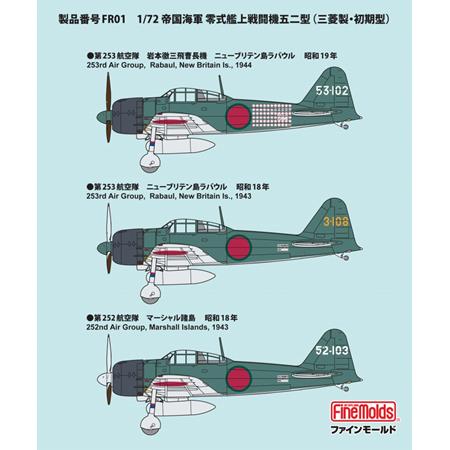
- 3 marking options:
- 53-102, 253rd Air Group, Rabaul, New Britain Is., 1944
- 3-108, 253rd Air Group, Rabaul, New Britain Is., 1944
- 52-103, 252nd Air Group, Marshall Islands, 1943
- Unassembled, unpainted
- Paint and glue not included
The A6M5 Model 52 Ko was powered by an air-cooled Nakajima Sakae 21 radial engine producing approximately 1,130 hp, enabling a top speed of around 565 km/h. Compared to the preceding Model 22 version, it featured shortened, rounded wingtips and a reinforced wing structure, which significantly improved the roll rate, particularly at high speeds. It also incorporated a redesigned exhaust system with individual stacks, the thrust effect of which provided a slight boost in performance.
Its armament consisted of two wing-mounted 20mm Type 99 Model 2 cannons and two 7.7mm machine guns positioned above the engine. Unlike later production batches, the early Model 52 variant relied solely on this light fuselage-mounted armament; it lacked both the 13.2mm machine gun introduced later and the additional protective measures found in subsequent versions. Nevertheless, it was regarded as offering a well-balanced combination of firepower, range, and excellent flight characteristics.
The A6M5 Model 52 Ko saw service from the autumn of 1943 across the key theaters of the Pacific War. It proved effective, particularly in the defense of Japanese island bases and in carrier-based operations, though it increasingly had to contend with modern Allied aircraft such as the Grumman F6F Hellcat and the Vought F4U Corsair. While maneuverability remained one of its greatest strengths, its relatively light armor and the absence of fully self-sealing fuel tanks became increasingly significant liabilities.
For scale modelers, the early production series of the A6M5 holds a special appeal, as it combines the classic Zero silhouette with the first major performance upgrades. Key features include the twin 7.7mm machine guns in the upper fuselage, shortened wingtips, distinctive individual exhaust stacks, and a dark green upper-surface camouflage contrasting with a light gray underside. The Model 52 Ko thus embodies the transition from the early wartime Zero to the technically advanced late-war versions and ranks among the most distinctive variants of this famous Japanese fighter aircraft.
Customer Reviews 0
Write now your personal experience with this article and help others with their purchase decision.