Bandai

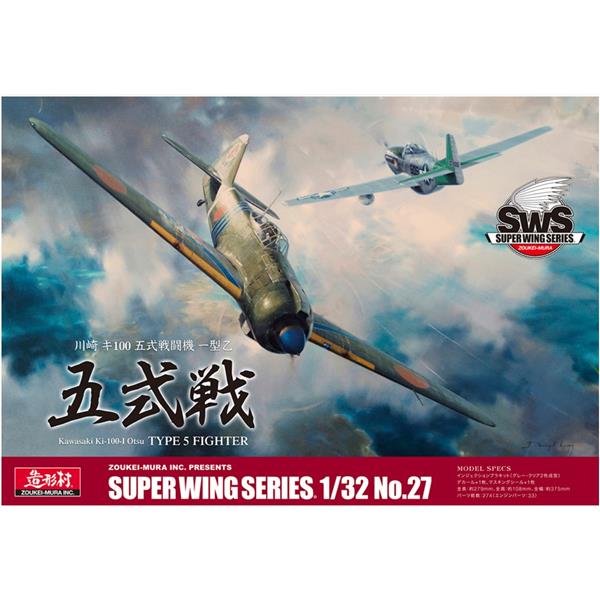
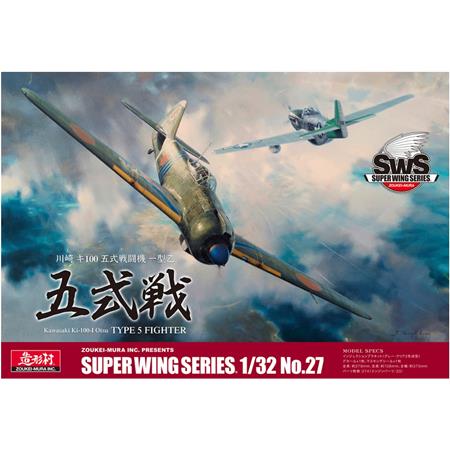
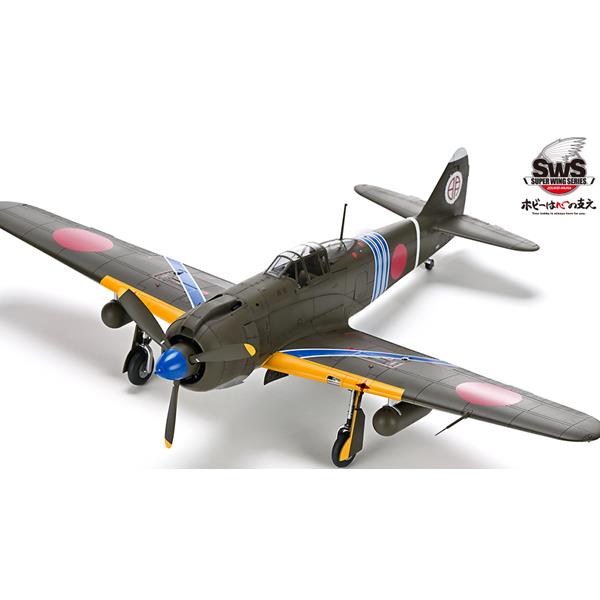
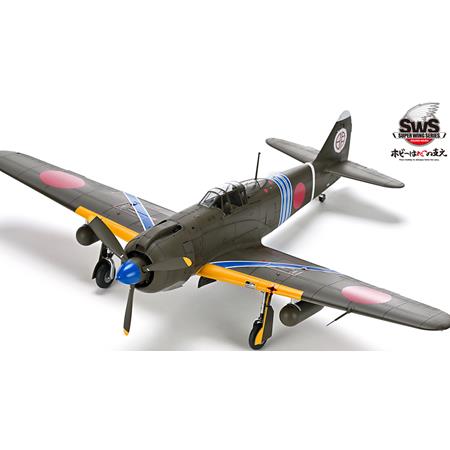
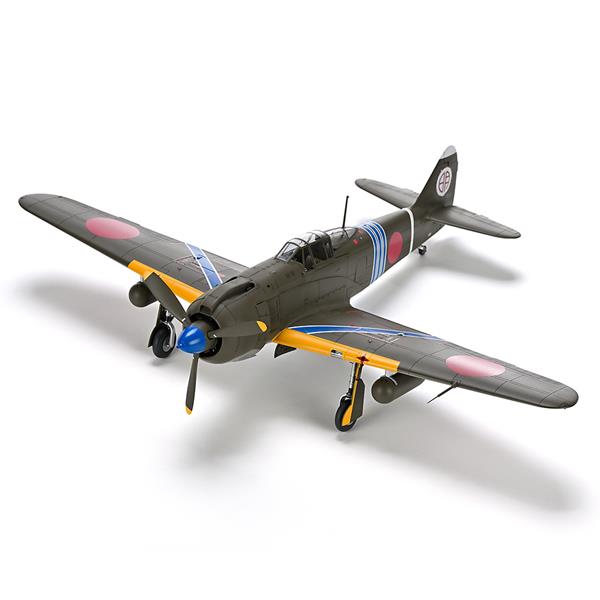
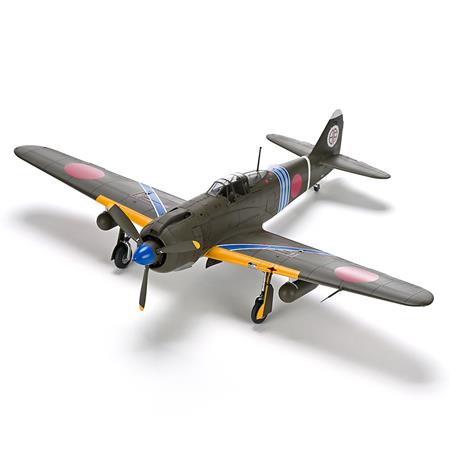
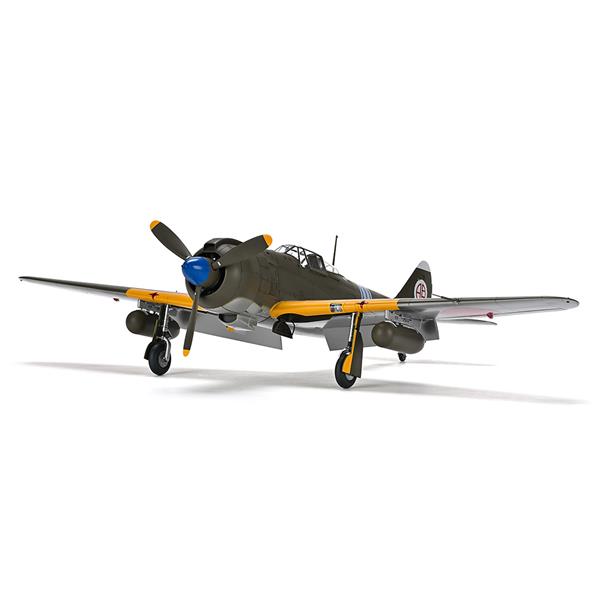
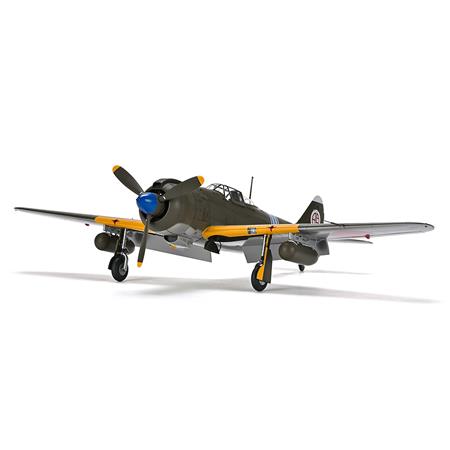
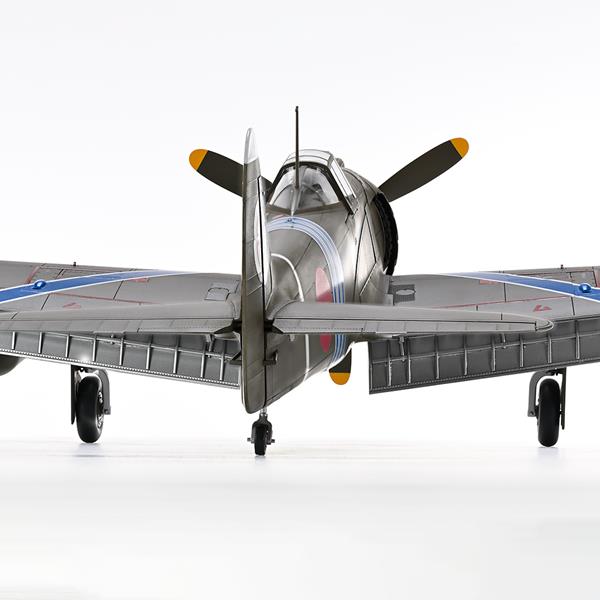
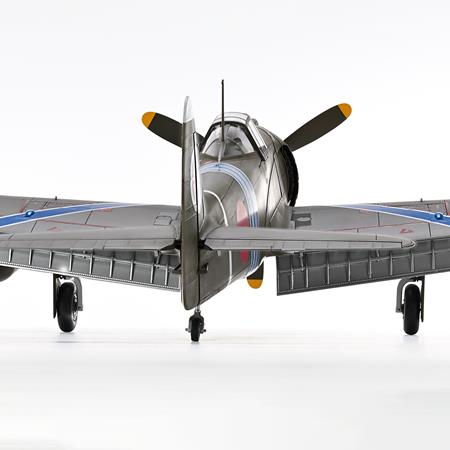
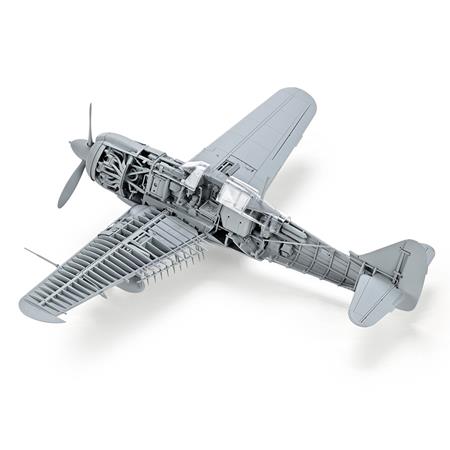
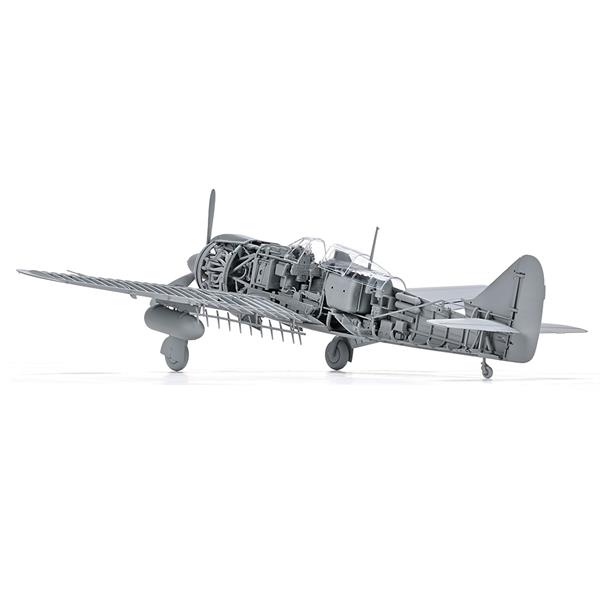
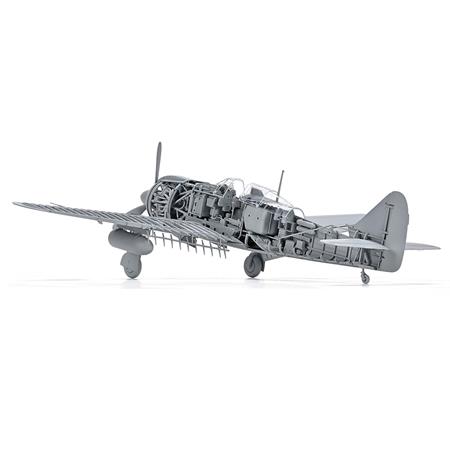
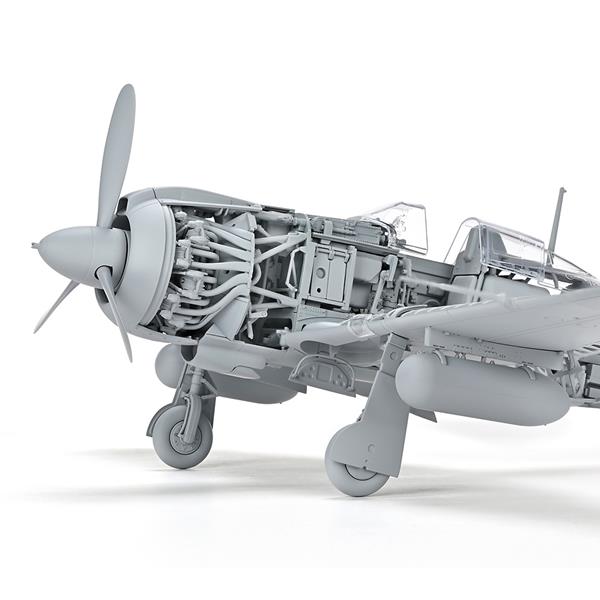
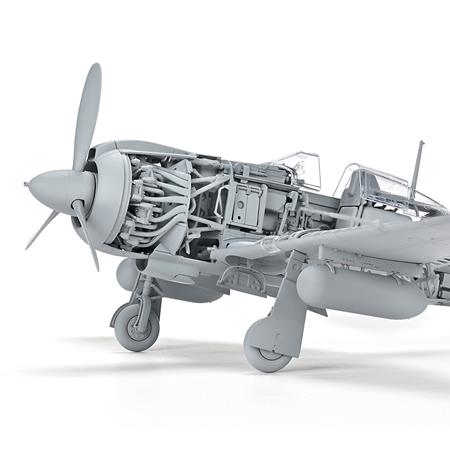
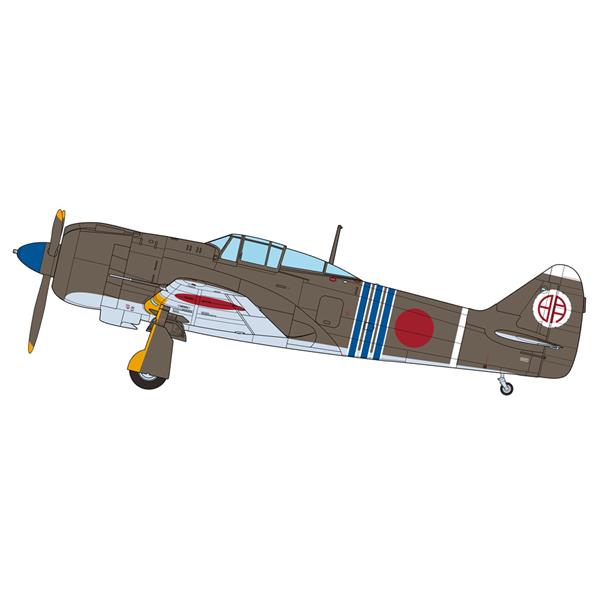
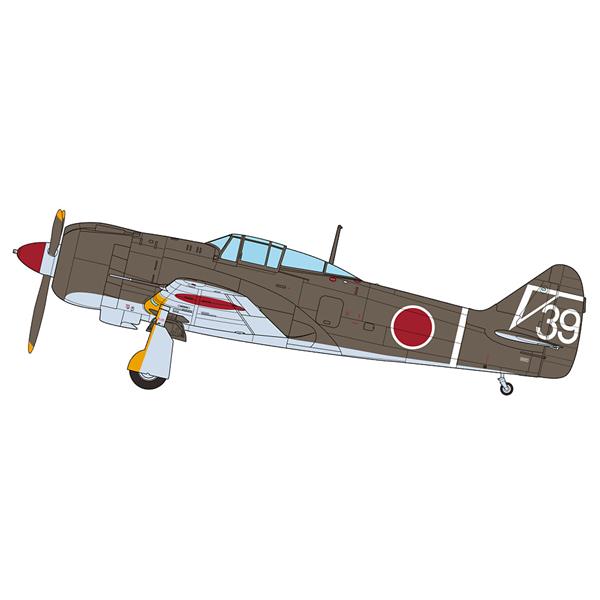
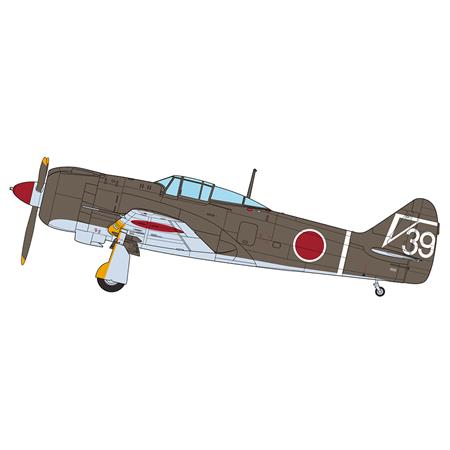


Kawasaki Ki-100-I OTSU Type 5 Fighter
Item Number:
ZM-SWS27
ZM-SWS27
Manufacturer
ZOUKEI-MURA
ZOUKEI-MURA
Scale:
1:32
1:32

You save: 8 %
instead of: 125.00 €*
Now: 115.00 €*
VAT included plus shipping and handling
Sonderangebot
Appears soon
We expect to arrive at middle / end of August 2026
Expected to be released middle / end of August 2026
Plastic model kit to build a Japanese Kawasaki Ki-100-I OTSU Type 5 fighter aircraft
World's first Ki-100 kit in this scale
SwS Super Wings Series
The Legacy of the “Hien” Masterpiece Reborn through SWS.
The Ki‑100 Type 5 Army Fighter was a Japanese Army aircraft of World War II, developed as a derivative of the Ki‑61 Hien.
By installing the Ha‑112 radial air‑cooled engine and modifying the fuselage, the Ki‑100 arose as an emergency conversion aircraft.
Despite its improvised origins, it demonstrated outstanding performance, providing the Japanese Army with an unexpectedly capable fighter.
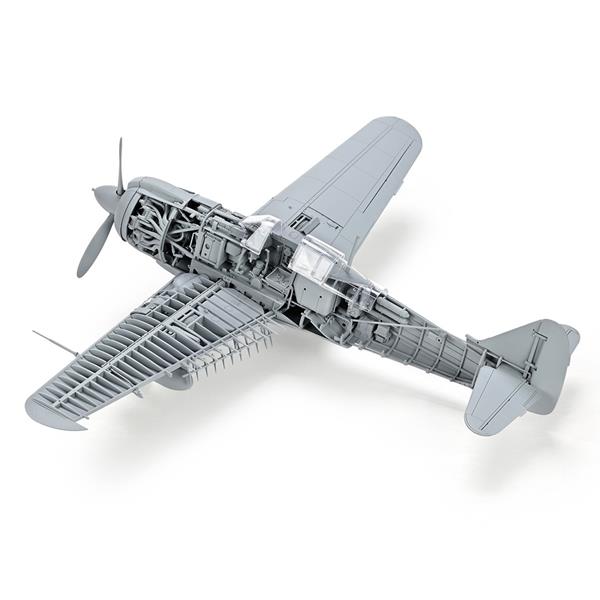
This SWS kit thoroughly recreates the Ki‑100 based on direct research of surviving airframes.
It faithfully reproduces the structure and modification process through a carefully engineered parts layout.
From the slender Ki‑61 fuselage grafted with a radial engine, to the large fillets blending the fuselage with the wings, all hallmarks of Kawasaki’s engineering challenges were exquisitely captured in true SWS standard.
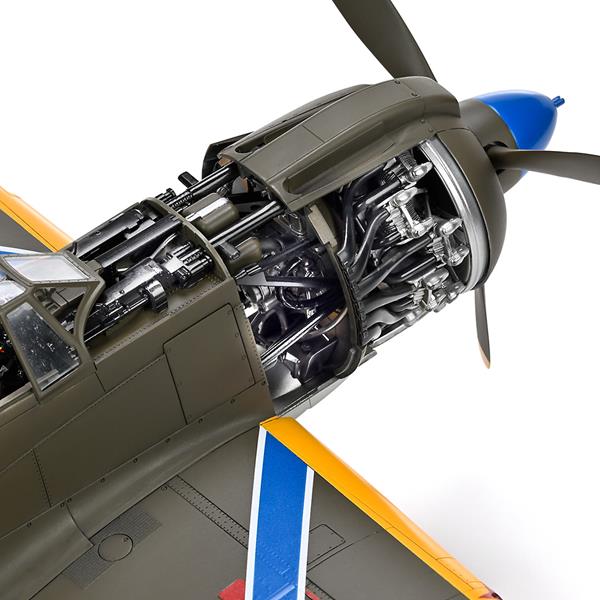
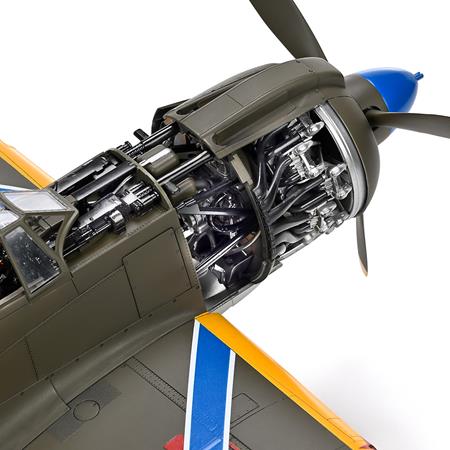
Focus on the air‑cooled, 14‑cylinder, twin‑row radial Ha‑112‑II engine, which can truly be called the heart of the Ki‑100.
Developed by Mitsubishi Heavy Industries, the Ha‑112‑II was equipped with a single‑stage, two‑speed centrifugal supercharger and was used on late‑war Japanese Army aircraft such as the Ki‑100 fighter and Ki‑46 reconnaissance aircraft. It was equivalent to the Navy’s Kinsei Model 62 and delivered a maximum output of 1,500 horsepower. The engine drove a Pe‑29 propeller with a diameter of 3.0 meters, featuring wide paddle‑shaped blades. Because the radial engine was forcibly installed onto the slim fuselage originally designed for a liquid‑cooled engine, the resulting aerodynamic cowling and its dramatic tapering into the fuselage are major highlights of the Ki‑100’s distinctive appearance. As the unreliable Ha‑40 liquid‑cooled engine plagued the Ki‑61, the conversion that replaced it with the very dependable Ha‑112‑II air-cooled engine dramatically improved performance and reduced failure rates. As a result, the Ki‑100 became one of the finest fighters fielded by the Japanese Army in the latter half of the war.
Discover the Ki‑100 Cockpit, Where the Hien’s Legacy and Army Design Philosophy Converge.
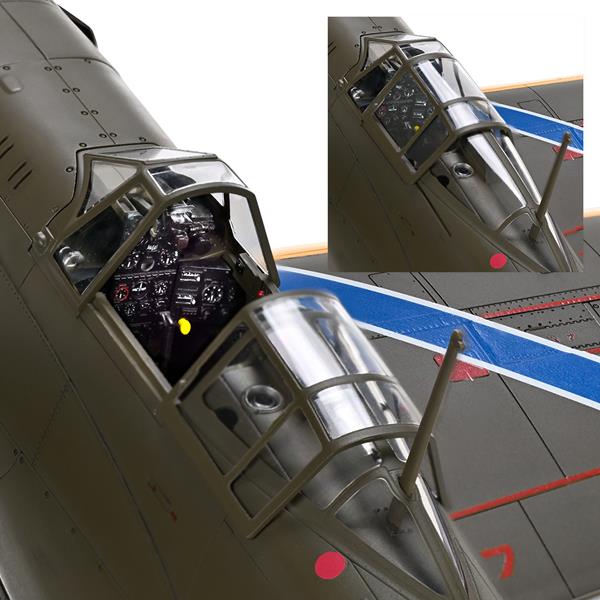
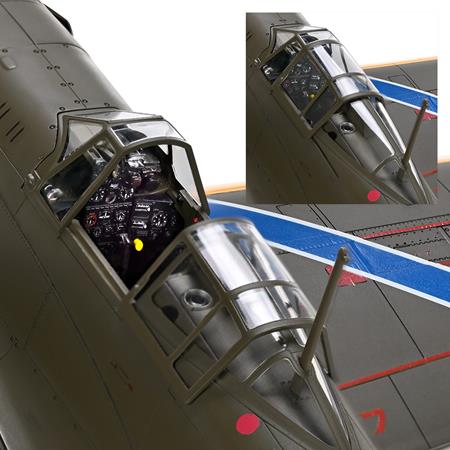
The cockpit of the Ki‑100 largely followed that of the Ki‑61 Hien, with instrument placement and control layouts typical of single‑seat fighters of the era. However, the installation of an armored steel plate behind the pilot’s headrest was relatively uncommon when compared to aircraft such as the Navy’s Zero, reflecting the Japanese Army’s greater emphasis on pilot protection.
In the SWS kit, the upper rear fuselage is molded as a separate part, allowing accurate reproduction of either the “razorback” canopy configuration seen on conversions from the Ki‑61 or the later‑production aircraft fitted with a “teardrop” canopy offering superior rearward visibility. This kit faithfully represents the Otsu variant, featuring the teardrop canopy that significantly improved rearward visibility.
Ho‑103s on the wings, Ho‑5s up front—four fixed guns that underpin the Ki‑100’s air‑superiority capability.
The fixed armament consisted of two 12.7 mm Ho‑103 (Type 1) machine guns mounted in the wings, each supplied with 250 rounds, which were standard Imperial Japanese Army aircraft weapons of World War II. In addition, two 20 mm Ho‑5 (Type 2) cannons were installed on top of the nose. These were developed from the 12.7 mm Ho‑103, with an enlarged breech to accommodate the more powerful 20×94 mm ammunition, each supplied with 120 rounds.
Most aircraft were equipped with the Type 100 gunsight, though it is believed that some later examples used the more advanced Type 3 gunsight.
As with the Ki‑61, a standard 200‑liter drop tank could be carried under each wing.
Like the Ki‑61, the Ki‑100 was primarily used for air‑superiority missions, and bomb‑equipped examples were extremely rare; however, it combined excellent maneuverability with high reliability and proved effective against the P‑51 and B‑29.
Text ZOUKEI-MURA
World's first Ki-100 kit in this scale
SwS Super Wings Series
- Scale 1:32
- 274 parts
- Highly detailed kit with interior details
- Selectable open or closed cockpit canopy
- Clear parts and paint masks included
- 2 marking options:
- 111th Squadron, 2nd Battalion, flown by Major Yohei Hinoki, commander of the 2nd Battalion, Akeno Airfield, July 1945
- 5th Squadron, flown by Captain Yasuhide Baba, commander of the 5th Squadron, Kiyosu Airfield, June 1945
- Full-color assembly instructions in Japanese and English with detailed illustrations
- The instructions allow modelers to learn more about the original aircraft while assembling the model.
- Unbuilt, unpainted
- Paint and glue not included
The Legacy of the “Hien” Masterpiece Reborn through SWS.
The Ki‑100 Type 5 Army Fighter was a Japanese Army aircraft of World War II, developed as a derivative of the Ki‑61 Hien.
By installing the Ha‑112 radial air‑cooled engine and modifying the fuselage, the Ki‑100 arose as an emergency conversion aircraft.
Despite its improvised origins, it demonstrated outstanding performance, providing the Japanese Army with an unexpectedly capable fighter.
This SWS kit thoroughly recreates the Ki‑100 based on direct research of surviving airframes.
It faithfully reproduces the structure and modification process through a carefully engineered parts layout.
From the slender Ki‑61 fuselage grafted with a radial engine, to the large fillets blending the fuselage with the wings, all hallmarks of Kawasaki’s engineering challenges were exquisitely captured in true SWS standard.
Focus on the air‑cooled, 14‑cylinder, twin‑row radial Ha‑112‑II engine, which can truly be called the heart of the Ki‑100.
Developed by Mitsubishi Heavy Industries, the Ha‑112‑II was equipped with a single‑stage, two‑speed centrifugal supercharger and was used on late‑war Japanese Army aircraft such as the Ki‑100 fighter and Ki‑46 reconnaissance aircraft. It was equivalent to the Navy’s Kinsei Model 62 and delivered a maximum output of 1,500 horsepower. The engine drove a Pe‑29 propeller with a diameter of 3.0 meters, featuring wide paddle‑shaped blades. Because the radial engine was forcibly installed onto the slim fuselage originally designed for a liquid‑cooled engine, the resulting aerodynamic cowling and its dramatic tapering into the fuselage are major highlights of the Ki‑100’s distinctive appearance. As the unreliable Ha‑40 liquid‑cooled engine plagued the Ki‑61, the conversion that replaced it with the very dependable Ha‑112‑II air-cooled engine dramatically improved performance and reduced failure rates. As a result, the Ki‑100 became one of the finest fighters fielded by the Japanese Army in the latter half of the war.
Discover the Ki‑100 Cockpit, Where the Hien’s Legacy and Army Design Philosophy Converge.
The cockpit of the Ki‑100 largely followed that of the Ki‑61 Hien, with instrument placement and control layouts typical of single‑seat fighters of the era. However, the installation of an armored steel plate behind the pilot’s headrest was relatively uncommon when compared to aircraft such as the Navy’s Zero, reflecting the Japanese Army’s greater emphasis on pilot protection.
In the SWS kit, the upper rear fuselage is molded as a separate part, allowing accurate reproduction of either the “razorback” canopy configuration seen on conversions from the Ki‑61 or the later‑production aircraft fitted with a “teardrop” canopy offering superior rearward visibility. This kit faithfully represents the Otsu variant, featuring the teardrop canopy that significantly improved rearward visibility.
Ho‑103s on the wings, Ho‑5s up front—four fixed guns that underpin the Ki‑100’s air‑superiority capability.
The fixed armament consisted of two 12.7 mm Ho‑103 (Type 1) machine guns mounted in the wings, each supplied with 250 rounds, which were standard Imperial Japanese Army aircraft weapons of World War II. In addition, two 20 mm Ho‑5 (Type 2) cannons were installed on top of the nose. These were developed from the 12.7 mm Ho‑103, with an enlarged breech to accommodate the more powerful 20×94 mm ammunition, each supplied with 120 rounds.
Most aircraft were equipped with the Type 100 gunsight, though it is believed that some later examples used the more advanced Type 3 gunsight.
As with the Ki‑61, a standard 200‑liter drop tank could be carried under each wing.
Like the Ki‑61, the Ki‑100 was primarily used for air‑superiority missions, and bomb‑equipped examples were extremely rare; however, it combined excellent maneuverability with high reliability and proved effective against the P‑51 and B‑29.
Text ZOUKEI-MURA
Customer Reviews 0
Write now your personal experience with this article and help others with their purchase decision.