Bandai
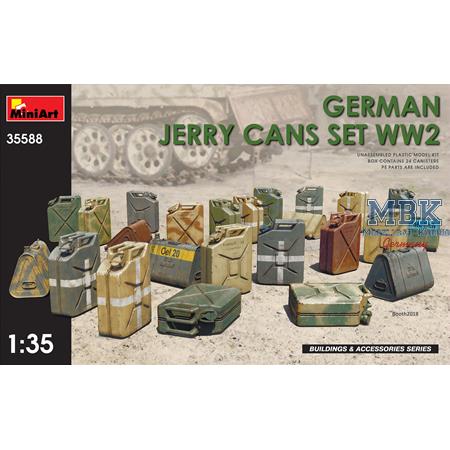
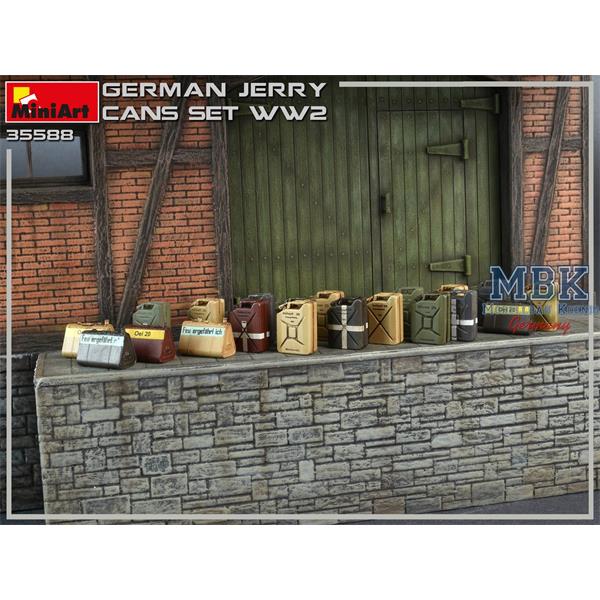
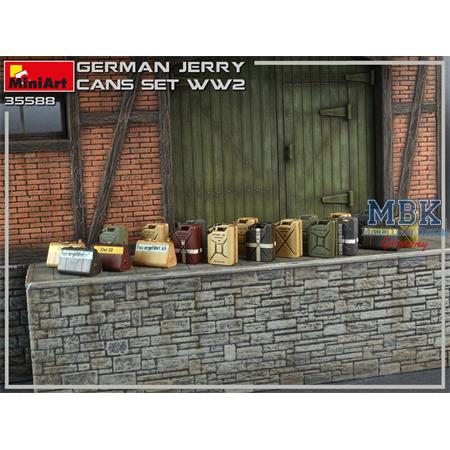
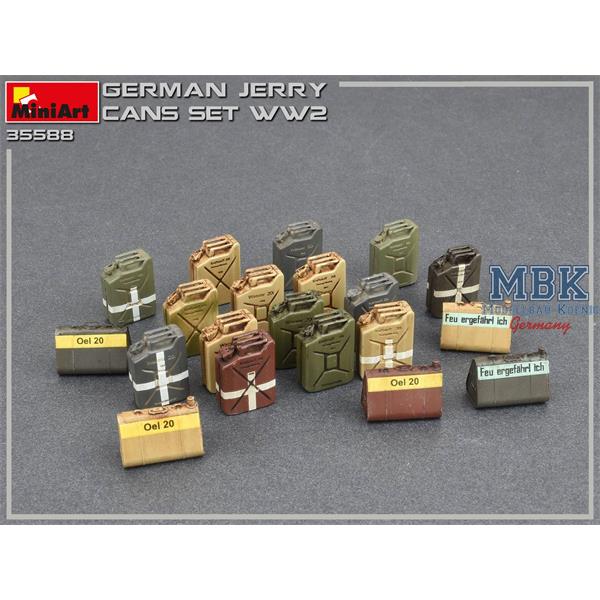
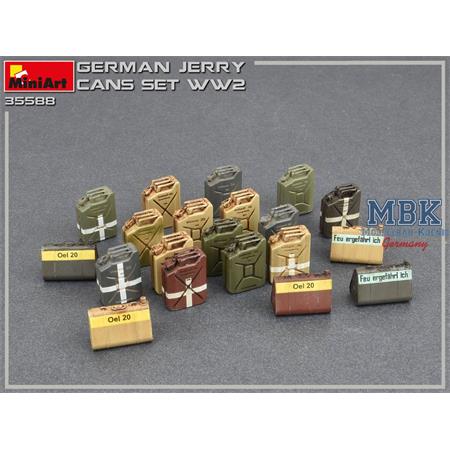
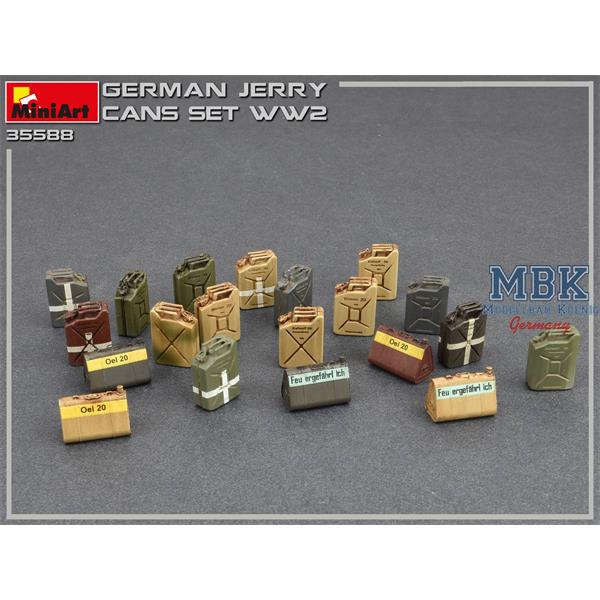
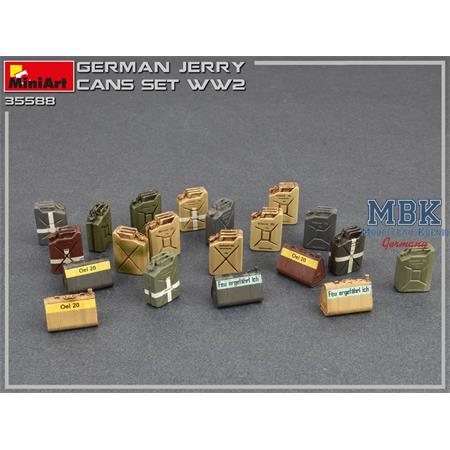
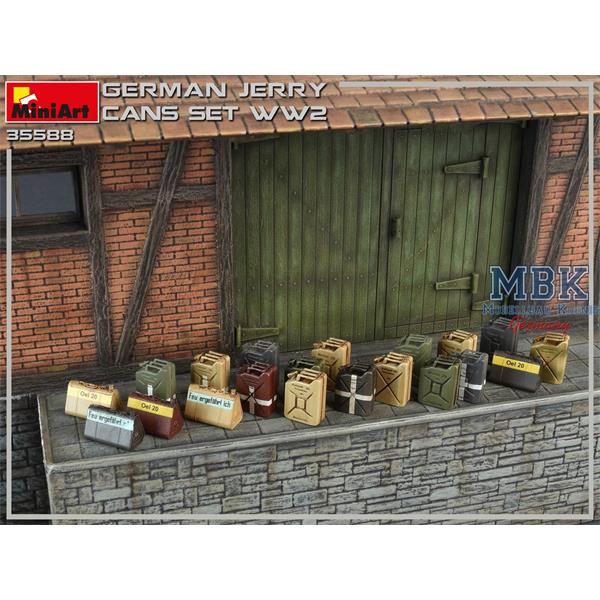
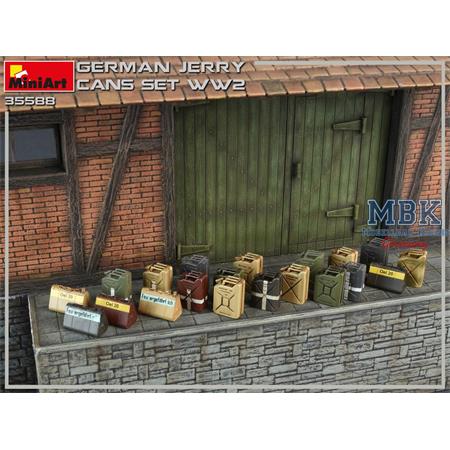
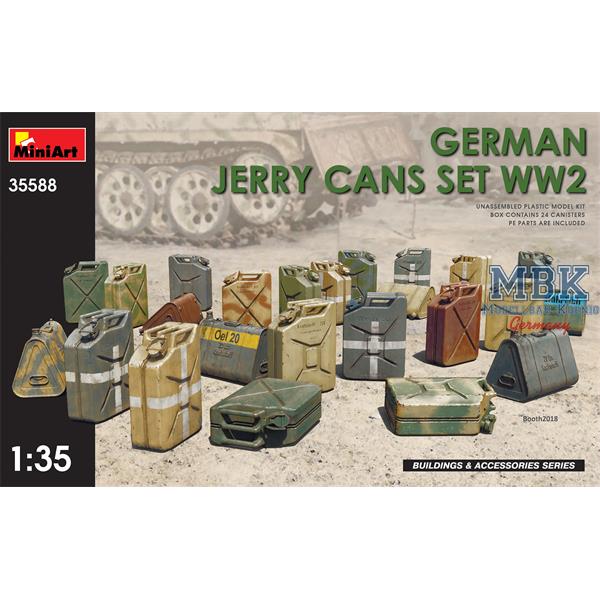
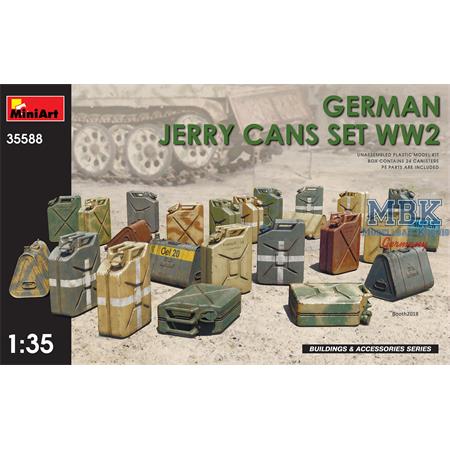
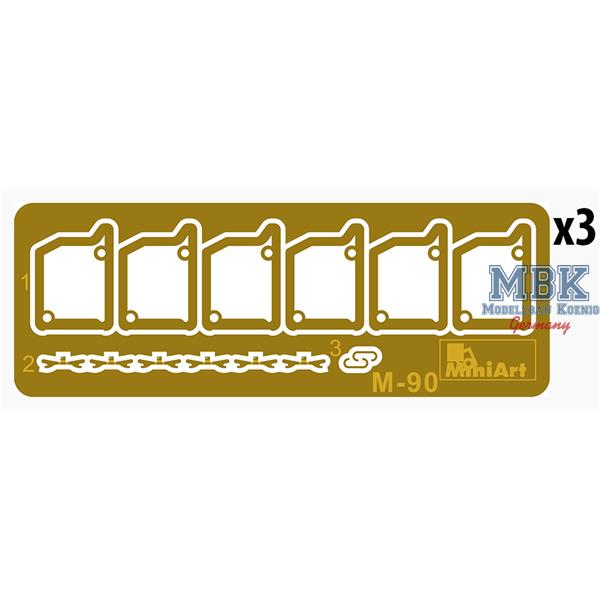
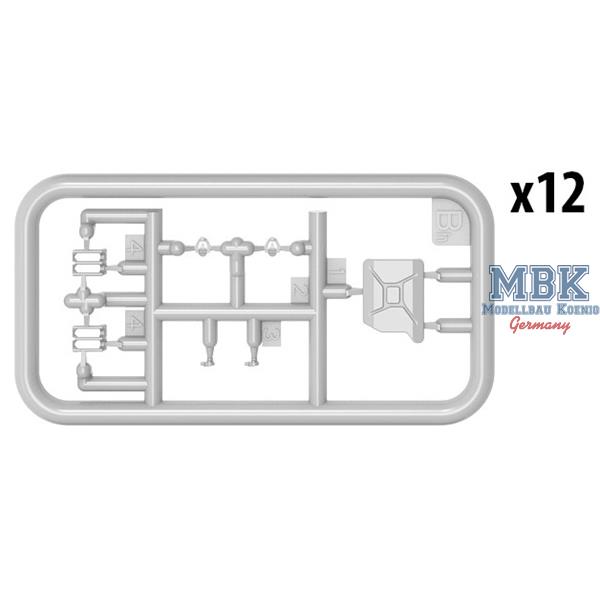
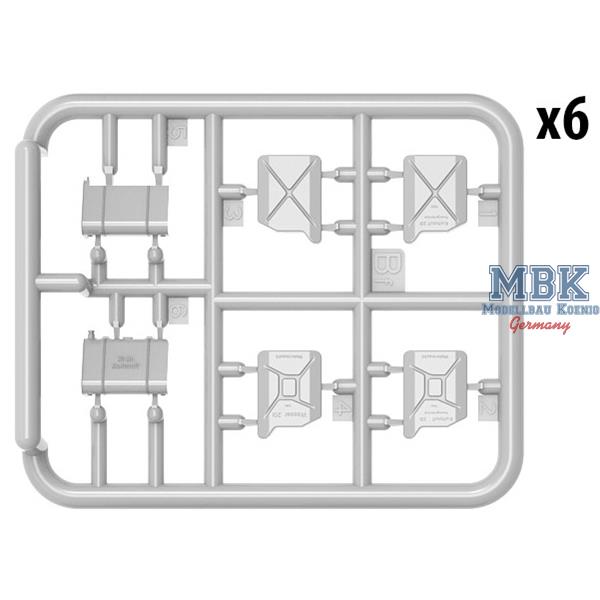
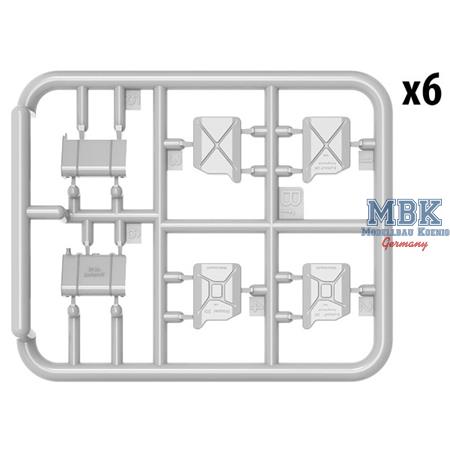


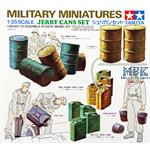
Plastic kit for building various German canisters
The German 20-liter standard jerrycan was one of the most significant logistical developments of the Wehrmacht during World War II. It was developed in the late 1930s to replace the fuel containers used up to that point, which were often unwieldy, leaky, or difficult to transport. The jerrycan was made of pressed sheet steel and held 20 liters of liquid. Its distinctive shape, with the pressed-in cross-shaped reinforcement on the side walls, increased stability and prevented deformation under stress.
The three-handle system was particularly innovative, facilitating transport by one or more people. The cap could be quickly opened and securely resealed without any additional tools. An air space at the top allowed the contents to expand with temperature fluctuations without damaging the container. The design was also such that the jerrycan remained robust and reliable even under harsh military conditions.
The standard jerrycan was primarily used for fuels but was also employed for water and other liquids. To avoid confusion, water canisters were often specially marked, usually with a white cross. Due to its practical qualities, the German canister proved superior to the containers of many other armies. During the war, the Allies adopted the basic design and produced their own versions. In English-speaking countries, the container became known as the "Jerry Can," with "Jerry" being a colloquial term for Germans at the time.
The German 20-liter canister had a lasting impact on the development of transport containers worldwide. Its basic design remains a model for many modern fuel and water canisters and is still used today in its essential features.
Triangular or Triangular Oil Cans
In addition to the familiar 20-liter standard jerrycan, the Wehrmacht also used smaller containers for lubricants and operating fluids, including so-called triangular or triangular oil cans. These were not general-purpose fuel cans for transporting large quantities of gasoline or diesel, but primarily served to supply vehicles, weapons, and machinery with lubricating oil.
The triangular shape had practical advantages. It facilitated pouring and allowed for space-saving storage in vehicles. Many of these containers were made of sheet steel and had a carrying handle and a screw or hinged cap. Depending on the model, the capacity usually ranged from one to a few liters. The containers were often stamped or printed with information about the contents, manufacturer, and year of manufacture.
In everyday military use, various types of oil were required, such as engine oil, gear oil, or gun oil. To avoid confusion, the containers were sometimes color-coded or clearly labeled. The shape and design could vary depending on the intended use and manufacturer.
Triangular containers were occasionally used for other operating fluids, but their most well-known use was for storing and dispensing lubricating oil. For actual fuel transport, the Wehrmacht primarily used the 20-liter standard jerrycan, which was significantly better suited due to its larger capacity and robust construction.
Today, triangular oil cans are mainly known from historical vehicle collections, museum pieces, and contemporary photographs. They represent a characteristic example of the specialized equipment required to maintain the mobility and operational readiness of the German armed forces.
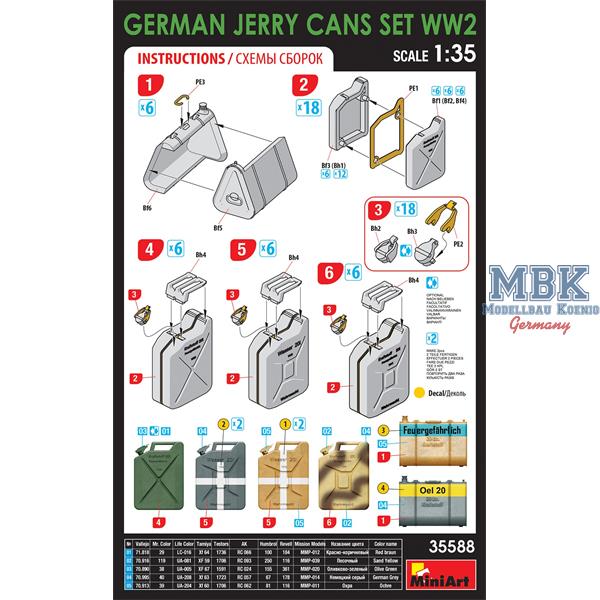
- Scale 1:35
- 6x early oil and fuel canisters (triangular)
- 6x 20l water canisters
- 6x 20l fuel canisters (early style)
- 6x 20l fuel canisters (late style)
- Photo-etched parts included
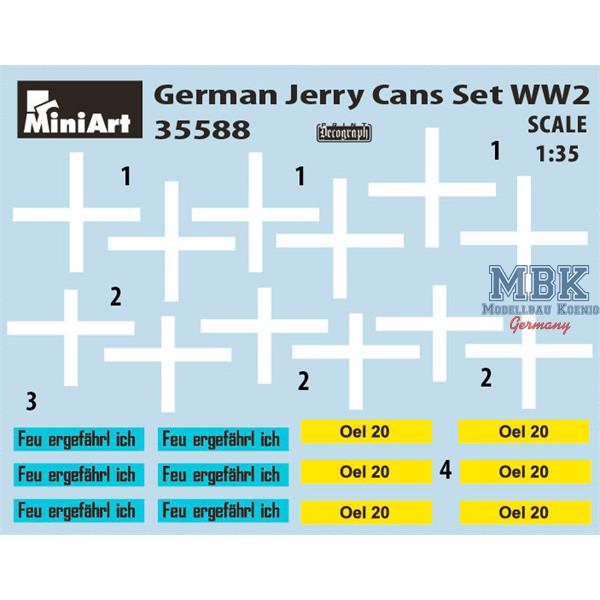
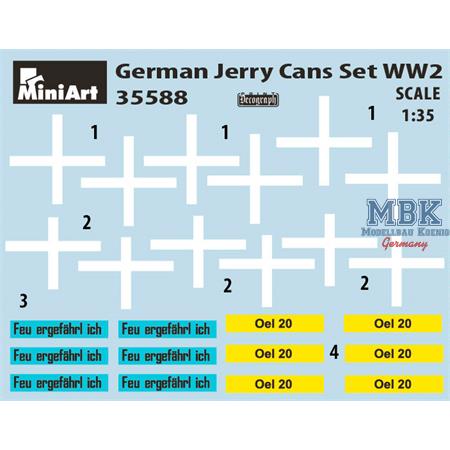
- Wet decals
- Not built, not painted
- Paint and glue not included
The German 20-liter standard jerrycan was one of the most significant logistical developments of the Wehrmacht during World War II. It was developed in the late 1930s to replace the fuel containers used up to that point, which were often unwieldy, leaky, or difficult to transport. The jerrycan was made of pressed sheet steel and held 20 liters of liquid. Its distinctive shape, with the pressed-in cross-shaped reinforcement on the side walls, increased stability and prevented deformation under stress.
The three-handle system was particularly innovative, facilitating transport by one or more people. The cap could be quickly opened and securely resealed without any additional tools. An air space at the top allowed the contents to expand with temperature fluctuations without damaging the container. The design was also such that the jerrycan remained robust and reliable even under harsh military conditions.
The standard jerrycan was primarily used for fuels but was also employed for water and other liquids. To avoid confusion, water canisters were often specially marked, usually with a white cross. Due to its practical qualities, the German canister proved superior to the containers of many other armies. During the war, the Allies adopted the basic design and produced their own versions. In English-speaking countries, the container became known as the "Jerry Can," with "Jerry" being a colloquial term for Germans at the time.
The German 20-liter canister had a lasting impact on the development of transport containers worldwide. Its basic design remains a model for many modern fuel and water canisters and is still used today in its essential features.
Triangular or Triangular Oil Cans
In addition to the familiar 20-liter standard jerrycan, the Wehrmacht also used smaller containers for lubricants and operating fluids, including so-called triangular or triangular oil cans. These were not general-purpose fuel cans for transporting large quantities of gasoline or diesel, but primarily served to supply vehicles, weapons, and machinery with lubricating oil.
The triangular shape had practical advantages. It facilitated pouring and allowed for space-saving storage in vehicles. Many of these containers were made of sheet steel and had a carrying handle and a screw or hinged cap. Depending on the model, the capacity usually ranged from one to a few liters. The containers were often stamped or printed with information about the contents, manufacturer, and year of manufacture.
In everyday military use, various types of oil were required, such as engine oil, gear oil, or gun oil. To avoid confusion, the containers were sometimes color-coded or clearly labeled. The shape and design could vary depending on the intended use and manufacturer.
Triangular containers were occasionally used for other operating fluids, but their most well-known use was for storing and dispensing lubricating oil. For actual fuel transport, the Wehrmacht primarily used the 20-liter standard jerrycan, which was significantly better suited due to its larger capacity and robust construction.
Today, triangular oil cans are mainly known from historical vehicle collections, museum pieces, and contemporary photographs. They represent a characteristic example of the specialized equipment required to maintain the mobility and operational readiness of the German armed forces.
Customer Reviews 7
Write now your personal experience with this article and help others with their purchase decision.
Customers also bought