Bandai
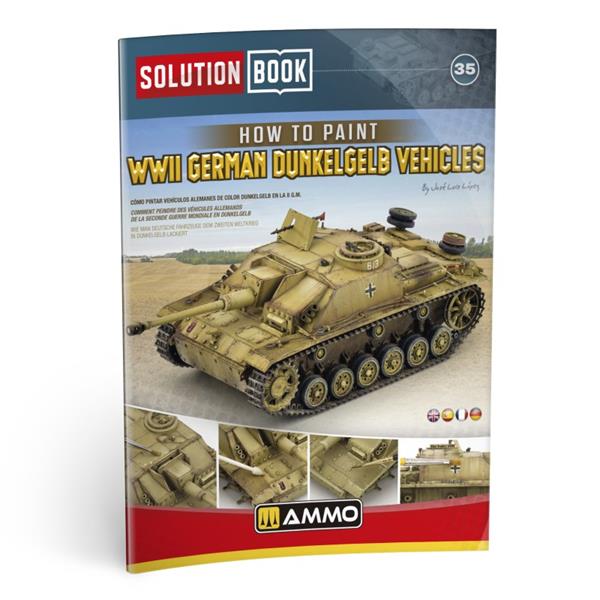
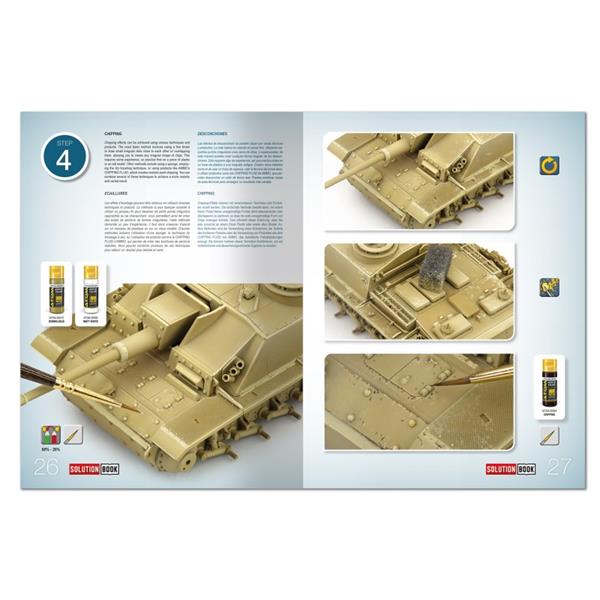
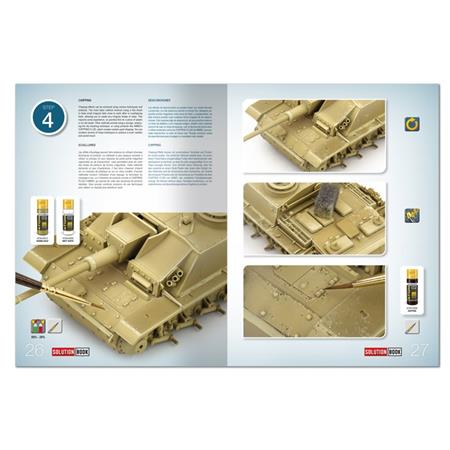
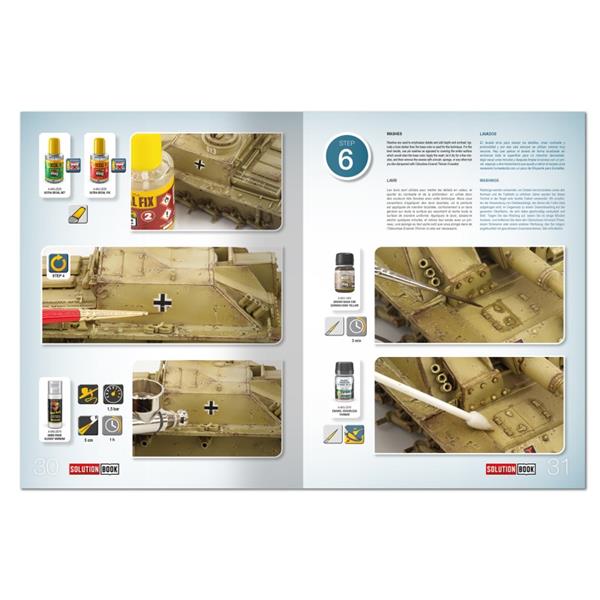
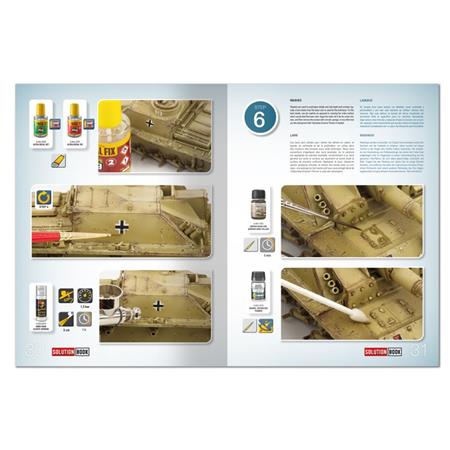
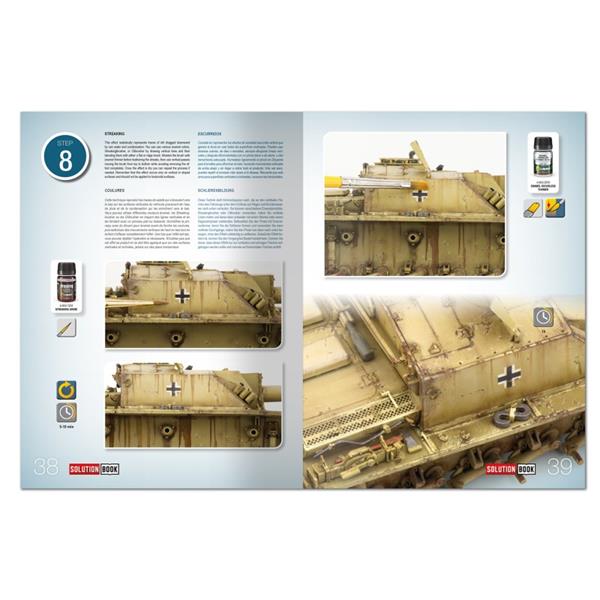
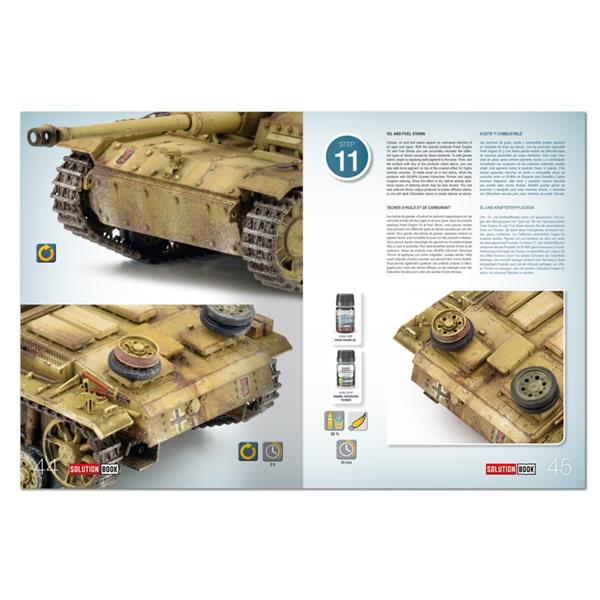
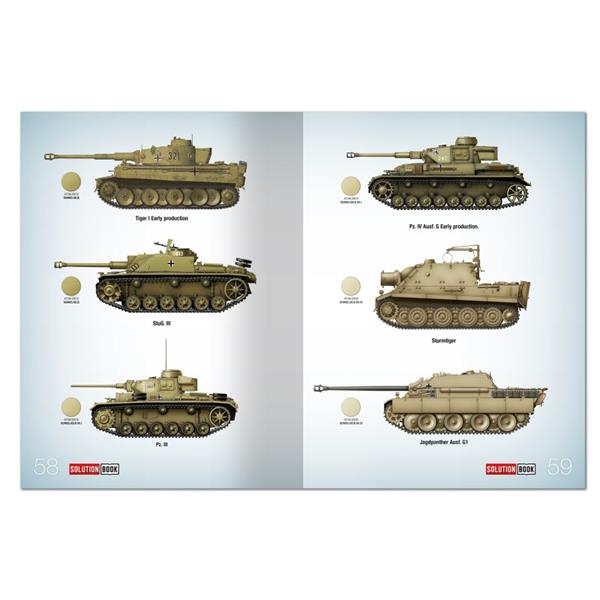
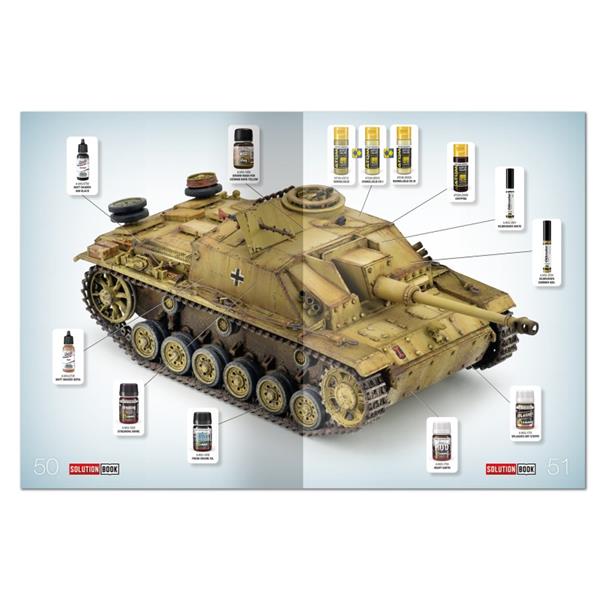


How to Paint WWII German Dunkelgelb SOLUTION BOOK
AMIG6537
Ammo of MIG
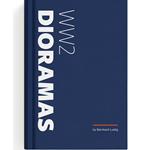
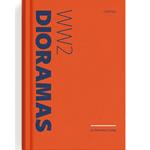
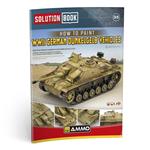
SOLUTION BOOK 35 - How to Paint WWII German Dunkelgelb Vehicles (English, Castellano, Français, Deutsch)
- Author: José Luis López
- Publisher: Mig Jimenez S.L.
- Collection: Solution Book
- Subject: Painting & weathering techniques for WWII German vehicles.
- Languages: Multilingual. English, Spanish, French & German.
- Number of pages and description: Softcover, 59 pages with high-quality full-color photos and profiles.
Dunkelgelb (RAL 7028) officially came into use on February 18, 1943, when the official German order Heeresmitteilung 181 established that Dunkelgrau (RAL 7021) was no longer the base color, the new standard base color for Heer vehicles would be Dunkelgelb (RAL 7028). From that moment on, tanks and vehicles began to leave the factory painted in Dunkelgelb. However, for several months in 1943, there were still some gray and dark yellow vehicles still produced, as well as others repainted directly at the front. As the war progressed and some paint components became scarce, lighter shades of Dunkelgelb began to be used and are unofficially known as DGI (used between late 1943 and mid-1944) and DG III (used from mid-1944 until the end of the war). Dunkelgelb was never a uniform color: the variable quality of the pigments, the dilution of the paint, the shortage of components, environmental conditions, and wear and tear in the field created expansive tonal variation. The diversity makes Dunkelgelb a color that is as historic as it is attractive to modelers, where there is no single “correct” interpretation, rather multiple possibilities consistent with reality. Among the best-known vehicles that used this camouflage are the Panzer III and IV tanks, the Tiger I, the Panther, and the Kingtiger; the Sd.Kfz. 222 and 223 reconnaissance vehicles; the Sd.Kfz. 251 half-tracks; assault guns and tank destroyers such as the StuG III, Jagdpanther, and Jagdtiger; and a variety of other vehicles German forces used on the Western Front, the Eastern Front, and in the Italian campaign. Although frontline units added camouflage patterns with Schokobraun RAL 8017 (chocolate brown) and Olivgrün RAL 6003 (olive green) to adapt to different environments, many vehicles were painted entirely in Dunkelgelb.
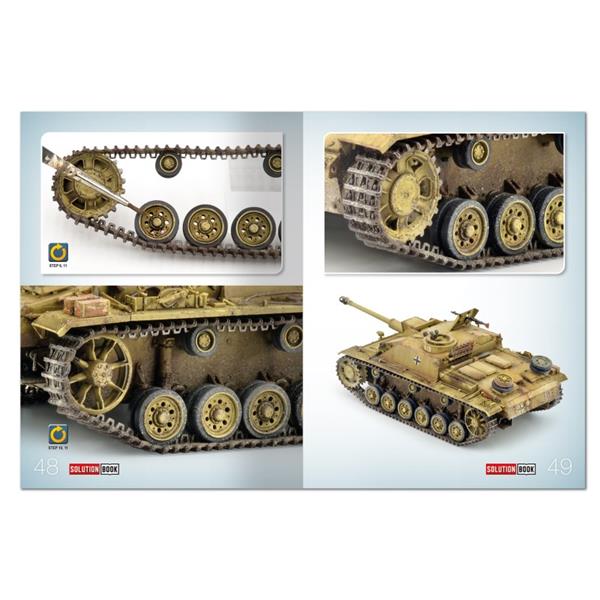
With this SOLUTION BOOK, you can apply camouflage and the effects of aging and dirt to any vehicle with Dunkelgelb camouflage. Most of the techniques and effects described are optional, and it is up to you to decide whether to apply them or not. If you want to improve your technique, we recommend that you try to apply them all. To obtain different levels of wear, simply adjust the intensity of the various effects to your liking.
This book shows all the products necessary and most suitable for creating the effects described. If you follow the recommended application order and drying times, you will be rewarded with excellent results. The model used as an example in this guide is the StuG III Ausf. G Early Production in 1/35 scale, reference 8004 from Takom. Now choose your favorite model and let an expert modeler guide you step by step!
Write now your personal experience with this article and help others with their purchase decision.