Bandai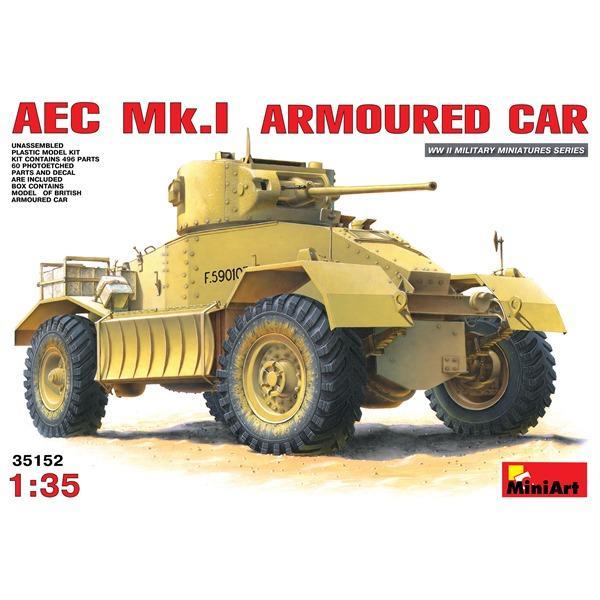
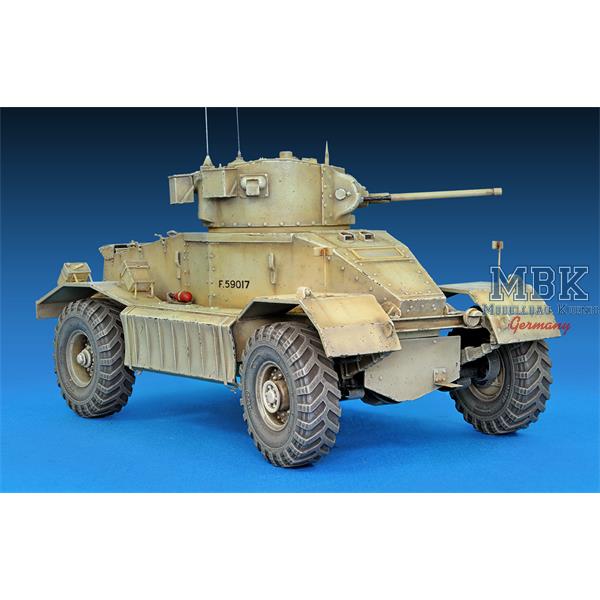
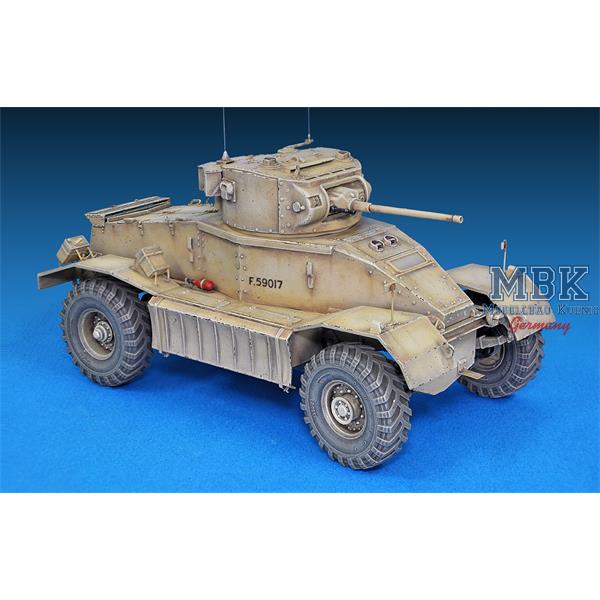
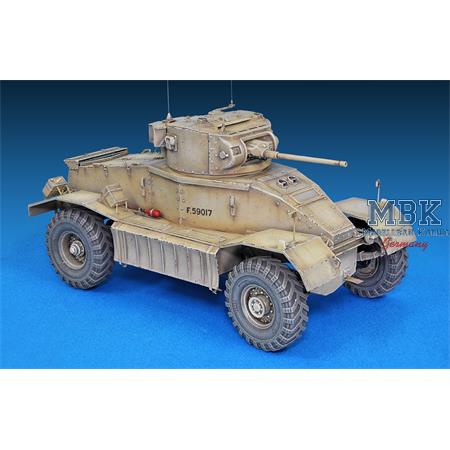
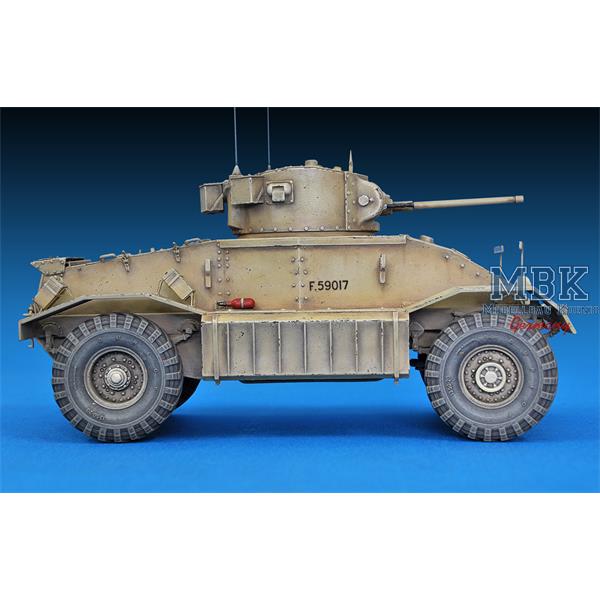
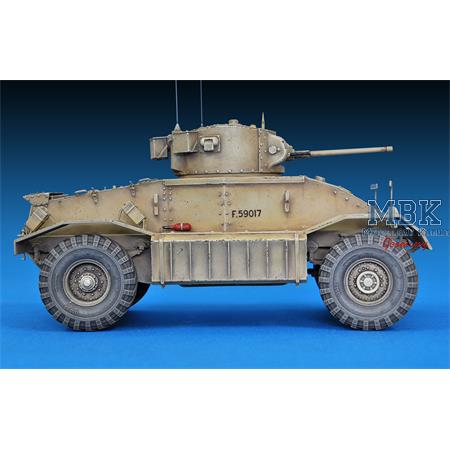
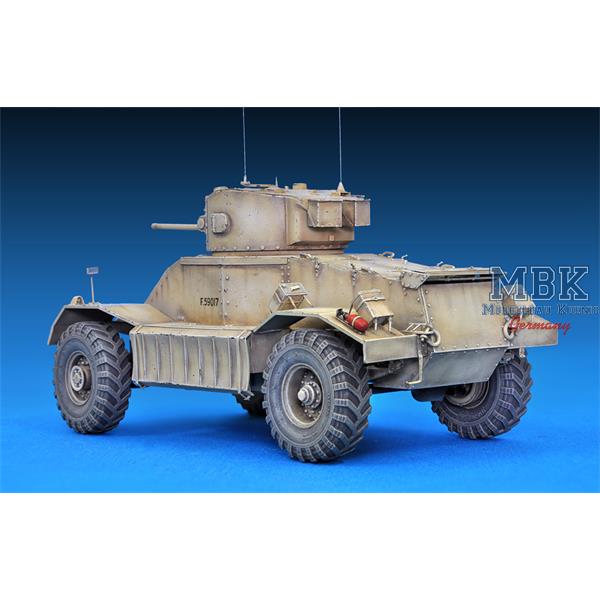
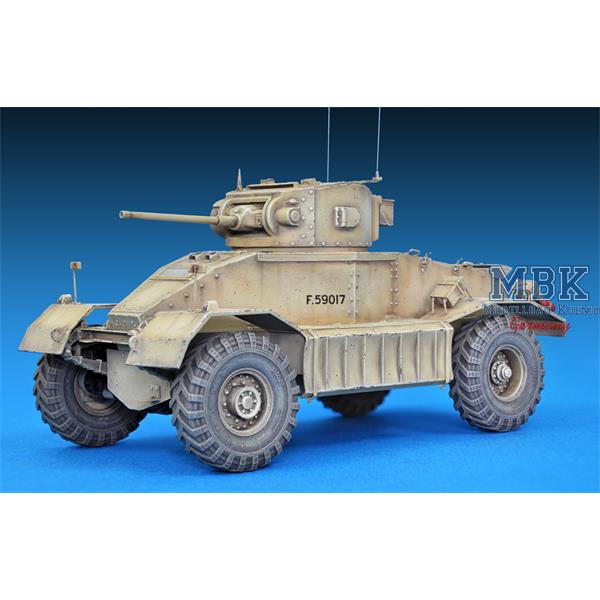
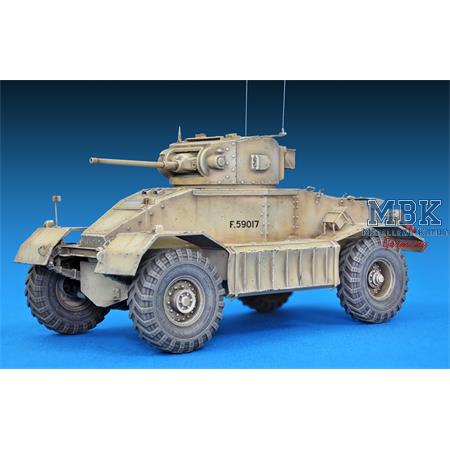
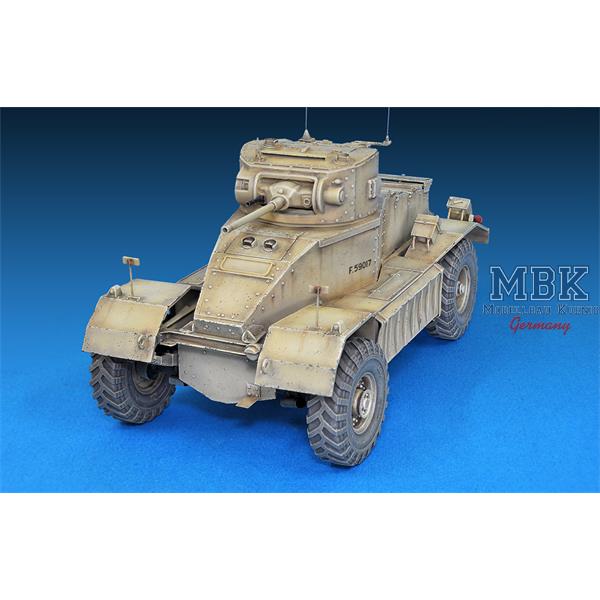
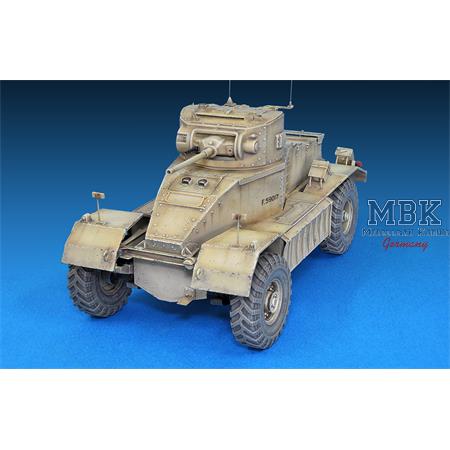
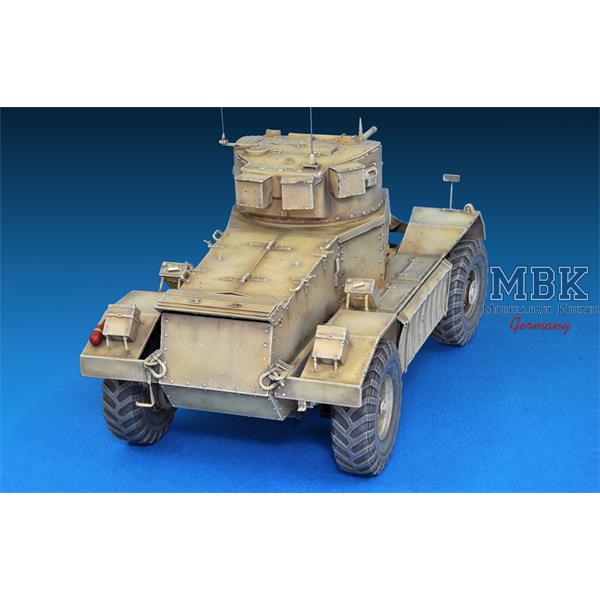
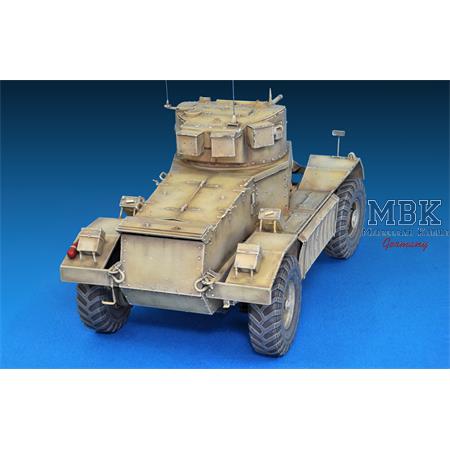
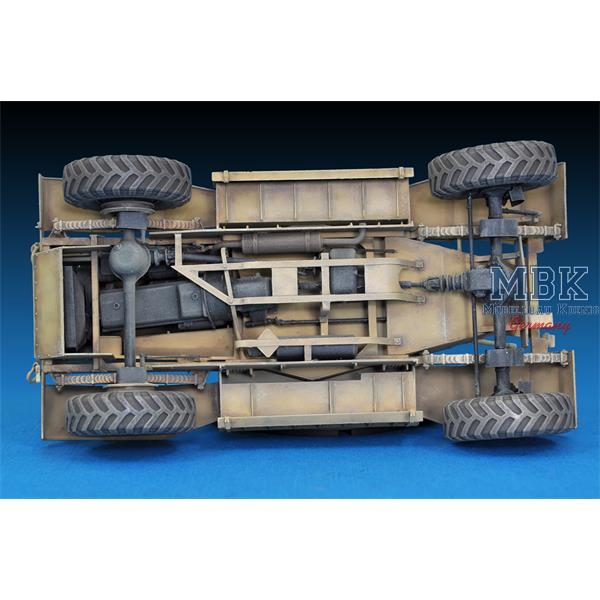
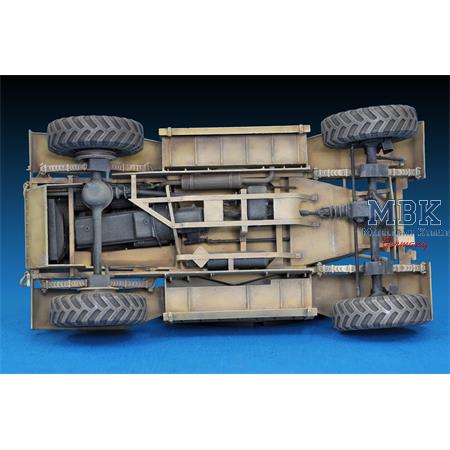
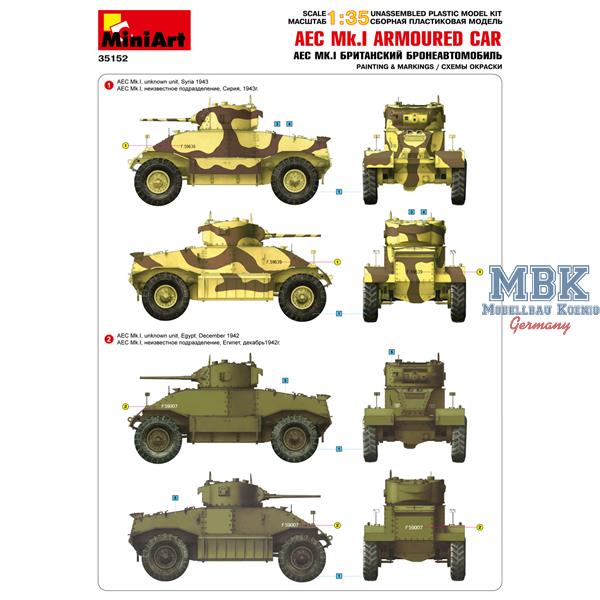
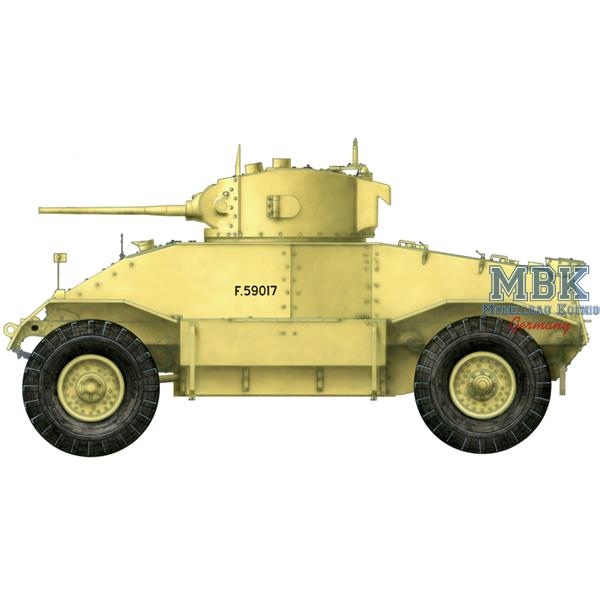


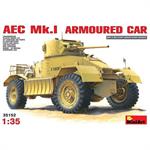
Plastic Modelkit for an AEC Mk.I
completre interior
The AEC Armoured Car was a British heavy armoured car from the Second World War. Its development progressed from the Mk. I—equipped with a 40 mm gun—to the Mk. II with a 57 mm gun, and finally to the Mk. III, which featured a 75 mm gun for fire support. The transition to the Mk. II represented the most significant design leap, while the Mk. III primarily focused on changes to the armament and the vehicle's operational role.
The Associated Equipment Company (AEC) developed the vehicle in 1941 as a private venture, utilizing chassis and drivetrain components from the AEC Matador, an all-wheel-drive artillery tractor. The engine was positioned at the rear. The objective was to create an armoured car with a combination of firepower and armour protection that was unusually robust for its class. To achieve this, the initial variant was fitted with the two-man turret from the Valentine tank.
The AEC served to supplement lighter armoured cars by providing additional firepower. It saw its first combat use in North Africa in 1942; later versions were also deployed in Italy and Northwest Europe. A total of 629 vehicles are generally cited as having been produced.
Mk. I → Mk. II: Beyond the more powerful gun, the introduction of a larger turret and an additional crew member was crucial. In the Mk. I, the commander—stationed in a two-man turret—had to shoulder multiple responsibilities. The three-man turret allowed for a division of duties among a commander, a gunner, and a loader. Furthermore, a more powerful engine improved the acceleration of the heavy vehicle.
Mk. II → Mk. III: The 75 mm gun shifted the vehicle's primary role toward fire support. Its high-explosive ammunition was more effective against artillery positions, buildings, and field fortifications. A larger caliber did not automatically translate to better anti-tank performance; the 57mm 6-pounder was more specifically geared toward this role. Consequently, the Mk. III was designated as a "Close Support Armoured Car."
All three variants featured four wheels with selectable all-wheel drive, a rear-mounted diesel engine, and a coaxial 7.92 mm Besa machine gun. Additionally, a Bren light machine gun could be carried for anti-aircraft defense. For the Mk. II and III, the top speed on roads is cited as approximately 66 km/h with a range of 400 km; the Mk. I was slower, at about 58 km/h. The later variants measured approximately 2.70 m in width and 2.69 m in height.
completre interior
- Scale 1:35
- Highly detailed model
- 436 plastic parts
- 60 Photo-Etched metal parts
- Decals options for three vehicles
- Full-color instruction
- All New Tooling. State of the art engineering utilising slide mould technology.
- Fully detailed interior
- Highly detailed engine compartment
- Engine is accurately represented
- Fighting compartment faithfully reproduced
- Driver’s vision periscopes moulded in clear plastic
- Driving compartment interior is fully detailed and accurately produced
- All doors and hatches can be assembled open or closed
- Slide-mould tyre tread pattern moulded in one part
- not built/not painted
- paint and glue not included
| MiniArt has all AEC armored cars in its range. You can purchase them here (if in stock): |
The AEC Armoured Car was a British heavy armoured car from the Second World War. Its development progressed from the Mk. I—equipped with a 40 mm gun—to the Mk. II with a 57 mm gun, and finally to the Mk. III, which featured a 75 mm gun for fire support. The transition to the Mk. II represented the most significant design leap, while the Mk. III primarily focused on changes to the armament and the vehicle's operational role.
The Associated Equipment Company (AEC) developed the vehicle in 1941 as a private venture, utilizing chassis and drivetrain components from the AEC Matador, an all-wheel-drive artillery tractor. The engine was positioned at the rear. The objective was to create an armoured car with a combination of firepower and armour protection that was unusually robust for its class. To achieve this, the initial variant was fitted with the two-man turret from the Valentine tank.
The AEC served to supplement lighter armoured cars by providing additional firepower. It saw its first combat use in North Africa in 1942; later versions were also deployed in Italy and Northwest Europe. A total of 629 vehicles are generally cited as having been produced.
Mk. I → Mk. II: Beyond the more powerful gun, the introduction of a larger turret and an additional crew member was crucial. In the Mk. I, the commander—stationed in a two-man turret—had to shoulder multiple responsibilities. The three-man turret allowed for a division of duties among a commander, a gunner, and a loader. Furthermore, a more powerful engine improved the acceleration of the heavy vehicle.
Mk. II → Mk. III: The 75 mm gun shifted the vehicle's primary role toward fire support. Its high-explosive ammunition was more effective against artillery positions, buildings, and field fortifications. A larger caliber did not automatically translate to better anti-tank performance; the 57mm 6-pounder was more specifically geared toward this role. Consequently, the Mk. III was designated as a "Close Support Armoured Car."
| Mk. I | Mk. II | Mk. III | |
| Timeline | Development in 1941; operational from 1942 | from 1943 | from 1944 |
| Main armament | QF 2-pounder (40 mm) | QF 6-pounder (57 mm) | QF 75 mm |
| Turret | Valentine-style two-man turret | New, larger three-man turret | Three-man turret (later design), adapted for the 75 mm gun |
| Total crew | 3 men | 4 men | 4 men |
| Engine | AEC 195, six-cylinder diesel | AEC 197, six-cylinder diesel | Same as Mk. II |
| Engine output | Approx. 105 hp | Approx. 158 hp | Approx. 158 hp |
| Hull | Original design | Revised front and improved protection | Largely the same as Mk. II |
| Primary focus | Heavy armored car with an early anti-tank gun | Significantly stronger anti-tank capability | Versatile direct fire support |
All three variants featured four wheels with selectable all-wheel drive, a rear-mounted diesel engine, and a coaxial 7.92 mm Besa machine gun. Additionally, a Bren light machine gun could be carried for anti-aircraft defense. For the Mk. II and III, the top speed on roads is cited as approximately 66 km/h with a range of 400 km; the Mk. I was slower, at about 58 km/h. The later variants measured approximately 2.70 m in width and 2.69 m in height.
Customer Reviews 2
Write now your personal experience with this article and help others with their purchase decision.
Customers also bought