Bandai
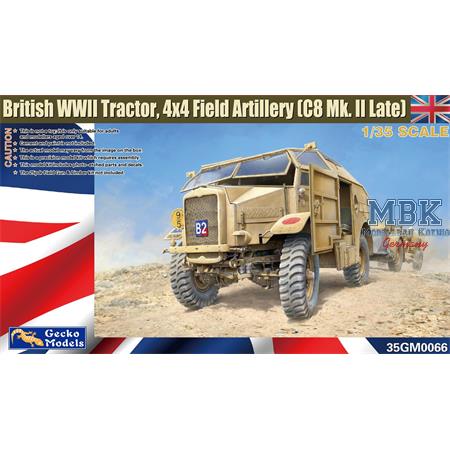
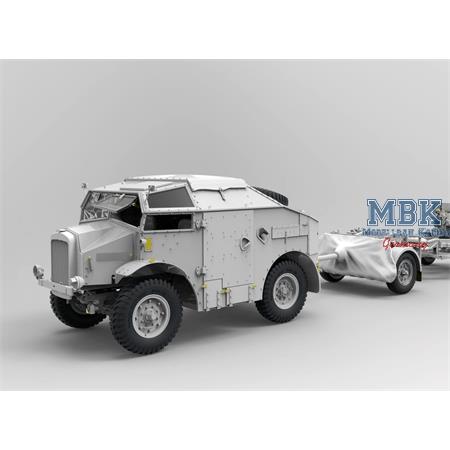
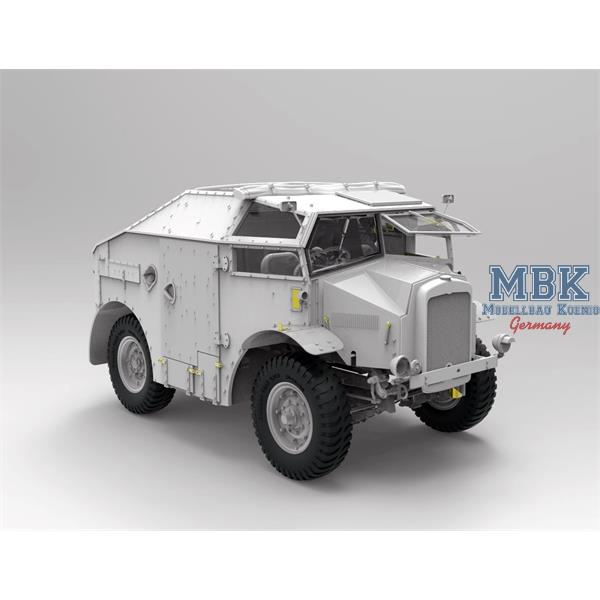
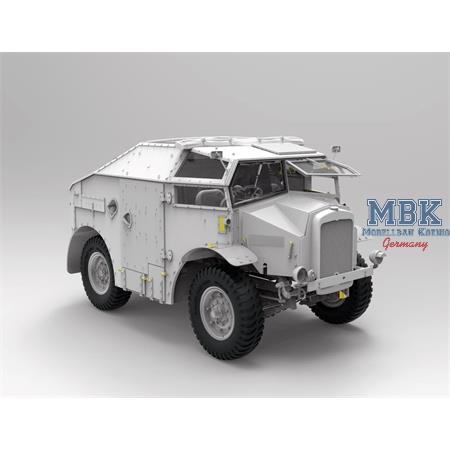
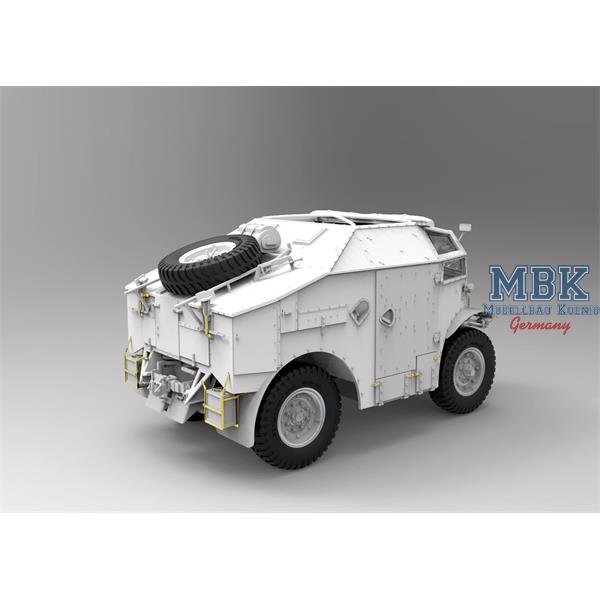
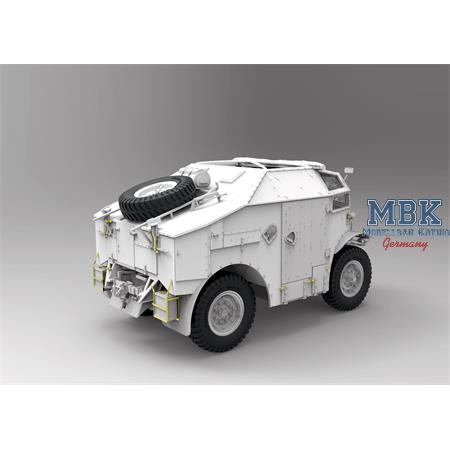
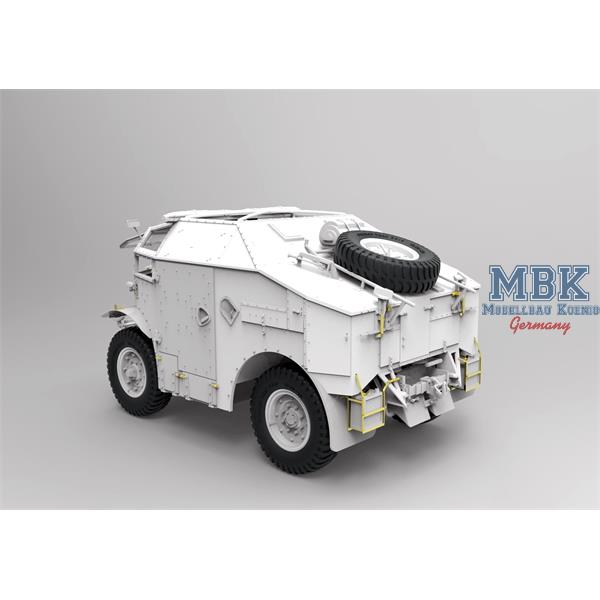
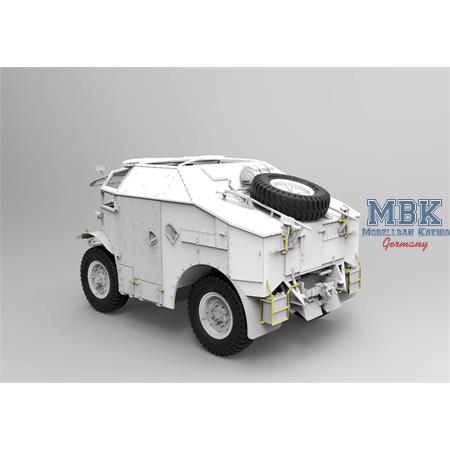


British WWII Tractor, 4x4 FAT (C8 Quad Mk.II late)
Item Number:
35GM0066
35GM0066
Manufacturer
Gecko Models
Gecko Models
Scale:
1:35
1:35
Plastic kit of a British WWII Tractor, 4x4 Field Artillery (C8 Quad Mk. II Late)
The Morris C8 was powered by a water-cooled, 3.5-liter, four-cylinder gasoline engine producing around 70 hp. The permanent all-wheel drive on early models gave the "Quad" excellent off-road capabilities, allowing even heavy guns to be towed across soft ground, sand, or mud. In addition to the driver, the vehicle could accommodate up to five other soldiers. Personal gear, tools, and ammunition were also carried in the rear crew compartment. A distinctive feature was the driver's cab, positioned unusually far forward, combined with a short engine hood and a highly rounded rear body - a design that earned the vehicle the nickname "Beetle Back."
The early version of the Mk. II, manufactured from 1940 onwards, differed only slightly from the Mk. I in technical terms. The most significant change concerned the front axle: the previously included locking differential was removed, though the permanent all-wheel-drive system was retained. Externally, early Mk. II vehicles featured the original "Beetle Back" bodywork, characterized by a fully enclosed metal roof, two round roof ventilators, and only a few small side windows. The two large doors lacked windows entirely. This early design conveys the characteristic look of the war's opening years and appears frequently in photographs from the French campaign and early operations in North Africa.
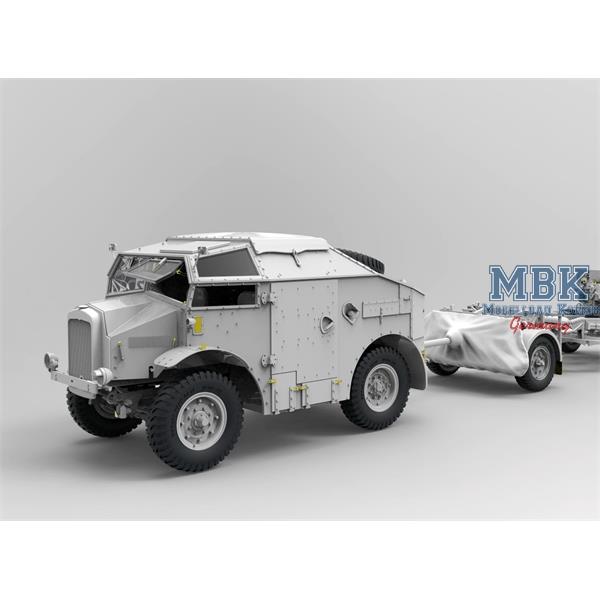
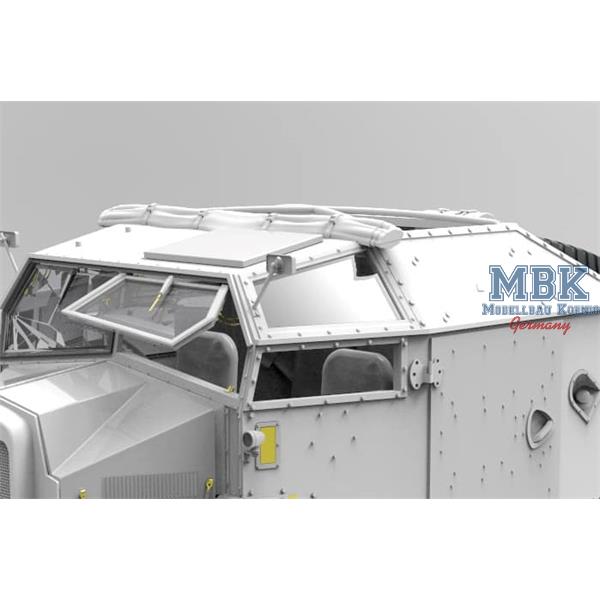
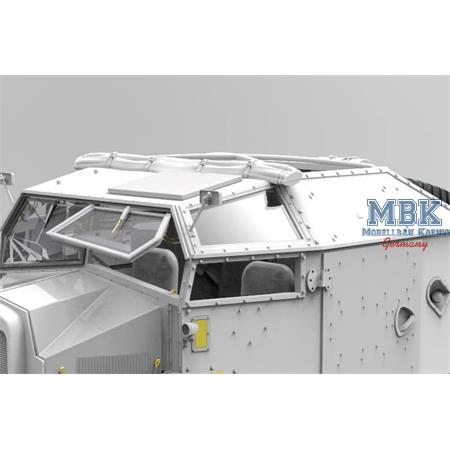
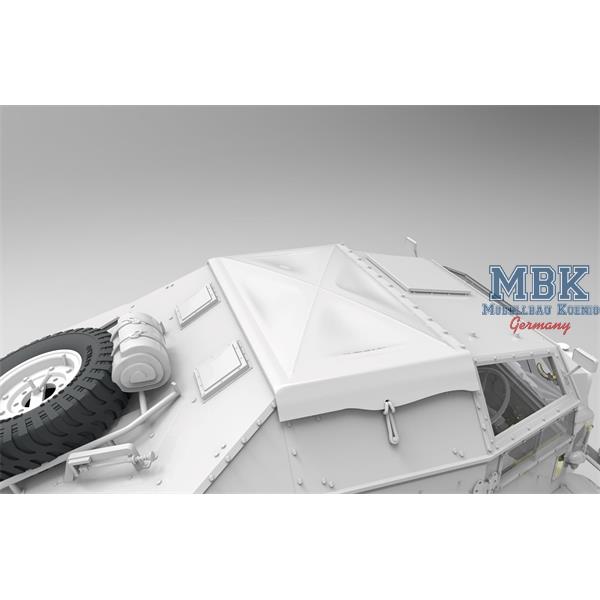
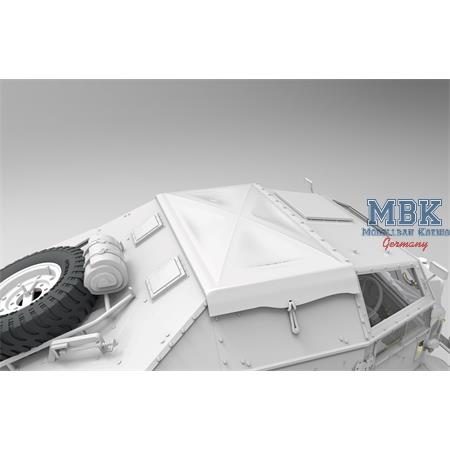
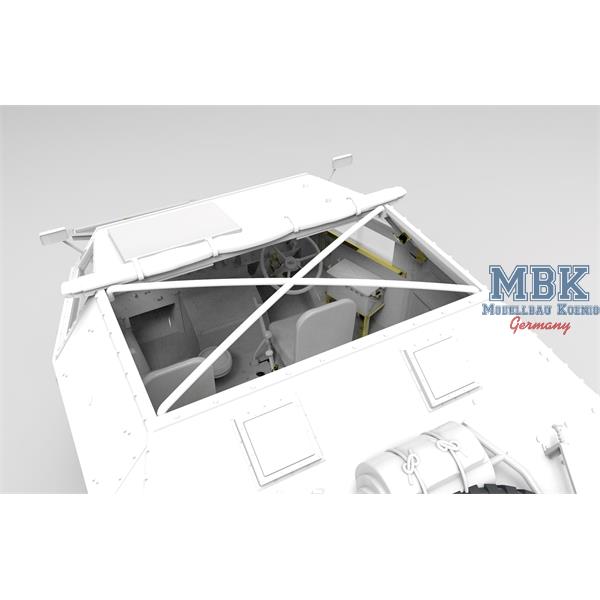
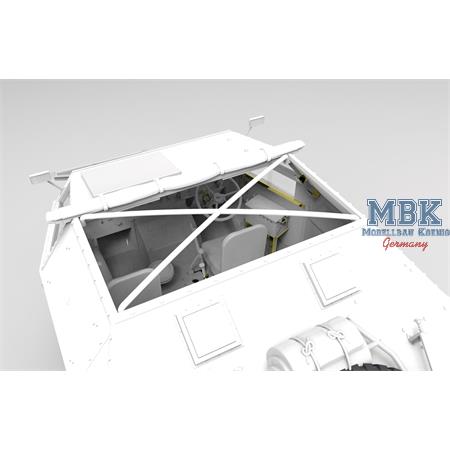
During the Mk. II production run, a late variant was introduced that incorporated numerous lessons learned from frontline service. The most noticeable difference was the modernized "Beetle-Back" bodywork. A canvas roof supported by a cross-shaped steel frame replaced the previous steel roof over the crew compartment. Additionally, the doors were fitted with windows, and a small extra side window was added to the front left, significantly improving visibility for the driver and front passenger. At the same time, larger fuel tanks with larger filler necks were installed, extending the vehicle's operational range. Mechanically, however, it remained a Mk. II, featuring permanent all-wheel drive and a front axle design that had been simplified compared to the Mk. I.
Fundamental technical changes did not occur until the Mk. III. The front axle was relocated beneath the leaf springs, the permanent all-wheel-drive system was replaced by a selectable one, and smaller 16-inch wheels were adopted in place of the previous 20-inch tires. Late-model Mk. III vehicles eventually received a completely redesigned, more angular body ("No. 5 Body") featuring four doors and a significantly more spacious crew compartment. These modifications improved ease of maintenance, cost-efficiency, and handling characteristics, while the vehicle's primary role as an artillery tractor remained unchanged.
For scale modelers, distinguishing between the early and late Mk. II versions is particularly important. The early version features a fully enclosed metal roof with two round roof ventilators, few small side windows, and windowless doors. In contrast, the late version is identified by its glazed doors, the additional small side window, the canvas roof over the crew compartment, and the larger fuel filler necks. These details are characteristic identifying features and should be taken into account for a historical portrayal or when building a scale model.
- 1:35 scale
- Highly detailed chassis and engine replica
- Extensive interior detailing
- Separate doors, storage compartment hatches, and engine hood
- Photo-etched parts and decals included
- 1 driver figure
- Personal equipment such as helmets, bags, blankets, etc., included
- 3 marking options
- H4311605: B Troop, 258 (22nd London) Battery, 65th (8th London) Field Regiment (TA), Royal Artillery, 44th (Home Counties) Infantry Division, North Africa, August 1942
- H4494520: (Late) Madras Troop, M Battery, 3rd Royal Horse Artillery, 7th Armoured Division, Normandy, July 1944
- H4495164: (Late) C Troop, 304 (City of Dundee) Battery, 127th (Highland) Field Regiment, Royal Artillery, 51st (Highland) Infantry Division, Normandy 1944
- only truck, field gun and limber not included
- unbuilt, unpainted
- Paint and glue not included
The Morris C8 was powered by a water-cooled, 3.5-liter, four-cylinder gasoline engine producing around 70 hp. The permanent all-wheel drive on early models gave the "Quad" excellent off-road capabilities, allowing even heavy guns to be towed across soft ground, sand, or mud. In addition to the driver, the vehicle could accommodate up to five other soldiers. Personal gear, tools, and ammunition were also carried in the rear crew compartment. A distinctive feature was the driver's cab, positioned unusually far forward, combined with a short engine hood and a highly rounded rear body - a design that earned the vehicle the nickname "Beetle Back."
The early version of the Mk. II, manufactured from 1940 onwards, differed only slightly from the Mk. I in technical terms. The most significant change concerned the front axle: the previously included locking differential was removed, though the permanent all-wheel-drive system was retained. Externally, early Mk. II vehicles featured the original "Beetle Back" bodywork, characterized by a fully enclosed metal roof, two round roof ventilators, and only a few small side windows. The two large doors lacked windows entirely. This early design conveys the characteristic look of the war's opening years and appears frequently in photographs from the French campaign and early operations in North Africa.
During the Mk. II production run, a late variant was introduced that incorporated numerous lessons learned from frontline service. The most noticeable difference was the modernized "Beetle-Back" bodywork. A canvas roof supported by a cross-shaped steel frame replaced the previous steel roof over the crew compartment. Additionally, the doors were fitted with windows, and a small extra side window was added to the front left, significantly improving visibility for the driver and front passenger. At the same time, larger fuel tanks with larger filler necks were installed, extending the vehicle's operational range. Mechanically, however, it remained a Mk. II, featuring permanent all-wheel drive and a front axle design that had been simplified compared to the Mk. I.
Fundamental technical changes did not occur until the Mk. III. The front axle was relocated beneath the leaf springs, the permanent all-wheel-drive system was replaced by a selectable one, and smaller 16-inch wheels were adopted in place of the previous 20-inch tires. Late-model Mk. III vehicles eventually received a completely redesigned, more angular body ("No. 5 Body") featuring four doors and a significantly more spacious crew compartment. These modifications improved ease of maintenance, cost-efficiency, and handling characteristics, while the vehicle's primary role as an artillery tractor remained unchanged.
For scale modelers, distinguishing between the early and late Mk. II versions is particularly important. The early version features a fully enclosed metal roof with two round roof ventilators, few small side windows, and windowless doors. In contrast, the late version is identified by its glazed doors, the additional small side window, the canvas roof over the crew compartment, and the larger fuel filler necks. These details are characteristic identifying features and should be taken into account for a historical portrayal or when building a scale model.
Suitable Accessories

16.50 €*
Customer Reviews 0
Write now your personal experience with this article and help others with their purchase decision.
Customers also bought