 Bandai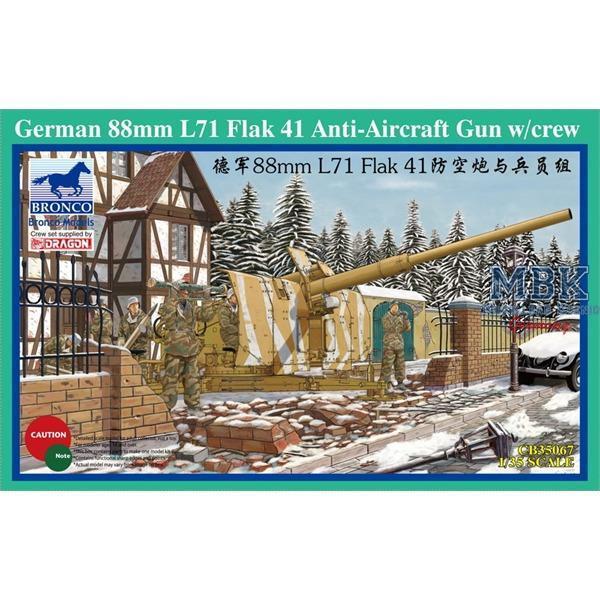



39.50 €
VAT included plus shipping and handling
Unfortunately sold out at the moment
No new delivery date known, if necessary please activate stock alert
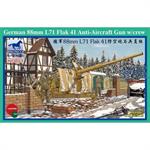
Plastic model kit for building an 88mm Flak 41 with crew
The weapon fired a more powerful 88 mm cartridge and achieved muzzle velocities of up to 1,000 m/s. This allowed it to engage targets at altitudes of up to approximately 14,700 meters and made it extremely effective against heavy bomber formations. A characteristic feature was its very long barrel with a multi-section construction, but it lacked the typical muzzle brake of later German anti-tank guns such as the Pak 43.
Although the Flak 41 was originally designed as a heavy anti-aircraft gun, its enormous penetrating power also led to its use in ground combat. The weapon proved particularly effective against tanks. Contemporary sources describe engagements against armored targets at ranges between approximately 600 and 1,500 meters. The high velocity of its armor-piercing ammunition made the Flak 41 a dangerous anti-tank weapon, even though this role was not its primary purpose.
The first Flak 41 guns were sent to North Africa on Hitler's personal orders to reinforce German units there. However, some of the weapons were lost during transport across the Mediterranean. The guns that were actually deployed suffered under the harsh desert conditions; in particular, sand and heat caused malfunctions in ammunition feeding and shell ejection. Due to these technical problems, many of the guns used in North Africa were later returned to Germany.
Despite its impressive performance specifications, the Flak 41 was generally considered complicated and prone to malfunctions. Above all, its complex mechanics and problems with shell ejection significantly hampered its use at the front. Production therefore proceeded more slowly than planned, so the older Flak 36 continued to constitute the majority of Germany's heavy anti-aircraft defenses. In total, only slightly more than 500 were manufactured.
The 8.8 cm Flak 41 was used both in the Reich's air defense and on various fronts during the war. Besides its role against Allied bombers, it was also occasionally used in direct ground combat against armored units. Due to its high firepower and distinctive appearance, the Flak 41 is considered today to be the technological pinnacle of German 88mm anti-aircraft gun development during the Second World War.
- Scale 1:35
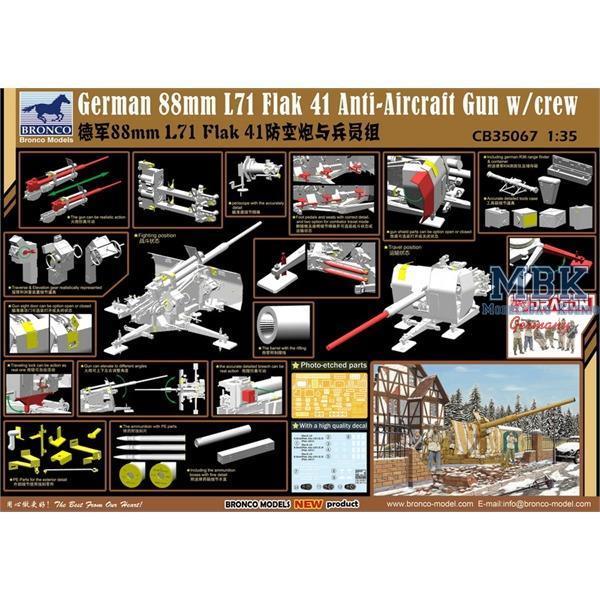
- Photo-etched parts included
- Can be built in firing position
- 6 figures (Dragon 6275)
- Workable boom
- Various ammunition boxes/containers
- Various types of ammunition
- R36 rangefinder with transport case included
- Special trailer 202 not included
- 3 painting suggestions
- Unbuilt, unpainted
- Paint and glue not included
The weapon fired a more powerful 88 mm cartridge and achieved muzzle velocities of up to 1,000 m/s. This allowed it to engage targets at altitudes of up to approximately 14,700 meters and made it extremely effective against heavy bomber formations. A characteristic feature was its very long barrel with a multi-section construction, but it lacked the typical muzzle brake of later German anti-tank guns such as the Pak 43.
Although the Flak 41 was originally designed as a heavy anti-aircraft gun, its enormous penetrating power also led to its use in ground combat. The weapon proved particularly effective against tanks. Contemporary sources describe engagements against armored targets at ranges between approximately 600 and 1,500 meters. The high velocity of its armor-piercing ammunition made the Flak 41 a dangerous anti-tank weapon, even though this role was not its primary purpose.
The first Flak 41 guns were sent to North Africa on Hitler's personal orders to reinforce German units there. However, some of the weapons were lost during transport across the Mediterranean. The guns that were actually deployed suffered under the harsh desert conditions; in particular, sand and heat caused malfunctions in ammunition feeding and shell ejection. Due to these technical problems, many of the guns used in North Africa were later returned to Germany.
Despite its impressive performance specifications, the Flak 41 was generally considered complicated and prone to malfunctions. Above all, its complex mechanics and problems with shell ejection significantly hampered its use at the front. Production therefore proceeded more slowly than planned, so the older Flak 36 continued to constitute the majority of Germany's heavy anti-aircraft defenses. In total, only slightly more than 500 were manufactured.
The 8.8 cm Flak 41 was used both in the Reich's air defense and on various fronts during the war. Besides its role against Allied bombers, it was also occasionally used in direct ground combat against armored units. Due to its high firepower and distinctive appearance, the Flak 41 is considered today to be the technological pinnacle of German 88mm anti-aircraft gun development during the Second World War.
Customer Reviews 10
Write now your personal experience with this article and help others with their purchase decision.
