Bandai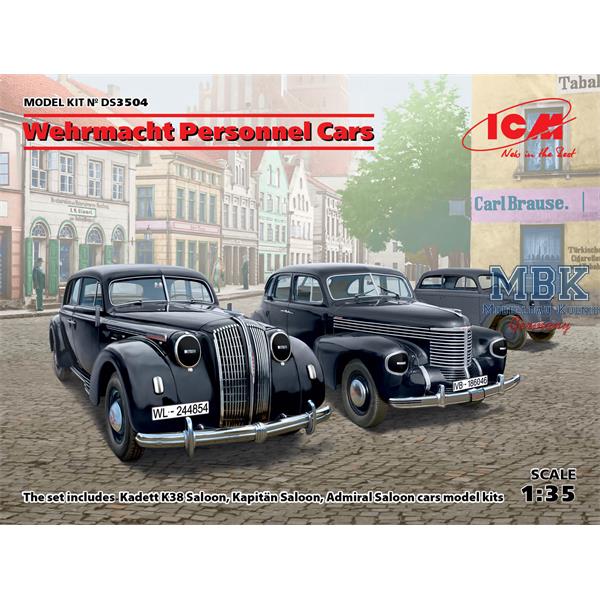
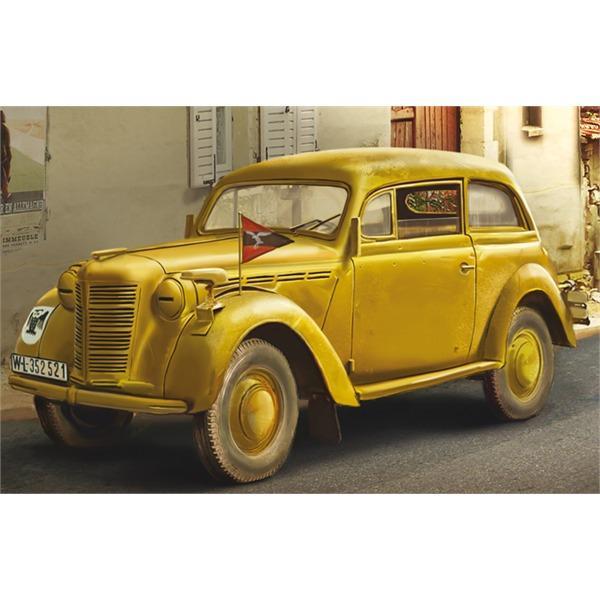

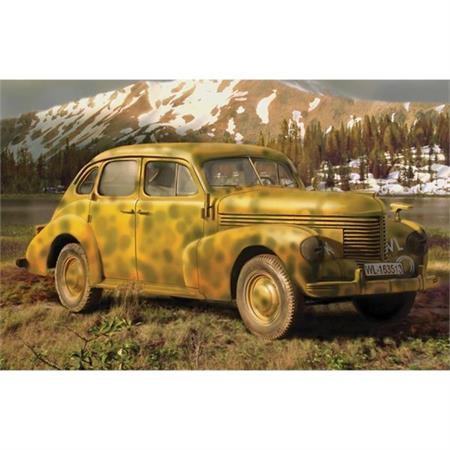
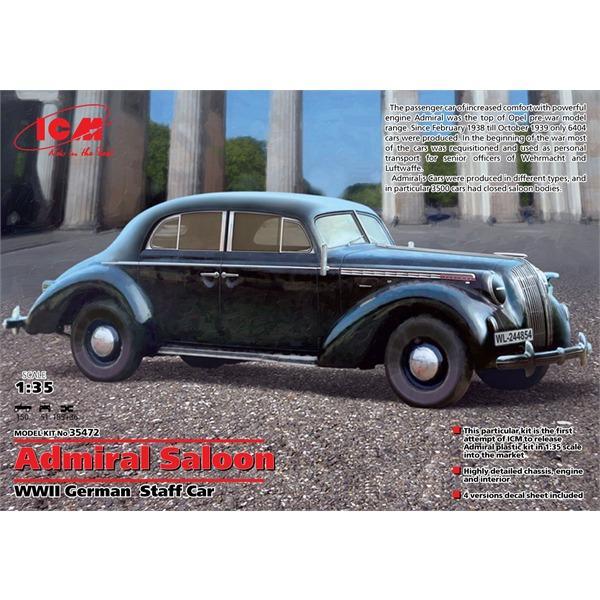
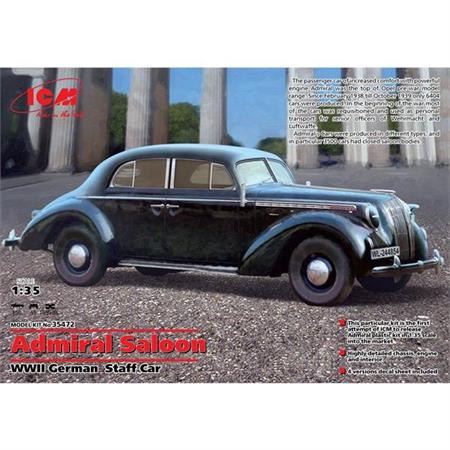



Plastic model kit for building three WWII Wehrmacht passenger cars
The Opel Kadett K38 was a German small car manufactured by Adam Opel AG from 1937 to 1940. It represented a further development of the first Kadett model and benefited from modern design features, particularly the unibody construction, which was considered advanced at the time. With its 1.1-liter four-cylinder engine, the car produced 23 hp and reached a top speed of just under 100 km/h. Thanks to its low fuel consumption, simple technology, and reliability, the Kadett enjoyed great popularity.
Visually, the K38 was distinguished by its modern, streamlined design. The headlights were integrated into the fenders, the body appeared smooth and contemporary, and the front end was stylistically based on the larger Opel Olympia. The Kadett was offered as a two-door and four-door sedan, as well as a convertible sedan. A higher-end trim level was sold under the name "Kadett Spezial."
With the outbreak of World War II, many vehicles were requisitioned by government agencies and the Wehrmacht. The Kadett K38 was primarily used as a courier, liaison, and service vehicle. Due to its compact dimensions and fuel efficiency, it was particularly well-suited for administrative tasks and rear-line operations. At the same time, it remained one of the most common civilian vehicles on German roads in the late 1930s.
Production of the Kadett K38 ended in 1940 when Opel factories were converted to the production of war-related goods. After the war, the production facilities and design documents were transferred to the Soviet Union as war reparations. There, they served as the basis for the Moskvich 400, which was largely identical to the Kadett in terms of both technology and appearance. The Opel Kadett K38 thus occupies a special place not only in the history of German automotive engineering but also in the development of the Soviet automotive industry.
Opel Kapitän
The Opel Kapitän was an upper-middle-class car produced by Adam Opel AG from 1938 onwards as the successor to the Opel Super 6. The vehicle was among the largest and most prestigious passenger cars in Opel's lineup at the time, combining modern, American-influenced body styling with solid German engineering. Its name was intended to emphasize the model's premium position within the Opel range.
The Kapitän was powered by a 2.5-liter inline six-cylinder engine producing 55 hp. This allowed the vehicle to reach a top speed of approximately 125 to 130 km/h, a remarkable figure for the late 1930s. The self-supporting, all-steel body offered seating for five to six people and ensured a comfortable ride.
Externally, the Opel Kapitän was distinguished by its generous dimensions, curved fenders, long hood, and modern, streamlined lines. The body design was clearly inspired by contemporary American vehicles, influenced by Opel's affiliation with the US corporation General Motors. The Kapitän was primarily offered as a four-door or two-door sedan, along with a few special editions.
During World War II, numerous Opel Kapitän models were used by government agencies, authorities, and the Wehrmacht. Due to its size, comfortable interior, and powerful engine, it was particularly well-suited as a staff car, command vehicle, and service vehicle. He was frequently seen in high-ranking military and civilian offices, both in the German Reich and in the occupied territories.
Civilian production was halted as early as 1940 due to the war. After the war, Opel resumed production of the Kapitän, as the model had sustained relatively little war damage to its production facilities. In the postwar years, the Kapitän became one of the best-known German luxury cars and remained an important part of the Opel lineup for several generations.
The pre-war Kapitän is considered one of the quintessential German six-cylinder vehicles of the late 1930s and exemplifies the transition from the classic automotive design of the interwar period to the more modern body styles that would characterize the postwar years.
Opel Admiral
The Opel Admiral was the flagship model of Adam Opel AG in the years leading up to World War II. Produced from 1937 to 1939, it was positioned above the Opel Kapitän. With its generous dimensions, powerful six-cylinder engine, and prestigious appearance, it was one of the most significant German luxury cars of the late 1930s.
The Admiral was powered by a 3.6-liter inline six-cylinder engine producing around 75 hp. This power enabled a top speed of approximately 130 to 135 km/h, making it one of the fastest German production cars in its class. The suspension was designed for a high level of comfort and suited the demands of long business trips.
The car's design was clearly influenced by American automobiles. The long hood, wide front end, curved fenders, and spacious body gave the Admiral a distinguished appearance. This influence was not surprising, as Opel had been part of the American General Motors corporation since 1929. The car was offered as a four-door and a two-door sedan; in addition, several special body styles were produced by specialized coachbuilders.
The Opel Admiral was primarily aimed at wealthy private customers, businesses, and government agencies. Due to its prestige, it was also used by government authorities, high-ranking officials, and leading figures. During World War II, numerous vehicles were acquired by military and civilian agencies and used as staff and ceremonial cars. The Admiral was particularly common among higher command authorities and administrative bodies.
With the outbreak of war, demand for luxury cars declined sharply, and production of the Admiral ended as early as 1939. In total, only slightly more than 6,000 vehicles were produced, making it considerably rarer than the Opel Kapitän. After the war, the pre-war model series was not revived. It wasn't until 1964 that a vehicle bearing the name Opel Admiral reappeared, but this was a completely new design.
The pre-war Admiral is considered one of the most prestigious German luxury cars of its era. It combined modern technology, high driving comfort and an impressive performance for the time, embodying Opel's ambition to compete with established German manufacturers in the luxury segment as well.
- Kadett K38 Saloon (unfortunately no longer available individually ICM35478)
- Dimensions L x H (built): 111 x 43 mm
- 143 parts
- 4 marking options
- Kapitan Saloon (unfortunately no longer available individually ICM35475)
- Dimensions L x H (built): 132 x 47 mm
- 147 parts
- 4 marking options
- Admiral Saloon (unfortunately no longer available individually ICM35472)
- Dimensions L x H (built): 150 x 46 mm
- 184 parts
- 4 marking options
- Scale 1:35
- Unassembled, unpainted
- Paint and glue not included
The Opel Kadett K38 was a German small car manufactured by Adam Opel AG from 1937 to 1940. It represented a further development of the first Kadett model and benefited from modern design features, particularly the unibody construction, which was considered advanced at the time. With its 1.1-liter four-cylinder engine, the car produced 23 hp and reached a top speed of just under 100 km/h. Thanks to its low fuel consumption, simple technology, and reliability, the Kadett enjoyed great popularity.
Visually, the K38 was distinguished by its modern, streamlined design. The headlights were integrated into the fenders, the body appeared smooth and contemporary, and the front end was stylistically based on the larger Opel Olympia. The Kadett was offered as a two-door and four-door sedan, as well as a convertible sedan. A higher-end trim level was sold under the name "Kadett Spezial."
With the outbreak of World War II, many vehicles were requisitioned by government agencies and the Wehrmacht. The Kadett K38 was primarily used as a courier, liaison, and service vehicle. Due to its compact dimensions and fuel efficiency, it was particularly well-suited for administrative tasks and rear-line operations. At the same time, it remained one of the most common civilian vehicles on German roads in the late 1930s.
Production of the Kadett K38 ended in 1940 when Opel factories were converted to the production of war-related goods. After the war, the production facilities and design documents were transferred to the Soviet Union as war reparations. There, they served as the basis for the Moskvich 400, which was largely identical to the Kadett in terms of both technology and appearance. The Opel Kadett K38 thus occupies a special place not only in the history of German automotive engineering but also in the development of the Soviet automotive industry.
Opel Kapitän
The Opel Kapitän was an upper-middle-class car produced by Adam Opel AG from 1938 onwards as the successor to the Opel Super 6. The vehicle was among the largest and most prestigious passenger cars in Opel's lineup at the time, combining modern, American-influenced body styling with solid German engineering. Its name was intended to emphasize the model's premium position within the Opel range.
The Kapitän was powered by a 2.5-liter inline six-cylinder engine producing 55 hp. This allowed the vehicle to reach a top speed of approximately 125 to 130 km/h, a remarkable figure for the late 1930s. The self-supporting, all-steel body offered seating for five to six people and ensured a comfortable ride.
Externally, the Opel Kapitän was distinguished by its generous dimensions, curved fenders, long hood, and modern, streamlined lines. The body design was clearly inspired by contemporary American vehicles, influenced by Opel's affiliation with the US corporation General Motors. The Kapitän was primarily offered as a four-door or two-door sedan, along with a few special editions.
During World War II, numerous Opel Kapitän models were used by government agencies, authorities, and the Wehrmacht. Due to its size, comfortable interior, and powerful engine, it was particularly well-suited as a staff car, command vehicle, and service vehicle. He was frequently seen in high-ranking military and civilian offices, both in the German Reich and in the occupied territories.
Civilian production was halted as early as 1940 due to the war. After the war, Opel resumed production of the Kapitän, as the model had sustained relatively little war damage to its production facilities. In the postwar years, the Kapitän became one of the best-known German luxury cars and remained an important part of the Opel lineup for several generations.
The pre-war Kapitän is considered one of the quintessential German six-cylinder vehicles of the late 1930s and exemplifies the transition from the classic automotive design of the interwar period to the more modern body styles that would characterize the postwar years.
Opel Admiral
The Opel Admiral was the flagship model of Adam Opel AG in the years leading up to World War II. Produced from 1937 to 1939, it was positioned above the Opel Kapitän. With its generous dimensions, powerful six-cylinder engine, and prestigious appearance, it was one of the most significant German luxury cars of the late 1930s.
The Admiral was powered by a 3.6-liter inline six-cylinder engine producing around 75 hp. This power enabled a top speed of approximately 130 to 135 km/h, making it one of the fastest German production cars in its class. The suspension was designed for a high level of comfort and suited the demands of long business trips.
The car's design was clearly influenced by American automobiles. The long hood, wide front end, curved fenders, and spacious body gave the Admiral a distinguished appearance. This influence was not surprising, as Opel had been part of the American General Motors corporation since 1929. The car was offered as a four-door and a two-door sedan; in addition, several special body styles were produced by specialized coachbuilders.
The Opel Admiral was primarily aimed at wealthy private customers, businesses, and government agencies. Due to its prestige, it was also used by government authorities, high-ranking officials, and leading figures. During World War II, numerous vehicles were acquired by military and civilian agencies and used as staff and ceremonial cars. The Admiral was particularly common among higher command authorities and administrative bodies.
With the outbreak of war, demand for luxury cars declined sharply, and production of the Admiral ended as early as 1939. In total, only slightly more than 6,000 vehicles were produced, making it considerably rarer than the Opel Kapitän. After the war, the pre-war model series was not revived. It wasn't until 1964 that a vehicle bearing the name Opel Admiral reappeared, but this was a completely new design.
The pre-war Admiral is considered one of the most prestigious German luxury cars of its era. It combined modern technology, high driving comfort and an impressive performance for the time, embodying Opel's ambition to compete with established German manufacturers in the luxury segment as well.
Customer Reviews 4
Write now your personal experience with this article and help others with their purchase decision.