 Bandai
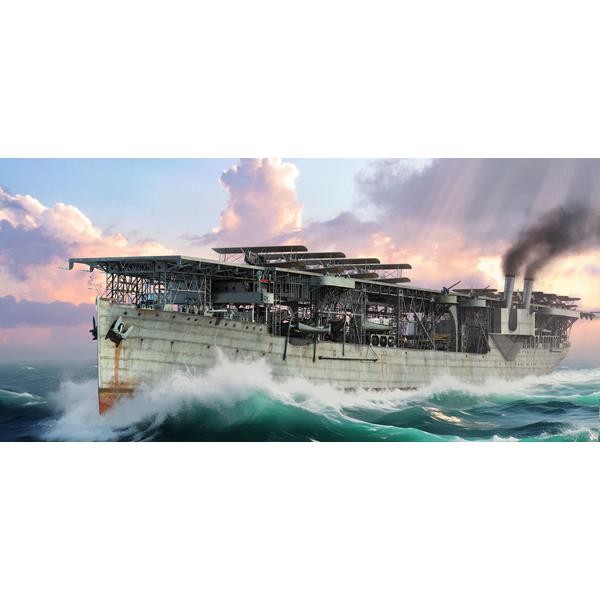
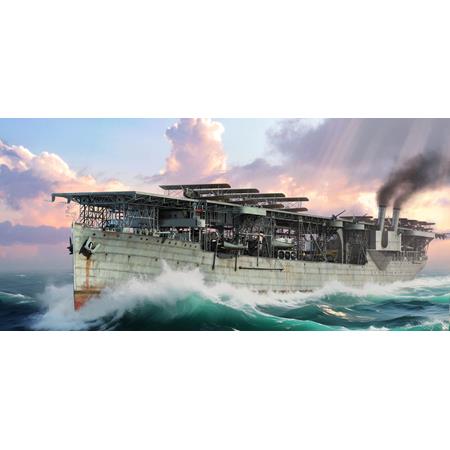

USS Langley CV-1 1:700
Item Number:
TRU06723
TRU06723
Manufacturer
TRUMPETER
TRUMPETER
Scale:
1:700
1:700

35.40 €
VAT included plus shipping and handling
Appears soon
We expect to arrive at middle / end of November 2026
Expected to be released middle / end of November 2026
Plastic model kit of the aircraft carrier USS Langley (CV-1)
With a length of approximately 165 meters and a standard displacement of about 11,500 tons, the Langley was significantly smaller than later fleet carriers. The ship was powered by a turbo-electric propulsion system featuring two electric motors and an output of around 7,200 shaft horsepower, enabling a top speed of approximately 15 knots. Its continuous wooden flight deck accommodated up to 34 aircraft. For self-defense, the carrier was equipped with four 12.7 cm guns. During her trials, numerous procedures were developed aboard the *Langley* that later became standard for carrier operations. On October 17, 1922, an aircraft took off from her flight deck for the first time; just days later, the first landing on an American aircraft carrier was successfully achieved, followed shortly thereafter by the first catapult launch from a US Navy carrier. These milestones turned the *Langley* into a flying testbed for modern naval aviation.
With the commissioning of the significantly larger *Lexington*-class aircraft carriers, the *Langley* increasingly lost her relevance as a frontline carrier. Consequently, between 1936 and 1937, she was converted into a seaplane tender and redesignated AV-3. In this role, she supported reconnaissance and patrol aircraft and transported planes and equipment across the Pacific theater. After the United States entered World War II, the *Langley* transported Curtiss P-40 fighter aircraft—among other loads—to Java to support Allied forces. On February 27, 1942, she was attacked by Japanese bombers south of Java and severely damaged by multiple bomb hits. As salvage was no longer possible, accompanying American destroyers scuttled the ship with torpedoes to prevent her capture by the enemy.
Although the USS *Langley* never served as a major combat aircraft carrier, she ranks among the most significant warships in US naval history. It was aboard her that the foundations of American carrier operations were established, including takeoff and landing procedures, deck organization, and operational doctrines for carrier-based air forces. The experience gained on the *Langley* directly informed the development of the *Lexington*, *Saratoga*, and *Yorktown* carriers, and ultimately the famous *Essex* class, all of which played a decisive role in the course of the Pacific War. Thus, the USS *Langley* is regarded as the ship that ushered in the era of American aircraft carriers.
- Scale: 1:700
- Dimensions (LxW, assembled): 237.8 x 34.1 mm
- 370+ parts
- Photo-etched parts included
- Metal anchor chain
- One-piece hull
- Detailed decks
- Aircraft types included:
- Martin BM-2 (Carrier-based torpedo bomber and reconnaissance aircraft)
- Boeing F4B (Carrier-based fighter aircraft)
- Martin T4M (Carrier-based torpedo bomber)
- Decals for ship and aircraft
- Unassembled and unpainted
- Paint and glue not included
With a length of approximately 165 meters and a standard displacement of about 11,500 tons, the Langley was significantly smaller than later fleet carriers. The ship was powered by a turbo-electric propulsion system featuring two electric motors and an output of around 7,200 shaft horsepower, enabling a top speed of approximately 15 knots. Its continuous wooden flight deck accommodated up to 34 aircraft. For self-defense, the carrier was equipped with four 12.7 cm guns. During her trials, numerous procedures were developed aboard the *Langley* that later became standard for carrier operations. On October 17, 1922, an aircraft took off from her flight deck for the first time; just days later, the first landing on an American aircraft carrier was successfully achieved, followed shortly thereafter by the first catapult launch from a US Navy carrier. These milestones turned the *Langley* into a flying testbed for modern naval aviation.
With the commissioning of the significantly larger *Lexington*-class aircraft carriers, the *Langley* increasingly lost her relevance as a frontline carrier. Consequently, between 1936 and 1937, she was converted into a seaplane tender and redesignated AV-3. In this role, she supported reconnaissance and patrol aircraft and transported planes and equipment across the Pacific theater. After the United States entered World War II, the *Langley* transported Curtiss P-40 fighter aircraft—among other loads—to Java to support Allied forces. On February 27, 1942, she was attacked by Japanese bombers south of Java and severely damaged by multiple bomb hits. As salvage was no longer possible, accompanying American destroyers scuttled the ship with torpedoes to prevent her capture by the enemy.
Although the USS *Langley* never served as a major combat aircraft carrier, she ranks among the most significant warships in US naval history. It was aboard her that the foundations of American carrier operations were established, including takeoff and landing procedures, deck organization, and operational doctrines for carrier-based air forces. The experience gained on the *Langley* directly informed the development of the *Lexington*, *Saratoga*, and *Yorktown* carriers, and ultimately the famous *Essex* class, all of which played a decisive role in the course of the Pacific War. Thus, the USS *Langley* is regarded as the ship that ushered in the era of American aircraft carriers.
Customer Reviews 0
Write now your personal experience with this article and help others with their purchase decision.
