 Bandai
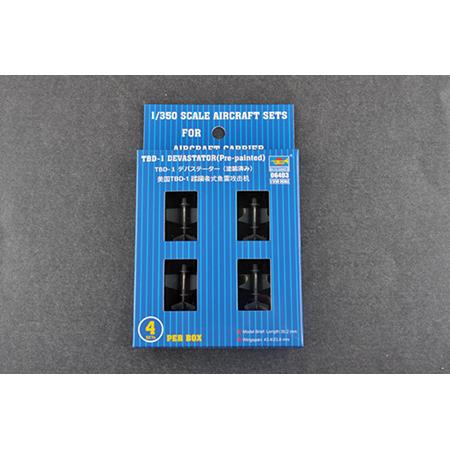
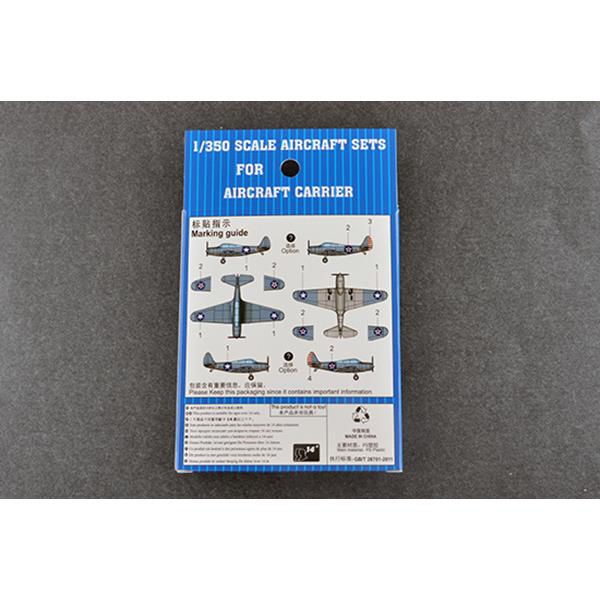
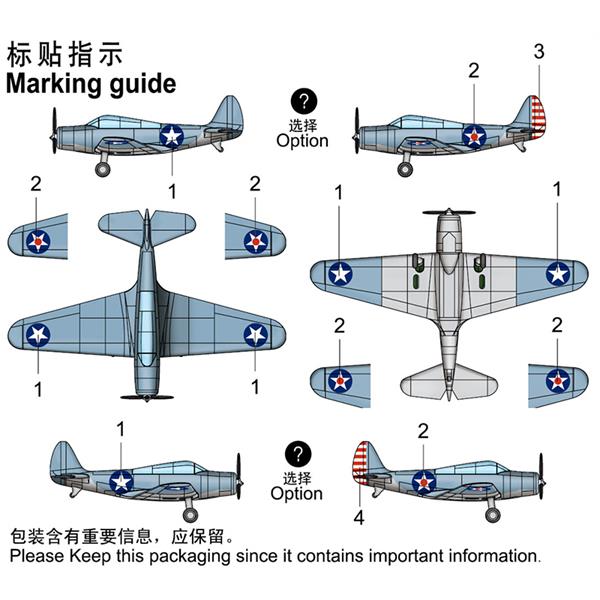
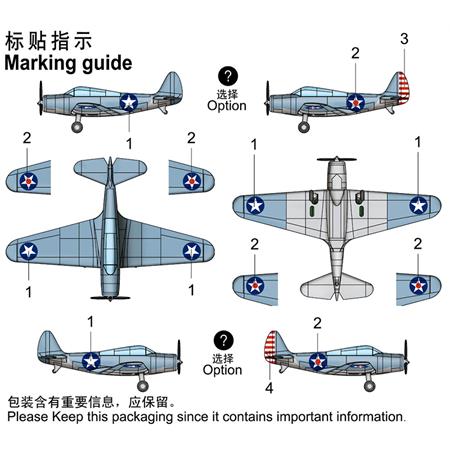
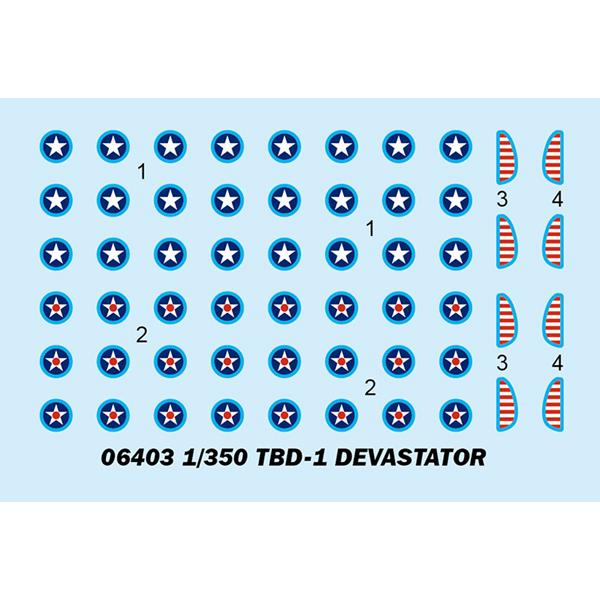
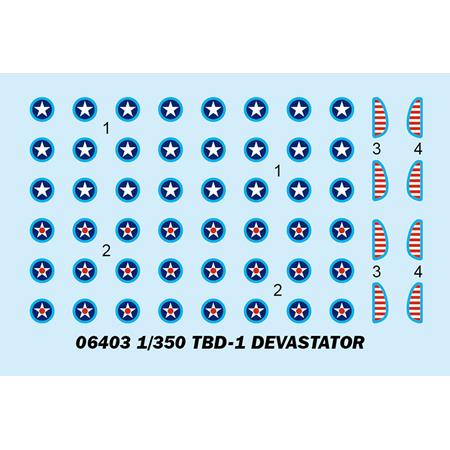


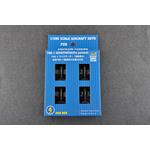
Douglas TBD-1 DEVASTATOR (Pre-painted) 1:350
Item Number:
TRU06403
TRU06403
Manufacturer
TRUMPETER
TRUMPETER
Scale:
1:350
1:350

Plastic model kit for Douglas TBD-1 Devastator carrier-based aircraft
The TBD-1 was powered by a Pratt & Whitney R-1830-64 Twin Wasp radial engine producing approximately 850 hp. The aircraft reached speeds of around 330 km/h and carried a crew of three. For its time, it was a modern aircraft, featuring an all-metal fuselage, a monoplane design, and hydraulically retractable landing gear.
The Devastator's primary mission was launching torpedo attacks against enemy ships. It could carry a Mark 13 aerial torpedo or, alternatively, bombs. Two 7.62 mm machine guns were available for self-defense: one fixed and forward-firing, the other operated by the observer/gunner. The large crew allowed for simultaneous navigation, observation, and operation of the defensive armament.
The TBD-1 faced its critical test during the Pacific War in 1942. During the Battle of Midway, Devastator squadrons from the carriers USS Enterprise, USS Hornet, and USS Yorktown attacked the Japanese carrier fleet. Although the torpedo attacks were tactically extremely costly and achieved little immediate success, they tied up Japanese fighter aircraft and helped enable American Dauntless dive-bombers to launch their attacks later with virtually no interference.
By mid-1942, the Devastator was already significantly obsolete. Its relatively low speed and the slow performance of the Mark 13 torpedo made it particularly vulnerable to modern Japanese fighters. Consequently, it was withdrawn from frontline units in 1942 and replaced by the more capable Grumman TBF Avenger.
The Douglas TBD-1 Devastator thus represents the transition from early carrier-based biplanes to modern all-metal monoplanes. Although its operational service was brief, its role at the Battle of Midway made it one of the most famous US carrier aircraft of the early Pacific War.
- Scale: 1:350
- 4 pre-painted aircraft
- 2 with folding wings
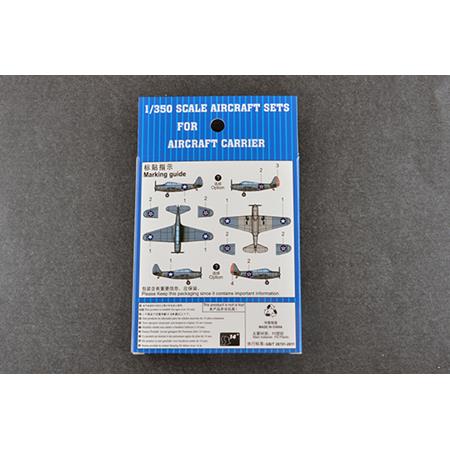
- Decals included
- Unassembled
- Paint and glue not included
The TBD-1 was powered by a Pratt & Whitney R-1830-64 Twin Wasp radial engine producing approximately 850 hp. The aircraft reached speeds of around 330 km/h and carried a crew of three. For its time, it was a modern aircraft, featuring an all-metal fuselage, a monoplane design, and hydraulically retractable landing gear.
The Devastator's primary mission was launching torpedo attacks against enemy ships. It could carry a Mark 13 aerial torpedo or, alternatively, bombs. Two 7.62 mm machine guns were available for self-defense: one fixed and forward-firing, the other operated by the observer/gunner. The large crew allowed for simultaneous navigation, observation, and operation of the defensive armament.
The TBD-1 faced its critical test during the Pacific War in 1942. During the Battle of Midway, Devastator squadrons from the carriers USS Enterprise, USS Hornet, and USS Yorktown attacked the Japanese carrier fleet. Although the torpedo attacks were tactically extremely costly and achieved little immediate success, they tied up Japanese fighter aircraft and helped enable American Dauntless dive-bombers to launch their attacks later with virtually no interference.
By mid-1942, the Devastator was already significantly obsolete. Its relatively low speed and the slow performance of the Mark 13 torpedo made it particularly vulnerable to modern Japanese fighters. Consequently, it was withdrawn from frontline units in 1942 and replaced by the more capable Grumman TBF Avenger.
The Douglas TBD-1 Devastator thus represents the transition from early carrier-based biplanes to modern all-metal monoplanes. Although its operational service was brief, its role at the Battle of Midway made it one of the most famous US carrier aircraft of the early Pacific War.
Customer Reviews 1
Write now your personal experience with this article and help others with their purchase decision.
