 Bandai
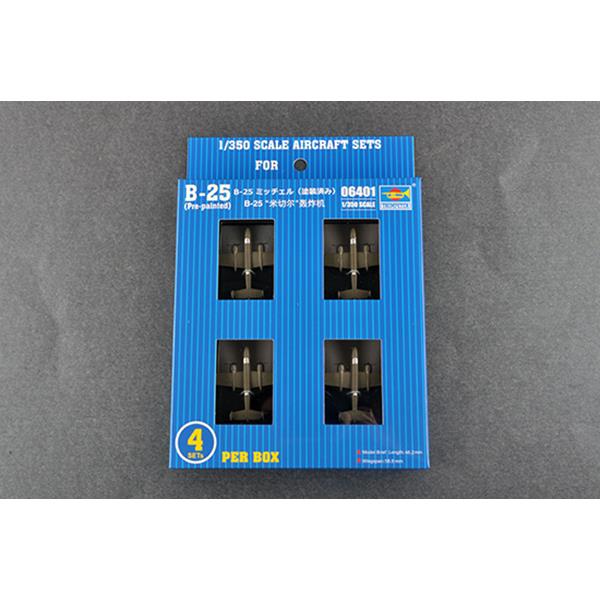

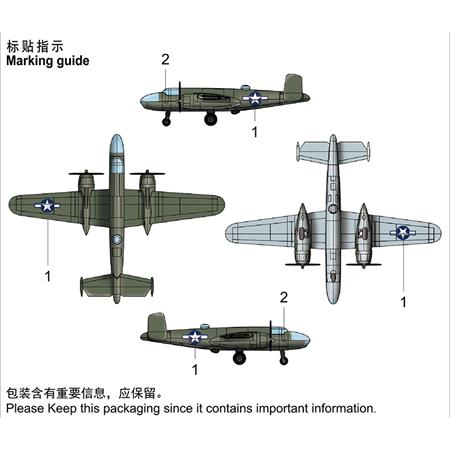


North American B-25B MITCHELL (Pre-painted) 1:350
Item Number:
TRU06401
TRU06401
Manufacturer
TRUMPETER
TRUMPETER
Scale:
1:350
1:350

Plastic model kit for the North American B-25B Mitchell bomber
The B-25B was powered by two Wright R-2600 Cyclone 14 radial engines, each producing approximately 1,700 hp. It featured retractable tricycle landing gear and an all-metal airframe. Its top speed was around 440 km/h, with a range of approximately 2,000 km, depending on payload and operational conditions.
The B-25B differed significantly from later variants. Initially, it had relatively light armament in the tail section and featured a transparent dorsal turret equipped with two 12.7 mm Browning M2 machine guns. A retractable ventral turret, also mounting two 12.7 mm machine guns, could be deployed for downward defense. Defensive armament was significantly increased in later versions of the B-25.
Various bomb loads could be carried in the bomb bay. Designed as a medium bomber for standard operations, the B-25 was intended for attacks on airfields, troop concentrations, ships, and other tactical targets. Its twin-engine configuration provided good range and greater reliability compared to single-engine aircraft. The Doolittle Raid
The historical significance of the B-25B stems primarily from the Doolittle Raid. Led by Lieutenant Colonel James H. Doolittle, 16 specially modified B-25Bs were launched from the aircraft carrier USS Hornet. The aircraft were not originally designed for carrier-based operations; consequently, they had to be fitted with reduced bomb loads and extra fuel tanks to handle the unusually long mission.
On April 18, 1942, the B-25Bs attacked Japanese targets on Honshu, including facilities in and around Tokyo. The plan was for the aircraft to reach China afterward. However, because the task force was detected prematurely, the planes had to launch much earlier than intended. Most crews ultimately had to make emergency landings in China or bail out; one aircraft landed in the Soviet Union, where it was interned.
In military terms, the raid caused only limited material damage. Its psychological and strategic impact, however, was substantial: it demonstrated that the Japanese home islands were vulnerable to attack by American forces—despite the vast distances involved—and boosted U.S. morale following the attack on Pearl Harbor.
The B-25 Mitchell was subsequently developed into numerous variants and saw service throughout World War II. It proved to be a versatile bomber and low-level attack aircraft, particularly in the Pacific and North African theaters. Later versions featured significantly heavier nose armament, with some models specifically optimized for attacking ships and ground targets.
- 1:350 scale
- 4 pre-painted aircraft
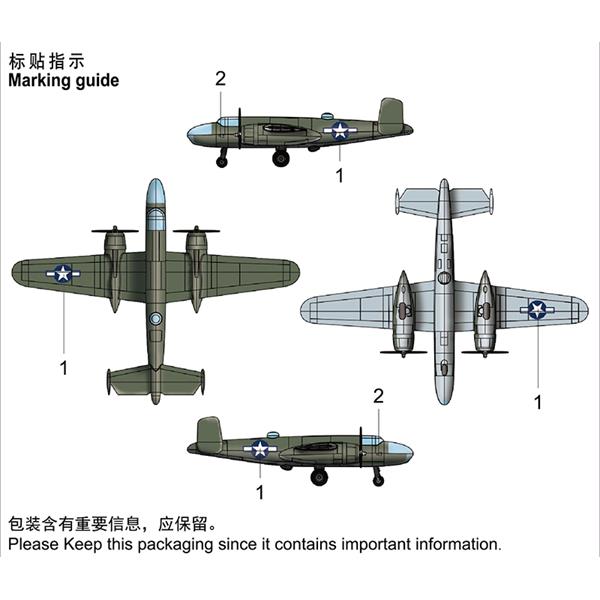
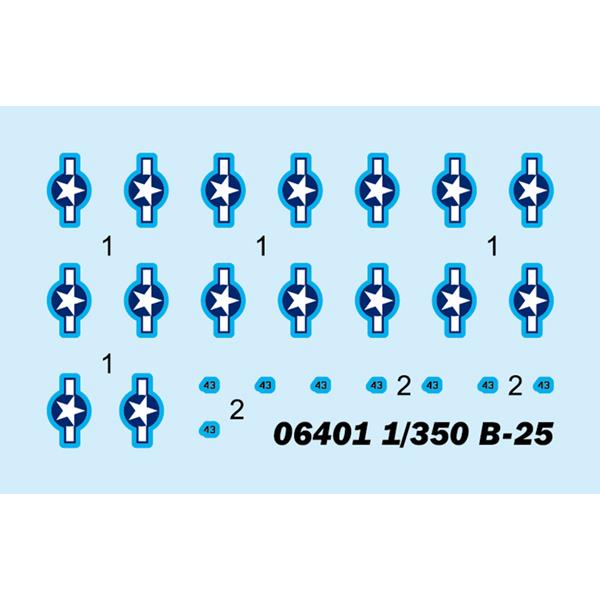
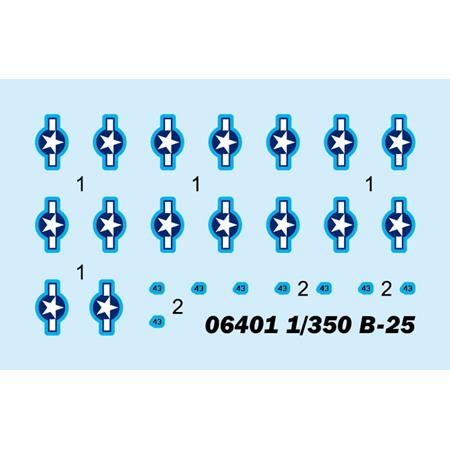
- Decals included
- Unassembled
- Paint and glue not included
The B-25B was powered by two Wright R-2600 Cyclone 14 radial engines, each producing approximately 1,700 hp. It featured retractable tricycle landing gear and an all-metal airframe. Its top speed was around 440 km/h, with a range of approximately 2,000 km, depending on payload and operational conditions.
The B-25B differed significantly from later variants. Initially, it had relatively light armament in the tail section and featured a transparent dorsal turret equipped with two 12.7 mm Browning M2 machine guns. A retractable ventral turret, also mounting two 12.7 mm machine guns, could be deployed for downward defense. Defensive armament was significantly increased in later versions of the B-25.
Various bomb loads could be carried in the bomb bay. Designed as a medium bomber for standard operations, the B-25 was intended for attacks on airfields, troop concentrations, ships, and other tactical targets. Its twin-engine configuration provided good range and greater reliability compared to single-engine aircraft. The Doolittle Raid
The historical significance of the B-25B stems primarily from the Doolittle Raid. Led by Lieutenant Colonel James H. Doolittle, 16 specially modified B-25Bs were launched from the aircraft carrier USS Hornet. The aircraft were not originally designed for carrier-based operations; consequently, they had to be fitted with reduced bomb loads and extra fuel tanks to handle the unusually long mission.
On April 18, 1942, the B-25Bs attacked Japanese targets on Honshu, including facilities in and around Tokyo. The plan was for the aircraft to reach China afterward. However, because the task force was detected prematurely, the planes had to launch much earlier than intended. Most crews ultimately had to make emergency landings in China or bail out; one aircraft landed in the Soviet Union, where it was interned.
In military terms, the raid caused only limited material damage. Its psychological and strategic impact, however, was substantial: it demonstrated that the Japanese home islands were vulnerable to attack by American forces—despite the vast distances involved—and boosted U.S. morale following the attack on Pearl Harbor.
The B-25 Mitchell was subsequently developed into numerous variants and saw service throughout World War II. It proved to be a versatile bomber and low-level attack aircraft, particularly in the Pacific and North African theaters. Later versions featured significantly heavier nose armament, with some models specifically optimized for attacking ships and ground targets.
Customer Reviews 4
Write now your personal experience with this article and help others with their purchase decision.
