 Bandai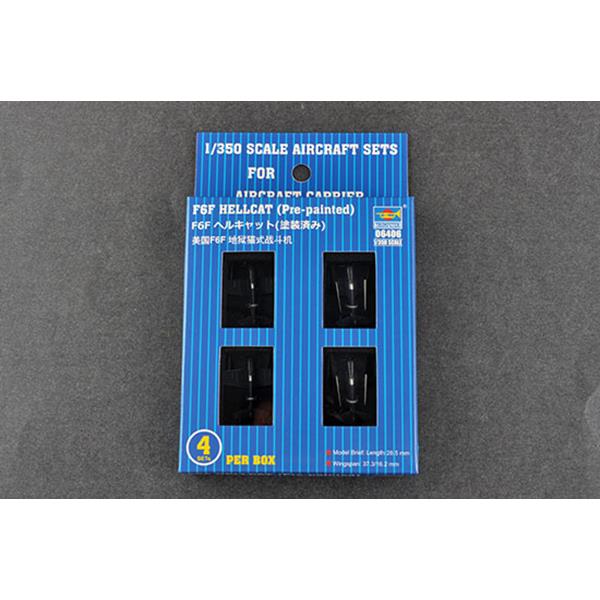



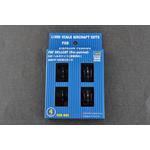
Plastic model kit for Grumman F6F Hellcat carrier-based aircraft
The Hellcat was an all-metal monoplane featuring retractable landing gear and a large, air-cooled radial engine. The early F6F-3 model was powered by a Pratt & Whitney R-2800-10 Double Wasp engine producing approximately 2,000 hp, enabling a top speed of around 605 km/h. The later F6F-5 variant was equipped with an improved R-2800-10W engine, delivering comparable—and in some respects superior—performance.
Its standard armament consisted of six 12.7 mm Browning M2 machine guns, with three mounted in each wing. Alternatively, the F6F-5 could be fitted with two 20 mm cannons and four 12.7 mm machine guns. Bombs and unguided rockets could also be carried under the wings, making the Hellcat not only a fighter aircraft but also a capable fighter-bomber.
A key strength of the F6F was its ruggedness. The pilot and critical components were protected by armor plating, while self-sealing fuel tanks enhanced survivability. The Hellcat could withstand significant combat damage and still return to the carrier. At the same time, it was relatively easy for carrier pilots to fly and possessed good take-off and landing characteristics.
From 1943 onwards, the Hellcat increasingly assumed the role of the primary American carrier-based fighter. It proved its worth impressively, particularly during the Battle of the Philippine Sea in June 1944. During the engagement known as the "Great Marianas Turkey Shoot," American carrier aircraft shot down a vast number of Japanese planes; the Hellcat constituted a significant portion of the American fighter force.
The F6F also saw extensive service in the battles for Guadalcanal, the Marshall Islands, the Marianas, the Philippines, and Okinawa. Its high production numbers and excellent operational readiness enabled the US Navy to increasingly gain air superiority over the Pacific.
Among the various versions, the F6F-3 and F6F-5, in particular, were produced in large numbers. In total, more than 12,000 Hellcats were built. The ratio of approximately 19:1 between aerial victories achieved by US Navy and Marine Corps Hellcats and their own combat losses makes the F6F one of the most successful fighter aircraft in aviation history.
The Grumman F6F Hellcat was designed less for exceptional maneuverability than for firepower, speed, ruggedness, and ease of operation. Together with the F4U Corsair, it formed the backbone of American carrier-based fighter forces during the second half of the Pacific War.
- 1:350 scale
- 4 pre-painted aircraft
- 2 with folding wings
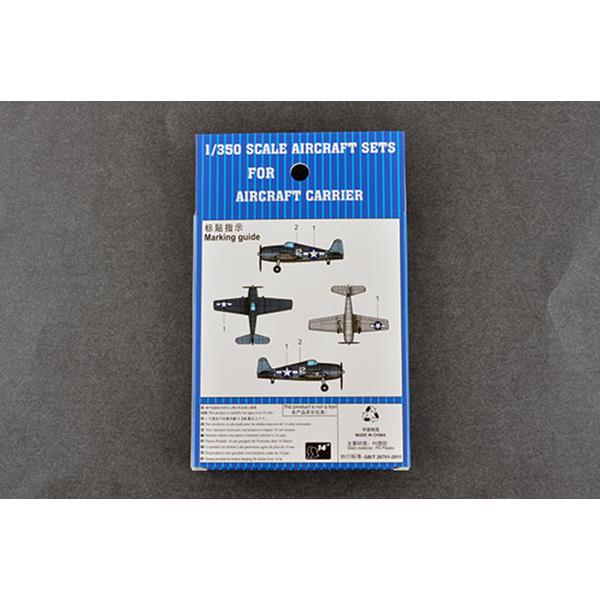
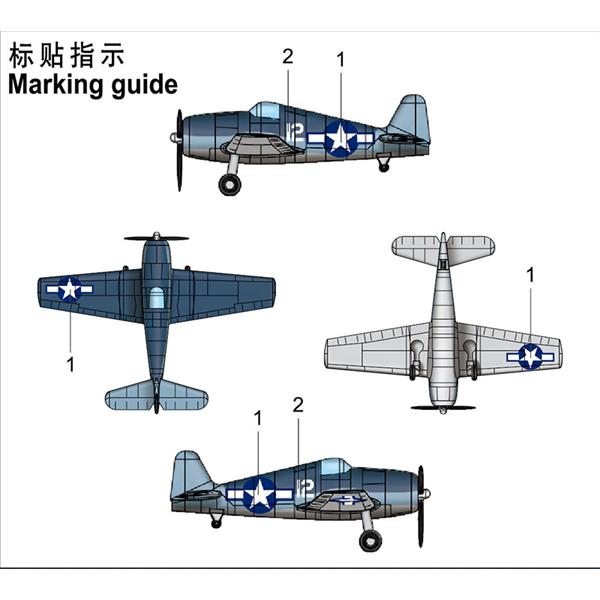
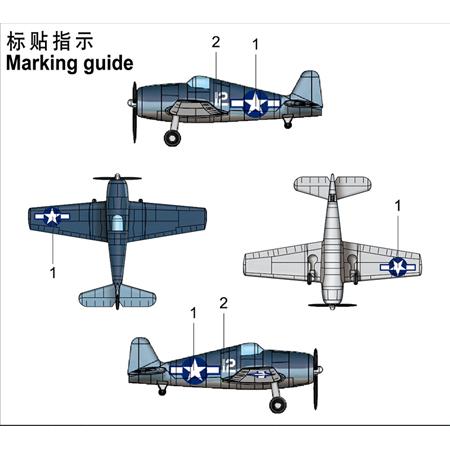
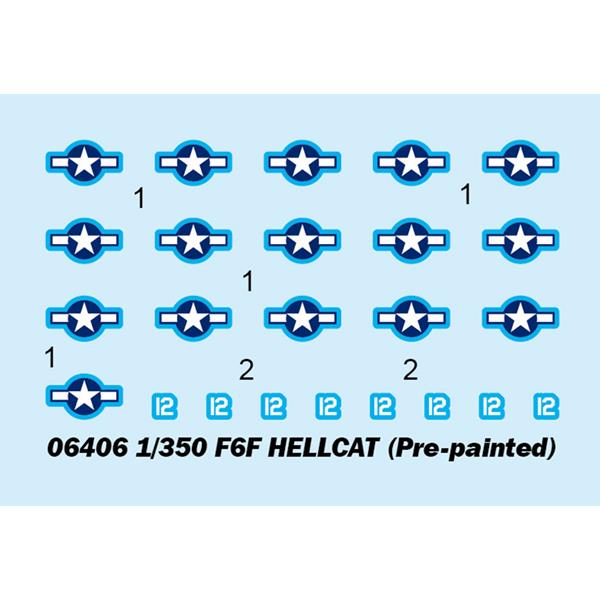
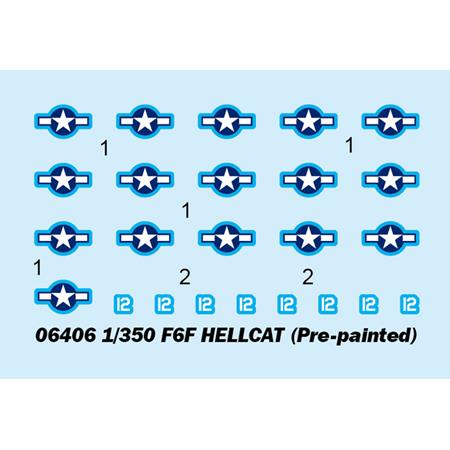
- Decals included
- Unassembled
- Paint and glue not included
The Hellcat was an all-metal monoplane featuring retractable landing gear and a large, air-cooled radial engine. The early F6F-3 model was powered by a Pratt & Whitney R-2800-10 Double Wasp engine producing approximately 2,000 hp, enabling a top speed of around 605 km/h. The later F6F-5 variant was equipped with an improved R-2800-10W engine, delivering comparable—and in some respects superior—performance.
Its standard armament consisted of six 12.7 mm Browning M2 machine guns, with three mounted in each wing. Alternatively, the F6F-5 could be fitted with two 20 mm cannons and four 12.7 mm machine guns. Bombs and unguided rockets could also be carried under the wings, making the Hellcat not only a fighter aircraft but also a capable fighter-bomber.
A key strength of the F6F was its ruggedness. The pilot and critical components were protected by armor plating, while self-sealing fuel tanks enhanced survivability. The Hellcat could withstand significant combat damage and still return to the carrier. At the same time, it was relatively easy for carrier pilots to fly and possessed good take-off and landing characteristics.
From 1943 onwards, the Hellcat increasingly assumed the role of the primary American carrier-based fighter. It proved its worth impressively, particularly during the Battle of the Philippine Sea in June 1944. During the engagement known as the "Great Marianas Turkey Shoot," American carrier aircraft shot down a vast number of Japanese planes; the Hellcat constituted a significant portion of the American fighter force.
The F6F also saw extensive service in the battles for Guadalcanal, the Marshall Islands, the Marianas, the Philippines, and Okinawa. Its high production numbers and excellent operational readiness enabled the US Navy to increasingly gain air superiority over the Pacific.
Among the various versions, the F6F-3 and F6F-5, in particular, were produced in large numbers. In total, more than 12,000 Hellcats were built. The ratio of approximately 19:1 between aerial victories achieved by US Navy and Marine Corps Hellcats and their own combat losses makes the F6F one of the most successful fighter aircraft in aviation history.
The Grumman F6F Hellcat was designed less for exceptional maneuverability than for firepower, speed, ruggedness, and ease of operation. Together with the F4U Corsair, it formed the backbone of American carrier-based fighter forces during the second half of the Pacific War.
Customer Reviews 1
Write now your personal experience with this article and help others with their purchase decision.
