 Bandai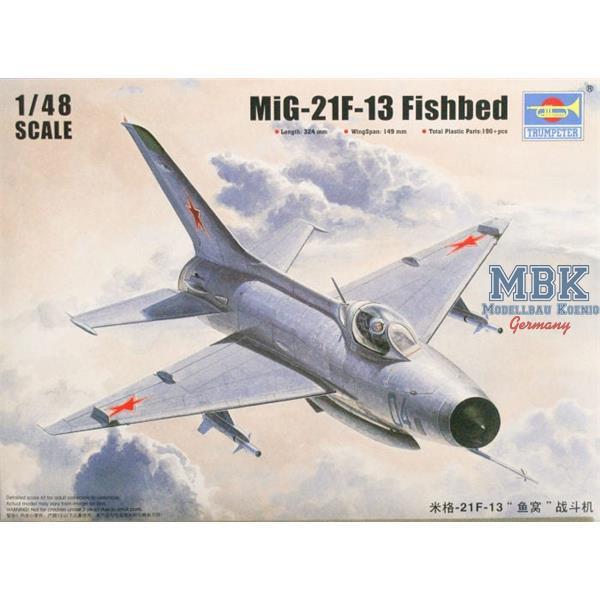
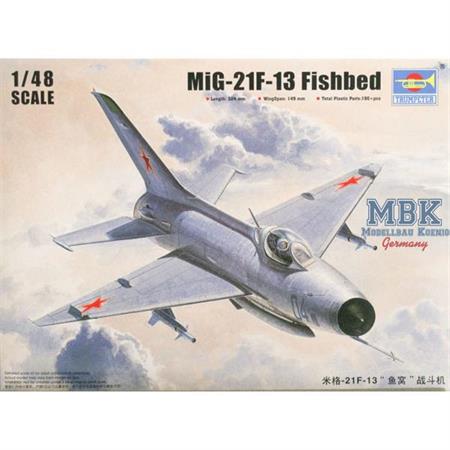
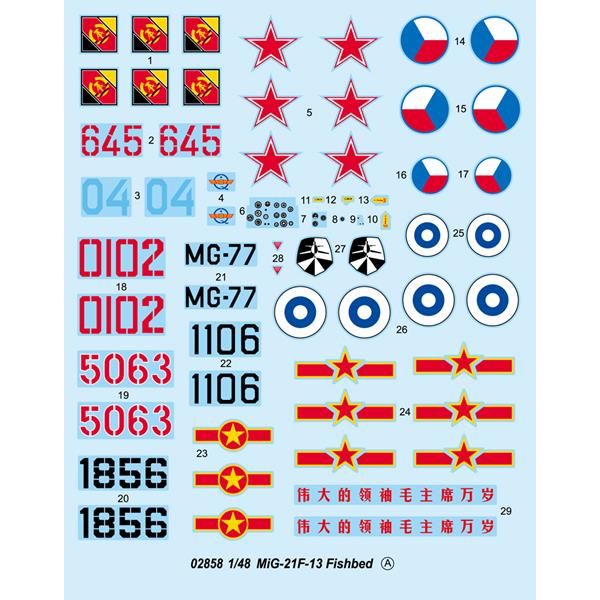
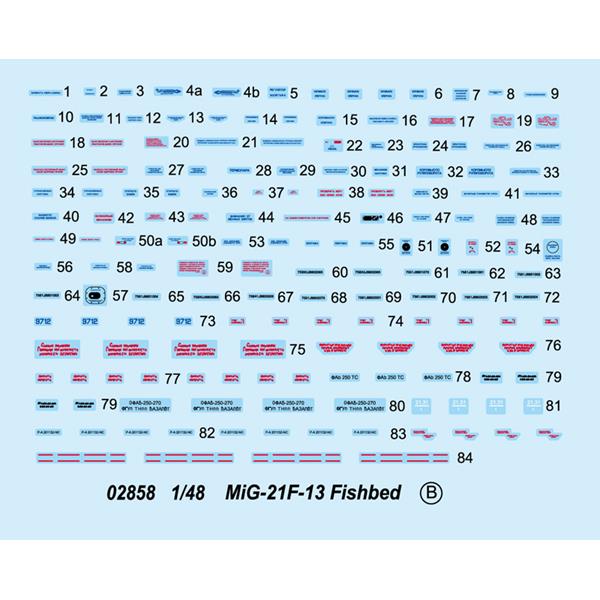
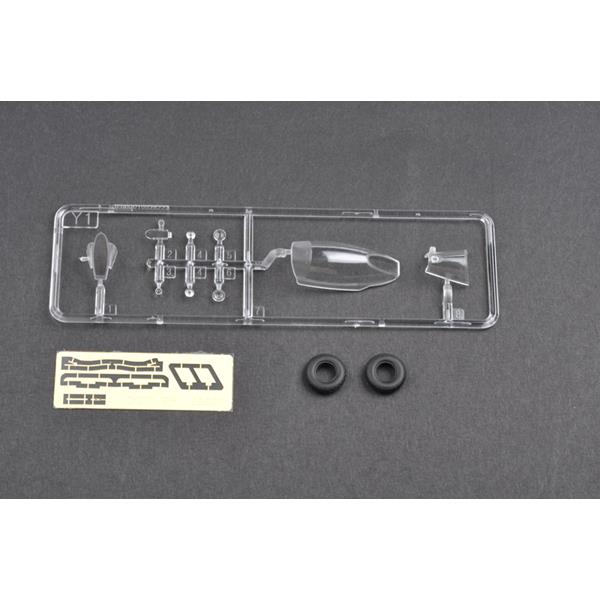
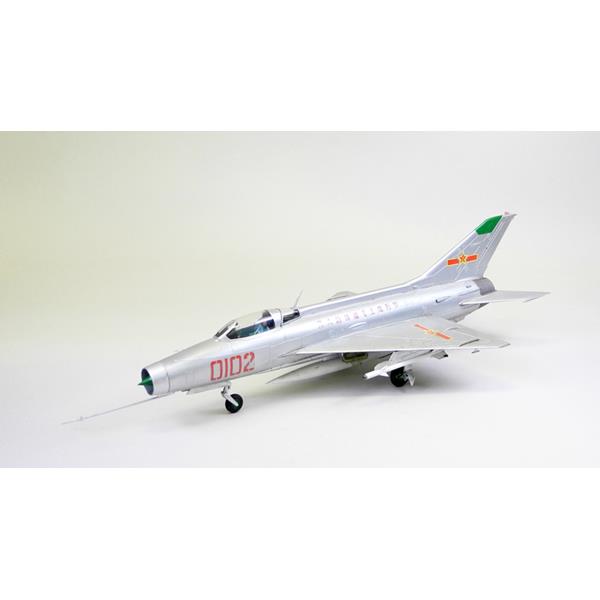
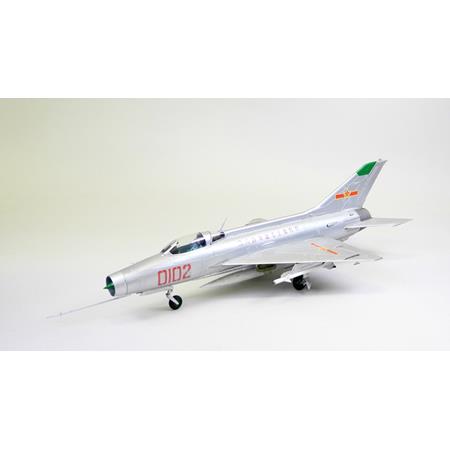
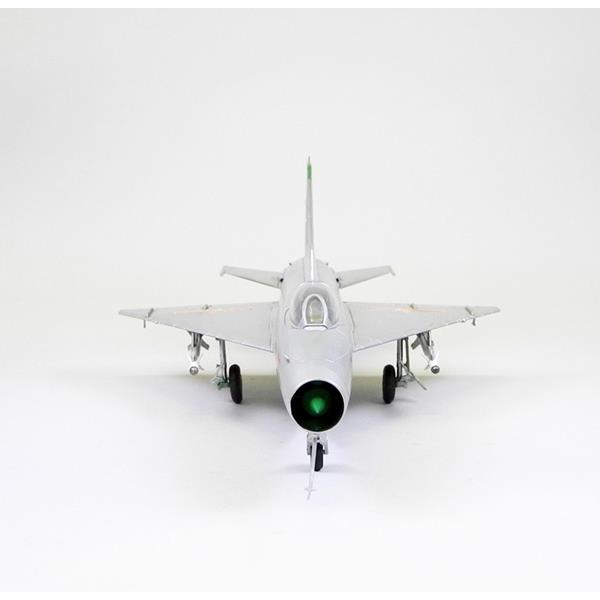
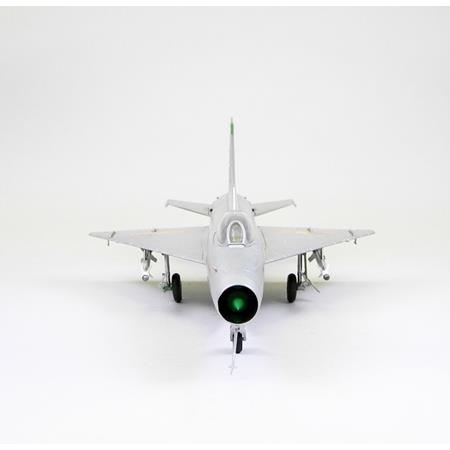
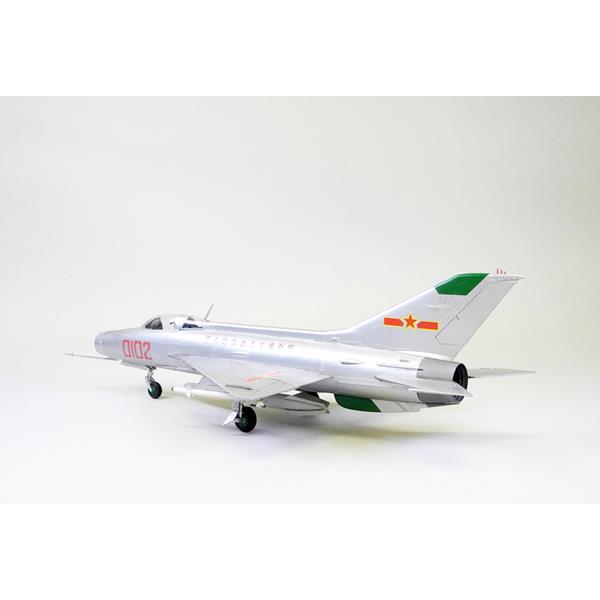
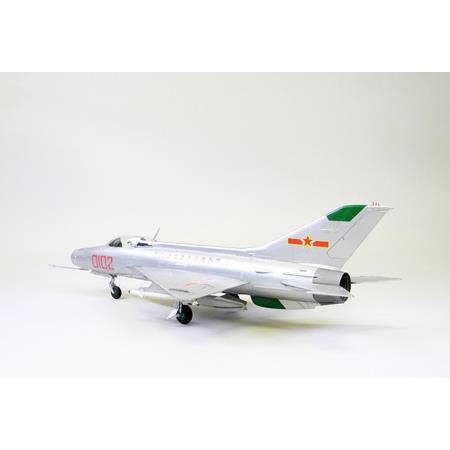
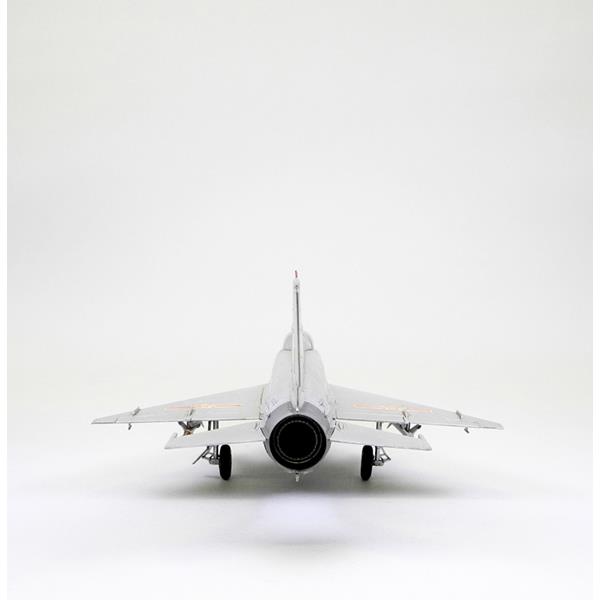
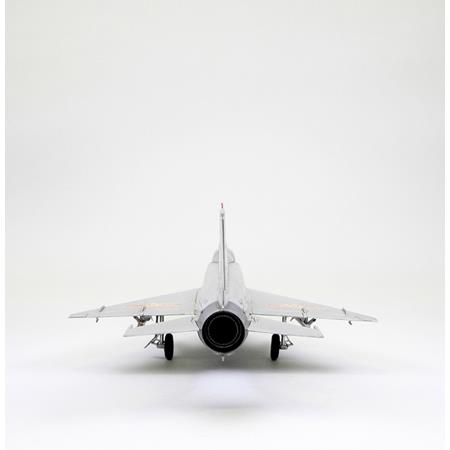
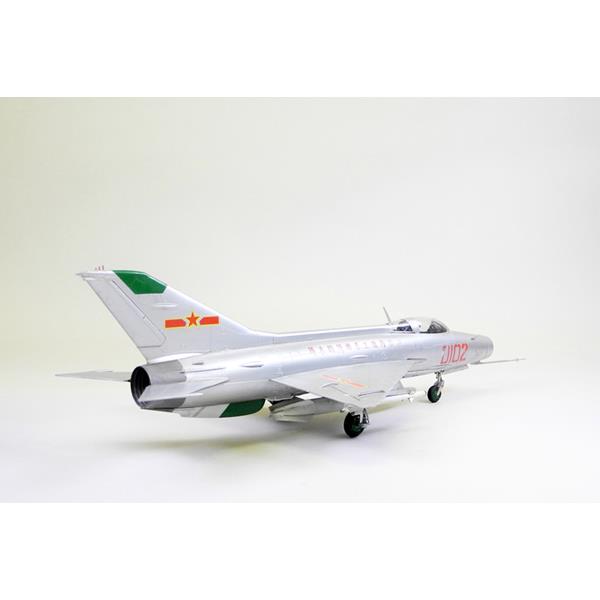
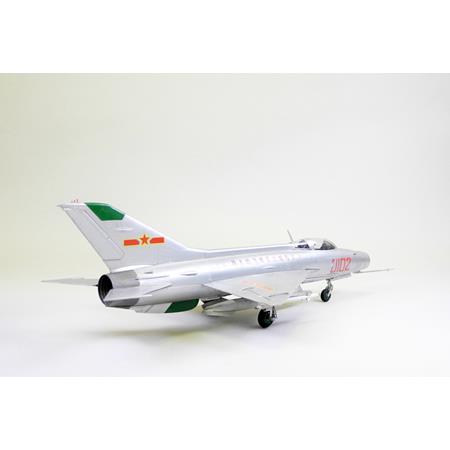
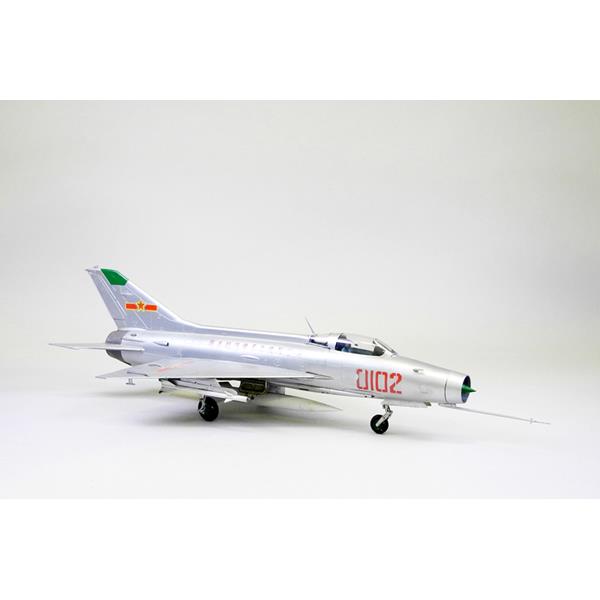
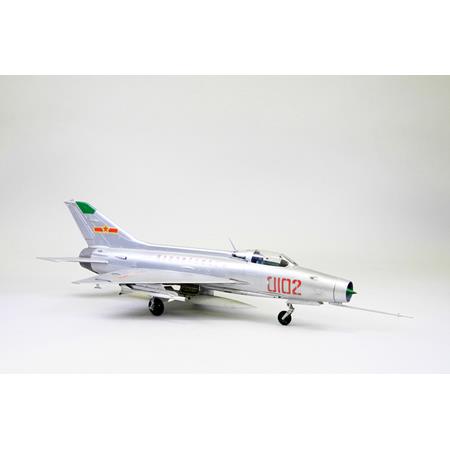



Plastic model kit for a Mikoyan-Gurevich MiG-21F-13 "Fishbed-C" fighter aircraft
The most significant upgrade over the MiG-21F was its armament: two infrared-guided K-13/R-3S air-to-air missiles. To accommodate this, the F-13 featured a weapon hardpoint under each wing. At the same time, the gun armament was reduced to a single 30mm NR-30 cannon with 60 rounds of ammunition. It could also carry unguided rockets or bombs.
However, the MiG-21F-13 remained strictly a fair-weather, daytime fighter lacking its own search radar. Target assignment was therefore handled by ground control stations before the pilot could visually acquire and engage the target. This made the aircraft simpler and lighter than later, radar-equipped versions of the MiG-21.
The F-13 was powered by a Tumansky R-11F-300 engine with an afterburner. Depending on the source, afterburner thrust is rated at approximately 53–57 kN. Its top speed was approximately Mach 2 (or 2,100–2,125 km/h), and its service ceiling was around 19,000 m.
A distinctive feature of the early F-13 was the forward-opening cockpit canopy, the rear section of which was fixed. Also clearly visible are the pitot tube beneath the nose, the small air intake, and the single NR-30 cannon on the side of the fuselage. The Soviet aircraft were originally delivered primarily in a natural metal finish.
The MiG-21F-13 was not only operated by the Soviet Air Force but was also exported to numerous countries and produced under license in China as the Chengdu J-7/F-7 and in Czechoslovakia as the Aero S-106. It thus served as a key starting point for the global proliferation of the MiG-21 family.
- Scale: 1:48
- Dimensions (built): Length 324 mm / Wingspan 149 mm
- 190+ parts
- Features finely engraved panel lines
- Includes rubber tires, clear parts, and photo-etched parts
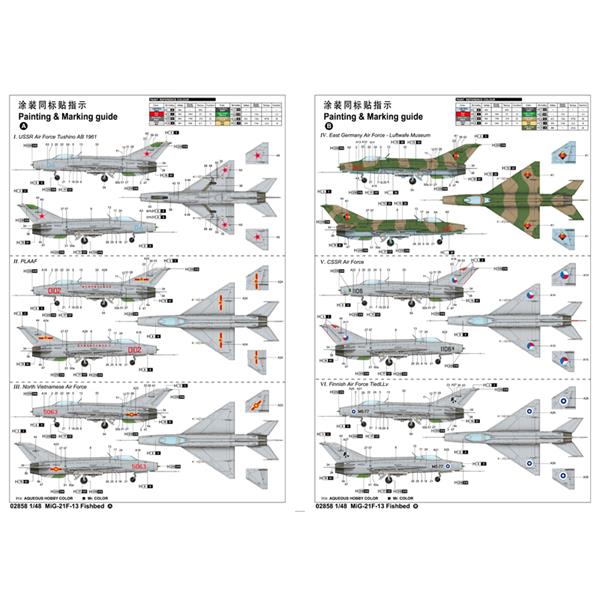
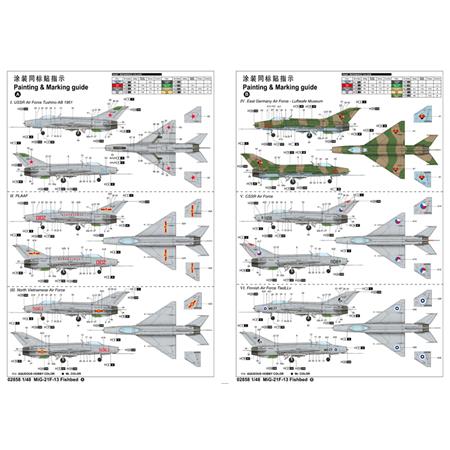
- 6 marking options: USSR, China, Northvietnam, GDR, Tchechoslowakia, Finland
- Unassembled and unpainted
- Paint and glue not included
The most significant upgrade over the MiG-21F was its armament: two infrared-guided K-13/R-3S air-to-air missiles. To accommodate this, the F-13 featured a weapon hardpoint under each wing. At the same time, the gun armament was reduced to a single 30mm NR-30 cannon with 60 rounds of ammunition. It could also carry unguided rockets or bombs.
However, the MiG-21F-13 remained strictly a fair-weather, daytime fighter lacking its own search radar. Target assignment was therefore handled by ground control stations before the pilot could visually acquire and engage the target. This made the aircraft simpler and lighter than later, radar-equipped versions of the MiG-21.
The F-13 was powered by a Tumansky R-11F-300 engine with an afterburner. Depending on the source, afterburner thrust is rated at approximately 53–57 kN. Its top speed was approximately Mach 2 (or 2,100–2,125 km/h), and its service ceiling was around 19,000 m.
A distinctive feature of the early F-13 was the forward-opening cockpit canopy, the rear section of which was fixed. Also clearly visible are the pitot tube beneath the nose, the small air intake, and the single NR-30 cannon on the side of the fuselage. The Soviet aircraft were originally delivered primarily in a natural metal finish.
The MiG-21F-13 was not only operated by the Soviet Air Force but was also exported to numerous countries and produced under license in China as the Chengdu J-7/F-7 and in Czechoslovakia as the Aero S-106. It thus served as a key starting point for the global proliferation of the MiG-21 family.
Customer Reviews 1
Write now your personal experience with this article and help others with their purchase decision.
