Bandai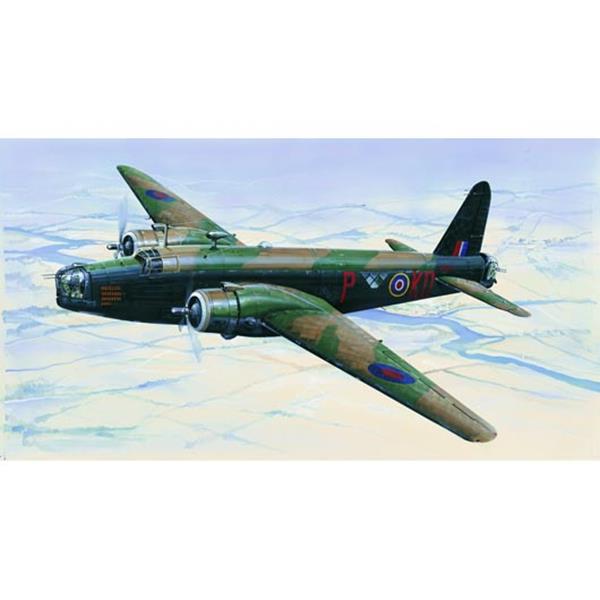
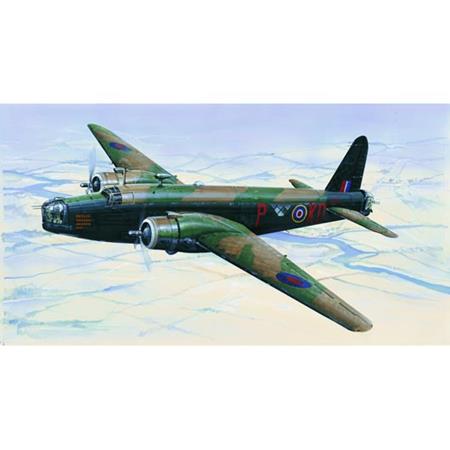
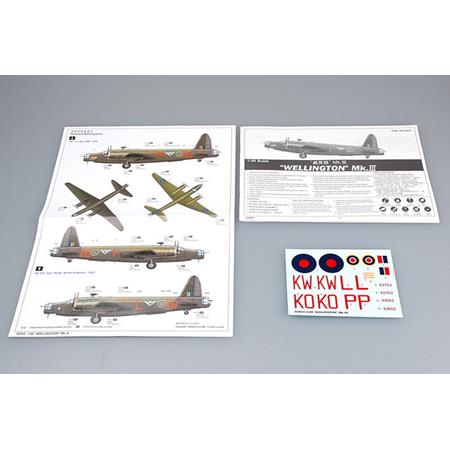
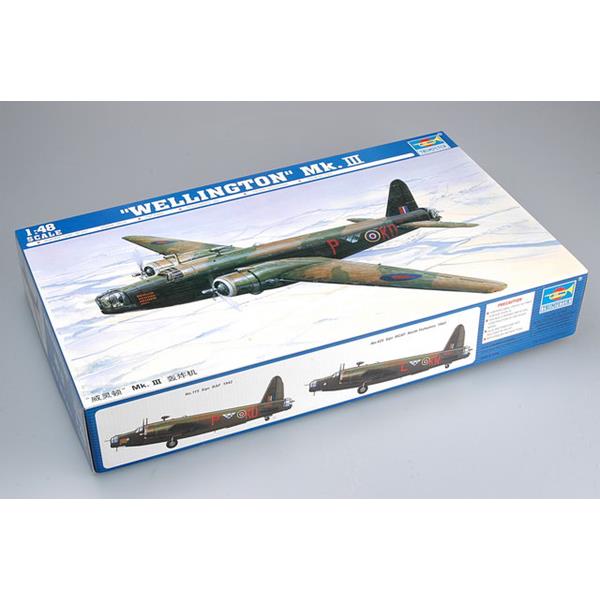
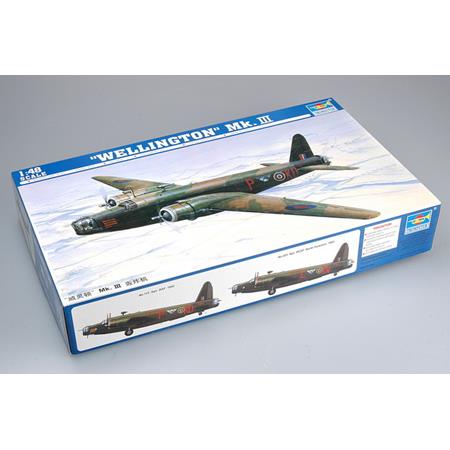



The Wellington was the most important British bomber of the early war period.
The prototype made its maiden flight in June 1936. Deliveries to RAF bomber squadrons began in 1939. During the war, it operated from bases in Great Britain, India, the Middle East, North Africa, and Italy. Although it appeared quite modern, the Wellington was technically a product of a bygone era. From 1942 onwards, its low speed, limited service ceiling, and modest bomb load rendered the Wellington obsolete in the European theater of operations. However, after being replaced by Lancaster and Halifax bombers in Europe, it continued to fly in other roles and theaters until the end of the war. Notably, the RAF used it as a training aircraft until 1953.
A total of 11,461 Wellingtons of all variants were built—more than any other British bomber model. Wingspan: 26.26 m; Length: 19.68 m; Height: 6.76 m; Empty weight: 9,510 kg; Max. weight: 15,650 kg; Speed: 420 km/h; Service ceiling: 6,950 m; Range: 3,285 km.
Plastic model kit
- Length: 387.3 mm; Wingspan: 547 mm
- 639 parts
- Includes photo-etched parts
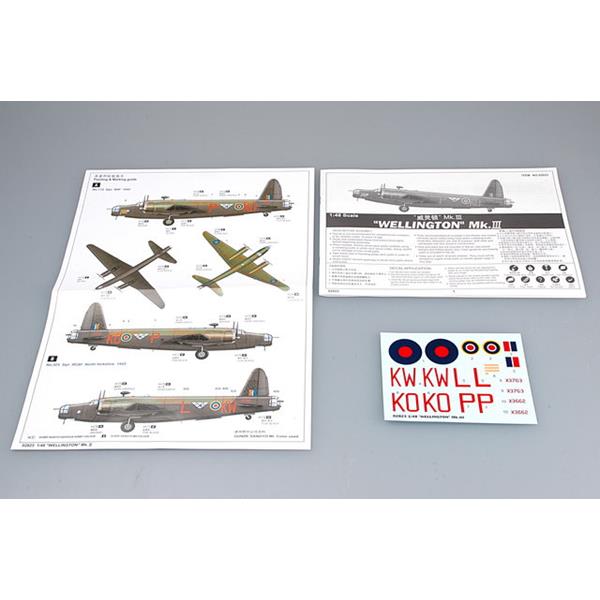
- Livery options: No. 115 Sqn RAF 1942; No. 425 Sqn RCAF North Yorkshire 1943
Scale 1:48
unbuilt / unpainted
Paint and glue not included
Write now your personal experience with this article and help others with their purchase decision.