Bandai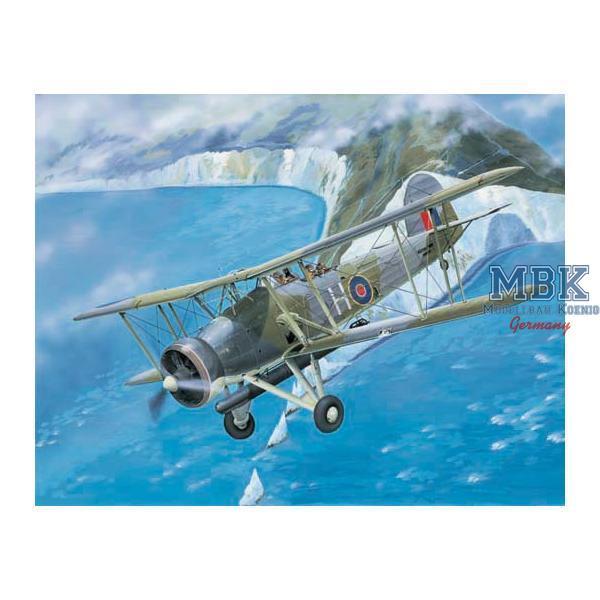
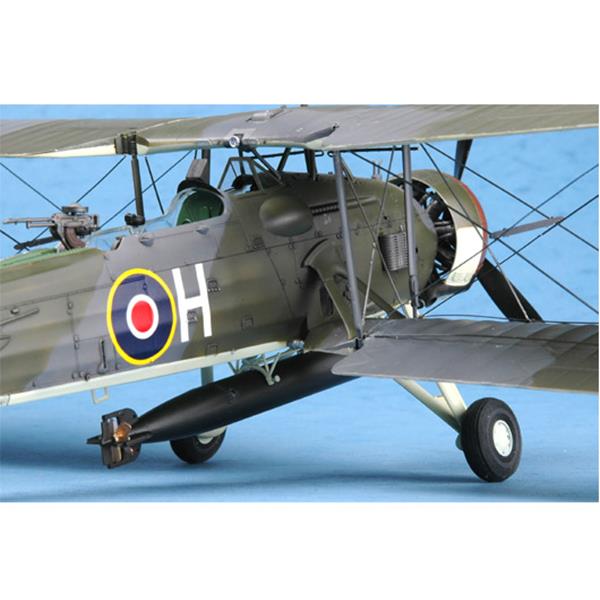
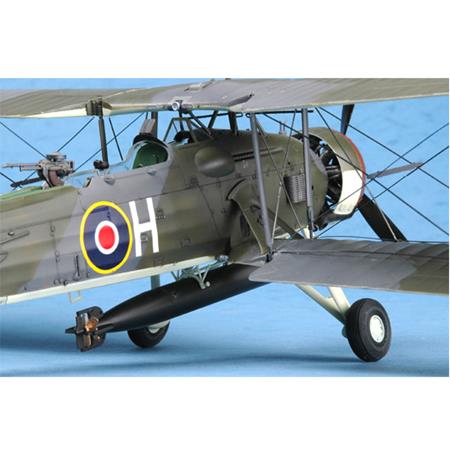
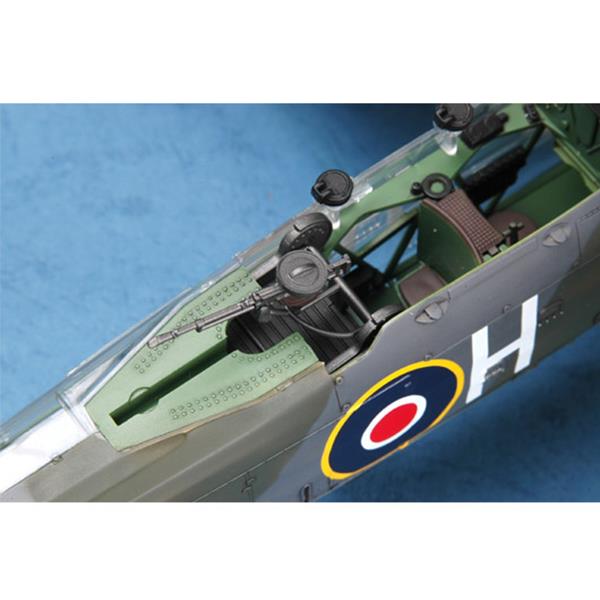
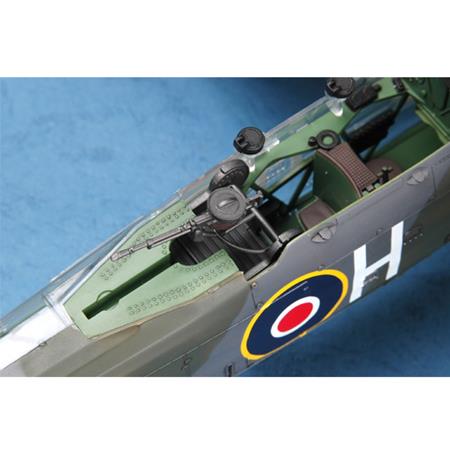
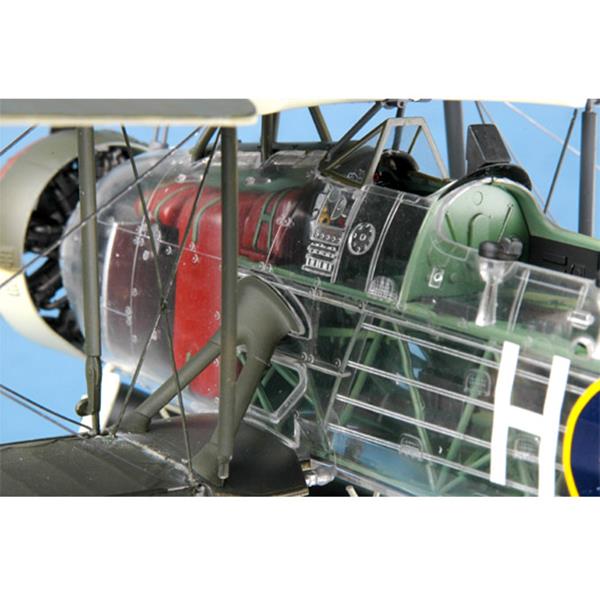
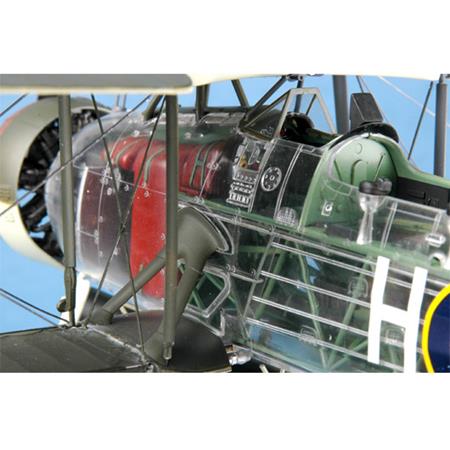
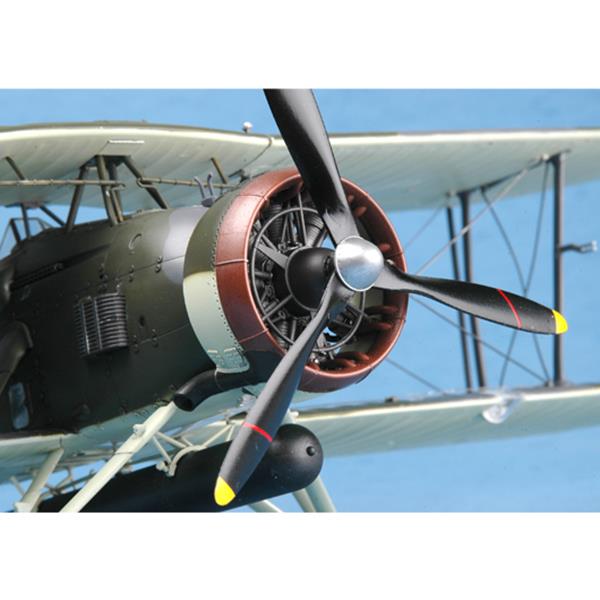
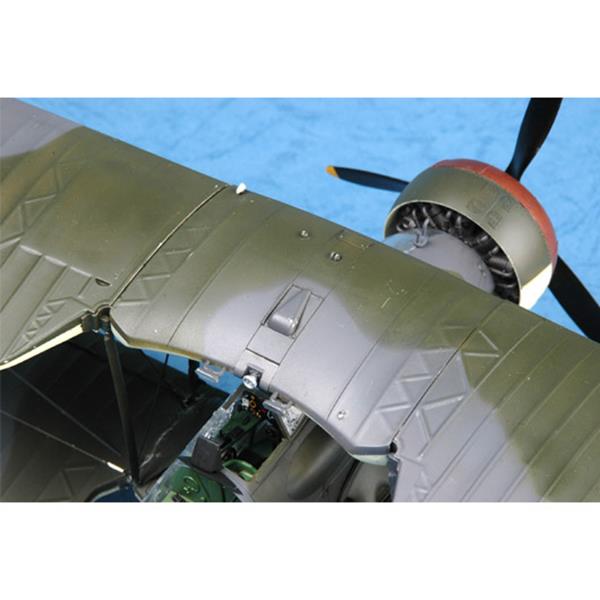
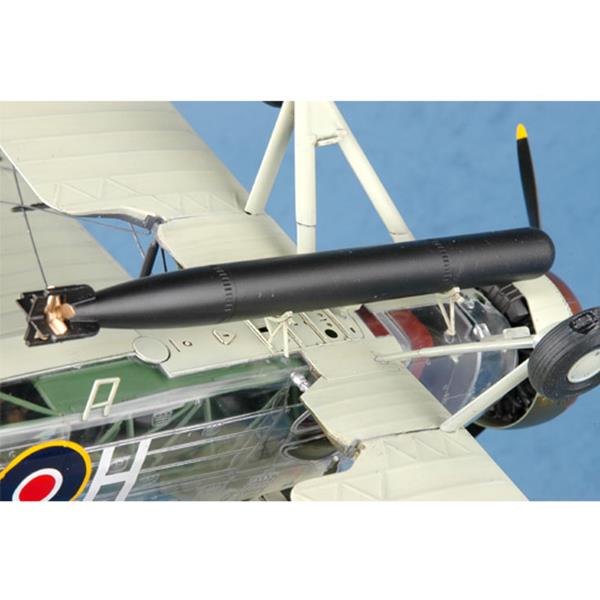
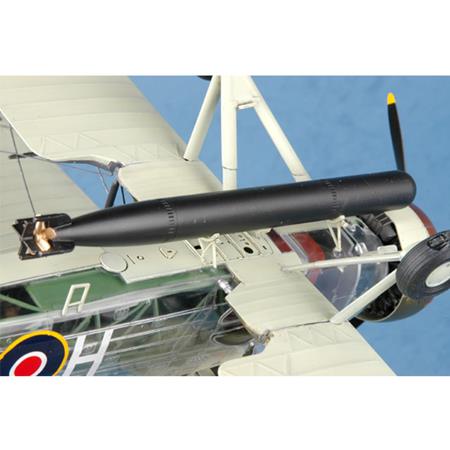
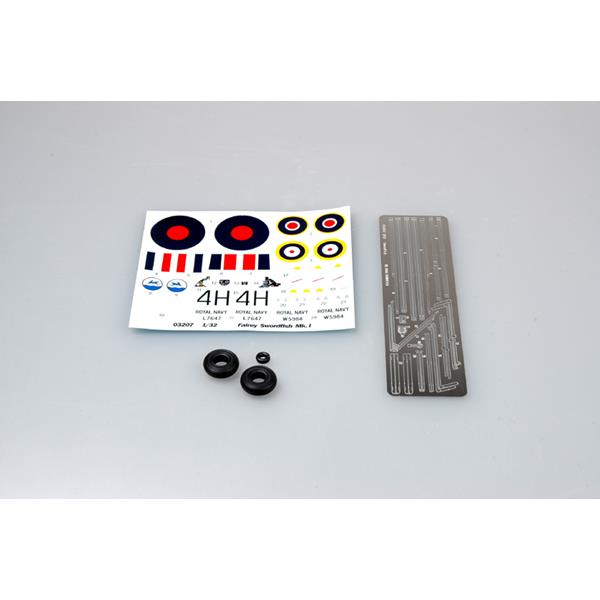
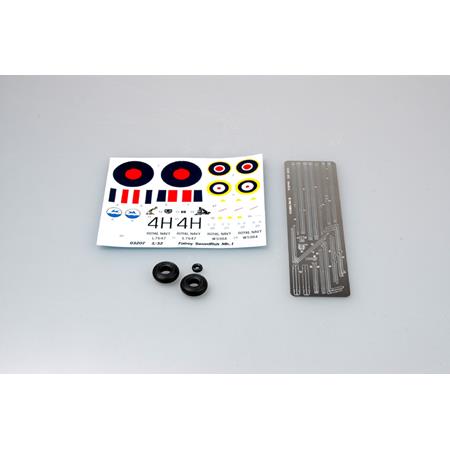



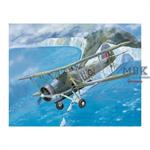
Plastic model kit of a British Fairey Swordfish Mk. I torpedo and reconnaissance bomber
The Mk. I was powered by a Bristol Pegasus radial engine producing approximately 690 hp. The aircraft reached a top speed of only about 220 km/h, making it appear extremely slow compared to modern fighter aircraft. However, its low speed proved to be an advantage during torpedo attacks, as it allowed for good control at low speeds.
Its primary armament consisted of an aerial torpedo carried under the fuselage; alternatively, bombs or rockets could be carried. For self-defense, the Swordfish was equipped with a fixed 7.7 mm Vickers machine gun and a flexible 7.7 mm Lewis or Vickers K machine gun in the rear cockpit. The wings could be folded for stowage aboard aircraft carriers. The Swordfish saw perhaps its most famous action during the Battle of Taranto on the night of November 11–12, 1940. Swordfish aircraft launched from HMS *Illustrious* attacked the Italian naval base, damaging several battleships. This attack impressively demonstrated the effectiveness of carrier-based torpedo aircraft against warships anchored in harbor.
The Swordfish also played a key role in the sinking of the *Bismarck* in May 1941. Torpedo hits from Swordfish aircraft operating from HMS *Ark Royal* left the German battleship unable to maneuver, allowing British surface forces to subsequently intercept and engage it.
As the war progressed, the Swordfish was increasingly deployed for anti-submarine warfare, reconnaissance, convoy protection, and night attacks. Equipped with radar and other technical systems, it remained highly effective in these roles.
- Scale: 1:32
- Dimensions (built): Length 344 mm / Wingspan 433.5 mm
- 190 parts
- Fuselage available in either grey or clear plastic
- Clear parts and photo-etched parts included
- Rubber tires
- 2 marking options:
- Swordfish Mk. I (H/W5984) on February 12, 1942
- Swordfish Mk. I L7647:H, 820 Squadron, HMS Ark Royal, 1941
- Unassembled and unpainted
- Paint and glue not included
The Mk. I was powered by a Bristol Pegasus radial engine producing approximately 690 hp. The aircraft reached a top speed of only about 220 km/h, making it appear extremely slow compared to modern fighter aircraft. However, its low speed proved to be an advantage during torpedo attacks, as it allowed for good control at low speeds.
Its primary armament consisted of an aerial torpedo carried under the fuselage; alternatively, bombs or rockets could be carried. For self-defense, the Swordfish was equipped with a fixed 7.7 mm Vickers machine gun and a flexible 7.7 mm Lewis or Vickers K machine gun in the rear cockpit. The wings could be folded for stowage aboard aircraft carriers. The Swordfish saw perhaps its most famous action during the Battle of Taranto on the night of November 11–12, 1940. Swordfish aircraft launched from HMS *Illustrious* attacked the Italian naval base, damaging several battleships. This attack impressively demonstrated the effectiveness of carrier-based torpedo aircraft against warships anchored in harbor.
The Swordfish also played a key role in the sinking of the *Bismarck* in May 1941. Torpedo hits from Swordfish aircraft operating from HMS *Ark Royal* left the German battleship unable to maneuver, allowing British surface forces to subsequently intercept and engage it.
As the war progressed, the Swordfish was increasingly deployed for anti-submarine warfare, reconnaissance, convoy protection, and night attacks. Equipped with radar and other technical systems, it remained highly effective in these roles.
Customer Reviews 1
Write now your personal experience with this article and help others with their purchase decision.