 Bandai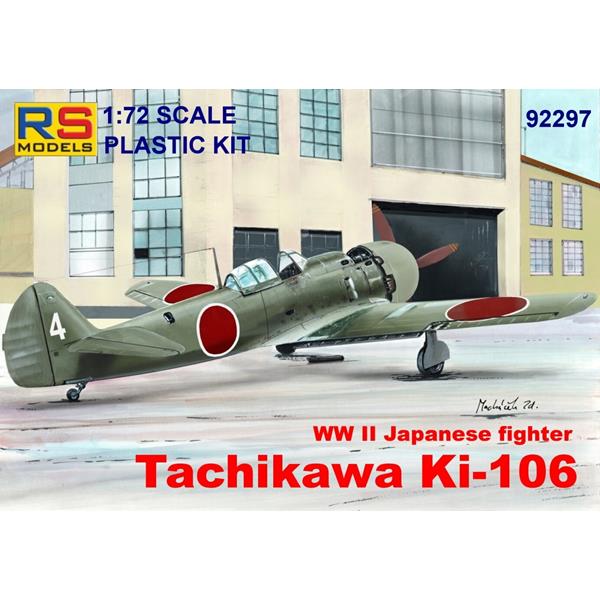
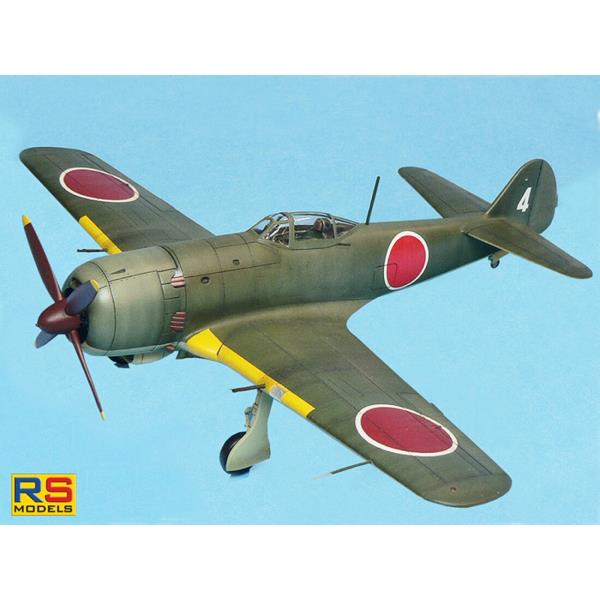
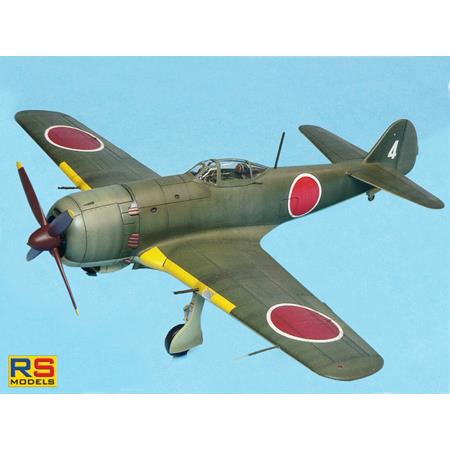
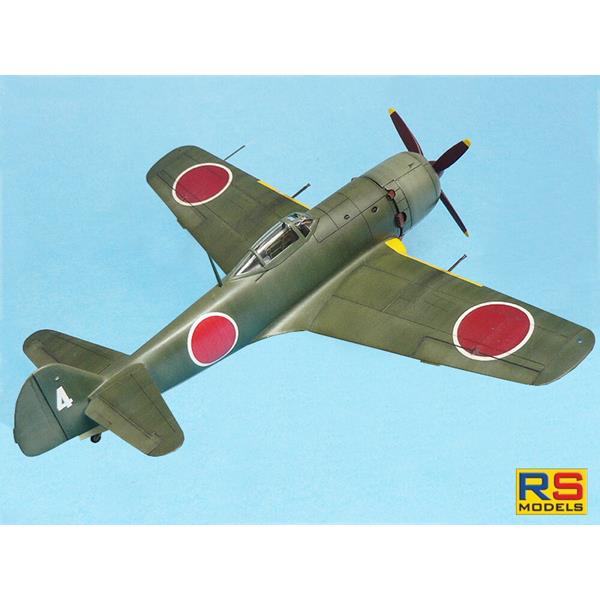
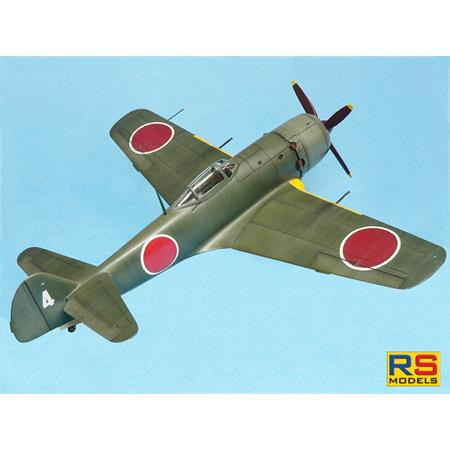



As a result of the war, Japan suffered from a critical shortage of strategic raw materials for aircraft production—particularly duralumin—as well as a lack of skilled labor in the aviation industry, which was already overburdened by the manufacture of war materiel.
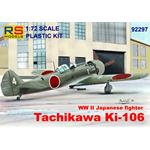
The development contract was awarded to the Tachikawa Hikoki Kabushiki Kaisha plant; three prototypes were ultimately built there, two of which actually flew. After the war, they were transported to the USA, where they were presumably tested. However, the all-wood construction entailed certain drawbacks that needed to be addressed; the main issues were insufficient structural strength and the aircraft's increased weight. Consequently, the wing-mounted cannons were removed from a subsequent prototype. At Tachikawa, the task was assigned to engineers Moriyuki Nakagawa and Shinagawa; both traveled to Burma to examine the structure of a crashed DH.98 Mosquito and, upon their return, began work on the Ki-106's wooden airframe. Several prototypes were built, one of which was taken to the USA for evaluation.
Plastic model kit
unbuilt / unpainted
Paint and glue not included
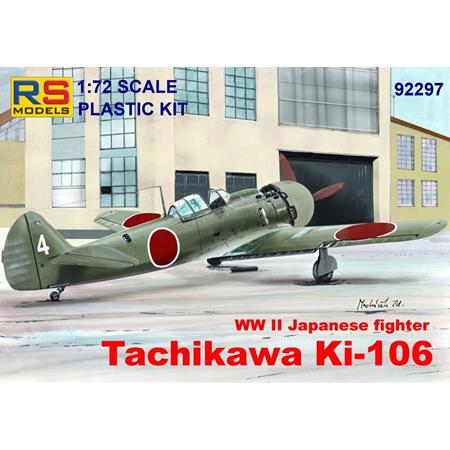
The development contract was awarded to the Tachikawa Hikoki Kabushiki Kaisha plant; three prototypes were ultimately built there, two of which actually flew. After the war, they were transported to the USA, where they were presumably tested. However, the all-wood construction entailed certain drawbacks that needed to be addressed; the main issues were insufficient structural strength and the aircraft's increased weight. Consequently, the wing-mounted cannons were removed from a subsequent prototype. At Tachikawa, the task was assigned to engineers Moriyuki Nakagawa and Shinagawa; both traveled to Burma to examine the structure of a crashed DH.98 Mosquito and, upon their return, began work on the Ki-106's wooden airframe. Several prototypes were built, one of which was taken to the USA for evaluation.
Plastic model kit
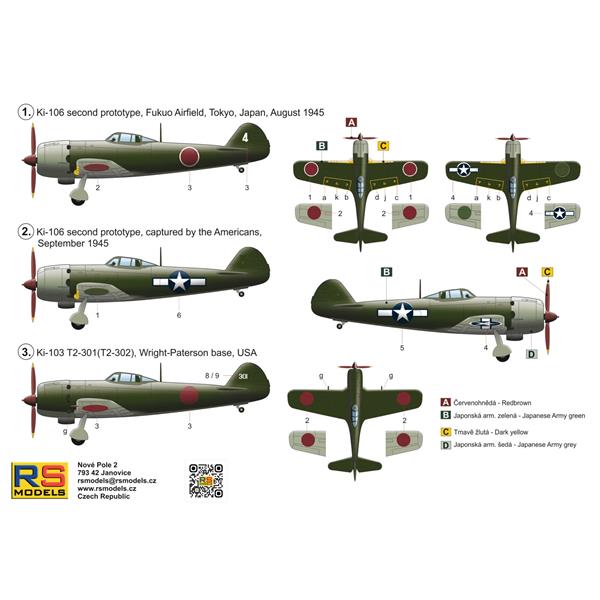
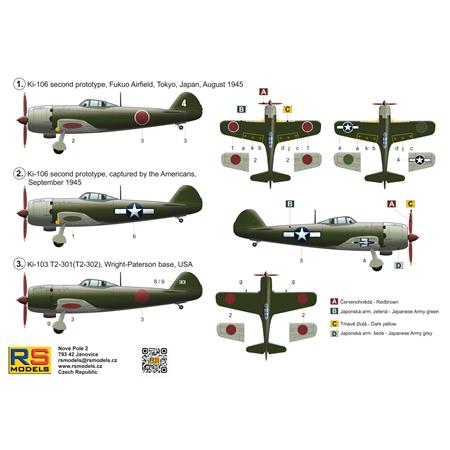
- Ki-106, second prototype, Fukuo Airfield, Tokyo, Japan, August 1945
- Ki-106, second prototype, captured by the Americans, September 1945
- Ki-106, T2-301 (T-302), Wright-Patterson Air Force Base, USA, 1945
unbuilt / unpainted
Paint and glue not included
Customer Reviews 0
Write now your personal experience with this article and help others with their purchase decision.
