Bandai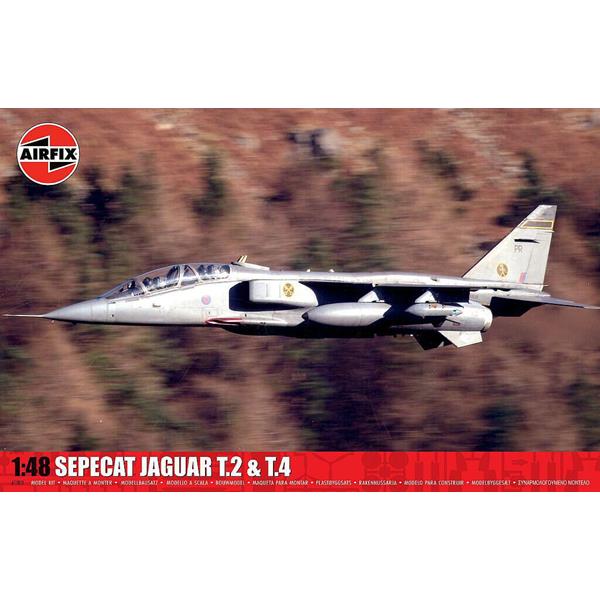
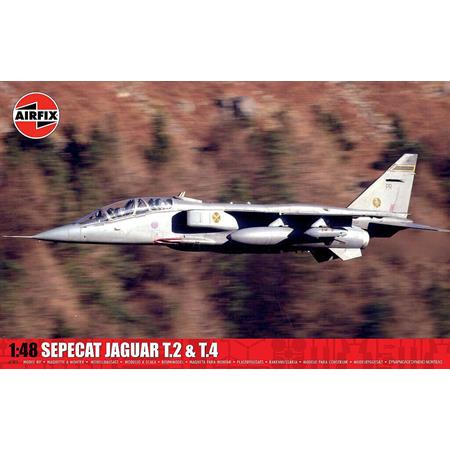
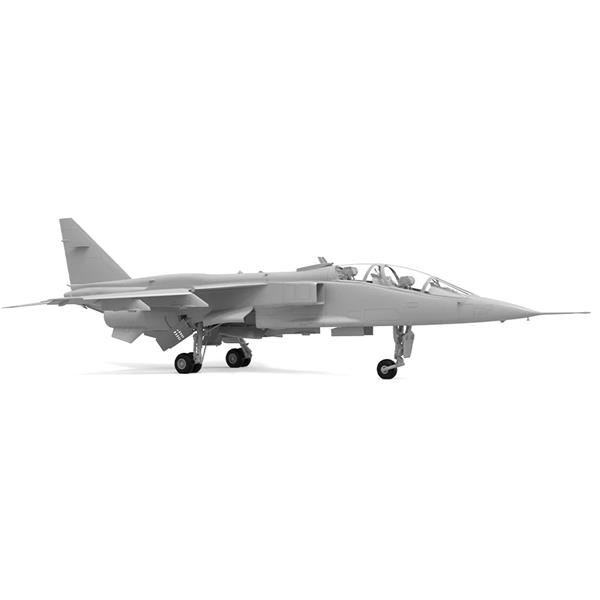
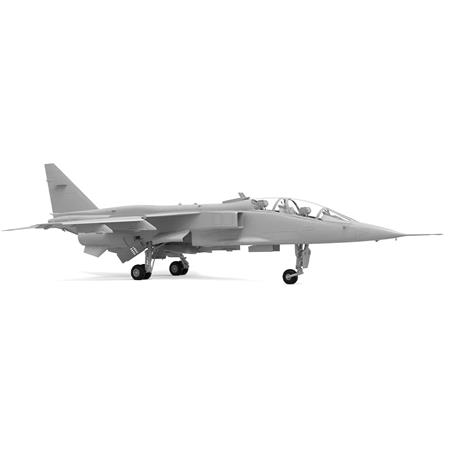
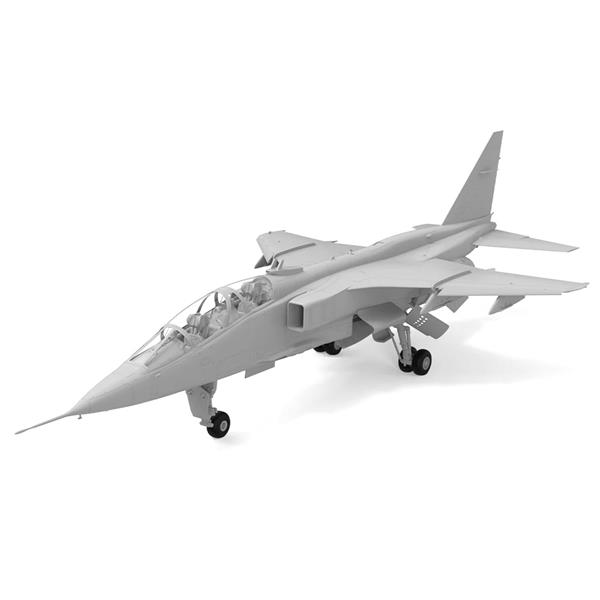
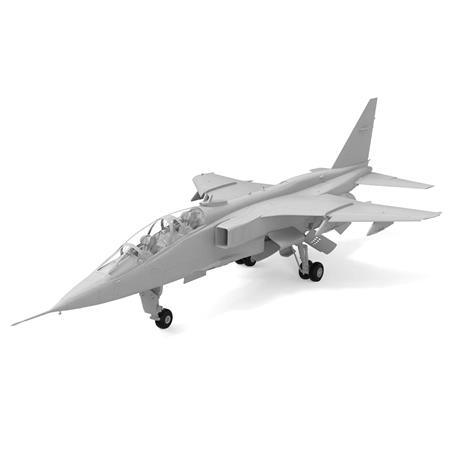
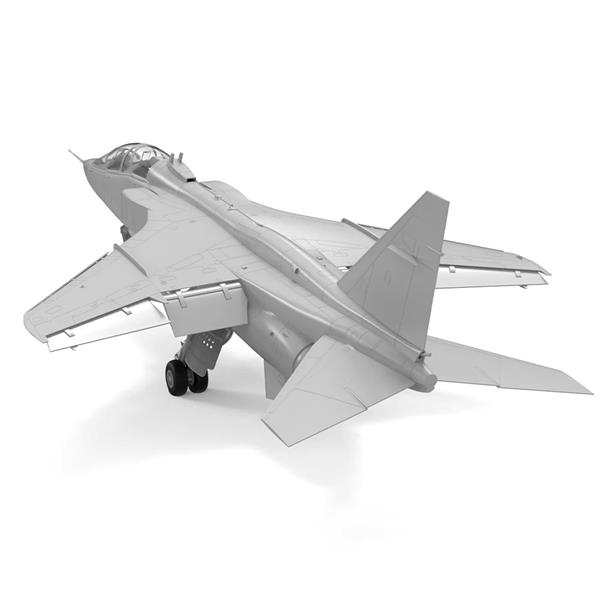
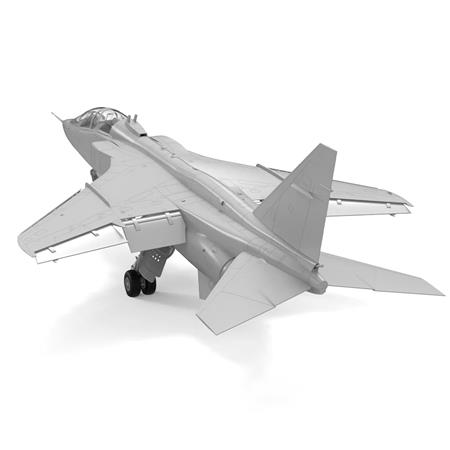
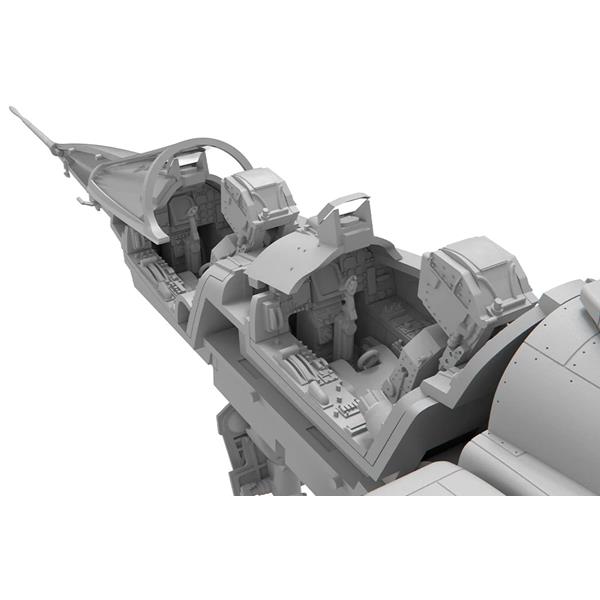
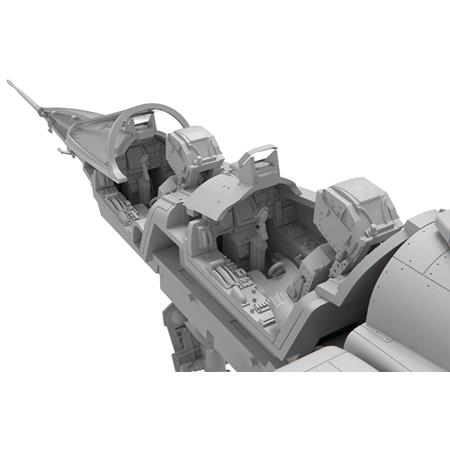
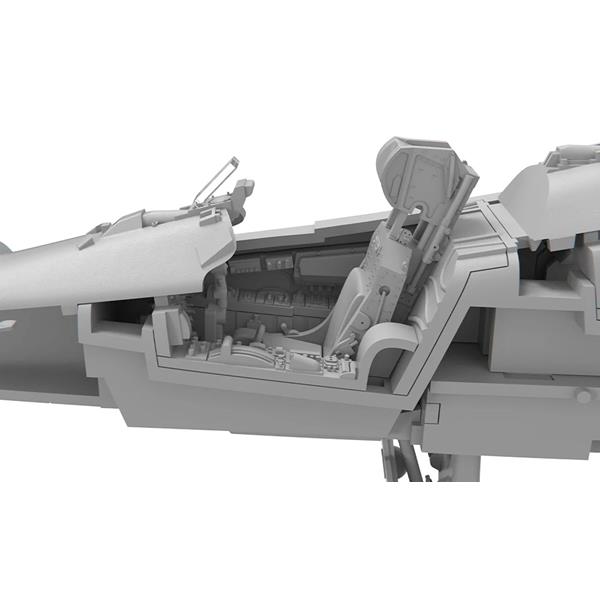
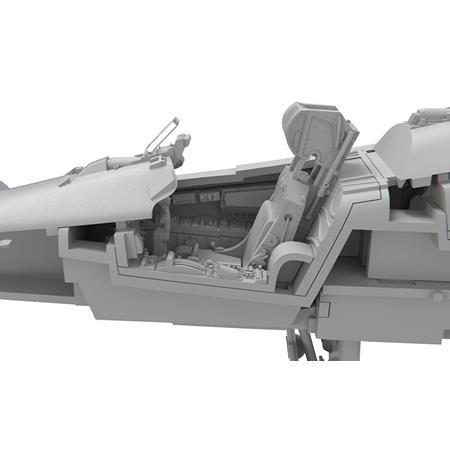
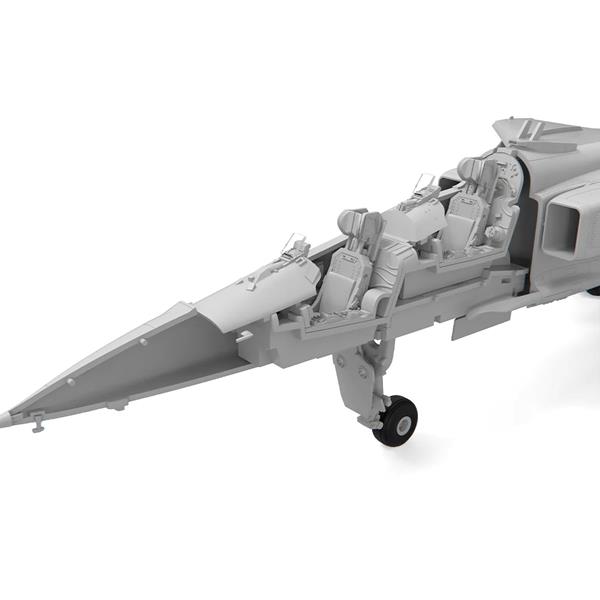


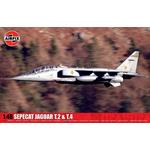
SEPECAT Jaguar T.2 & T.4
Item Number:
AIR11011
AIR11011
Manufacturer
AIRFIX
AIRFIX
Scale:
1:48
1:48
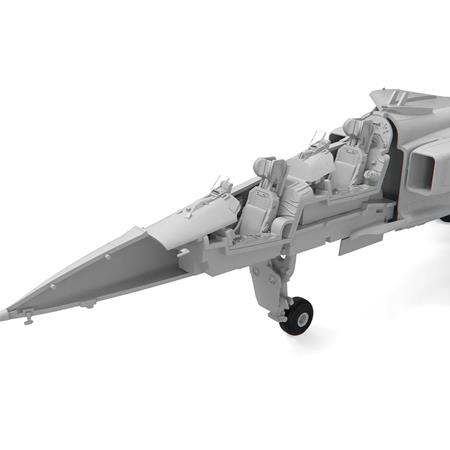
Plastic model kit for building a SEPECAT Jaguar T.2/T.4
The Jaguar T.2 was developed as an advanced trainer for the British Royal Air Force. Unlike the single-seat operational versions, it featured two tandem cockpits for the instructor and student pilots. The aircraft was not only intended for pilot training but could also be used as a fully operational combat aircraft if needed. Despite the additional cockpit space, its performance remained largely unchanged, providing trainee pilots with realistic conditions for later deployment on the single-seat variants.
The Jaguar T.2 was powered by two Rolls-Royce/Turbomeca Adour turbofan engines, which enabled the aircraft to reach a top speed of approximately Mach 1.6. Its robust construction, good low-altitude maneuverability, and ability to operate from short and poorly prepared runways made the Jaguar a versatile military aircraft. In addition to training roles, the T.2 could carry a wide range of weapons and auxiliary equipment, including free-fall bombs, laser-guided precision weapons, rocket pods, and reconnaissance systems.
Modernization of the British Jaguar fleet began in the 1990s. The resulting Jaguar T.4 was a comprehensively modernized training version with new avionics, digital displays, and improved navigation and weapons systems. Many of the technical improvements mirrored those of the modernized operational version, the Jaguar GR.3. This allowed pilots to work with the systems they would later use in combat units during their training.
The Jaguar served for decades as a vital attack and training aircraft for the Royal Air Force. British Jaguars saw action during the Gulf War, among other campaigns, flying ground attack and reconnaissance missions. The two-seat T.2 and T.4 variants played a central role in the training and retraining of crews.
With the gradual introduction of more modern aircraft such as the Eurofighter Typhoon, the Royal Air Force's Jaguar fleet was eventually retired. The last British Jaguars left active service in 2007. Nevertheless, the SEPECAT Jaguar remains one of the most successful European combat aircraft of the Cold War and a significant example of military cooperation between Great Britain and France. The T.2 and T.4 training versions played a significant role in preparing generations of pilots for the use of this capable fighter-bomber.
- Scale 1:48
- Dimensions (built): Length 366 mm / Wingspan 181 mm
- 245 parts
- 3 marking options
- Unbuilt, unpainted
- Paint and glue not included
The Jaguar T.2 was developed as an advanced trainer for the British Royal Air Force. Unlike the single-seat operational versions, it featured two tandem cockpits for the instructor and student pilots. The aircraft was not only intended for pilot training but could also be used as a fully operational combat aircraft if needed. Despite the additional cockpit space, its performance remained largely unchanged, providing trainee pilots with realistic conditions for later deployment on the single-seat variants.
The Jaguar T.2 was powered by two Rolls-Royce/Turbomeca Adour turbofan engines, which enabled the aircraft to reach a top speed of approximately Mach 1.6. Its robust construction, good low-altitude maneuverability, and ability to operate from short and poorly prepared runways made the Jaguar a versatile military aircraft. In addition to training roles, the T.2 could carry a wide range of weapons and auxiliary equipment, including free-fall bombs, laser-guided precision weapons, rocket pods, and reconnaissance systems.
Modernization of the British Jaguar fleet began in the 1990s. The resulting Jaguar T.4 was a comprehensively modernized training version with new avionics, digital displays, and improved navigation and weapons systems. Many of the technical improvements mirrored those of the modernized operational version, the Jaguar GR.3. This allowed pilots to work with the systems they would later use in combat units during their training.
The Jaguar served for decades as a vital attack and training aircraft for the Royal Air Force. British Jaguars saw action during the Gulf War, among other campaigns, flying ground attack and reconnaissance missions. The two-seat T.2 and T.4 variants played a central role in the training and retraining of crews.
With the gradual introduction of more modern aircraft such as the Eurofighter Typhoon, the Royal Air Force's Jaguar fleet was eventually retired. The last British Jaguars left active service in 2007. Nevertheless, the SEPECAT Jaguar remains one of the most successful European combat aircraft of the Cold War and a significant example of military cooperation between Great Britain and France. The T.2 and T.4 training versions played a significant role in preparing generations of pilots for the use of this capable fighter-bomber.
Customer Reviews 0
Write now your personal experience with this article and help others with their purchase decision.