Bandai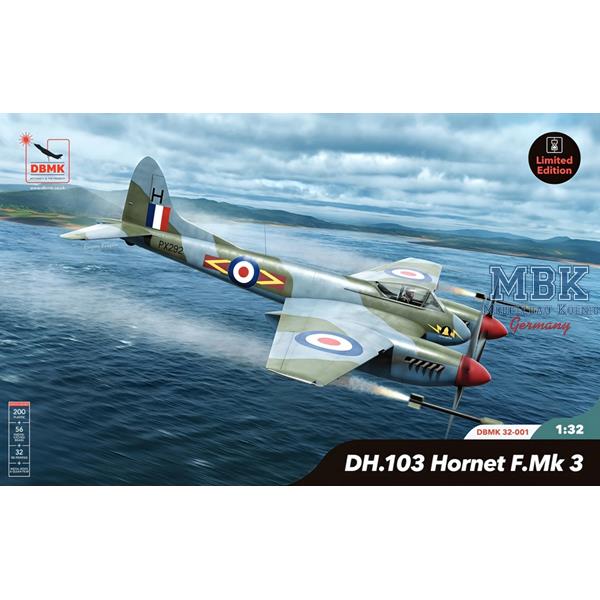
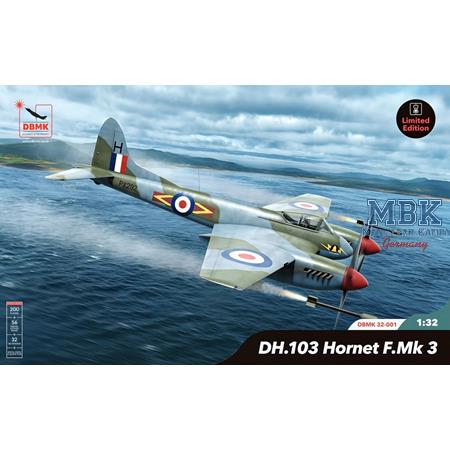
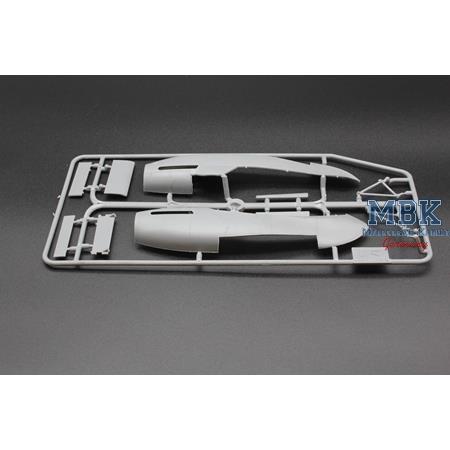
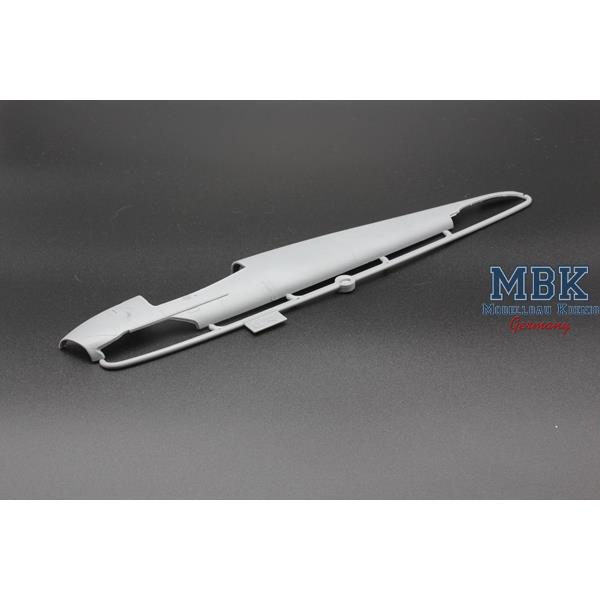
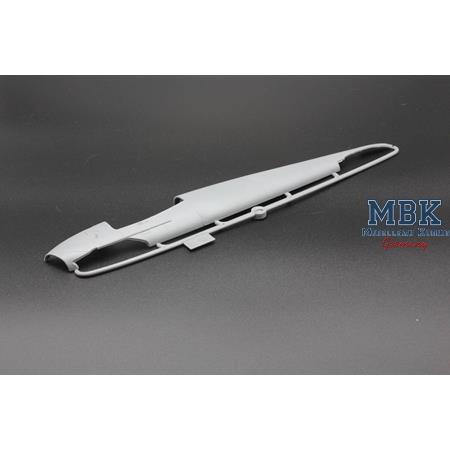
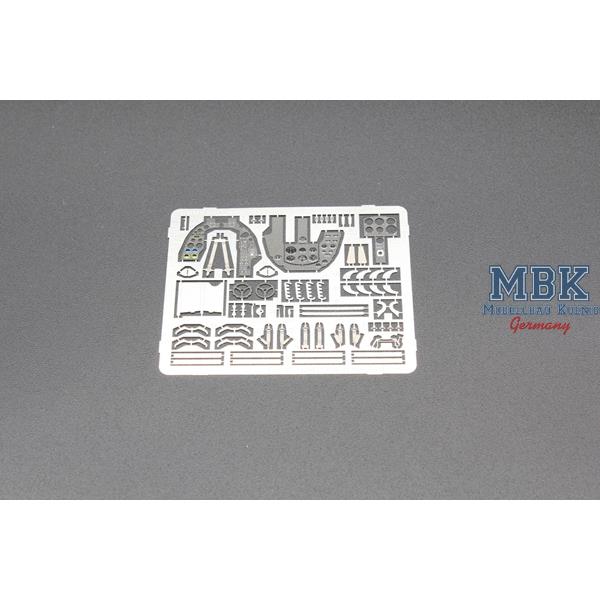


Plastic model kit for a de Havilland DH.103 Hornet F. Mk. 3
The de Havilland DH.103 Hornet was conceived in 1941 as a high-speed, long-range fighter tailored for operations in the Pacific Theatre. With the Mosquito entering full-rate production and jet development underway, de Havilland had design capacity to pursue a private venture. Initial concepts (DH.101 and DH.102) explored Sabre and Griffon engines, but by late 1942, the company settled on a twin Merlin-powered design—compact fast and agile,
Design-wise, the Hornet was a masterclass in aerodynamic refinement. It retained the Mosquito’s wooden construction but introduced a slimmer fuselage, laminar flow wings, and tightly cowled Merlin 130/131 engines producing 2,070 hp each with propellors rotating in opposite directions. These features enabled a blistering top speed of 485 mph at 22,000 feet, probably the fastest of any piston engine service aircraft, and superb handling. Armament included four 20mm Hispano cannons and provisions for rockets or bombs up to 1,000lb, making it a potent strike platform.
Though it missed World War II combat, the Hornet entered RAF service in 1946 and saw action during the Malayan Emergency. Operating from Singapore, Hornets conducted ground-attack missions and reconnaissance, proving their worth in tropical conditions. The Sea Hornet variant, adapted for carrier use and as an all-weather fighter, served with the Fleet Air Arm.
Captain Eric "Winkle” Brown, who holds the record for most number of aircraft types flown, rated the Hornet as his favourite and praised the its performance: "The Hornet was a pilot’s aeroplane par excellence. It had delightful handling characteristics and was incredibly fast for a piston-engined aircraft.” He further remarked, "Its acceleration was phenomenal, and it could out-turn most contemporary fighters with ease.”
Despite its brief service life, the Hornet represented the zenith of propeller-driven fighter design—an elegant, lethal machine that bridged the gap between wartime innovation and the jet age.
Our F.3 kit features 3 marking schemes and includes rockets, 1000lb bombs and fuel tanks.
Text DB Model Kits
- Scale 1:32
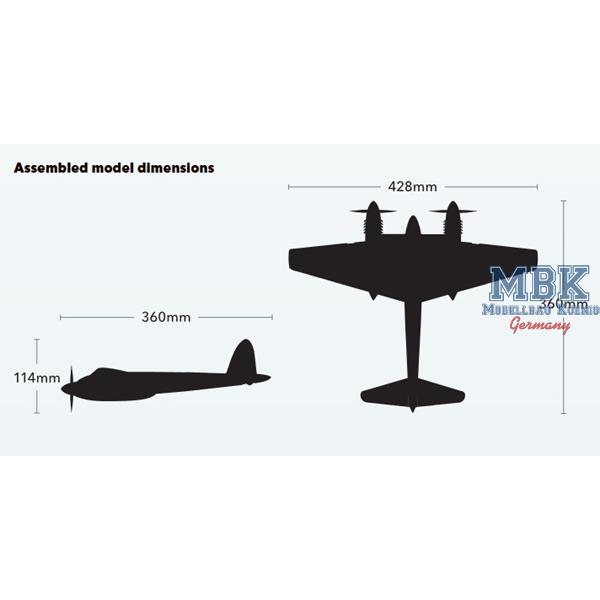
- Dimensions (built): Length 360 mm / Wingspan 428 mm / Height 114 mm
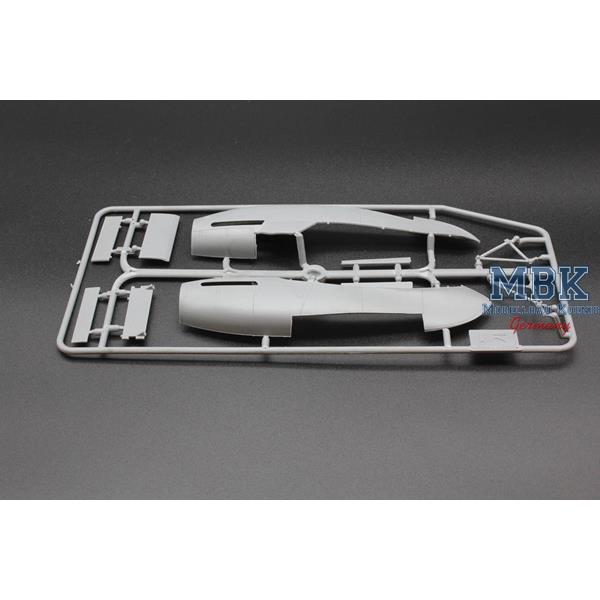
- 192 plastic parts
- 8 clear plastic parts
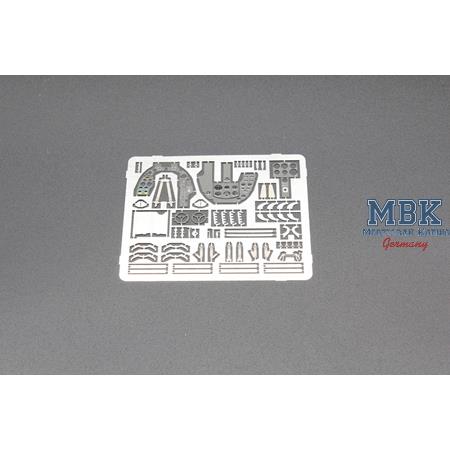
- 56 photo-etched parts
- 32 3D-printed parts
- Canopy masking sheets
- Metal rod and clear film
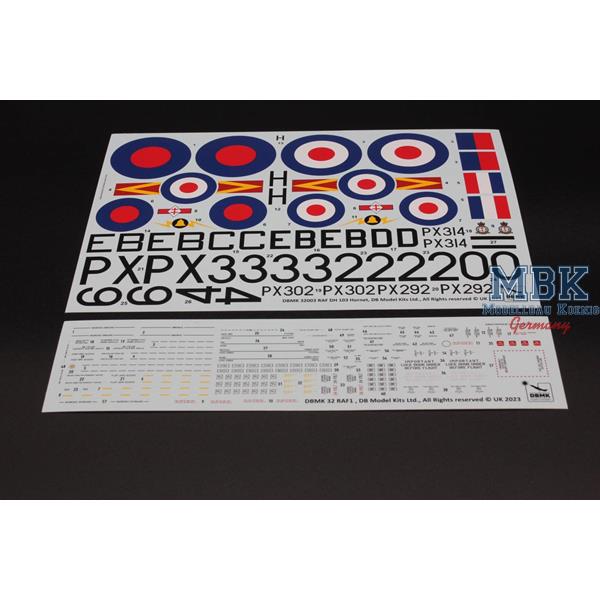
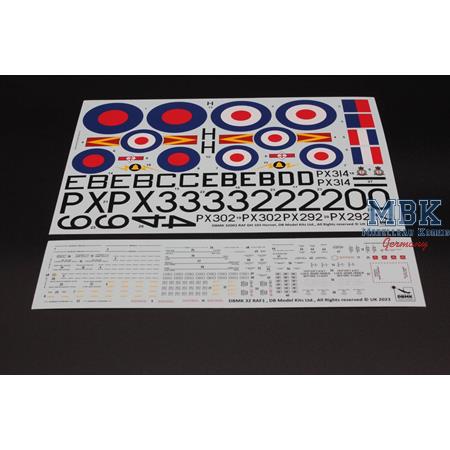
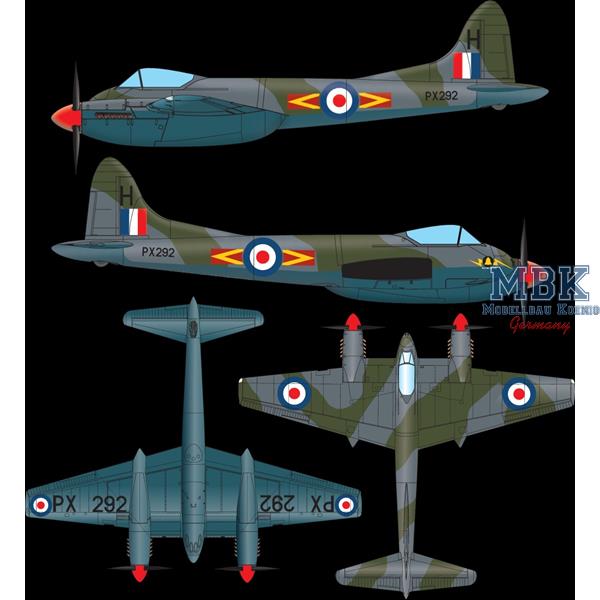
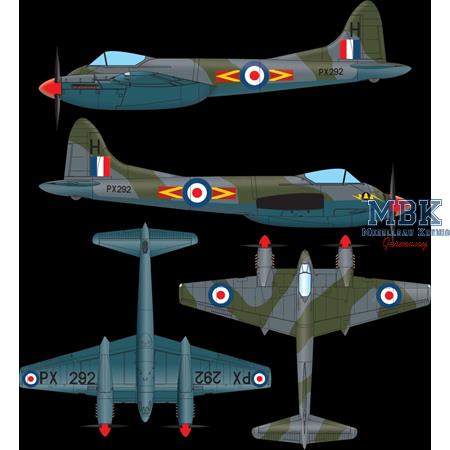
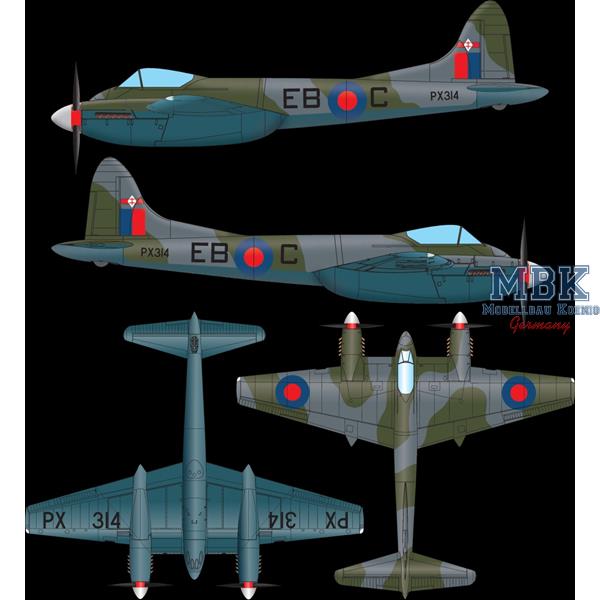
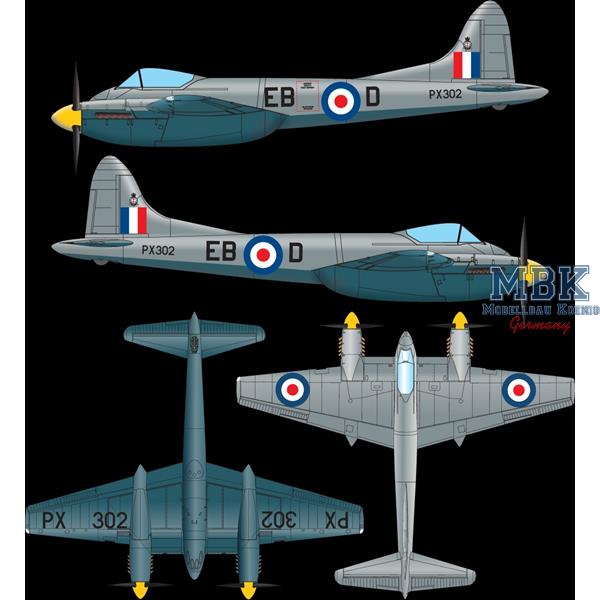
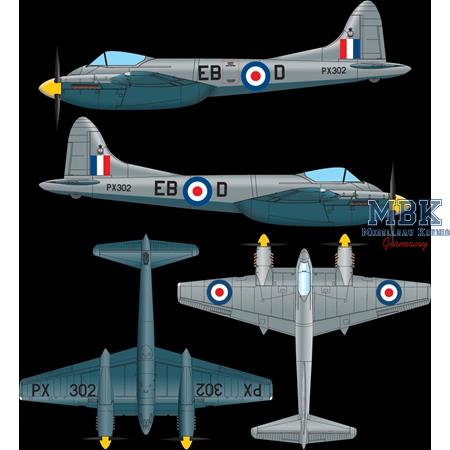
- Three marking options
- PX292/H, 80 Squadron, Royal Air Force, RAF Kai Tak/Hong Kong, 1954
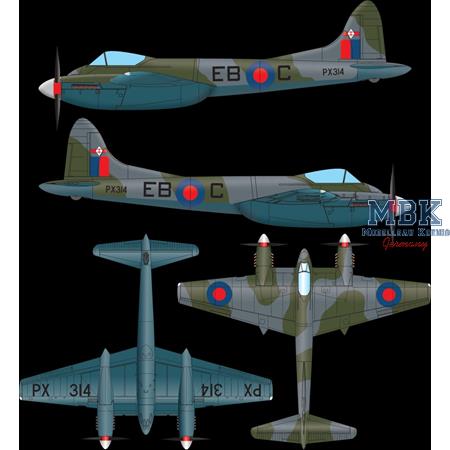
- PX314: EB-C, 41 Squadron, Royal Air Force, 1949-50
- PX302: EB-D, 41 Squadron, Royal Air Force, 1949
- Unbuilt, unpainted
- Paint and glue not included
The de Havilland DH.103 Hornet was conceived in 1941 as a high-speed, long-range fighter tailored for operations in the Pacific Theatre. With the Mosquito entering full-rate production and jet development underway, de Havilland had design capacity to pursue a private venture. Initial concepts (DH.101 and DH.102) explored Sabre and Griffon engines, but by late 1942, the company settled on a twin Merlin-powered design—compact fast and agile,
Design-wise, the Hornet was a masterclass in aerodynamic refinement. It retained the Mosquito’s wooden construction but introduced a slimmer fuselage, laminar flow wings, and tightly cowled Merlin 130/131 engines producing 2,070 hp each with propellors rotating in opposite directions. These features enabled a blistering top speed of 485 mph at 22,000 feet, probably the fastest of any piston engine service aircraft, and superb handling. Armament included four 20mm Hispano cannons and provisions for rockets or bombs up to 1,000lb, making it a potent strike platform.
Though it missed World War II combat, the Hornet entered RAF service in 1946 and saw action during the Malayan Emergency. Operating from Singapore, Hornets conducted ground-attack missions and reconnaissance, proving their worth in tropical conditions. The Sea Hornet variant, adapted for carrier use and as an all-weather fighter, served with the Fleet Air Arm.
Captain Eric "Winkle” Brown, who holds the record for most number of aircraft types flown, rated the Hornet as his favourite and praised the its performance: "The Hornet was a pilot’s aeroplane par excellence. It had delightful handling characteristics and was incredibly fast for a piston-engined aircraft.” He further remarked, "Its acceleration was phenomenal, and it could out-turn most contemporary fighters with ease.”
Despite its brief service life, the Hornet represented the zenith of propeller-driven fighter design—an elegant, lethal machine that bridged the gap between wartime innovation and the jet age.
Our F.3 kit features 3 marking schemes and includes rockets, 1000lb bombs and fuel tanks.
Text DB Model Kits
Customer Reviews 2
Write now your personal experience with this article and help others with their purchase decision.