 Bandai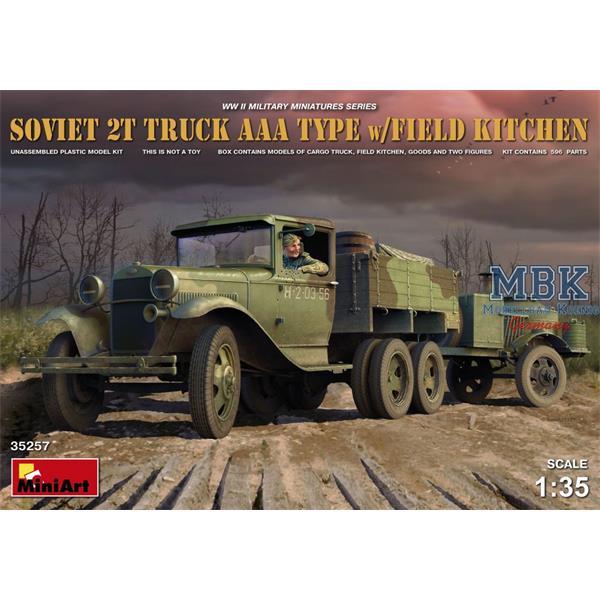
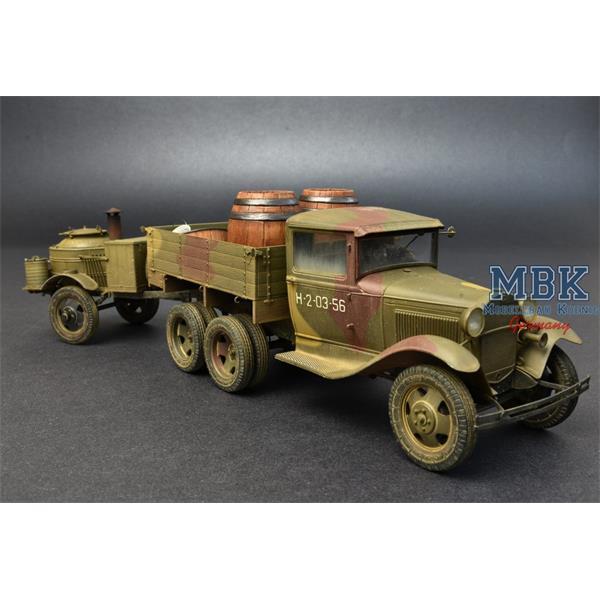
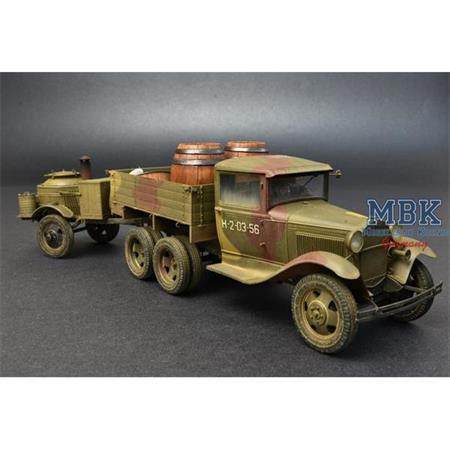
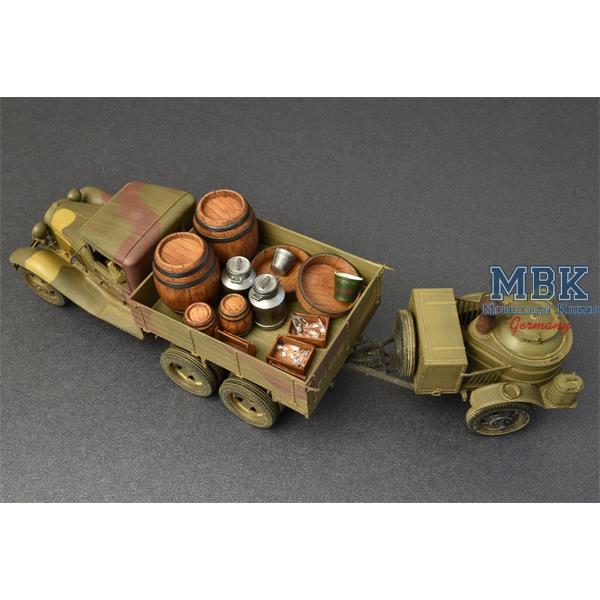
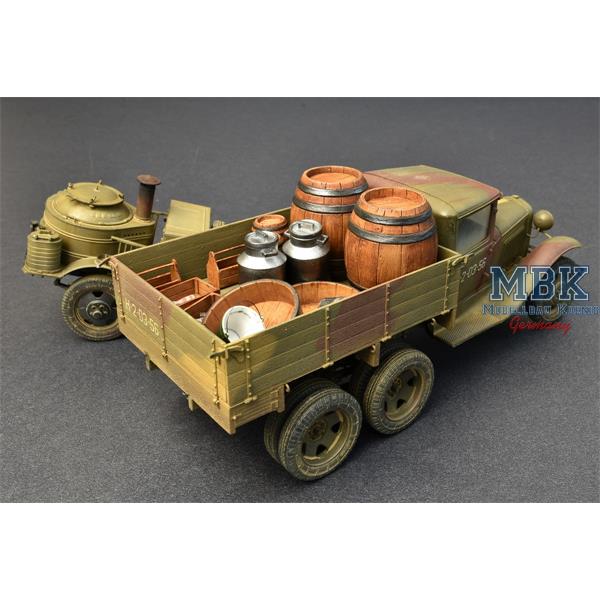
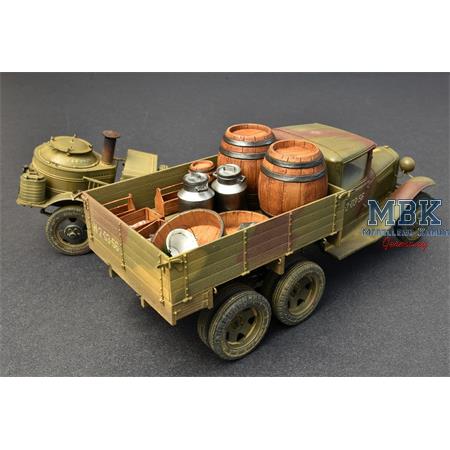
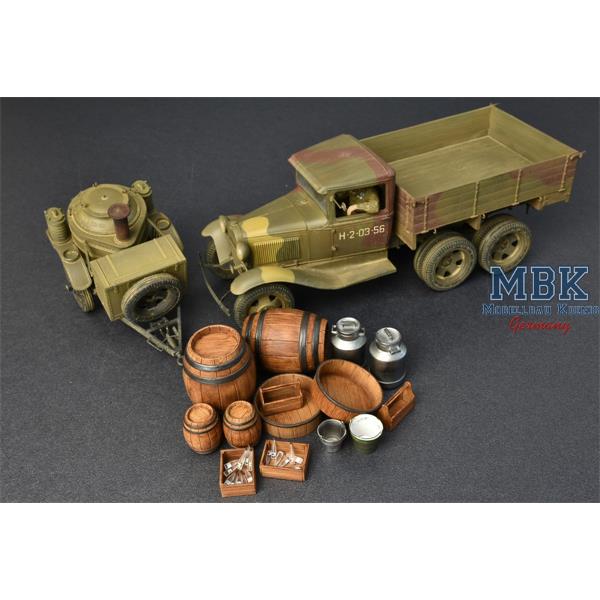
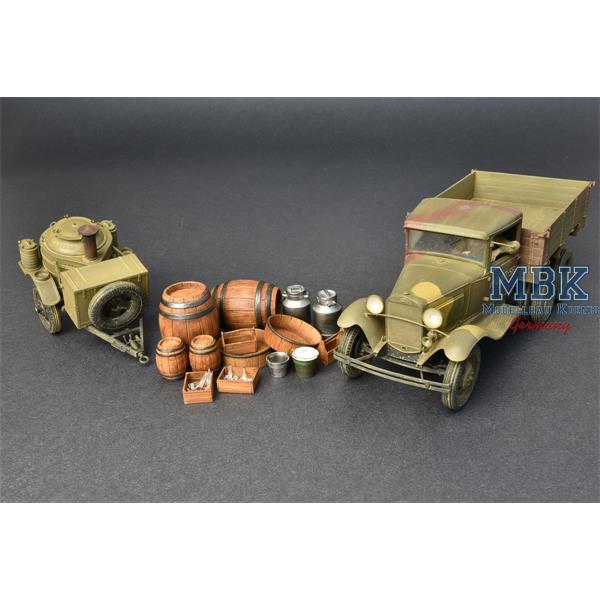

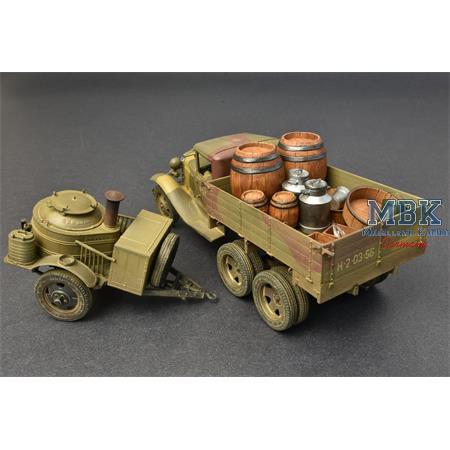
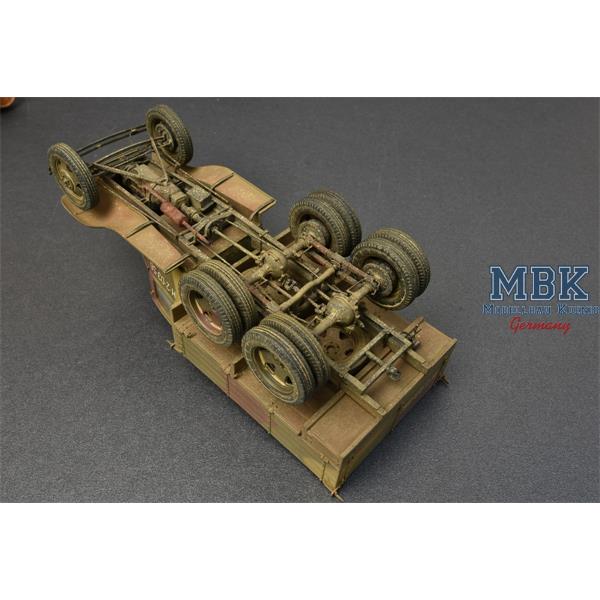
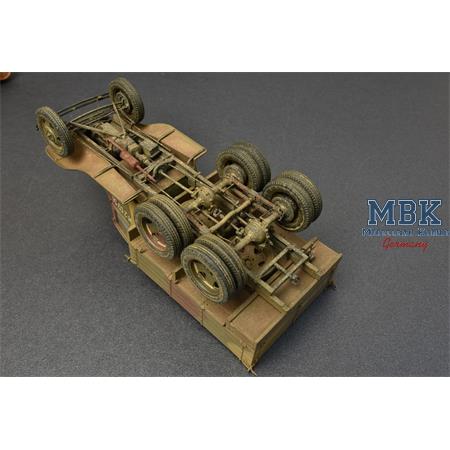
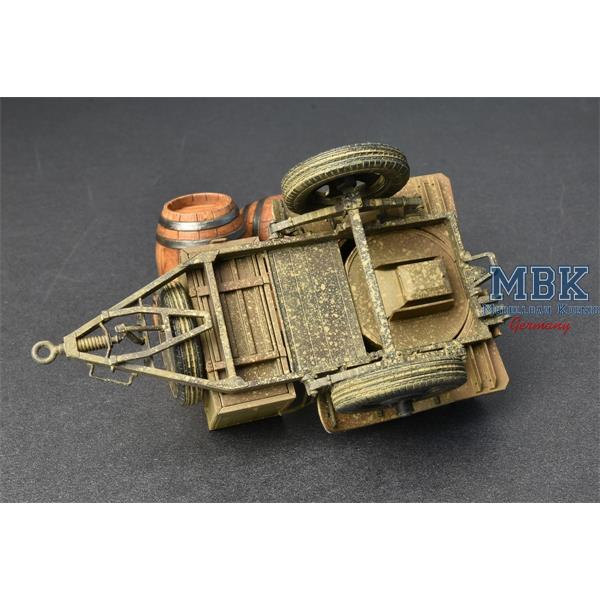
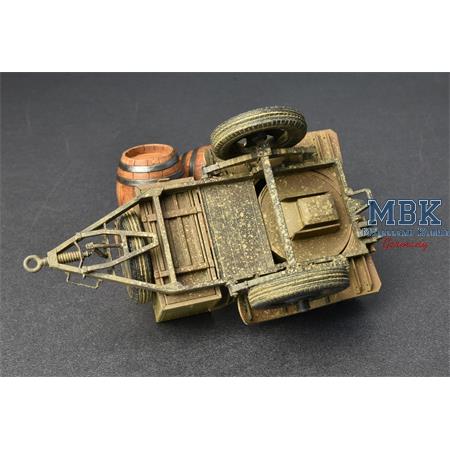
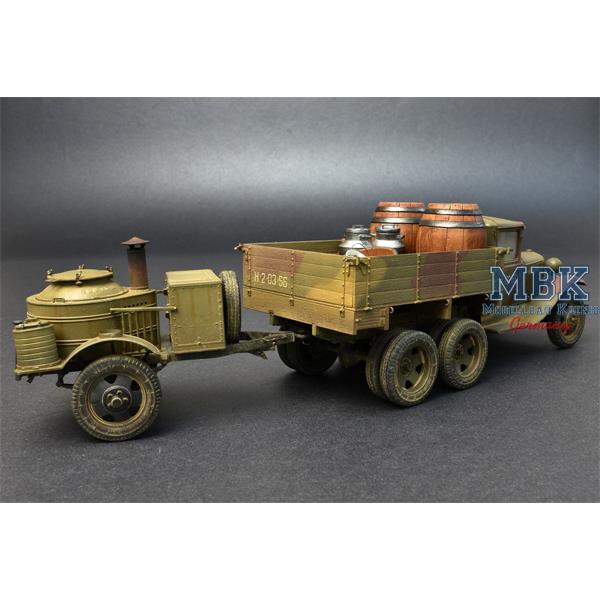
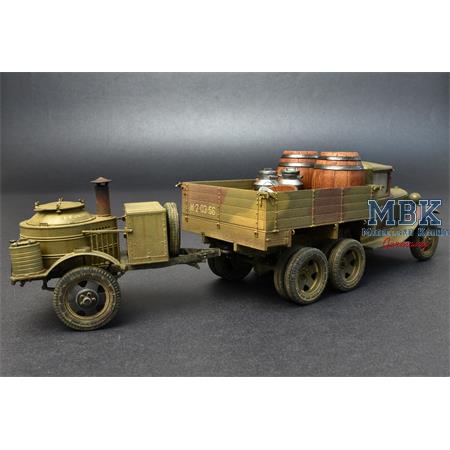
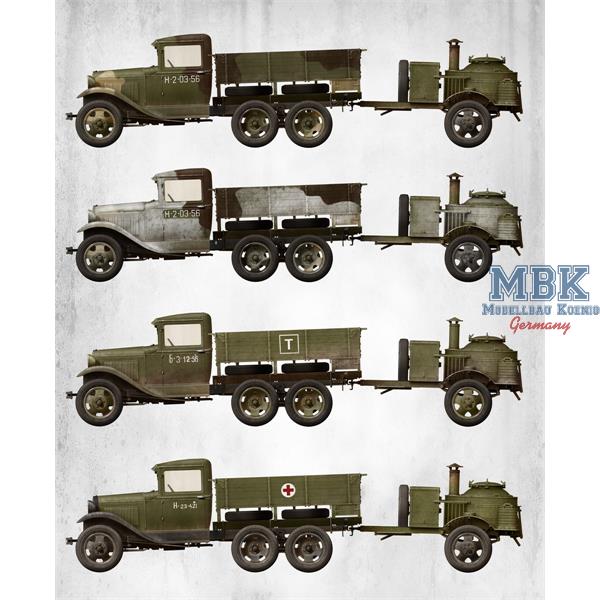
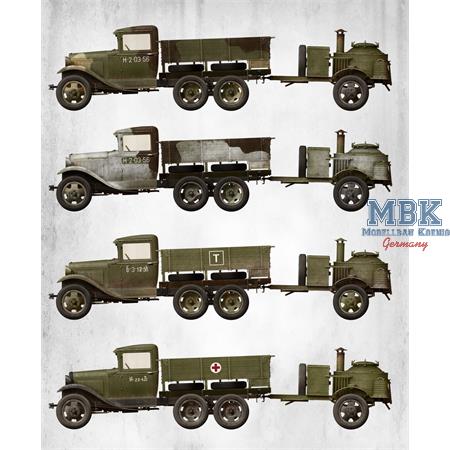


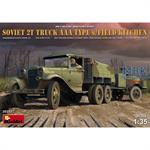
Plastic model kit for a Soviet GaZ-AAA 2-ton truck with load, KP-42 field kitchen trailer and figures
The GAZ-AAA was one of the Red Army's most important trucks in the years leading up to and during World War II. Produced at the Gorky Automobile Plant (GAZ) starting in 1934, it was a three-axle evolution of the two-axle GAZ-AA, which was itself based on the American Ford AA. The addition of a second rear axle gave the GAZ-AAA a higher payload capacity and superior off-road capability, making it particularly attractive for military applications.
The truck was powered by a water-cooled, four-cylinder gasoline engine producing approximately 50 hp. It had a payload capacity of about two tons and a top speed of around 65 km/h on paved roads. Robust and simple in design, the truck was easy to maintain and could operate under harsh conditions—factors of great importance to the Soviet Army.
The GAZ-AAA served as a general-purpose transport vehicle for troops, ammunition, fuel, and supplies. Furthermore, its chassis formed the basis for numerous specialized vehicles. These included radio trucks, mobile workshops, fuel tankers (such as the BZ-38), mobile anti-aircraft vehicles, and various rocket launchers. The GAZ-AAA became particularly well-known as the carrier for early versions of the Soviet BM-13 Katyusha multiple rocket launcher, prior to the adoption of more modern chassis.
At the time of the German invasion of the Soviet Union in 1941, the GAZ-AAA was one of the Red Army's most widely used military trucks. It saw service on all fronts and played a vital role in troop logistics. Production continued until 1943, when raw material shortages and the exigencies of war led to a shift toward other vehicle types.
KP-42 Field Kitchen
From 1942 onwards, the Soviet KP-42 field kitchen was one of the Red Army's most important mobile supply units. Mounted on a two-wheeled trailer, the kitchen featured a large cooking cauldron, additional storage containers, and a wood- or coal-fired furnace. It could be towed by horses or trucks and provided soldiers with hot meals even under difficult frontline conditions. The KP-42 contributed significantly to the troops' nutrition and morale, particularly during the harsh winters on the Eastern Front. Thanks to its robust construction, ease of operation, and high reliability, it became one of the most famous field kitchens of World War II and is a popular subject for dioramas featuring Soviet supply units today.
- 1:35 scale
- 763 parts
- Photo-etched and clear parts included
- detailed engine
- Loading in the form of barrels, buckets, crates, milk cans and bottles available
- 2 figures
- not built, not painted
- Paint and glue not included
The GAZ-AAA was one of the Red Army's most important trucks in the years leading up to and during World War II. Produced at the Gorky Automobile Plant (GAZ) starting in 1934, it was a three-axle evolution of the two-axle GAZ-AA, which was itself based on the American Ford AA. The addition of a second rear axle gave the GAZ-AAA a higher payload capacity and superior off-road capability, making it particularly attractive for military applications.
The truck was powered by a water-cooled, four-cylinder gasoline engine producing approximately 50 hp. It had a payload capacity of about two tons and a top speed of around 65 km/h on paved roads. Robust and simple in design, the truck was easy to maintain and could operate under harsh conditions—factors of great importance to the Soviet Army.
The GAZ-AAA served as a general-purpose transport vehicle for troops, ammunition, fuel, and supplies. Furthermore, its chassis formed the basis for numerous specialized vehicles. These included radio trucks, mobile workshops, fuel tankers (such as the BZ-38), mobile anti-aircraft vehicles, and various rocket launchers. The GAZ-AAA became particularly well-known as the carrier for early versions of the Soviet BM-13 Katyusha multiple rocket launcher, prior to the adoption of more modern chassis.
At the time of the German invasion of the Soviet Union in 1941, the GAZ-AAA was one of the Red Army's most widely used military trucks. It saw service on all fronts and played a vital role in troop logistics. Production continued until 1943, when raw material shortages and the exigencies of war led to a shift toward other vehicle types.
KP-42 Field Kitchen
From 1942 onwards, the Soviet KP-42 field kitchen was one of the Red Army's most important mobile supply units. Mounted on a two-wheeled trailer, the kitchen featured a large cooking cauldron, additional storage containers, and a wood- or coal-fired furnace. It could be towed by horses or trucks and provided soldiers with hot meals even under difficult frontline conditions. The KP-42 contributed significantly to the troops' nutrition and morale, particularly during the harsh winters on the Eastern Front. Thanks to its robust construction, ease of operation, and high reliability, it became one of the most famous field kitchens of World War II and is a popular subject for dioramas featuring Soviet supply units today.
Suitable Accessories

10.00 €*
Customer Reviews 2
Write now your personal experience with this article and help others with their purchase decision.
