 Bandai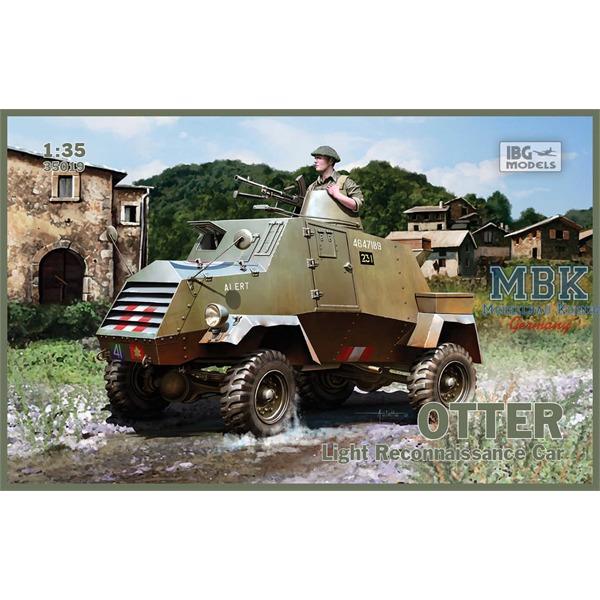
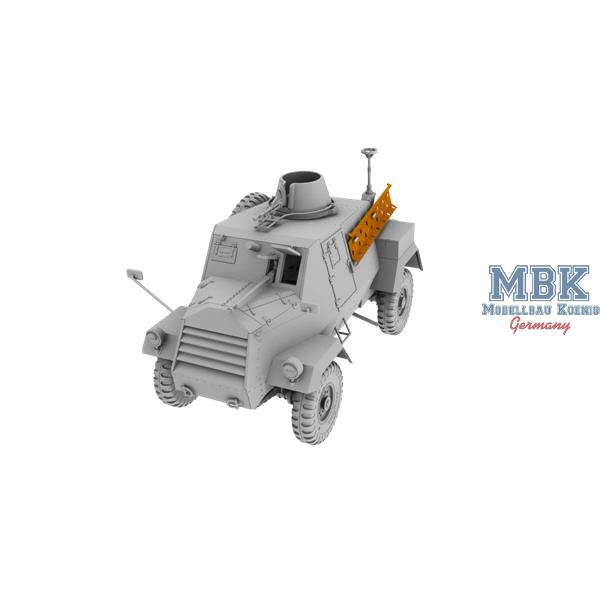
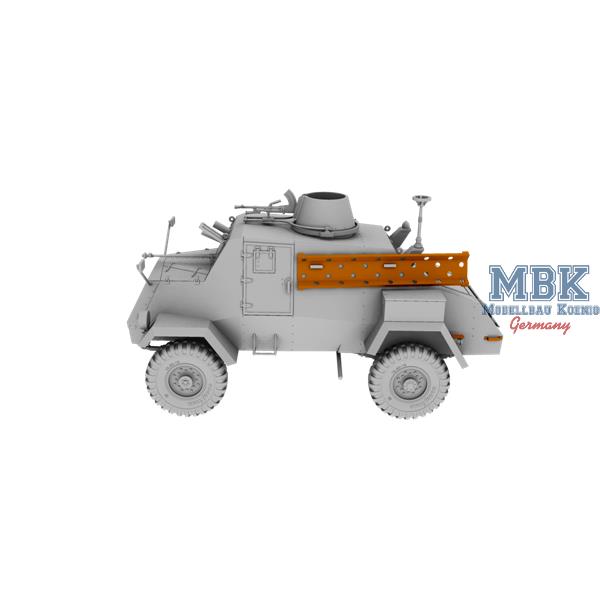
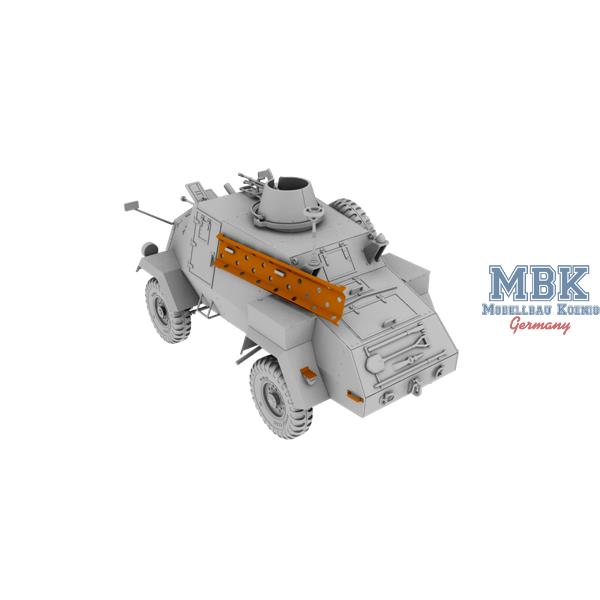
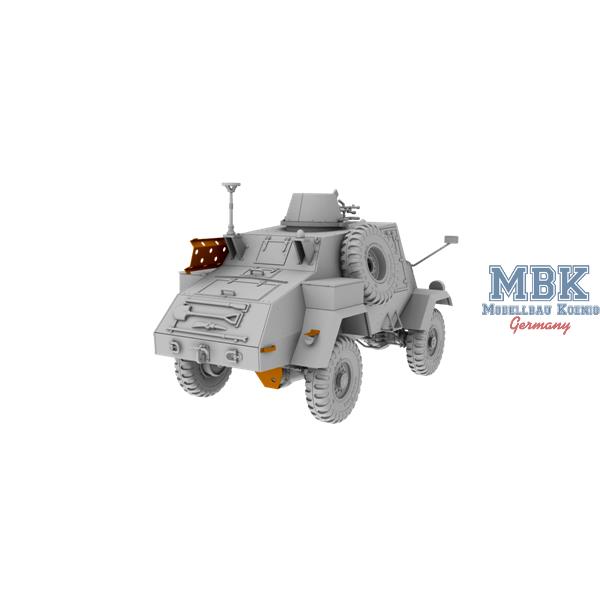
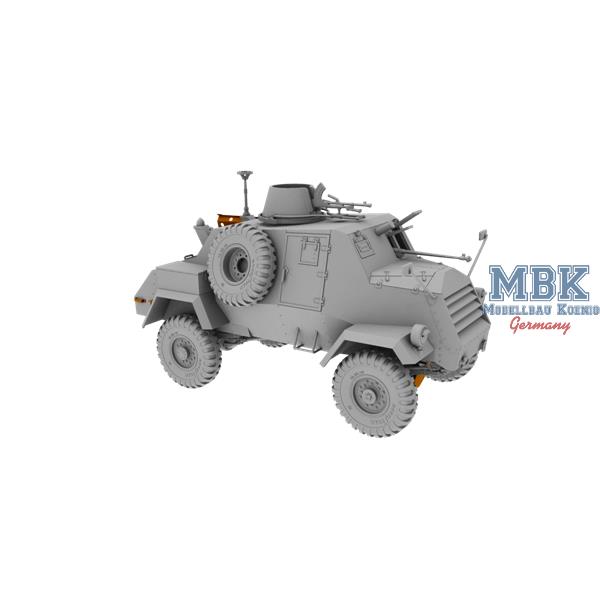
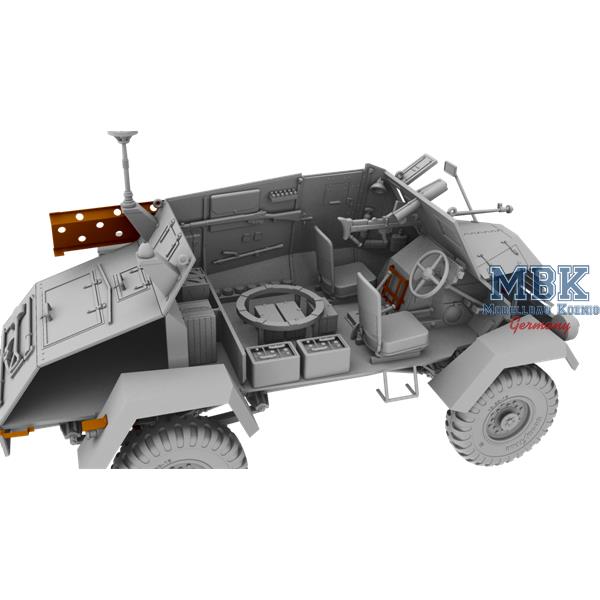
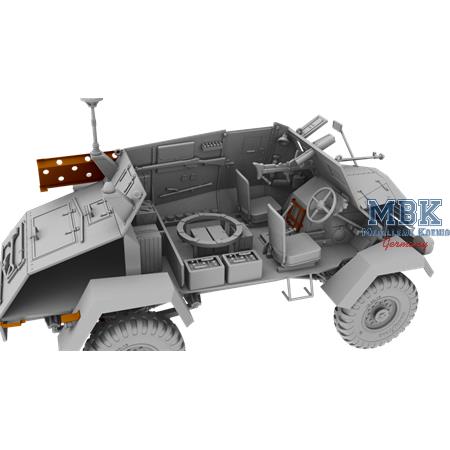
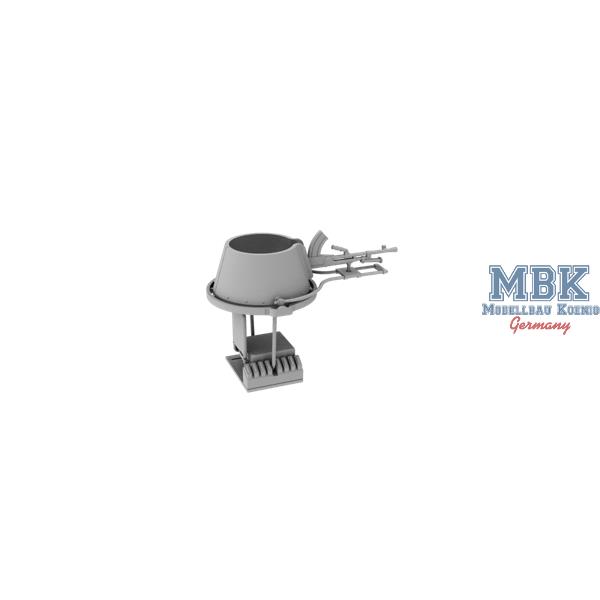
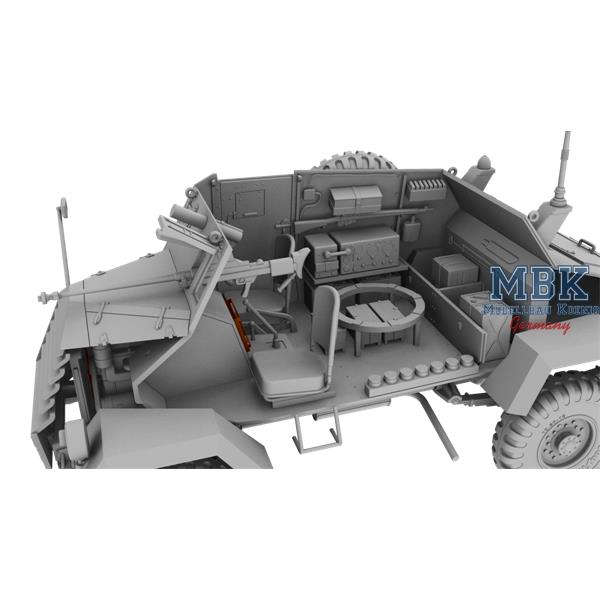
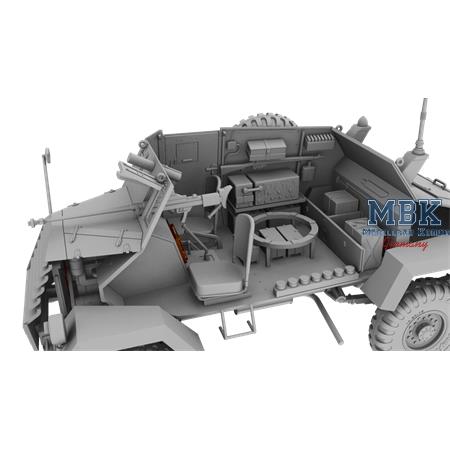
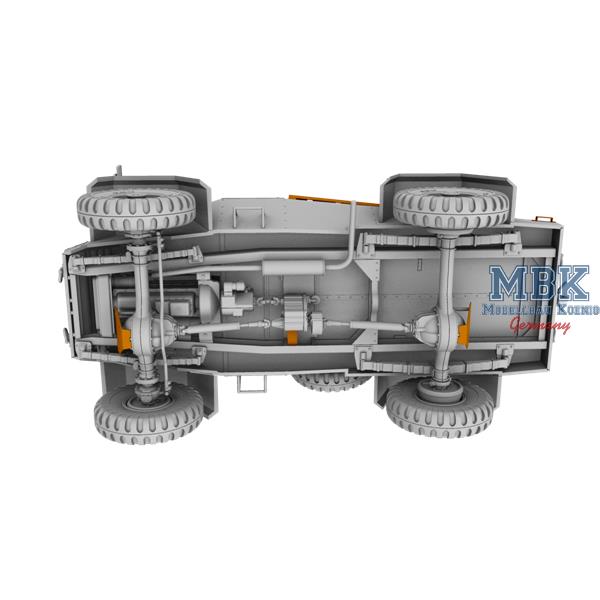
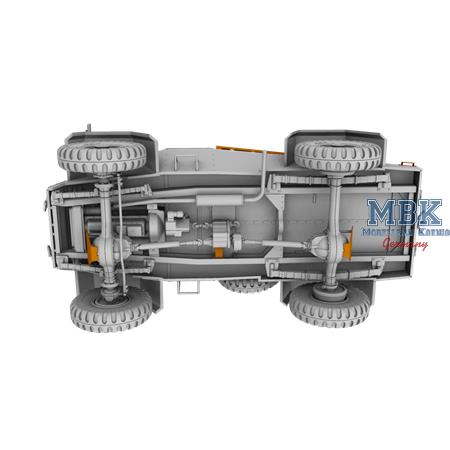
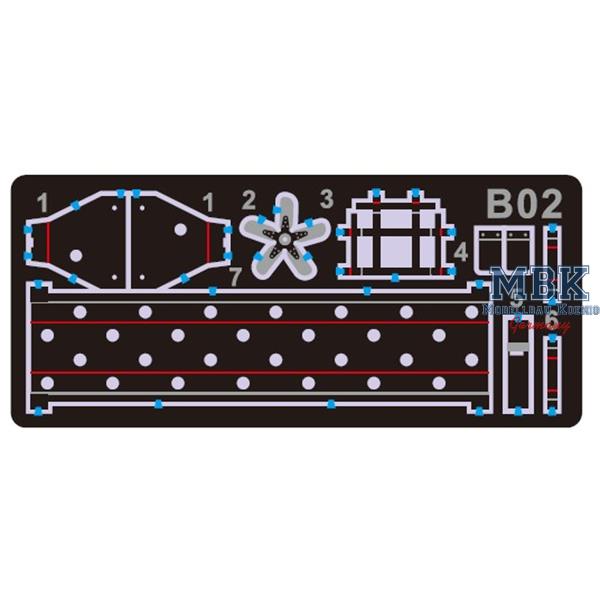



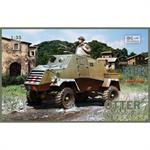
Plastic model kit for building a British Otter Light Reconnaissance Vehicle
Technically, the Otter was based on the proven chassis of the Chevrolet C15 Canadian Military Pattern (CMP), featuring permanent four-wheel drive (4×4). It was powered by a Chevrolet inline-six gasoline engine with a displacement of 3.5 liters (216 cu in) and an output of approximately 85 hp. Power was transmitted via a four-speed manual transmission coupled with a two-speed transfer case. With a combat weight of around 4.5 tonnes, the Otter could reach road speeds of up to 75 km/h and had an operational range of approximately 400 kilometers. Its robust suspension - featuring solid axles and leaf springs - gave the vehicle good off-road capabilities, although its relatively high center of gravity and weight made it less agile than the Humber.
The fully enclosed armored hull was constructed from welded armor plates ranging from approximately 6 to 12 mm in thickness, providing protection against small arms fire and shrapnel. The crew consisted of three soldiers: a driver, a commander, and a gunner/radio operator. A distinctive feature was the small rotating turret on the roof, typically armed with a .303 British (7.7 mm) Bren light machine gun. Additionally, a .55-caliber Boys anti-tank rifle - or later, other light weapons - could be carried. Radio equipment typically included a Wireless Set No. 19, enabling reliable communication with other reconnaissance units and higher-level command posts.
The Otter was primarily employed by reconnaissance regiments, military police, and liaison and security units. Its duties included scouting enemy positions, providing convoy escorts, traffic control, and patrolling behind the front lines. Combat operations took place mainly in Italy and in Northwest Europe following the Normandy landings. The robust CMP technology proved extremely reliable and easy to maintain, although crews occasionally criticized the limited visibility from within the vehicle and its comparatively high silhouette.
After the war, the Otter remained in service with various Commonwealth nations for many years. Canada, Belgium, Denmark, the Netherlands, and several other countries used the vehicle into the 1950s and, in some cases, the early 1960s. Today, the Otter Light Reconnaissance Car is considered one of the most distinctive Canadian armored vehicles of the Second World War. Due to its relatively low production numbers and close ties to the CMP vehicle family, it is now a rare museum piece and collector's item that regularly attracts great interest at historic military vehicle gatherings.
- 1/35 scale
- engine replica
- interior design
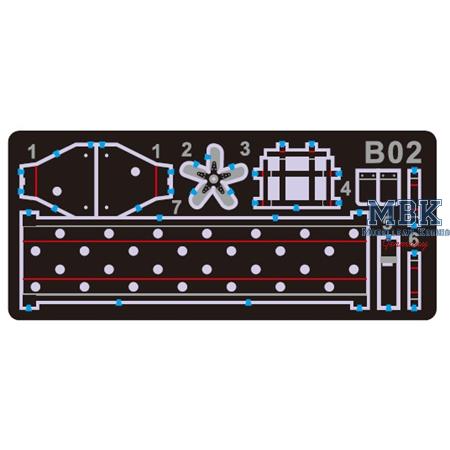
- Including photo-etched parts
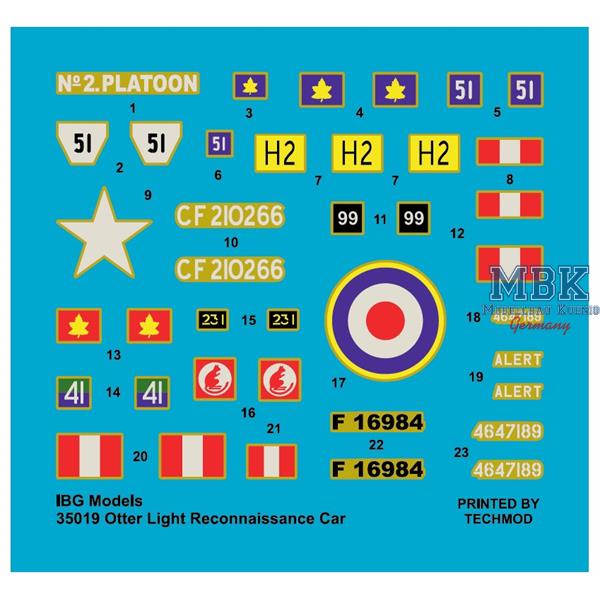
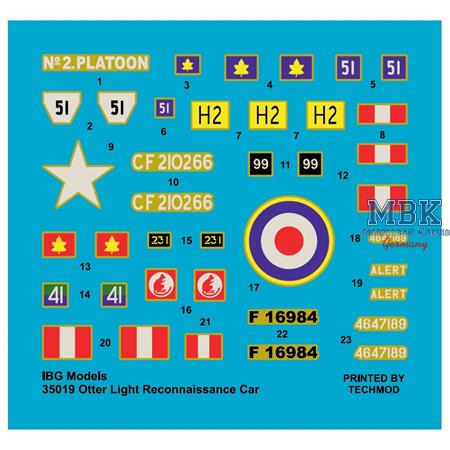
- 3 marking options
- not built, not painted
- Paint and glue not included
Technically, the Otter was based on the proven chassis of the Chevrolet C15 Canadian Military Pattern (CMP), featuring permanent four-wheel drive (4×4). It was powered by a Chevrolet inline-six gasoline engine with a displacement of 3.5 liters (216 cu in) and an output of approximately 85 hp. Power was transmitted via a four-speed manual transmission coupled with a two-speed transfer case. With a combat weight of around 4.5 tonnes, the Otter could reach road speeds of up to 75 km/h and had an operational range of approximately 400 kilometers. Its robust suspension - featuring solid axles and leaf springs - gave the vehicle good off-road capabilities, although its relatively high center of gravity and weight made it less agile than the Humber.
The fully enclosed armored hull was constructed from welded armor plates ranging from approximately 6 to 12 mm in thickness, providing protection against small arms fire and shrapnel. The crew consisted of three soldiers: a driver, a commander, and a gunner/radio operator. A distinctive feature was the small rotating turret on the roof, typically armed with a .303 British (7.7 mm) Bren light machine gun. Additionally, a .55-caliber Boys anti-tank rifle - or later, other light weapons - could be carried. Radio equipment typically included a Wireless Set No. 19, enabling reliable communication with other reconnaissance units and higher-level command posts.
The Otter was primarily employed by reconnaissance regiments, military police, and liaison and security units. Its duties included scouting enemy positions, providing convoy escorts, traffic control, and patrolling behind the front lines. Combat operations took place mainly in Italy and in Northwest Europe following the Normandy landings. The robust CMP technology proved extremely reliable and easy to maintain, although crews occasionally criticized the limited visibility from within the vehicle and its comparatively high silhouette.
After the war, the Otter remained in service with various Commonwealth nations for many years. Canada, Belgium, Denmark, the Netherlands, and several other countries used the vehicle into the 1950s and, in some cases, the early 1960s. Today, the Otter Light Reconnaissance Car is considered one of the most distinctive Canadian armored vehicles of the Second World War. Due to its relatively low production numbers and close ties to the CMP vehicle family, it is now a rare museum piece and collector's item that regularly attracts great interest at historic military vehicle gatherings.

Customer Reviews 4
Write now your personal experience with this article and help others with their purchase decision.
