Bandai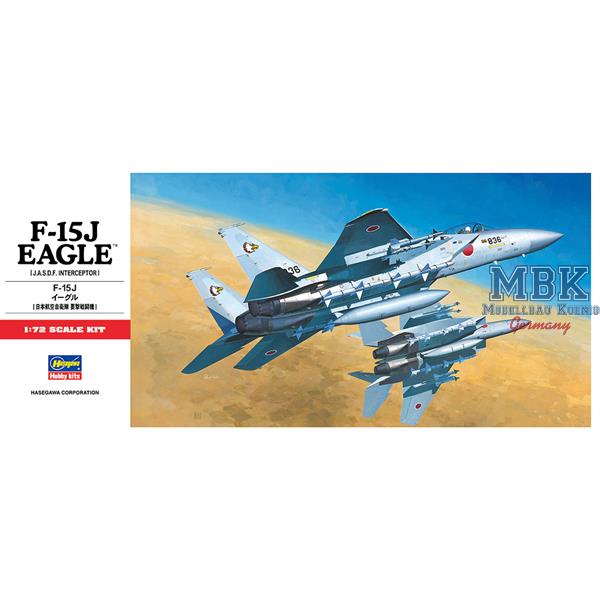
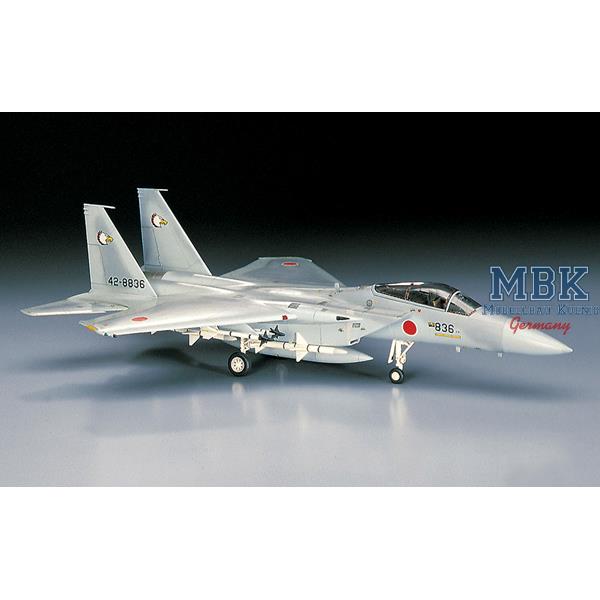
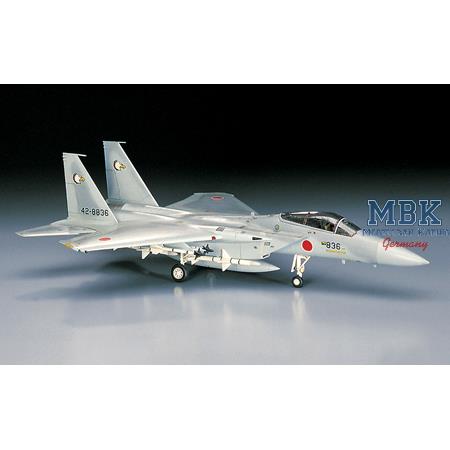


McDonnell Douglas F-15J Eagle (C7)
Item Number:
HAS00337
HAS00337
Manufacturer
HASEGAWA
HASEGAWA
Scale:
1:72
1:72

Plastic kit for a Japanese McDonnell Douglas F-15J Eagle
The Japan Air Self-Defense Force is the third country in the world, after the U.S. Air Force and Israel, to be equipped with the Eagle.
The Japan Air Self-Defense Force had previously used the F-104J as an interceptor,
but was considering the F-X as a successor to the F-104J.
From numerous candidates, the Japan Air Self-Defense Force chose the F-15 on December 9, 1976,
and the first aircraft arrived at Gifu Air Base on March 27, 1981.
At its introduction, the Japan Air Self-Defense Force's F-15J was
essentially the U.S. Air Force's F-15C Block 26,
with some JASDF-specific modifications.
These modifications primarily included the addition of the JASDF's proprietary automated warning and control system (Badge System) and a high-speed data unit (J/ASW-10 data link system) that receives interceptor control signals from E-2C early warning aircraft, as well as the switch to a mass-balanced antenna on the tip of the vertical stabilizer.
The Japan Air Self-Defense Force initially deployed the F-15J at Nyutabaru Air Base, where it was used for pilot training before being fully deployed to fighter squadrons.
F-15Js are currently deployed in seven squadrons: the 201st Squadron (Chitose Air Base), the 202nd Squadron (Nyutabaru Air Base),
the 203rd Squadron (Chitose Air Base), the 204th Squadron (Hyakuri Air Base), the 303rd Squadron (Komatsu Air Base),
the 304th Squadron (Tsukiki Air Base), and the 305th Squadron (Hyakuri Air Base).
Like the U.S. Air Force, the F-15J undergoes a Multi-Phase Improvement Program (MSIP),
in which equipment is upgraded and expanded annually.
As a result, the aircraft's exterior has changed, and new antennas have been added.
In addition, one aircraft is currently being modified to carry the domestically developed AAM-3 air-to-air missile.
As the primary combat aircraft of the Japan Air Self-Defense Force, the F-15J, along with the upcoming FS-X, will play an active role in defending Japanese airspace.
Specifications
- Scale 1:72
- not built, not painted
- Paint and glue not included
The Japan Air Self-Defense Force is the third country in the world, after the U.S. Air Force and Israel, to be equipped with the Eagle.
The Japan Air Self-Defense Force had previously used the F-104J as an interceptor,
but was considering the F-X as a successor to the F-104J.
From numerous candidates, the Japan Air Self-Defense Force chose the F-15 on December 9, 1976,
and the first aircraft arrived at Gifu Air Base on March 27, 1981.
At its introduction, the Japan Air Self-Defense Force's F-15J was
essentially the U.S. Air Force's F-15C Block 26,
with some JASDF-specific modifications.
These modifications primarily included the addition of the JASDF's proprietary automated warning and control system (Badge System) and a high-speed data unit (J/ASW-10 data link system) that receives interceptor control signals from E-2C early warning aircraft, as well as the switch to a mass-balanced antenna on the tip of the vertical stabilizer.
The Japan Air Self-Defense Force initially deployed the F-15J at Nyutabaru Air Base, where it was used for pilot training before being fully deployed to fighter squadrons.
F-15Js are currently deployed in seven squadrons: the 201st Squadron (Chitose Air Base), the 202nd Squadron (Nyutabaru Air Base),
the 203rd Squadron (Chitose Air Base), the 204th Squadron (Hyakuri Air Base), the 303rd Squadron (Komatsu Air Base),
the 304th Squadron (Tsukiki Air Base), and the 305th Squadron (Hyakuri Air Base).
Like the U.S. Air Force, the F-15J undergoes a Multi-Phase Improvement Program (MSIP),
in which equipment is upgraded and expanded annually.
As a result, the aircraft's exterior has changed, and new antennas have been added.
In addition, one aircraft is currently being modified to carry the domestically developed AAM-3 air-to-air missile.
As the primary combat aircraft of the Japan Air Self-Defense Force, the F-15J, along with the upcoming FS-X, will play an active role in defending Japanese airspace.
Specifications
- Crew: 1
- Wingspan: 13.05 m
- Length: 19.43 m
- Height: 5.63 m
- Maximum takeoff weight: 30,845 kg
- Engine: P&W F-100-IHI-100
- Thrust: 7,348 kg x 2 (10,800 kg x 2 with AB)
- Top speed: Mach 2.5/12,200 m
- Fixed armament: 1 x JM61A 20 mm Vulcan cannon
Customer Reviews 0
Write now your personal experience with this article and help others with their purchase decision.